
IBM's mainframe revenue fell 42% while its AI book passed $9.5 billion — and it has promised the first verified quantum advantage before December
IBM grew revenue 1 per cent last quarter, which tells you almost nothing about IBM. Inside that number: software up 5 per cent, Red Hat up 11, distributed infrastructure up 37 in its best quarter ever, and the mainframe business down 42 per cent. Meanwhile the company has staked its scientific reputation on a deadline four months away. An analysis of a conglomerate with three different clocks running.
Every figure in this article is drawn from IBM's second-quarter 2026 results, published 22 July 2026, and its SEC filings and quantum roadmap disclosures, or from CNBC, Forbes and Tom's Hardware as attributed. Sections marked as analysis are identified as such.
IBM's second-quarter revenue grew 1 per cent to $17.2 billion, a number so unremarkable it actively conceals the company underneath it. Three businesses moved in three different directions at once, and only one of them is behaving the way the headline implies.
The three IBMs
Software — $7.8 billion, up 5 per cent — is the one that matters most to the share price. Red Hat grew 11 per cent and the data platform grew 19. This is the recurring, high-margin business built over a decade of acquisitions, and it is now the largest segment and the engine of the whole company.
Consulting — $5.3 billion, flat, up 1 per cent in constant currency — is the one that tells you about corporate demand. IBM's consulting arm is a fairly reliable proxy for how much discretionary transformation work large enterprises are commissioning, and flat is what caution looks like.
Infrastructure — $3.8 billion, down 7 per cent — contains the extremes. Mainframe revenue fell 42 per cent. In the same segment, distributed infrastructure grew 37 per cent, the strongest reported performance in its history.
The 42 per cent needs immediate context, because it is not a collapse. IBM's mainframe business runs on a hard product cycle: a new generation launches, banks and governments buy heavily for a year, and then purchases fall away until the next one. A steep decline in the year after a launch year is the normal shape of that curve, not evidence that the world stopped using mainframes.
It is worth remembering what those machines still do. The great majority of the world's card transactions, airline reservations and core banking ledgers run on this hardware, and the institutions that own them replace them roughly every three to four years rather than migrating away. IBM's mainframe revenue is volatile precisely because its customer base is not.
| IBM Q2 2026 | Revenue | Change |
|---|---|---|
| Software | $7.8bn | +5% |
| Consulting | $5.3bn | flat |
| Infrastructure | $3.8bn | −7% |
| — of which z mainframe | — | −42% |
| — of which distributed | — | +37% |
| Total revenue | $17.2bn | +1% |
Cash generation improved regardless. Operating cash flow rose $0.9 billion to $2.6 billion in the quarter, with free cash flow of $2.5 billion; over the first half IBM produced $7.8 billion from operations and $4.8 billion of free cash flow. Full-year guidance calls for 4 to 5 per cent constant-currency revenue growth, free cash flow about $1 billion higher than last year, and margin expansion.
The cash line is the one that has kept IBM's shareholders patient through a decade of flat revenue. A company converting a mid-single-digit grower into steadily rising free cash flow, while paying one of the larger dividends in American technology, does not need to grow quickly to be worth owning. That is the whole investment case, and the second quarter did nothing to damage it.
The AI book
Arvind Krishna's headline metric is what IBM calls its generative AI book of business, now more than $9.5 billion since inception — bookings and revenue across software and consulting combined. It is a real number and an unusual one, because IBM has consistently described it as spanning both software and consulting with consulting the larger share: the company is being paid substantially to implement other people's models inside institutions that cannot do it themselves.
That is a perfectly good business and a structurally different one from selling the model. It scales with people, not with copies, and its margins reflect that. The strategic question for IBM is whether the software share of that $9.5 billion rises over time — which is the same question as whether IBM ends up owning a platform or staffing one.
There is a case that staffing it is the better business anyway. Every large bank, insurer, hospital system and government department currently wants to deploy models against data they are not permitted to move, inside regulatory constraints they cannot ignore, using staff they do not have. That work is not glamorous, it does not scale like software, and there is a great deal more of it than there are people qualified to do it.
The deadline
IBM has done something almost no large company does: set a public, falsifiable scientific deadline. It has said that verified quantum advantage — a quantum computer demonstrably outperforming any classical method on a useful problem, confirmed by the wider research community — should be established by the end of 2026. That is roughly four months away.
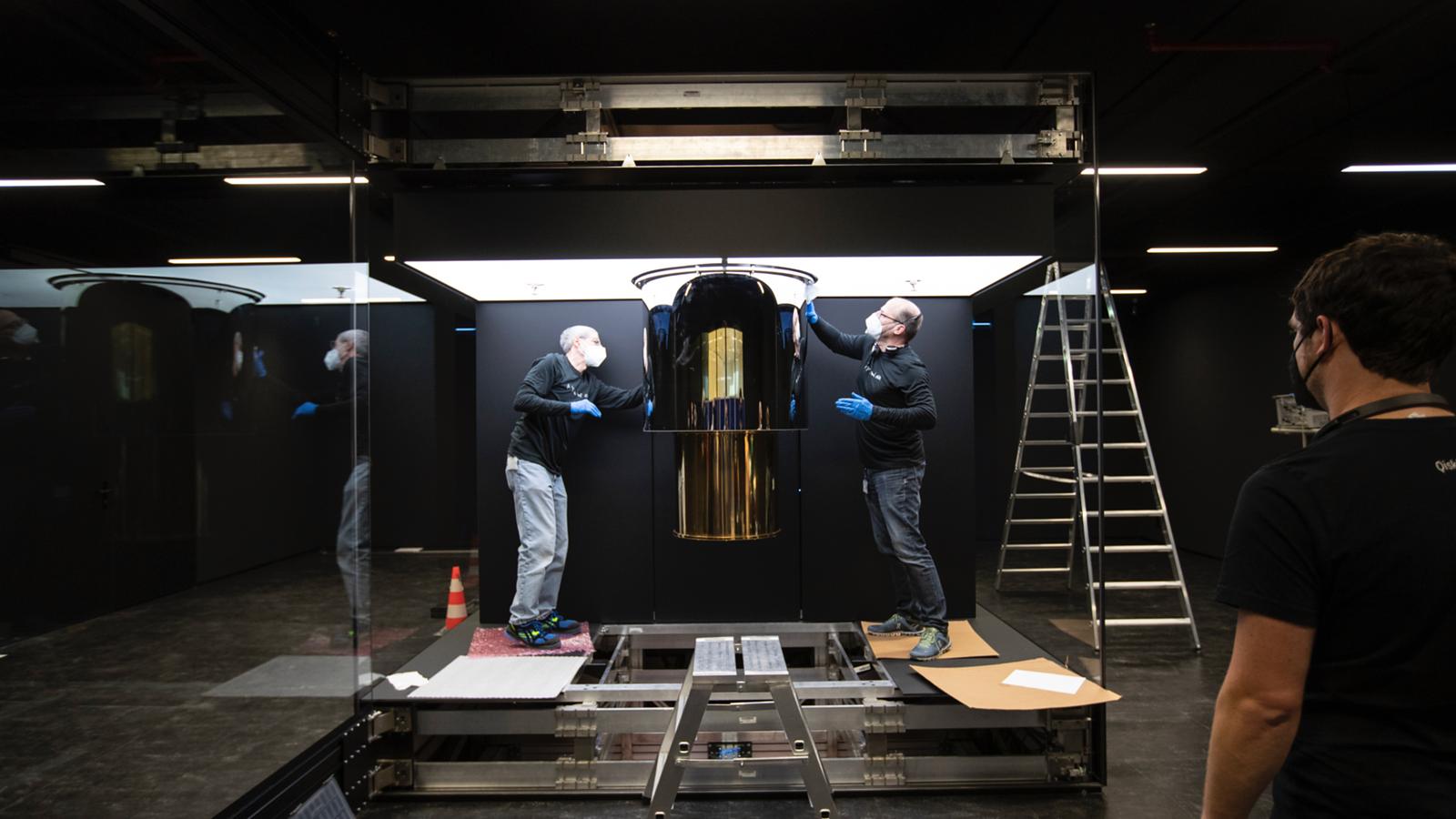
The hardware backing the claim is specific. Nighthawk, unveiled last November, carries 120 qubits linked by 218 next-generation tunable couplers in a square lattice, delivering more than 20 per cent greater connectivity than its predecessor. IBM's roadmap targets circuits of 7,500 gates this year, 10,000 next year and 15,000 by 2028, with a fault-tolerant machine — Starling, 200 error-corrected logical qubits running more than 100 million operations per job — promised for 2029.
Analysis: why the deadline is the story
Quantum computing has spent fifteen years as a field where every milestone is contested. "Quantum supremacy" claims have been announced, disputed and in several cases overturned by classical algorithms written specifically to catch up. IBM's formulation is deliberately harder to fudge: not a claim it makes about itself, but one it expects the research community to confirm about it.
The wording also quietly narrows the claim in a useful way. Advantage on a useful problem is a lower bar than general-purpose quantum computing and a much higher bar than a contrived benchmark; it is the point at which a specific class of calculation — in chemistry, materials or optimisation — becomes cheaper to run on quantum hardware than on any classical machine. That is a real commercial threshold, and it arrives long before anyone breaks encryption.
The commercial stakes are smaller than the scientific ones, at least for now — quantum contributes essentially nothing to IBM's $17 billion quarter. What it contributes is the reason IBM is still described as a research company rather than a mid-growth software business with a mainframe attached. That framing is worth a great deal to a firm whose consulting arm sells expertise and whose software sells trust.
If the deadline slips, IBM will have done what the quantum field has done repeatedly, and the credibility cost will be real. If it holds, IBM becomes the first company to have delivered a scientifically verified quantum result on a schedule it published years in advance — which is a different kind of asset from a product.
Analysis: the ordinary company underneath
Strip out the physics and IBM in 2026 is a coherent, unglamorous proposition: about 4 to 5 per cent constant-currency growth, expanding margins, a dependable and rising free cash flow, a software portfolio growing mid-single digits with Red Hat doing better than that, and a consulting business waiting for corporate confidence to return.
The mainframe cycle will turn again, as it always has. Distributed infrastructure growing 37 per cent suggests the segment is quietly rebalancing toward something less cyclical. And the AI book, whatever its composition, is $9.5 billion of work IBM did not have three years ago.
It is a company that has stopped trying to be exciting quarter to quarter and has instead placed one very large, very public bet with a date attached. Investors have four months to find out whether it was a good one — which, for a stock usually discussed in terms of dividend yield, is an unusual position to be in.
The broader lesson may be about how old technology companies survive. IBM has now outlived the punch card, the mainframe monopoly, the PC, the services boom and the cloud transition it initially lost, and it has done it by being willing to look uninteresting for years at a time while it rebuilt the portfolio underneath. Whatever happens in December, that pattern is the most reliable thing about the company.