
Anduril wins a Navy contract worth up to $2.9 billion to build a submarine-parts shipyard on Baltimore's old Bethlehem Steel site — days after Palmer Luckey joined a Pentagon weapons panel
The $6.6 billion Arsenal-2 plant at Sparrows Point will not build submarines. It will build the torpedo tubes and hull sections that the two existing yards cannot turn out fast enough, which is the real bottleneck behind a Virginia-class programme running at little more than one boat a year against a target of two.
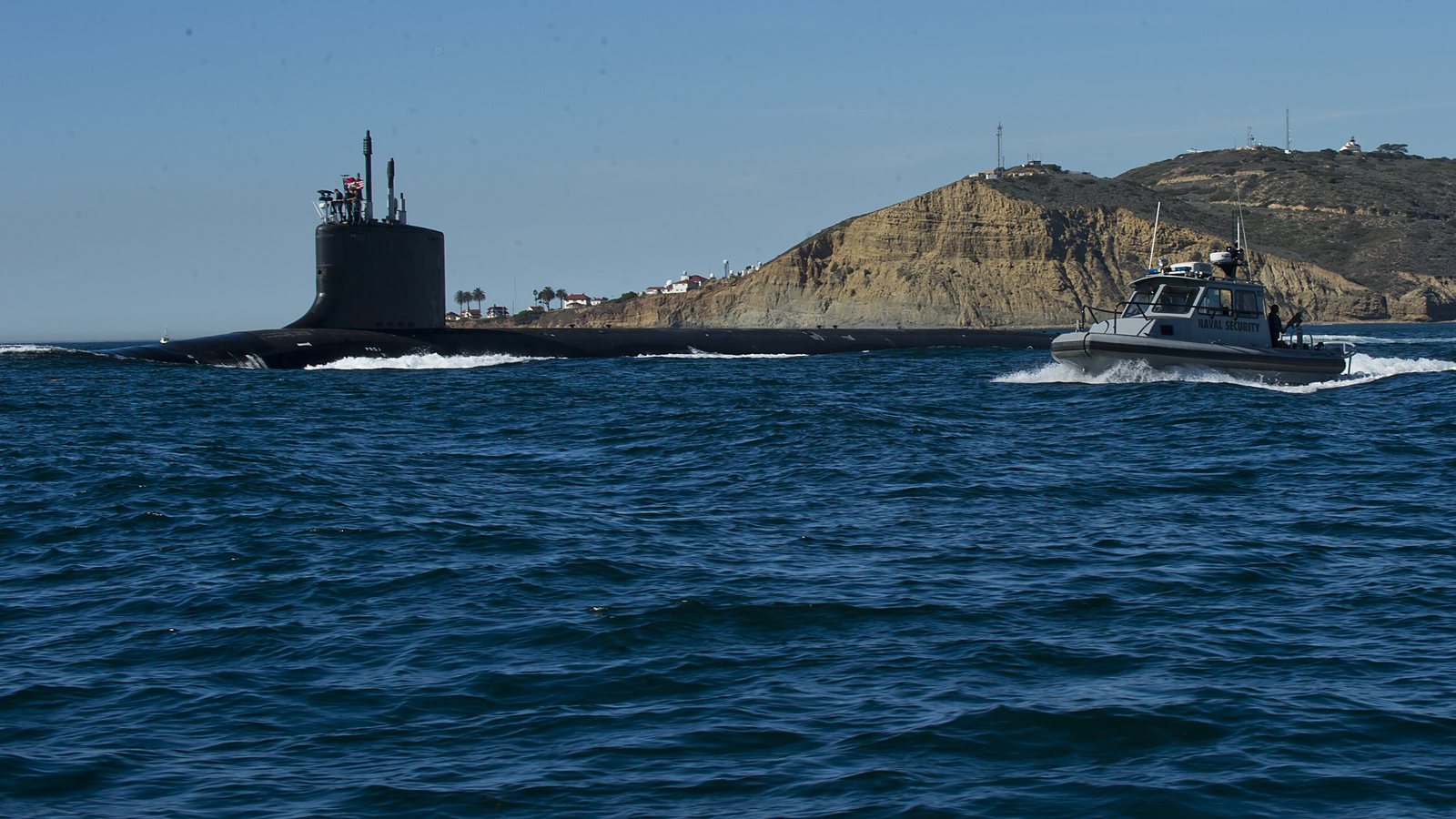
The most important number in Tuesday's announcement is not the $2.9 billion the Navy may pay Anduril, nor the $3.7 billion the company says it will put in itself. It is 1.2. That, according to the Congressional Research Service, is roughly how many Virginia-class attack submarines American industry has managed to deliver each year since 2022, against a procurement rate of two a year that Congress has funded since 2011. The gap has produced a growing backlog of boats paid for but not built, and it is that backlog, not a new class of warship, that the Sparrows Point project is meant to attack.
Anduril said on Tuesday it had won a contract worth up to $2.9 billion from the US Navy to help establish a 2 million-square-foot manufacturing complex it is calling Arsenal-2 on a 187-acre parcel at Tradepoint Atlantic in Baltimore County, Maryland. The company will add $3.7 billion of its own capital, for a combined investment the White House put at $6.6 billion. Permitting and site preparation begin immediately, hiring is expected to start in 2029, and initial operations are slated for 2030, CNBC and DefenseScoop reported.
The yard will not build submarines. Chris Brose, Anduril's president and chief strategy officer, was explicit about that in a press briefing. 'Our goal here is to be a critical, and hopefully, over time, much larger and growing part of the supply chain for our lead shipbuilders,' he said. 'And over time, we hope that'll grow up to very large sections of the ship.' Finished components will be shipped to General Dynamics Electric Boat in Connecticut and HII's Newport News Shipbuilding in Virginia, the only two yards in the country that assemble nuclear-powered submarines.
Why torpedo tubes come first
The first products will be among the least glamorous parts of a $4 billion warship. Anduril told reporters it will begin with torpedo tubes and other relatively simple components at a 160,000-square-foot facility in Orange County, California, which gives it a roughly two-year head start before the Maryland site opens. A senior administration official described torpedo tubes to DefenseScoop as 'a gating component' in Virginia-class construction, meaning hulls wait on them.
That is the mechanism the whole project rests on. A submarine is not slow to build because any single part is impossible to make; it is slow because thousands of parts arrive from a supplier base that shrank sharply after the Cold War, and a late delivery of one of them idles a dock. The Government Accountability Office said as much in a July report that cited late material deliveries and a shortage of workers as the central problems in the programme, Breaking Defense noted. Anduril's pitch is to add capacity at the point where the chain is thinnest and work upward from there toward bow sections and other large assemblies.
The company says the yard will add about 9 million labour hours a year to the submarine industrial base, which it equates to a 15 per cent increase in Virginia-class production capacity. Those are Anduril's figures, not the Navy's, and they describe a plant that does not yet exist.
A 'software-defined' shipyard
Anduril is a drone and autonomous-systems company best known for products such as the Ghost helicopter drone and the Roadrunner interceptor, and it has never built anything for a nuclear submarine. Its answer to the obvious question is software. The facility will run on ArsenalOS, the company's industrial software platform, which it describes as the plant's 'digital backbone,' connecting fabrication workflows, outfitting sequences, material movement, inspection protocols and documentation in a single system.
'This is an opportunity to really reimagine how a shipyard is built and how this work is done, and that's just not something that our current industrial base has the luxury of doing,' Brose said. The claim is that a greenfield site designed around digital tracking from the first weld can hit quality and schedule targets that century-old yards, retrofitting software onto legacy processes, cannot. It is the same thesis behind Arsenal-1, the company's weapons factory outside Columbus, Ohio, and it is, so far, a thesis.
The Virginia-class submarine program is one of the most critical warfighting capabilities that our nation has. — Chris Brose, Anduril president and chief strategy officer, quoted by DefenseScoop
What the site used to be
Sparrows Point is one of the most symbolically loaded industrial addresses in the United States. Steelmaking on the peninsula south-east of Baltimore began in the late nineteenth century, and under Bethlehem Steel the complex grew through two world wars into what was, by the 1950s, the largest steel plant in the country. Bethlehem's adjacent shipyard launched tankers and Navy auxiliaries; National Archives photographs show the Chevron Hawaii sliding down the ways there in the 1970s.
Bethlehem Steel filed for bankruptcy in 2001. Steelmaking at Sparrows Point stopped entirely in 2012. In 2014 a joint venture of Redwood Capital Investments and Hilco Global bought the roughly 3,100-acre site, renamed it Tradepoint Atlantic and redeveloped it as a logistics hub whose tenants now include Amazon, Under Armour, Home Depot and Volkswagen. Over the summer, the Wall Street Journal reported that Anduril was in talks to build drone boats there; the submarine announcement is a considerably larger ambition for the same ground.
The company projects more than 3,000 direct jobs and more than 11,000 indirect ones, with annual economic output of about $2 billion once the plant is running. White House principal deputy press secretary Anna Kelly said the project 'delivers on President Trump's promise to bolster America's defense industrial base.' President Donald Trump was expected to speak at the site, and Maryland Governor Wes Moore, a Democrat, has backed the development of Tradepoint Atlantic.
The Luckey question
The contract landed days after the Department of Defense named Anduril co-founder Palmer Luckey to Project Meridian, a new task force charged with identifying and developing capabilities for future conflicts. Former House Speaker Newt Gingrich and SpaceX chief executive Elon Musk are also members, CNBC reported. Both SpaceX and Anduril are active government contractors, and the timing drew immediate questions about whether defence-technology executives are now sitting on both sides of the procurement table.
Emil Michael, the Pentagon's chief technology officer, dismissed the concern in comments to CNBC on Tuesday. 'There's really nothing to see here,' he said, describing Meridian's mix of academics, former military officers and industry leaders as 'exactly the right kind of mix that you want.' The pattern is not new: Marc Andreessen, whose venture firm Andreessen Horowitz is a major Anduril investor, joined the Pentagon's defence policy board this summer alongside Thiel Capital's Blake Masters.
Anduril's defenders will note that advisory boards do not award contracts and that the Navy's need is not in dispute. Its critics will note that the appearance of access matters in a procurement system built on the appearance of fairness, and that a company founded in 2017 is now being handed a role in the most sensitive shipbuilding programme the country runs.
Why the Navy is taking the bet
The shortfall is not abstract. Under the AUKUS agreement, the United States has committed to sell Australia between three and five Virginia-class boats starting in the early 2030s, which means the production rate has to rise not just to two a year but, in the Congressional Research Service's analysis, to about 2.33 a year to replace the hulls sold and still work off the backlog. Breaking Defense reported that the Navy's current goal is two boats a year by 2032.
The incumbents are not standing still. General Dynamics won a $76.6 billion Navy award this summer to build submarines, CNBC noted, and both prime yards have spent years expanding their own supplier programmes. But the Navy has concluded that two yards and their existing vendors cannot close the gap alone, and Tuesday's contract is the clearest statement yet that it is willing to pay a newcomer to try.
There is a case against. A plant that opens in 2030 does nothing for boats under construction today, and the GAO's worker-shortage finding applies to Baltimore as much as to Groton or Newport News; Anduril will be hiring welders and machinists from the same national pool. Nuclear-grade quality certification is slow, unforgiving and not a software problem. And 'up to $2.9 billion' is a ceiling, not a cheque; the Navy's actual outlay will track what the company delivers.
Still, the shape of the decision is the durable part. For three decades the submarine industrial base has been treated as a closed club of two assemblers and their suppliers, protected and occasionally rescued but rarely expanded. Tuesday's announcement opens the door to a third large player, on a site that once symbolised the industrial capacity the country has spent years trying to rebuild. Whether Arsenal-2 delivers 15 per cent more capacity or a fraction of that, the Navy has conceded in public that the club is not big enough.
This report is based on Anduril's and the White House's announcements of October 6, 2026, as reported by CNBC, DefenseScoop and Breaking Defense; Congressional Research Service and Government Accountability Office reporting on the Virginia-class programme; and public records on the history of the Sparrows Point site. Job, output and capacity figures are the company's projections for a facility not expected to operate before 2030. The contract value is a ceiling and final terms were not published.