
Anthropic IPO valuation talk slides from $2 trillion toward $1 trillion as midterm voters reject data centers and the Nasdaq posts its worst day in 19 months
Investors who were discussing a $2 trillion debut a month ago now call $1.5 trillion a stretch. The company's own prospectus lists about $895 billion in compute and lease commitments, and it now has to sell that buildout to buyers in a week when voters turned against the data centers it depends on.
A month ago the question about Anthropic's listing was whether it would become the most valuable IPO ever. This week the question changed to how far the price would have to fall to get the deal done. Investors who plan to take part told CNBC on Friday that even $1.5 trillion, the bottom of the range talked about in October, is now in doubt. One called it a "stretch" and said $1 trillion to $1.25 trillion was more likely.
That would be a big markdown for a company that, according to reports earlier in the autumn, was aiming for close to $2 trillion. It would still be a premium to the private market. Anthropic was valued at $965 billion after its $65 billion Series H round in May. The drop is a vote on how much of its future buyers will pay for in advance, not a verdict that the business is shrinking.
Three bad weeks for the AI trade
The timing is the problem. CNBC reports that the Nasdaq fell more than 5% on Thursday, its steepest one-day drop in 19 months, after Tuesday's midterm elections gave Democrats sweeping congressional gains and put a spotlight on opposition to AI infrastructure. October had already been the index's worst month since March 2025, with chipmakers and neoclouds leading the losses.
The pressure on the price started before election day. On November 2 the Wall Street Journal reported, citing people familiar with the matter, that institutional investors had told Anthropic and its advisers the valuation should be closer to $1.5 trillion to $1.6 trillion. Since then, double-digit falls in Intel and Alphabet after earnings, and then the election, pushed the talk lower again.
The Journal also reported that three investors planning to buy into the deal expected the $1.5 trillion figure to come down, with one suggesting something closer to $1 trillion. According to summaries of that report, Anthropic had aimed to raise up to $100 billion, and one investor said the offering could shrink to about $80 billion.
What voters said about data centers
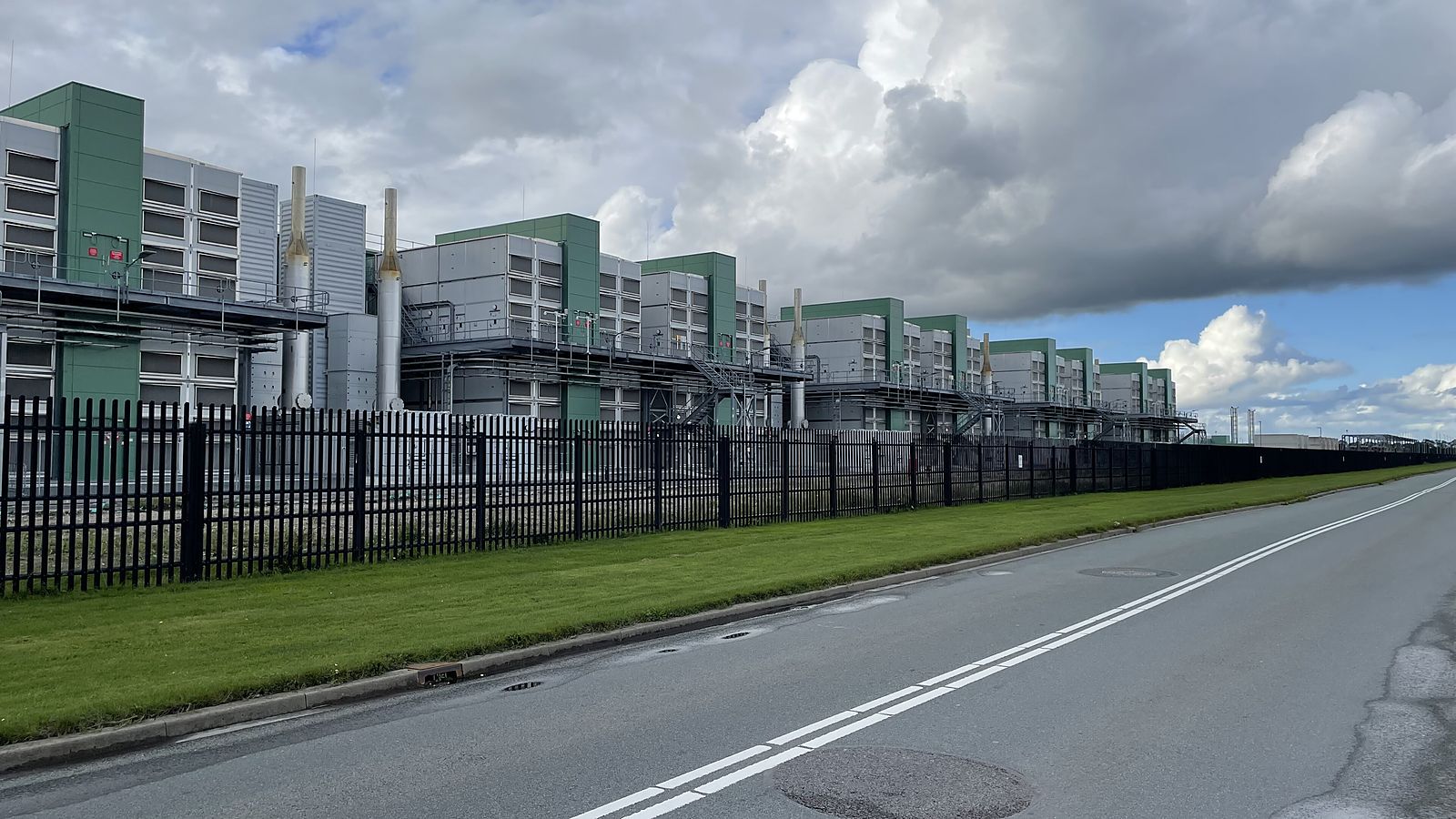
The political signal is unusually direct for a market story. CNBC reports that local communities opposed data center-related ballot measures in 40 of 41 cases on Tuesday. An NBC News exit poll found that more than half of voters called AI data centers a "crucial" or "major" factor in their choice for Congress. Candidates who campaigned for tighter AI rules won comfortably in states including Michigan, Ohio, Texas and Georgia, all of which will now have Democratic governors.
Why that matters for an IPO price: a valuation near $1 trillion or more assumes years of fast revenue growth, and that growth needs huge amounts of new computing capacity. Capacity needs land, power, water and permits, decided by the county boards, utility regulators and governors who were on the ballot this week. If local opposition slows permits or raises power prices, the cost and timing of the buildout change. That uncertainty raises the discount rate on the distant cash flows that make up most of a growth company's value.
A University of Southern California survey published Monday, cited by CNBC, found that 71% of respondents did not trust big tech companies "at all" to act in society's best interest on data center development. Anthropic's own prospectus anticipates some of this. In its risk factors the company says opposition to data center development has become more organised across jurisdictions, and that its public profile could bring particular scrutiny to projects linked to it.
"People don't want a data center going near them if it's just going to house AI that's going to help a big tech company profit." — Maura Austin, behavioral scientist at the University of Virginia, speaking to CNBC
The size of the commitment
The number that links the backlash to the valuation is in Anthropic's amended S-1, filed on November 2. The company disclosed purchase commitments and lease agreements with a total committed spend of about $895.4 billion, "substantially all of which is related to compute and infrastructure," in the filing's words as quoted by CNBC. According to a summary of the filing by investingLive, nearly $450 billion of that falls due before the end of 2030, and most of the rest between 2031 and 2045.
The original filing from late October listed some of the counterparties. As reported by The Next Web, it set out long-term compute agreements with Google worth at least $114.5 billion, Amazon at least $110 billion and Microsoft at least $44.9 billion, plus equipment leases with Broadcom of about $161.2 billion. That is why the AI hardware chain is watching: a strong listing makes those orders look secure; a weak one raises the question of how they get paid for.
The revenue side is real. The first S-1 reported $16.3 billion of revenue in the first half of 2026, up from $1.16 billion a year earlier, and a first operating profit of $974 million in the second quarter. The amended filing showed third-quarter revenue of about $17 billion, up from roughly $11.6 billion the quarter before. That gain was partly offset by about $600 million in price cuts from new model versions and contract discounts. Several reports on the amendment say the quarter swung to an operating loss, which the company tied mainly to short-term compute purchases.
In other words, quarterly revenue is still rising quickly, but more slowly than it was. Between the first and second quarters of 2026 it grew roughly two and a half times. Between the second and third it grew by about 47%. For a company asking public investors for a price well above its last private round, the shape of that curve matters as much as its height.
Why the rest of the market is watching
Anthropic is poised to become, in CNBC's description, the first pure-play AI company to reach the public market. Saudi Aramco's 2019 listing raised about $25.6 billion, which was a record at the time. SpaceX reset that mark in June with a raise of about $75 billion, according to The Next Web, and, as the Journal noted, gained about 30% on its first day of trading before worries about AI spread more widely. A raise of $80 billion to $100 billion would be in that territory.
That is why commentators increasingly describe the IPO as a referendum on AI appetite as a whole,. A well-received debut could reopen the queue of companies waiting to list and steady sentiment toward chipmakers, cloud providers and the megacaps. A weak debut would reinforce the case that investors already hold too much AI exposure. Gil Luria, an analyst at D.A. Davidson, put it bluntly to CNBC: "The market really needs this IPO to go well and the bankers on the deal surely understand that."
The usual answer to a nervous market is to price low enough to leave a first-day gain. The Journal reported that some investors expect chief financial officer Krishna Rao to price conservatively, and that some think a debut near $1.5 trillion could trade toward $2 trillion by the end of the first session. Unlike SpaceX, which named a single price, Anthropic is expected to set a price range. The amended filing still leaves that range blank, and it has to be filled in before the deal can price.
The counter-argument
There is a reasonable case that the backlash is being overweighted. Matt Kennedy, a senior IPO market strategist at Renaissance Capital, told CNBC that public companies should not face harsher scrutiny than comparable private ones, and that a listing brings transparency and visibility that can win new users. Anthropic's customers are mostly businesses, which has so far kept it from becoming the public face of AI. Its revenue, more than 11,900 customers paying $100,000 or more a year according to the first filing, and a computing pipeline already under contract do not depend on any single county permit.
A lower valuation is not necessarily a bad result for buyers either. A deal priced at $1 trillion to $1.25 trillion would sit only modestly above the May private round. That leaves room for the first-day gain bankers like to deliver. Part of the retreat is simply the gap between a hot market's hopes and a cold market's bids.
Governance also limits how much public shareholders can do about any of this. The prospectus says a single Class F share held by an entity owned by the seven co-founders carries 50.1% of the vote on ordinary matters, while the Long-Term Benefit Trust elects most of the board. Buyers of Class A stock will get economic exposure, not control.
The lasting point is that the AI buildout has become a local political issue, and its biggest private builder is about to become a public company in the same week that voters made that clear. Whatever number the bankers write into the price range, Anthropic will then report quarterly results to shareholders who also live near the data centers. Its valuation will depend on revenue growth and also on whether those projects keep getting approved.
This analysis is based on CNBC reporting from November 6 and 7, 2026, including interviews with unnamed investors, D.A. Davidson's Gil Luria and academics; the Wall Street Journal's reporting as summarised by investingLive, MLQ and Decrypt; The Next Web's reading of Anthropic's October S-1; and Anthropic's amended S-1 of November 2 as quoted by those outlets. A MarketWatch piece on the AI trade's reliance on the deal could not be accessed directly and is not quoted. Valuation ranges come from unnamed people familiar with the matter, are not company guidance and could change sharply before a price range is filed. Third-quarter operating results are taken from secondary summaries of the amended filing. Election figures are as reported by CNBC and NBC News and may be revised as final counts are certified.