
Apple's first foldable, the iPhone Duo, starts at $1,999, but the number that matters from John Ternus' debut as CEO is that no new iPhone this autumn costs less than $1,199
The biggest change to Apple's release cadence in seven years was not something the company announced on Wednesday. It was something it did not announce: an iPhone 18 without the Pro name. The mainline phone is expected in the spring, and the entry price to a new iPhone has moved by $400 in the meantime.
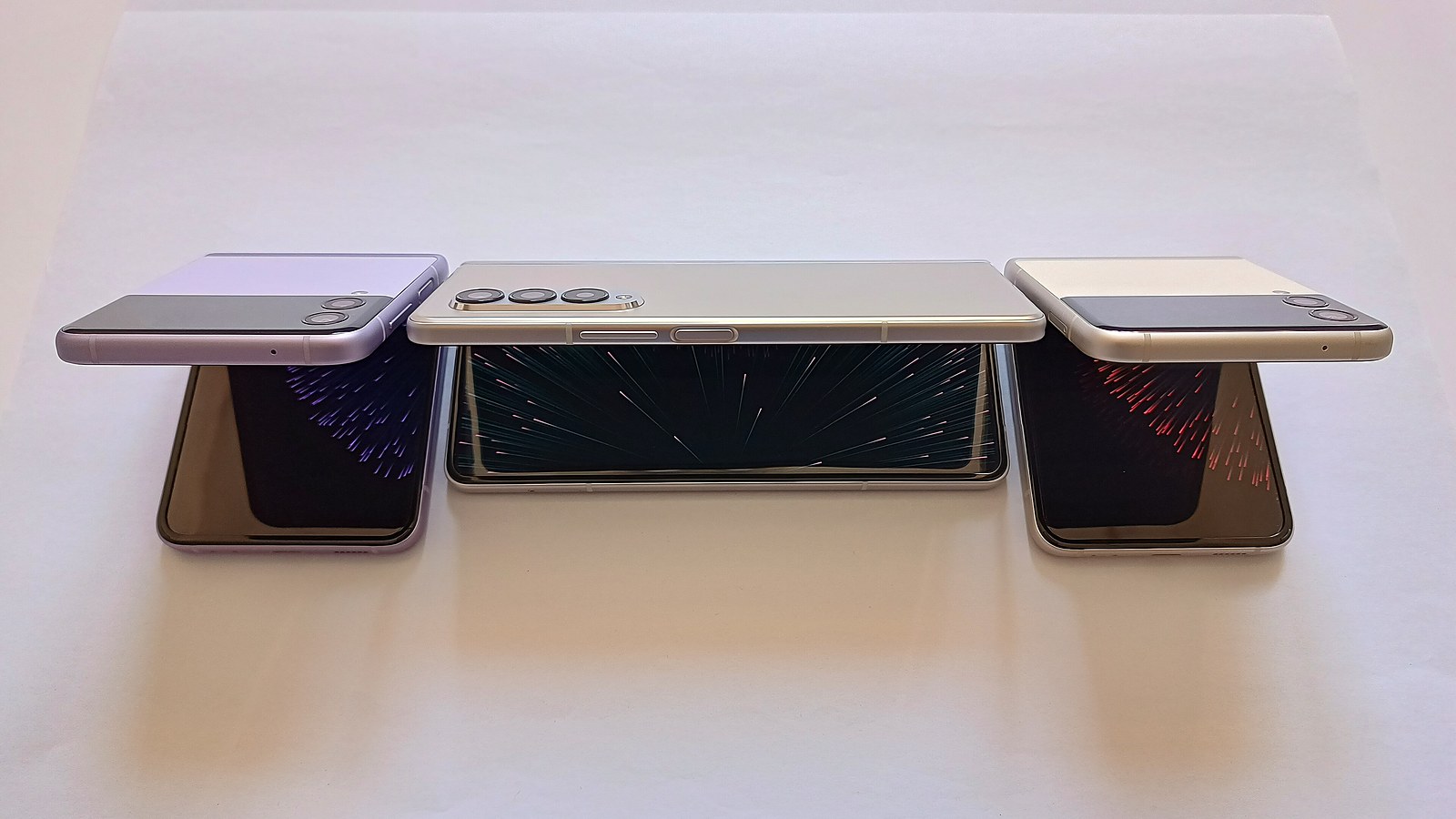
John Ternus took over from Tim Cook on September 1, becoming only the second person to run Apple since Steve Jobs resigned in 2011. Nine days later he stood on stage and introduced a foldable phone, two Pro models with larger screens, and a second-generation in-house modem. The headlines wrote themselves around the foldable.
The more consequential decision was an omission. There is no iPhone 18. Not a delayed one, not a quiet one — Apple simply did not announce a mainline, non-Pro handset at its September event for the first time since it split the lineup with the iPhone 11 seven years ago. Analysts expect it in the spring, at the slot Apple has historically used for its lower-cost models, the iPhone SE and the iPhone 16e.
The $400 step
Follow the price ladder rather than the product names and the shape of the change becomes obvious. Going into Wednesday, the cheapest current-generation iPhone was the iPhone 17 at $799. Coming out of Wednesday, the cheapest new iPhone is the iPhone 18 Pro at $1,199 — itself a $100 increase on its predecessor.
The iPhone 17 did not disappear. It was relisted at $899. So a buyer walking into a store this autumn faces a last-generation phone that costs $100 more than it did on Tuesday, or a new phone that costs $400 more than the cheapest new phone did a year ago. Neither of those is a $1,199 decision framed as a premium upgrade. Both are the same decision framed differently: wait, or pay.
Bank of America analyst Wamsi Mohan put the two-sidedness plainly in a note this week. "In our view, the split launch could support mix and ASPs," he wrote, before adding that it "creates some risk that price-sensitive consumers defer upgrades until the lower-priced models arrive."
It is worth being precise about how unusual this is. When Apple divided the iPhone into two tiers last decade with the iPhone 11 and a more expensive Pro version carrying the best displays and cameras, it kept both halves on one calendar. Every year since, the Pro and the standard phone have been announced at the same September event and gone on sale the same day. The tiers were a price segmentation, not a schedule. Wednesday cut the schedule itself in two.
Why the mix argument is strong
Apple has good reason to think the risk is manageable, and the evidence is in its own sales mix. According to IDC estimates, the iPhone 17 Pro and 17 Pro Max together accounted for 54 per cent of iPhone sales in the first half of 2026. The regular iPhone 17 accounted for 26 per cent. The expensive phones are not a niche within the lineup; they are the lineup, and the cheaper model is the minority case.
"That's how Apple has been playing the game as the market started to slow down in terms of smartphone adoption and upgrades," said Francisco Jeronimo, a vice president at IDC. When unit growth stops, average selling price is the only lever left, and Apple has been pulling it for years. A launch calendar that puts the Pro phones alone in the Christmas quarter is that strategy expressed as a schedule.
Deferral is the risk Mohan names, and it is worth understanding what deferral actually does to Apple rather than treating it as lost business. A customer who waits until spring is not a customer Apple loses; they are a customer whose purchase moves out of the Christmas quarter and into a later one. If the split launch works as intended, that is not a problem at all — it is the entire point, since those are precisely the quarters Apple is trying to fill. The danger is narrower and specific: a buyer who intends to wait six months has six months in which a competitor's handset, or simply the phone already in their pocket, can win the decision instead.
The seasonality problem it actually solves
The revenue-smoothing case is the one Apple's defenders will make, and it is real. Apple's largest quarter has always been its fiscal first quarter, which contains the first full quarter of iPhone sales and Christmas. The two quarters that follow are structurally much slower — not because Apple does anything wrong in them, but because it has nothing new to sell.
When Apple puts all the focus on the last quarter of the year, of course that generates quite strong revenues, but they were missing when the second quarter comes along with much lower sales.
That was Jeronimo, who said the split launch "will give them some stability in terms of balancing the revenues throughout the year." A significant iPhone launch in March or April, at a lower price point, would put a genuine product cycle into the calendar's dead zone. For a company whose quarterly results move a meaningful slice of the S&P 500, converting one enormous quarter and two thin ones into two solid ones has obvious appeal.
But the memory shortage came first
The strategic framing is elegant. It is also, on the evidence, downstream of a supply problem Apple did not choose.
Apple raised prices on Macs and iPads in June in response to a global shortage of memory and other components — a situation Cook described to the Wall Street Journal as "unsustainable." He warned that the constraints would persist, and on the July earnings call the company said the issue would grow larger during the September quarter. That is the quarter this event fell in.
Neil Shah, vice president of research at Counterpoint Research, made the connection explicit. Releasing two new models instead of four significantly simplifies what Apple has to secure from suppliers. "High memory pricing is not helping Apple launch multiple iPhones at the same time," Shah said.
This is the mechanism worth understanding, because it inverts the usual reading. A company facing a component squeeze has three options: eat the margin, raise the price, or ship fewer variants. Apple appears to have taken all three, and the third one — shipping fewer variants — happens to be presentable as a bold calendar strategy. It may well turn out to be a good one. But a decision that is simultaneously the right long-term move and the only available short-term move should be read carefully. The strategy and the constraint point the same direction, which makes it impossible to tell from the outside which is driving.
The foldable, and what it costs Qualcomm
The iPhone Duo arrives at $1,999, which Apple has positioned in line with competing foldables from manufacturers including Huawei. Craig Federighi, Apple's senior vice president of software engineering, said the company redesigned much of iOS to work across two screens, relocating buttons and controls, adding two-app multitasking and support for the Pencil stylus.
"For a device that plays such a central role in your life, a larger display would open up entirely new possibilities," Ternus said. "We think the best way to achieve that is with a foldable design."
The quieter engineering story is the modem. The Duo runs Apple's C2, the second generation of a modem the company designs itself. Johny Srouji, Apple's chief hardware officer, said in the keynote that C2 is 50 per cent faster than its predecessor and runs at 15 per cent lower energy. Each generation of in-house silicon moves more of the bill of materials inside the company and further reduces reliance on Qualcomm — which matters more, not less, in a year when everything Apple buys from outside has become more expensive.
The counter-argument
The case against reading this as a price rise is that the product being sold has changed. A Pro phone with a larger screen at $1,199 is not the same object as a base phone at $799, and comparing their prices is comparing two different products that happen to share a brand. On that reading, Apple has not raised the cost of entry at all; it has moved the entry model to a different month, and the buyer who wants a $799-class phone in spring will get one.
That is fair as far as it goes. It also assumes the spring phone lands where the autumn phone used to, and Apple has just demonstrated, twice in one week, that it is willing to move prices upward under component pressure — a $100 rise on the Pro and a $100 rise on a phone that already existed. The spring device is unannounced, unpriced, and will be built from the same memory market that produced this autumn's decisions.
The durable point
Ternus inherits a company whose unit growth has stalled and whose input costs are rising, and his first public act was to restructure the product calendar around both facts at once. Whether the split launch smooths revenue will not be visible until the spring quarter it was designed to fill. What is visible now is narrower and harder to argue with: for the first autumn in seven years, the entry price of a new iPhone is not a number Apple set by choosing a cheap model to sell. It is the number left over after the cheap model was removed.
This report is based on Apple's product announcements at its event on Wednesday, September 9, 2026, and on CNBC's reporting of that event, including estimates from IDC and comments from IDC's Francisco Jeronimo, Counterpoint Research's Neil Shah and Bank of America's Wamsi Mohan. Pricing figures are the announced US starting prices. Apple has not confirmed a spring launch for a mainline iPhone 18; that expectation is analyst commentary, not company guidance, and the timing, specification and price of any such device remain unannounced. Tim Cook's remarks on component shortages were made to the Wall Street Journal, which first reported them.