
Apple hit with a record $5.72 billion patent verdict over iPhone and Apple Watch haptics — and its past billion-dollar losses show why the jury’s number is only a starting point
A federal jury found Apple's Taptic Engine infringed two Taction Technology patents and set damages at $5,721,961,750, the largest patent verdict reported in the US. The figure is about five percent of Apple's annual profit, but Apple's record with VirnetX, WARF and Caltech shows how far such awards can fall.
The most important number in Friday's verdict against Apple is not the $5.7 billion headline. It is the answer the jury gave to the second question on its verdict form. According to AppleInsider's reading of that form, the San Diego jury, seven members according to CNBC, found that Taction Technology proved Apple infringed three patent claims, but that it did not prove the infringement was willful. That one answer caps the award where it is, and it frames everything that comes next.
The damages figure itself is precise: $5,721,961,750, according to the verdict form as reported by AppleInsider. CNBC and Bloomberg Law both put it at more than $5.7 billion. Law360, as cited by Ground News, called it the largest patent award in US history, and Reuters Legal described it as the country's largest such verdict to date. Apple says it will appeal.
Under US patent law, a judge may increase damages up to three times when infringement is found to be sufficiently serious, as Law Commentary noted in its coverage. Willfulness is the usual route to that enhancement. Without it, Taction's ceiling is the jury's number, and from here the pressure on that number runs in only one direction.
What the jury actually decided
Taction sued Apple in April 2021 in the US District Court for the Southern District of California, case No. 3:21-cv-00812. The suit asserted two patents, US Patent Nos. 10,659,885 and 10,820,117, which share a specification and describe "tactile transducers that produce bass frequency vibrations" felt through touch, according to Bloomberg Law and the IP IQ blog's analysis of the appeal. CNBC and Bloomberg Law independently report the same two patent numbers.
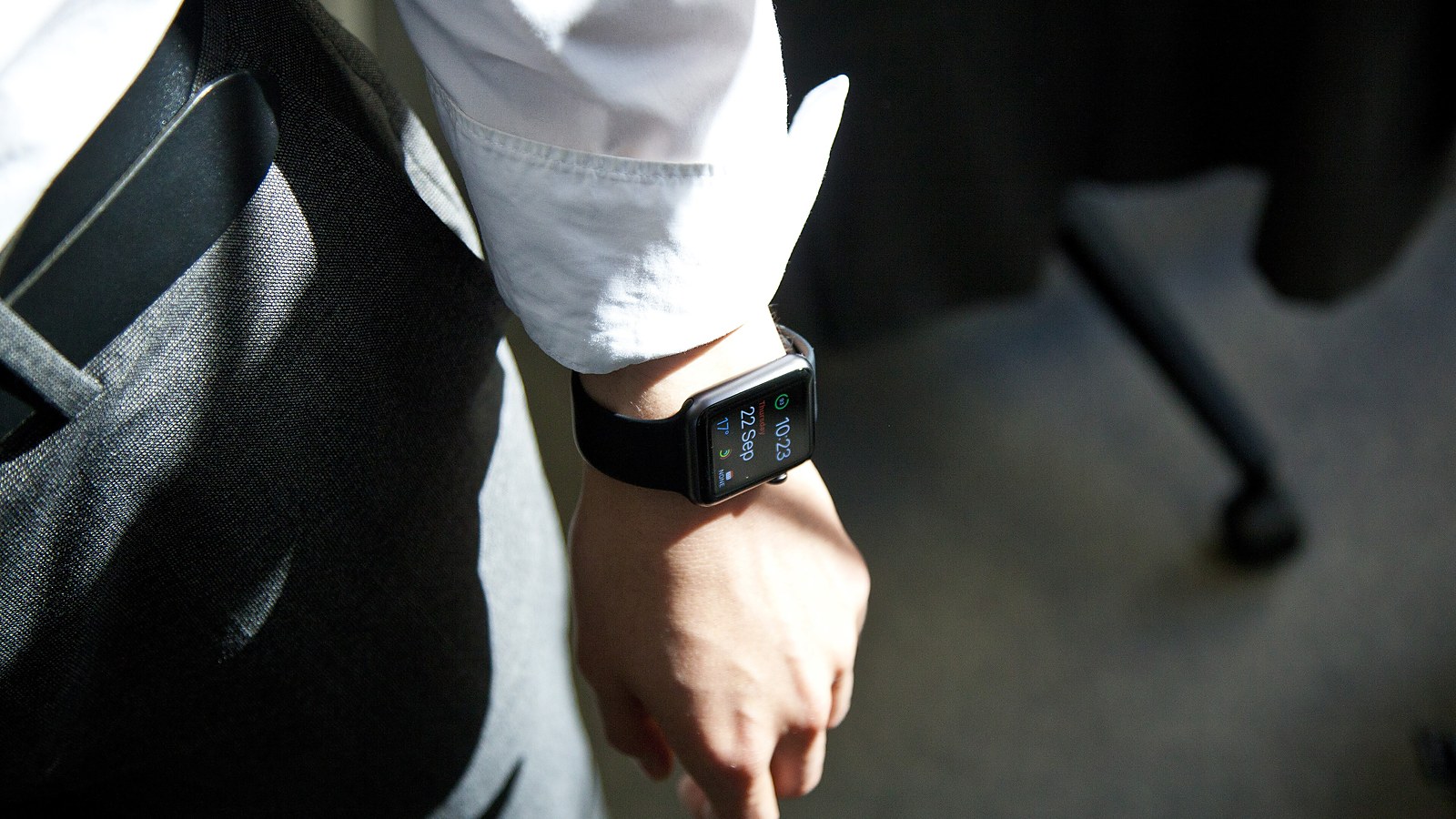
The target was Apple's Taptic Engine, the component that produces the taps and buzzes users feel when they type on an iPhone keyboard, confirm a payment or receive a notification on the wrist. AppleInsider describes it as a linear resonant actuator that Apple introduced with the Apple Watch in 2014 in place of conventional vibration motors, giving the company precise control over a moving mass. The design later spread to the iPhone.
The mechanism at issue is specific. The representative claim of the '885 patent, reproduced by IP IQ, covers coils, magnets, a moving inertial mass guided by flexures, and a ferrofluid that damps the motion and reduces mechanical resonance in the 40 to 200 Hz range. AppleInsider reports that Taction's complaint alleged Apple's earlier designs used coil springs and a central locating rod, while newer designs use flexures with ferrofluid. Taction also alleged that Apple bought and reverse-engineered two of its Kannon headsets, which use the technology.
The trial began on September 14, and jurors deliberated across two days before returning at 1:15 p.m. Pacific on Friday, according to CNBC. The verdict form also shows Apple failed to prove any of the three asserted claims invalid, AppleInsider reported.
A case that was once dead
This verdict exists only because an appeals court brought the case back. US District Judge Todd W. Robinson granted Apple summary judgment of noninfringement in 2023, relying partly on striking the opinions of Taction's technical expert and on a narrow reading of the patent claims, according to Law Commentary.
In August 2025 the US Court of Appeals for the Federal Circuit reversed. As summarised by IP IQ, the panel found the district court had imposed an unwritten requirement in the local patent rules, demanding that Taction explain not just where but how each claim limitation appeared in Apple's products, and that enforcing it was an abuse of discretion. The panel also found errors in claim construction. The case returned to Judge Robinson, who will now hear Apple's post-trial challenges.
There is a second storyline. Bloomberg Law reports that discovery showed Taction's case was financed by Gronostaj Investments LLC and Kenosha Investments LP, and that Kenosha has been identified in separate litigation as an indirect subsidiary of litigation funder Burford Capital. Apple pressed that connection hard, Bloomberg Law said. Funded litigation is lawful and common in patent cases, but it means the plaintiff has the resources to fight through years of appeals rather than settle early.
"While we thank the jury for their consideration, we strongly disagree with today's verdict and the damages awarded, which are entirely unsupported by the facts. Apple's Taptic Engine is fundamentally different from Taction's technology," Apple said in a statement to CNBC, adding that it "does not use Taction's technology, and we will appeal."
Taction's trial counsel at Quinn Emanuel said the company was happy the jury had vindicated its patent rights, noting that Taction had waited five and a half years to reach trial, according to CNBC and Bloomberg Law.
How big is $5.7 billion to Apple
Apple's own filings give the scale. For the fiscal year ended September 27, 2025, Apple reported net sales of $416.16 billion and net income of $112.01 billion, according to its earnings release filed with the SEC. The Taction award equals about 5.1 percent of that annual profit, or roughly 18 to 19 days of earnings at that rate.
That is painful but not destabilising for Apple. What matters more is the precedent the damages theory could set. A reasonable-royalty award of this size implies a per-device value for a haptic component spread across years of iPhone and Apple Watch sales. If that theory holds up, every component supplier and patent holder with a claim on something inside Apple's high-volume products has a new reference point for negotiations.
Why jury numbers against Apple tend to move
A verdict is not a judgment, and a judgment is not a payment. After trial, the losing side can ask the judge for judgment as a matter of law, arguing no reasonable jury could have reached the result on the evidence, or for a new trial. A judge who finds damages excessive can offer the plaintiff a reduced figure, known as remittitur, in place of a retrial. Then the Federal Circuit reviews both liability and the damages methodology. Apple's history shows each of those gates can matter.
WARF. A Wisconsin jury found in October 2015 that Apple's A7 and A8 processors infringed a University of Wisconsin patent, and the court entered a $506 million final judgment, according to RPX Insight. In September 2018 the Federal Circuit reversed outright, finding the evidence did not support infringement under the plain meaning of a key claim term. The US Supreme Court declined to reinstate the award in 2019, AppleInsider reported.
VirnetX. An East Texas jury awarded VirnetX $502 million in 2020 over virtual private network patents. The Federal Circuit threw the verdict out in 2023 after the patents were cancelled by the Patent Trial and Appeal Board, according to Reuters, and the Supreme Court declined to hear VirnetX's bid to revive it in February 2024, CNBC reported.
Caltech. A January 2020 jury awarded Caltech about $1.1 billion against Apple and Broadcom over Wi-Fi coding patents, with $837.8 million assessed against Apple, according to Broadcom's SEC filing. In February 2022 the Federal Circuit affirmed infringement on two patents but vacated the damages, rejecting a theory that priced the same chips at two levels of the supply chain, AppleInsider and IPWatchdog reported. No retrial was held. Broadcom settled for $160 million over five years, and Apple settled on undisclosed terms in October 2023, according to MacRumors.
The largest verdict before Taction points the same way. A 2021 jury awarded VLSI Technology $2.18 billion against Intel. The Federal Circuit vacated it in December 2023, reversing infringement on one patent and ordering a new damages trial on the other, according to WilmerHale and Bloomberg Law.
The case for Taction's number
The counter-argument deserves its own hearing, because the pattern is not universal. Masimo won $634 million against Apple in November 2025 over an Apple Watch pulse oximetry patent, and in July 2026 US District Judge James V. Selna rejected Apple's request for judgment as a matter of law and for a new trial, 9to5Mac reported. Apple has said it will appeal, noting that patent expired in 2022, but for now that verdict has survived the first gate intact.
Taction's position also has specific strengths. The jury rejected Apple's invalidity case on every asserted claim, according to the verdict form. And the Federal Circuit has already reviewed this dispute once and sided with Taction on claim construction and on the admissibility of its expert, which narrows some of the arguments Apple can make on appeal. Appellate courts also give juries considerable deference on questions of fact such as infringement.
The durable point is about where the fight moves. Apple's record suggests the damages methodology, not the infringement finding, is where billion-dollar awards are most often reshaped, and Caltech's vacated two-tier royalty is the clearest example. Whatever Judge Robinson and the Federal Circuit decide, the Taction case will now be tested on a single question that reaches far beyond haptics: how much of a device's value a court will let one component's patents claim.
This analysis rests on reporting by CNBC, Bloomberg Law, AppleInsider (including its reading of the verdict form), Law Commentary, Engadget, Reuters Legal and Law360 as cited by Ground News, the IP IQ blog's summary of the 2025 Federal Circuit ruling, and Apple's fiscal 2025 results filed with the SEC. Prior cases draw on RPX Insight, Reuters, CNBC, AppleInsider, IPWatchdog, MacRumors, Broadcom's 10-K, 9to5Mac and WilmerHale. Outlets differ on which Quinn Emanuel lawyer made Taction's statement (CNBC and AppleInsider name Lance Yang; Bloomberg Law names Tigran Guledjian), so it is attributed to the firm. The award is provisional: Apple's post-trial motions and its announced appeal are still to come, and any figure could change.