
A 96% 'blood moon' swept the Americas, Europe and Africa overnight — the deepest lunar eclipse the world will see until the end of 2028
At its 04:12 GMT peak, Earth's shadow covered 96.2% of the moon's face and turned it copper-red for over a billion people. It was, technically, not a blood moon at all — and that near-miss is the most interesting thing about it.
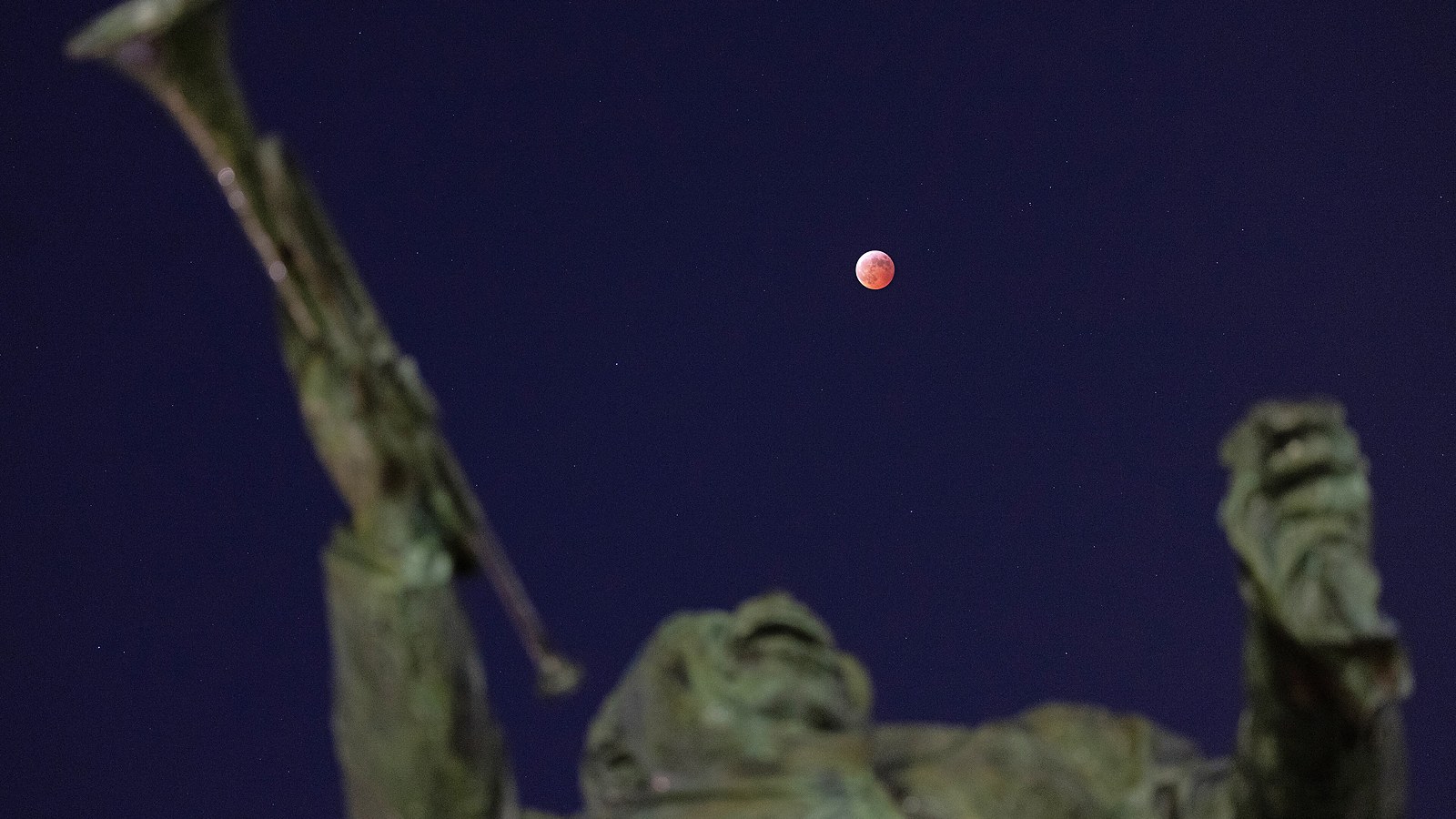
Overnight into Friday, the full moon slid almost entirely into Earth's shadow and turned the deep copper-red that stargazers call a blood moon — visible, weather permitting, across North and South America, Europe and Africa. At the peak of the event, at 04:12 GMT, 96.2 per cent of the lunar surface sat inside the darkest part of Earth's shadow. And yet, by the strict definition astronomers use, it was not a blood moon at all. The last few per cent are the whole story.
The eclipse ran five hours and 38 minutes from start to finish — from 01:23 to 07:01 GMT — with the dramatic partial phase, when Earth's dark central shadow visibly bites into the lunar disk, lasting from 02:33 to 05:52 GMT. For North American viewers that put the maximum at a civilised 12:12 a.m. Eastern on Friday, or 9:12 p.m. Pacific on Thursday evening. The full moon in question was August's traditional "Sturgeon Moon," which rose as normal and then spent the night being slowly consumed.
The audience was enormous. According to calculations by Time and Date cited by Space.com, roughly 12 per cent of the world's population — about 987 million people — could see every phase of the eclipse from start to finish, and around 1.3 billion could watch the entire partial phase. The Americas had the best seats in the house: across the central and eastern United States and most of South America, the moon stayed above the horizon for the whole performance.
Almost total — and why 'almost' matters
The numbers behind the spectacle are worth untangling, because two different percentages were doing the rounds. Measured across the moon's diameter, about 93 per cent of the disk passed into Earth's umbra — the dark, central core of the planet's shadow. Measured by visible area, that translates to 96.2 per cent coverage. Either way, a thin sliver along one edge of the moon never left direct sunlight, and that sliver is what kept the event a 'deep partial' eclipse rather than a total one.
The red colour, meanwhile, is the same physics that reddens a sunset — relocated 380,000 kilometres. Sunlight grazing the edges of the Earth passes through the atmosphere, which scatters away the blue wavelengths and bends the surviving red light inward, into the shadow. The eclipsed portion of the moon is lit, in effect, by every sunrise and sunset on Earth happening at once. That is why the shadowed 96 per cent glowed copper, brown and red rather than going black.
But the uneclipsed sliver ruins the purist's blood moon, and not just on a technicality. The lunar surface in direct sunlight is thousands of times brighter than the surface lit only by refracted red light, so that remaining edge blazes like a welding arc against the dim red disk. During a true total eclipse — with the entire moon inside the umbra — the glare vanishes and the full red colour saturates the whole face. Last night's moon looked, in the memorable framing of astronomy writers previewing it, like an almost-blood moon: unmistakably red, with one brilliant fingernail of white.
For observers who followed the whole arc, the show unfolded slowly enough to narrate. First came the penumbral dimming — subtle enough that a casual glance would miss it. Then, from 02:33 GMT, a dark bite appeared on the moon's edge and spent ninety minutes growing across the disk, until at maximum only the bright fingernail remained. The whole sequence then ran in reverse. For anyone clouded out, observatories and astronomy sites carried livestreams from clearer skies — the modern insurance policy of eclipse watching, and one that turns a local weather failure into somebody else's clear horizon.
The geometry behind the show
A lunar eclipse needs three things in a row: the sun, the Earth and a full moon, aligned closely enough that the moon passes through the planet's shadow. That shadow has two zones — a fuzzy outer penumbra, where the Earth blocks only part of the sun, and the dark central umbra, where it blocks all of it. Friday's event moved through five stages: into the penumbra at 01:23 GMT, into the umbra at 02:33, maximum at 04:12, out of the umbra at 05:52, and out of the shadow entirely at 07:01.
One detail spared the event any 'supermoon' hyperbole: the eclipse came just over five days after lunar apogee, the farthest point in the moon's slightly elliptical orbit, which made the disk almost exactly average in apparent size. And unlike a solar eclipse, the whole thing was safe to watch with the naked eye — no glasses, no filters, no projection tricks. The eclipsed moon sat in the constellation Aquarius, with Saturn visible nearby for those who stayed out.
Europe and Africa got the harder version of the night. Across the UK, Ireland, Spain and Portugal the maximum arrived in the pre-dawn hours with the moon barely seven to nine degrees above the western horizon, sinking toward moonset — a viewing geometry in which a building, a tree line or a band of haze is enough to end the show. Further east, from Berlin to the Baltics, the moon set before the deepest phase arrived at all.
Why this was the one to catch
What lifted an ordinary-sounding 'partial eclipse' into a global viewing event is the calendar around it. This was the first deep partial lunar eclipse anywhere on Earth since September 18, 2024. The next partial eclipse, on January 11–12, 2028, will be a barely-there affair covering just 2.4 per cent of the moon. That makes last night's event, by Space.com's reckoning, the most impressive lunar eclipse anywhere in the world until the next total eclipse — and the next true blood moon — which arrives on December 31, 2028, as a New Year's Eve spectacle.
Skywatchers with longer memories will note the contrast with the recent run of luck: the total lunar eclipse of March 2025 — photographed around the world as a textbook blood moon — came barely seventeen months ago. Eclipse droughts and gluts of this kind are a quirk of orbital bookkeeping, not a change in the machinery. The moon's orbit is tilted about five degrees to Earth's path around the sun, so most full moons pass above or below the planet's shadow entirely. Only when a full moon coincides with the crossing points of the two orbital planes does an eclipse occur — and how deep it runs depends on how exact that coincidence is. The alignments cluster and disperse in long rhythms, which is why the sky can serve up two deep eclipses in as many years and then almost nothing for two more.
The event also produced a bumper crop of photographs, and a predictable crop of frustrated photographers. An eclipsed moon is one of the harder targets in amateur astronomy precisely because of the contrast that defines a deep partial: any exposure long enough to bring out the red shadowed surface burns the sunlit sliver into a white smear, while any exposure short enough to hold detail in the sliver renders the red side black. The striking images are composites or careful compromises — which is worth knowing when judging how red the moon 'really' looked.
The honest caveat is that a good many people inside last night's vast visibility zone saw nothing but cloud. Forecasters had given the western United States, northern Chile and inland Brazil the best statistical odds of clear skies, and viewers elsewhere gambled on the weather as eclipse-watchers always have. The photographs now circulating — the dim red disk with its white edge — are the record of everyone who won the bet.
The durable point is the one astronomy is uniquely qualified to make: the next act is already scheduled, to the minute. No committee will move it, no forecast can cancel it, and nothing about it is provisional. On the night of December 31, 2028, the moon will pass fully into Earth's umbra and stay there — a total eclipse, a true blood moon, and a rare case of the universe committing to a date three years out. Last night was the rehearsal. The performance has a booking.
This report is based on eclipse timings and visibility data published by Space.com and Star Walk, drawing on calculations by Time and Date and standard eclipse ephemerides; all times are GMT/UTC with local conversions as published. Population-visibility figures are Time and Date estimates. Descriptions of local viewing conditions reflect pre-event forecasts and geometry, not verified observations from each region.