
Boeing flags a 737 Max software glitch that can drop automated vertical navigation during go-arounds — no big US airline flies the affected versions, but the Max 7 and Max 10 were built on them
Boeing says a flaw in the Max's newest flight management software can knock out automated vertical guidance after a go-around, and the FAA has convened a review board. No major U.S. airline flies the affected version. The planes that do carry it are the ones Boeing has not delivered yet.
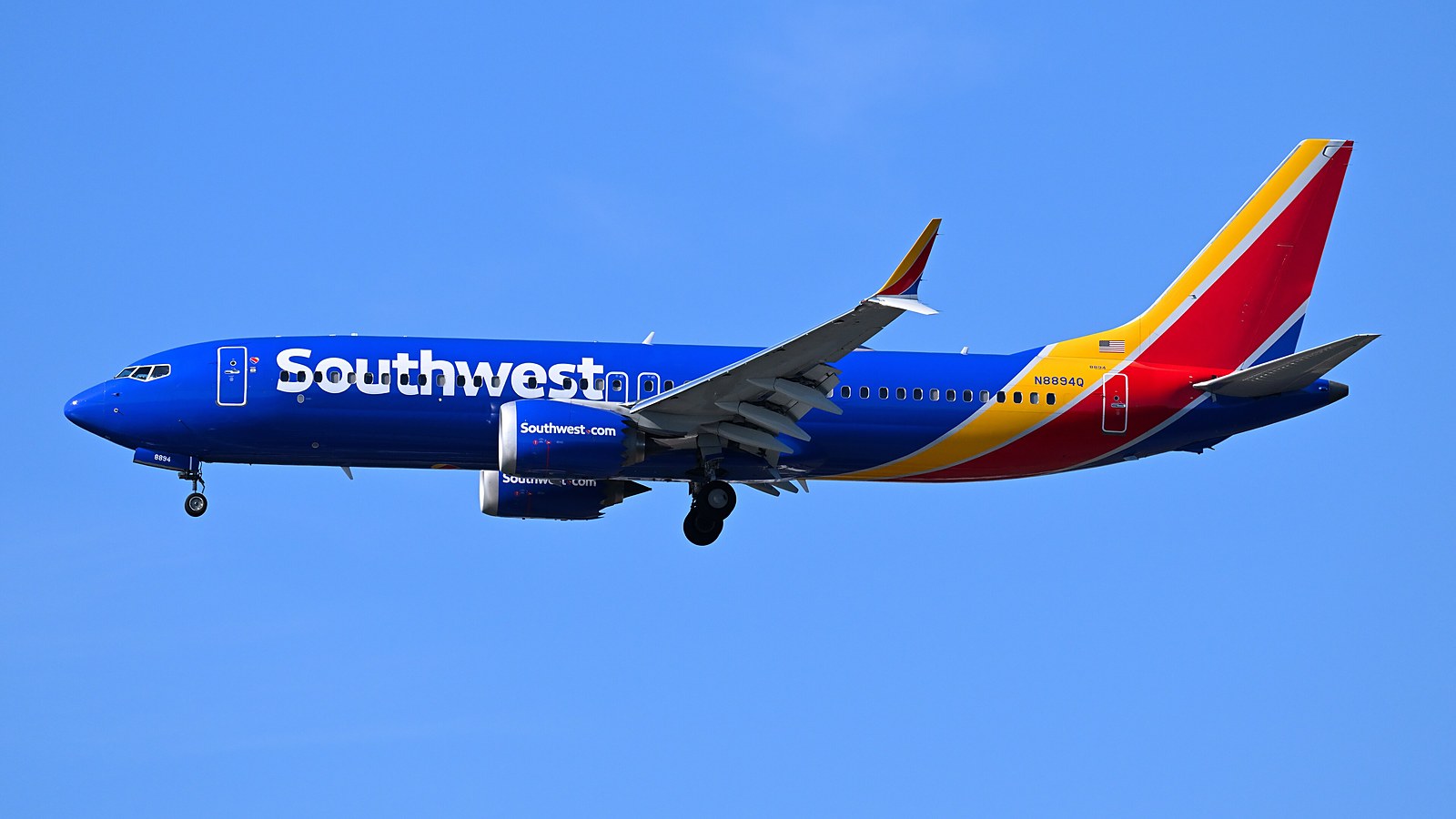
The 737 Max software problem Boeing confirmed on Saturday reaches less of today's fleet than the headlines suggest. It could matter more for jets that have not flown yet. Alaska, American, Southwest and United all told CBS News that none of their in-service Max aircraft run the affected flight-computer software. The two newest Max variants do. CBS reported that the Max 7, certified by the Federal Aviation Administration on August 3, was certified with software version 14. The Max 10, still awaiting certification, used version 14.1 in its certification testing. Those are the two versions where the glitch appeared.
So the real question is not whether today's Max flights are safe. Boeing, the FAA and the airlines all say pilots have procedures for this. The question is whether a narrow fault in one autopilot mode can slow two aircraft programs that are already years late.
What the fault actually does
By Boeing's account, the problem shows up in one specific sequence. CBS News described it: a crew flying a precision approach with the autopilot engaged abandons the landing, goes around, and then changes the flight plan preprogrammed into the flight management computer. At that point the plane's vertical navigation function, VNAV, can disengage and drop to a less sophisticated level of automated pitch control. Boeing said pilots would then have to take extra steps to use automated tools on the next approach.
The difference between modes explains why this means more work for pilots rather than a loss of control. Airways Magazine, summarizing Boeing's description as reported by Aviation Week, said VNAV follows the vertical profile the computer builds from the flight plan's altitude and speed limits. The fallback modes do not. Level change holds a target airspeed while the autothrottle sets thrust. Vertical speed holds a climb or descent rate the pilot chooses. With either one, the crew has to manage the constraints by hand.
Boeing's spokesperson told CBS that the autopilot keeps working if VNAV drops out, and that all pilots are trained to land without it. Nothing reported so far describes the airplane moving without a command from the crew. That is the key difference from the flight-control software behind the 2018 and 2019 crashes.
The risk is about timing. CBS noted that the scenario would typically happen at low altitude near an airport, where workload is already high. In a go-around the crew adds power, climbs, reconfigures the aircraft and follows a missed-approach path while talking to air traffic control. Losing automated vertical guidance at that moment adds tasks exactly when crews have the least attention to spare. One airline source, quoted anonymously by CBS, asked whether it meant "introducing distractions at the worst possible moment."
A bulletin, a review board and the difference between them
How the problem has been handled shows where it sits on the regulatory scale. Boeing said it informed all 737 operators last month. CBS reported that the August bulletin called the glitch not an immediate safety issue, promised updated pilot guidance in November, and put a permanent software fix in 2028. Boeing says it is now working to bring both dates forward.
"We shared information with operators that reinforced existing pilot procedures for safely handling such cases. Our engineers are working on a software update to permanently address the issue," Boeing said in a statement to Reuters and other outlets.
A manufacturer's bulletin is advice. An airworthiness directive is law: the FAA describes ADs as legally enforceable regulations under 14 CFR Part 39 to correct an unsafe condition. No AD has been issued here. Instead the FAA is convening a Corrective Action Review Board. Under FAA Order 8110.107B, a CARB is a cross-disciplinary panel that reviews a hazard's risk and causal analysis, and it is designed to come before the AD process, not replace it.
The same order describes a faster track. When a hazard needs urgent action, the FAA can put together an emergency CARB to start an emergency AD, and finish the risk analysis afterward. The agency has not done that. Choosing the standard board signals that the issue is under analysis, not being treated as an emergency, though the FAA's statement leaves room to escalate.
"The FAA will convene a Corrective Action Review Board and will take immediate action if it identifies a safety concern," the agency said in a statement to Reuters and CBS News.
The timeline is the uncomfortable part
Boeing has known about the behavior for some time. CBS reported that an airline first flagged it in November 2024, and that Boeing decided in February 2025 that it was not a safety issue. Earlier this year, "additional information from operators" led Boeing to open a formal safety review board, CBS said. Its findings went to the FAA this month and will now go before the CARB.
That sequence is not a cover-up. An engineering judgment was revisited when new data arrived, which is how safety monitoring is supposed to work. But it is the kind of timeline that makes airlines cautious. Southwest and United have told Boeing they will not accept new aircraft with the affected software and will take an earlier version instead, CBS reported.
Southwest told CNBC that "none of our fleet is equipped with Version U.14, including new deliveries of Max 8 airplanes." CNBC reported that airlines can roll some Max jets back to the older software. For the Max 8 and Max 9, the glitch is a question of which software is loaded, not a flaw in the airframe. None of the outlets reviewed had a count of how many aircraft carry versions 14 or 14.1. Cirium puts the global in-service Max fleet at 2,430, according to CNBC.
Why the Max 7 and Max 10 carry the exposure, and the scrutiny
Rolling back is simple for a model certified on the older software. It is less clear for one certified on the new version. CNBC reported it was not immediately clear whether the Max 7 could be delivered or flown with older software. CBS said nearly the entire Max 7 order book belongs to Southwest, which had been due to start taking deliveries this fall, and that it is now unclear whether it will.
The Max 10 is closer to the line. Boeing CEO Kelly Ortberg told investors this month he expected FAA certification "very soon." Airways reported that Alaska Airlines chief operating officer Jason Berry told Reuters on September 24 that Alaska, the launch customer with 105 jets on order, expected certification by the end of September. The FAA's statement did not mention either program.
Delays cost money because customers pay the bulk of an airplane's price at delivery, as CNBC has noted. In August, Jefferies analyst Sheila Kahyaoglu said Boeing had about 40 Max 7s and Max 10s built and sitting in inventory. Each month of waiting is cash that stays uncollected.
The caution comes from the Max's record. The FAA's timeline shows it grounded the Max on March 13, 2019, after two crashes that killed 346 people, and lifted the grounding on November 18, 2020, about 20 months later. In January 2024, a door plug blew off a nearly new Alaska Airlines Max 9 after takeoff from Portland, Oregon. The NTSB found that key bolts had not been reinstalled, and the FAA capped production at 38 jets a month.
Since then Boeing has been regaining trust step by step. The FAA raised the cap to 42 in October 2025. In May, Ortberg said Boeing had passed the FAA's capstone review for 47. In July the FAA restored Boeing's authority to issue airworthiness certificates, and in August it certified the Max 7. The CARB will now test the regulator confidence behind each of those steps.
The case for calm, and its limits
The case against alarm is strong. The fault involves one automation mode during one maneuver. The autopilot stays on and crews are trained to fly without VNAV. The largest U.S. operators say none of their in-service aircraft carry the software. Boeing warned every operator weeks before the story broke, and the FAA is following its standard process, not an emergency one.
What that case does not settle is the process. An issue an airline reported in November 2024 reached operators as a formal notice in August 2026, with a fix first targeted for 2028. That pace may be defensible for a low-risk workload issue, but it is what the review board and Boeing's customers will look at most closely.
The lasting lesson is that on a modern airliner, the software version is itself a certification item. The Max 8 and Max 9 can sidestep this fault by loading an older version. The Max 7 and Max 10 were approved or tested on the new one. Whatever the board concludes about risk, Boeing's next milestones for its two newest jets depend on getting that software cleared.
This analysis rests on Boeing's and the FAA's statements as reported by CNBC, CBS News, Reuters (via NBC News), The Seattle Times, Simple Flying and Airways Magazine; the original Wall Street Journal report was not directly reviewed. Mode descriptions come from Airways' summary of Aviation Week. CARB and emergency-AD procedures are drawn from FAA Order 8110.107B, and grounding dates from the FAA's 737 Max timeline. The number of aircraft carrying versions 14 or 14.1, the CARB's findings and any effect on Max 7 deliveries or Max 10 certification were not known at publication and remain provisional.