
A boat that left The Gambia with 127 people aboard was found adrift off Gran Canaria after 27 days at sea with 44 survivors, leaving 83 feared dead on the world's deadliest migration route
Spanish Maritime Rescue found the vessel 65 nautical miles from land with five bodies still on board, and had to leave them there. The death toll being reported is not a body count — it is the gap between how many boarded and how many came ashore, and the difference between those two methods explains most of the argument over this route.
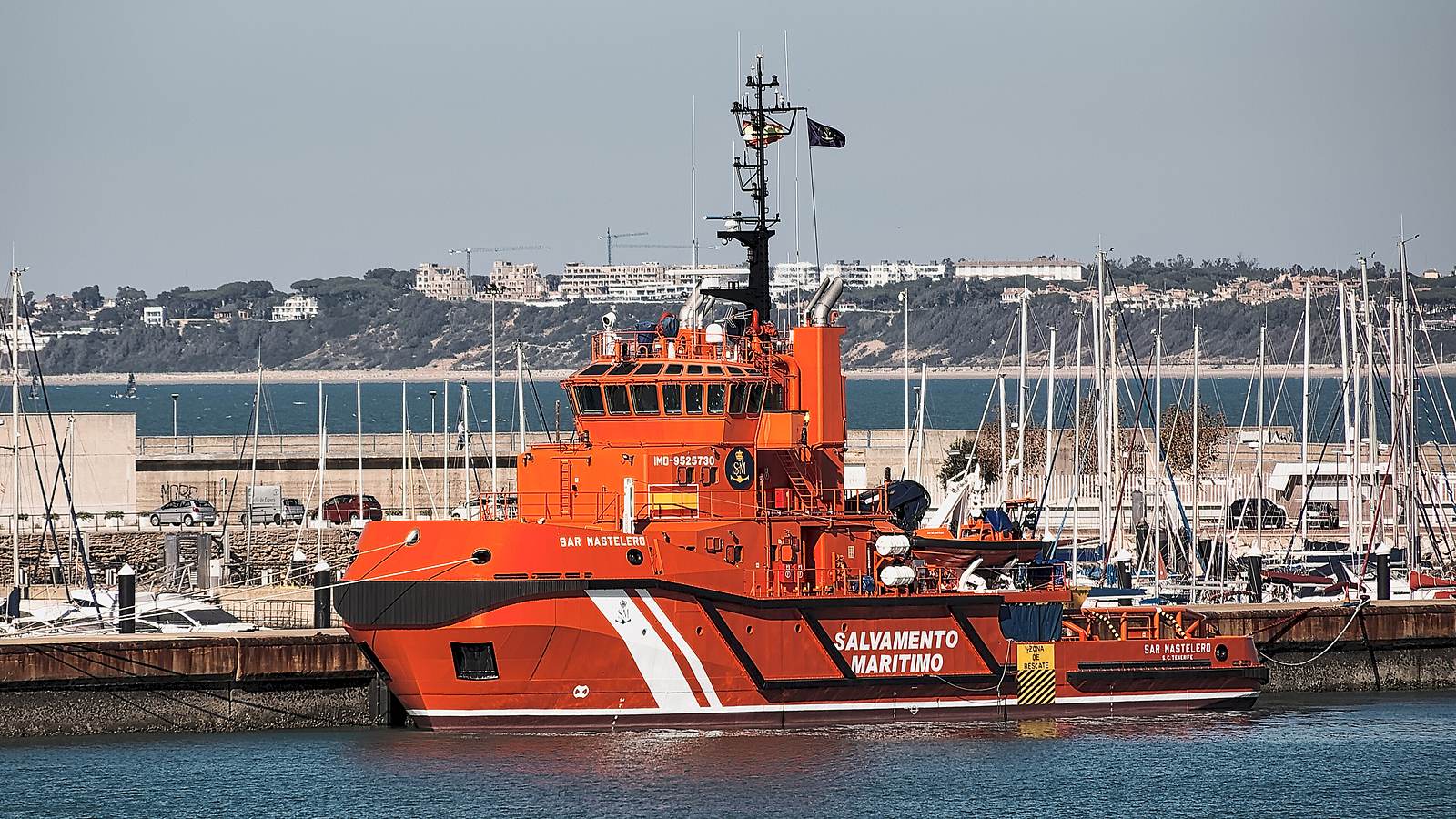
Spanish Maritime Rescue located a boat adrift in the Atlantic on Wednesday, some 65 nautical miles south-west of Arguineguín on the coast of Gran Canaria. There were 44 people alive on board and five bodies. The vessel is believed to have left The Gambia in early August carrying 127 people. More than 80 are now feared dead.
That last figure deserves to be read carefully, because of where it comes from. Nobody has recovered eighty-three bodies. The number is the distance between how many people are said to have boarded and how many walked off — and the fact that this is how deaths are counted on the Atlantic route is not a detail of the story. It is close to the whole of it.
The number the state will not confirm
The toll of 83 comes from Helena Maleno Garzón, founder of the Spanish charity Caminando Fronteras, which has monitored this crossing for years. Spanish Maritime Rescue took a different position in its own statement: it said it was unable to verify how many people were originally on board. Both statements are accurate, and they are not in conflict. They are answers to different questions.
The arithmetic is plain. If 127 people departed and 44 survived, 83 did not. The departure figure is established from testimony — families who saw people board, survivors who counted the deck, the networks that track departures from West African beaches. Caminando Fronteras has always been explicit that its figures go beyond the official data published by Spanish authorities, and that they rest on cross-referenced accounts from families and survivors, taking in both confirmed and presumed deaths.
A state rescue service cannot work that way. Official counts turn on a body, or on a manifest, and the Atlantic route produces neither. There is no passenger list for a wooden boat leaving a beach at night. So the state records five dead — the ones it saw — and an NGO records 83, and the gap between those two numbers is not a dispute about honesty. It is a dispute about what may be written down.
Five bodies left at sea
The five dead who were found could not be brought back. "Once the rescue was complete, adverse weather conditions in the area — featuring 20-knot winds and 2.5m waves — made it impossible to recover the five bodies found on board the vessel," Maritime Rescue said.
That is a routine and defensible operational call, and it is worth stating plainly what it involves. Transferring a body from an unstable, low-freeboard boat to a rescue vessel in a two-and-a-half-metre sea means putting crew over the side alongside a hull that is moving unpredictably. A rescue service that has just taken 44 living people off a boat, three of them in critical condition, will not risk its crew for a recovery. The consequence is that five of the 83 were seen, counted, and still not brought home.
Three survivors were airlifted to hospital in critical condition. The remainder were carried by sea to Gran Canaria and disembarked in the early hours of Thursday morning. All 44 are men from sub-Saharan Africa, according to Maritime Rescue.
Twenty-seven days is not a delay, it is the mechanism
The boat was adrift for 27 days. From the Gambian coast to Gran Canaria is roughly 1,600 kilometres of open ocean — something on the order of 870 nautical miles, with no land in between worth the name. That is not a crossing a small open boat makes by accident. It is a deliberate, multi-day passage undertaken in a vessel with no margin for anything going wrong.
And when something does go wrong on this route, the geography compounds it rather than relieving it. The prevailing Canary Current sets south-westward down the African seaboard. A boat that loses its engine is therefore not carried toward the islands; it is carried past and away from them, out into open Atlantic. This is why "adrift" on this crossing is measured in weeks rather than hours, and why the search area for a missing boat expands faster than any patrol can cover it. Authorities have not stated a cause of death for those who died aboard.
Why the departure point matters more than the destination
The single most significant fact in this incident may be that the boat left The Gambia at all. For most of the history of this route, the heavy traffic departed from Morocco, Western Sahara and Mauritania — crossings measured in a few hundred kilometres, survivable in a day or two of decent weather. A departure from The Gambia roughly triples that distance.
Spain's Interior Ministry recorded a 40 per cent fall in successful irregular entries in 2025 against the year before. Rights groups have consistently attributed that fall not to fewer people attempting the journey but to intensified maritime patrolling by Mauritania and Morocco, which pushes departures progressively farther south — into longer, less survivable journeys.
If that reading is right, the mechanism is straightforward and grim. Enforcement concentrated on the northern departure beaches does not reduce the number of attempts so much as it relocates them. And because risk on this route scales with days at sea rather than with the number of people leaving, moving a departure point a thousand kilometres south raises the expected death toll per attempt even as the arrival statistics improve. A boat adrift for 27 days after leaving The Gambia is precisely what that displacement looks like from the water.
What the counts show
Caminando Fronteras' own series gives the scale. Its tally for 2024 recorded 9,757 deaths on the Atlantic route, which it described as the deadliest migration route in the world — the highest figure since it began counting in 2007, and roughly half again the previous year's. Among the dead it counted more than 1,500 children.
The following year the numbers fell sharply: 1,906 deaths on the Atlantic route in 2025, within a total of 3,090 on all routes to Spain. In the first five months of 2026 the organisation counted 1,317 deaths on routes to Spanish coasts, including 142 women and 129 children — and, tellingly, 27 boats that disappeared completely.
Those 27 vessels are the same accounting problem as this week's boat, in its purest form. They are known to have left and were never found. Every person aboard them is a derived number, established the way the figure of 83 was established this week: by subtracting nothing from a departure count. No wreck, no body, no confirmation.
It is intolerable that lives continue to be lost. The Canaries cannot get used to or accept as normal the fact that the Atlantic continues to be a death trap. — Fernando Clavijo, head of the Canary Islands government
The case on the other side
There is a real argument for the current policy, and it should be stated at its strongest. Arrivals have fallen substantially. Deaths counted on the Atlantic route fell from 9,757 to 1,906 in a single year, which is not a rounding artefact — it is a very large decline by any measure. Patrols in Mauritanian and Moroccan waters do intercept boats before they reach open ocean, and a boat turned back on its first morning is a boat that cannot drift for 27 days.
The counter-case does not deny the fall. It questions what produced it. If attempts have genuinely declined, the policy is working as described. If attempts have merely moved south, then the falling death count reflects fewer boats leaving from places anyone is watching, while the survival odds for each boat that does leave get worse. The available public data — arrivals recorded at the destination, deaths estimated by an NGO — cannot easily distinguish between those two worlds, which is why the argument has not been settled.
What holds
Set aside the contested interpretation and a short list remains. A boat left West Africa in early August. Twenty-seven days later it was found within sight of the end of its journey, and 44 men were taken off it alive. Five bodies were found aboard and left in the water because the sea was too rough to take them. The people who counted those who boarded put the dead at 83.
Which leaves the figure that will not appear in any official record: 78. That is how many people are believed to have been on that boat and were not aboard when it was found — not recovered, not identified, and, on this route, in all likelihood never will be. The durable fact about the Atlantic crossing is not the size of the toll. It is that the toll has to be inferred at all.
This report is based on statements from Spanish Maritime Rescue (Salvamento Marítimo), reporting by the BBC published on 3 September 2026, figures published by the Spanish NGO Caminando Fronteras, and arrivals data attributed to Spain's Ministry of the Interior. The figure of 83 dead is an estimate derived from a reported departure count of 127 and has not been confirmed by Spanish authorities, who have said they cannot verify how many people were originally aboard. Caminando Fronteras' counts include both confirmed and presumed deaths and exceed official figures by design. Casualty numbers in incidents of this kind are provisional and have been revised repeatedly in past cases. The distance cited between the Gambian coast and Gran Canaria is approximate.