
Chevron is spending $7 billion to more than double its Venezuelan output to 600,000 barrels a day by 2031 — and the reason it can is a rewritten hydrocarbon law
Two new Orinoco Belt fields, five years of capital, and a target of 600,000 barrels per day against roughly 280,000 today. Chief executive Mike Wirth says the terms, not the geology, are what changed. The geology never needed changing.
Chevron said on Wednesday that it will invest more than $7 billion in Venezuela over the next five years, through a joint venture with the state oil company Petróleos de Venezuela, to raise its production in the country to approximately 600,000 barrels per day by 2031. It currently produces about 280,000. The company has been assigned two additional fields in the Orinoco Belt, the region holding most of Venezuela's extra-heavy crude.
Chevron shares were little changed on the announcement, having already climbed 13% over three months and 39% this year. That flat reaction is itself informative: the market has decided this is a long-dated option rather than a near-term earnings event, and it is right.
The thing that actually changed
Chief executive Mike Wirth, speaking to CNBC from Caracas, was unusually direct about why the company is committing capital now. Venezuela's interim government has passed a new hydrocarbon law altering taxes, royalties and other terms. Those changes, Wirth said, have "taken this from not being very competitive within our set of alternatives to something that's very competitive versus our options around the world, which is why we're willing to commit significant capital and grow the way we are."
This is the mechanism that gets lost when Venezuela is discussed as a reserves story. The country is believed to hold around 303 billion barrels — among the largest endowments on earth — and it has held them throughout the two decades in which its production collapsed. Reserves were never the constraint. Fiscal terms were. An oil major allocates capital against a global menu of projects, and a barrel that the host government taxes and royalties into unprofitability does not appear on that menu at any reserve number.
Chevron has understood this longer than anyone. It first established a Venezuelan presence in the 1920s, stayed after the industry was nationalised in 1976, and stayed again when Hugo Chávez tightened terms in the 2000s. ExxonMobil and ConocoPhillips left in 2007 rather than accept renegotiated contracts. Chevron is today the only U.S. major operating in the country, and the largest foreign operator there.
The political frame around the deal
The announcement lands inside an extraordinary reordering of who controls Venezuelan oil. The United States captured former President Nicolás Maduro in a military raid in January and seized control of the country's oil exports. Washington now works with interim President Delcy Rodríguez, Maduro's former vice-president, who governs unelected.
Last Friday, President Donald Trump announced that the U.S. had secured majority control over 65 billion barrels of Venezuelan crude reserves — roughly 20% of the national total — through a partnership with North American Blue Energy Partners, a private company headquartered in Barbados. NABEP has been granted concessions to 17 oilfields for 100 years, and has in turn given the U.S. Defense Department a 35% equity stake. Energy Secretary Chris Wright was in Venezuela on Wednesday.
The structure of that arrangement is worth pausing on, because it has no recent precedent. A private company incorporated offshore holds century-long concessions to seventeen national oilfields, and the defence ministry of a foreign state holds a third of its equity. Whatever the merits, it converts a commercial question about Venezuelan reserves into a sovereign one, and it is the backdrop against which every other operator in the country now has to assess its own position.
Chevron's expansion is legally separate from that arrangement — it runs through PDVSA joint ventures, not through NABEP — but it is not politically separate. The administration has been actively encouraging American oil companies to invest in Venezuela, and a $7 billion commitment from the country's most credible operator is the validation the wider policy needed.
Why 600,000 barrels is harder than it sounds
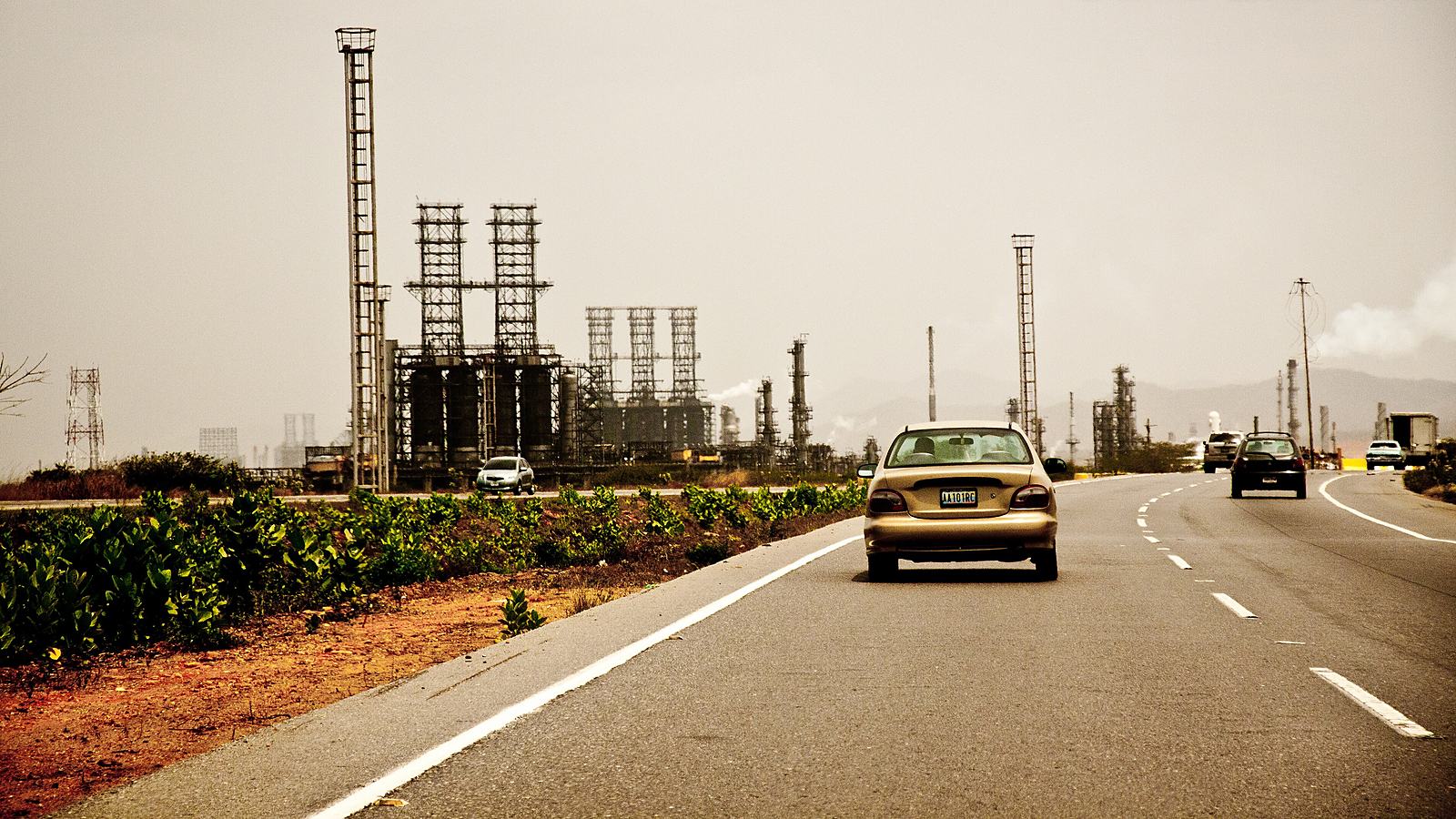
The number to hold onto is not the reserve figure. It is the state of the equipment. Venezuela's oil infrastructure has been degrading for more than a decade — the product of corruption, mismanagement and the low prices of the early 2000s. Alejandro Velasco, a New York University historian specialising in Venezuela, describes refineries with rusted equipment, leaks, and fences broken open by copper thieves stripping wire.
It's a little bit like sitting on a lottery ticket that's just a little bit out of our reach, and you're always having to try to stretch yourself to get it.
The engineering assessment is bleaker than the political one. "All of [the challenges] need to be solved before even thinking about increasing production in a sustained manner," said Jorge Leon, head of geopolitical analysis at Rystad Energy. In January, Rystad's analysts estimated it would take more than a decade and $183 billion to restore Venezuelan output to its 1990s level of roughly 3 million barrels a day.
Set Chevron's plan against that estimate and the scale becomes clear. Seven billion dollars is about 4% of Rystad's figure for full restoration, and Chevron's target of 600,000 barrels a day is a fifth of the 1990s peak. That is not a criticism of the plan — it is a well-sized, single-operator commitment on assets it already knows — but it is the correct calibration for anyone reading the announcement as a signal about Venezuelan supply generally.
Extra-heavy crude is a different business
The Orinoco Belt compounds the problem. Its crude is extra-heavy: viscous, high in sulphur and metals, and effectively immobile at reservoir conditions without intervention. Producing it requires diluent — lighter hydrocarbons blended in so the crude will flow through a pipeline — and upgrading facilities to convert it into something refineries can process. Both the diluent supply and the upgraders are capital items in their own right, and Venezuela's existing upgrading capacity is part of the infrastructure that decayed.
This is why Orinoco barrels do not behave like a swing supply source. A shale operator in the Permian can add or remove production within months. An extra-heavy project runs on a multi-year cycle in which drilling is only one input among several, and the constraint frequently sits downstream of the well. Chevron's five-year horizon to 2031 reflects that reality rather than caution.
Who the barrels are for
There is a reason a U.S. major, specifically, is the operator that wants these barrels. Refineries are built for a crude slate, not for crude in general, and the Gulf Coast complex was configured over decades to run heavy sour grades — the coking and hydrotreating capacity that makes extra-heavy oil economic sits disproportionately in Texas and Louisiana. The American shale boom produced the opposite product: light, sweet crude that those refineries are poorly suited to process, which is why the United States exports large volumes of light oil while importing heavy.
Orinoco crude fits that gap almost perfectly, and it sits a short tanker voyage away rather than an ocean crossing from the Middle East. That is the structural logic underneath the politics, and it did not change during the twenty years in which Venezuelan production was collapsing. It is why the reserves kept attracting attention that never converted into capital.
It is also why the deal should not be read as a consumer story. Venezuela was a founding member of OPEC and has been producing oil for roughly a century, but the increment Chevron is describing — about 320,000 additional barrels a day, arriving gradually over five years — is a fraction of one percent of global supply, reaching the market slowly enough that OPEC+ policy, Middle East risk premia and demand growth will each move the price far more in the interim. Nobody's pump price falls because of an announcement in Caracas.
The counter-argument
The case against reading this deal as a turning point rests on who Chevron is dealing with. The company is committing $7 billion to a country run by an unelected interim government installed after a foreign military operation, under a hydrocarbon law written by that government, with no electoral test yet applied to any of it. The fiscal terms that made the project competitive were changed once and can be changed again — as they were in 1976, and again under Chávez.
Chevron's own history is the strongest evidence on both sides of that argument. It stayed through nationalisation and through the Chávez renegotiations, which is why it is the operator with the standing to do this deal. It also absorbed twenty years of returns that its departing competitors judged not worth having. ExxonMobil chief executive Darren Woods called Venezuela "uninvestable" at a White House meeting in January, and nothing in this week's announcement establishes that he was wrong — only that Chevron is willing to price the risk differently.
Wirth's framing acknowledges the timeframe honestly. The expanded position, he said in the company's statement, "reflects our confidence in the country's deep resource potential and its ability to compete for investment within our portfolio for decades." Decades is the operative word. This is not a deal that changes the oil price this year, or lowers a price at a pump anywhere. It is a bet that the terms hold long enough for the barrels to arrive.
This report is based on Chevron's statement of September 2, 2026, chief executive Mike Wirth's remarks to CNBC in Caracas, and reporting by CNBC and NPR, together with Rystad Energy's January 2026 assessment of Venezuelan restoration costs. Production targets are company projections, not results. Details of the U.S. arrangement with North American Blue Energy Partners come from the White House announcement of August 28, 2026 and subsequent briefings; terms of that arrangement remain incompletely disclosed and are separate from Chevron's joint ventures with PDVSA.