
Container ship GFS Pride sinks in the Strait of Hormuz as Iran escalates attacks: more than 20 vessels hit this month and oil flows nearly 40% below pre-war levels
The Singapore-flagged GFS Pride went down after a strike and fire; all 21 crew were rescued. A sister ship was hit the same day. Iran says it was a mine in a forbidden lane. Either way, the strait's September recovery is unwinding — and this time the target was a box ship, not a tanker.
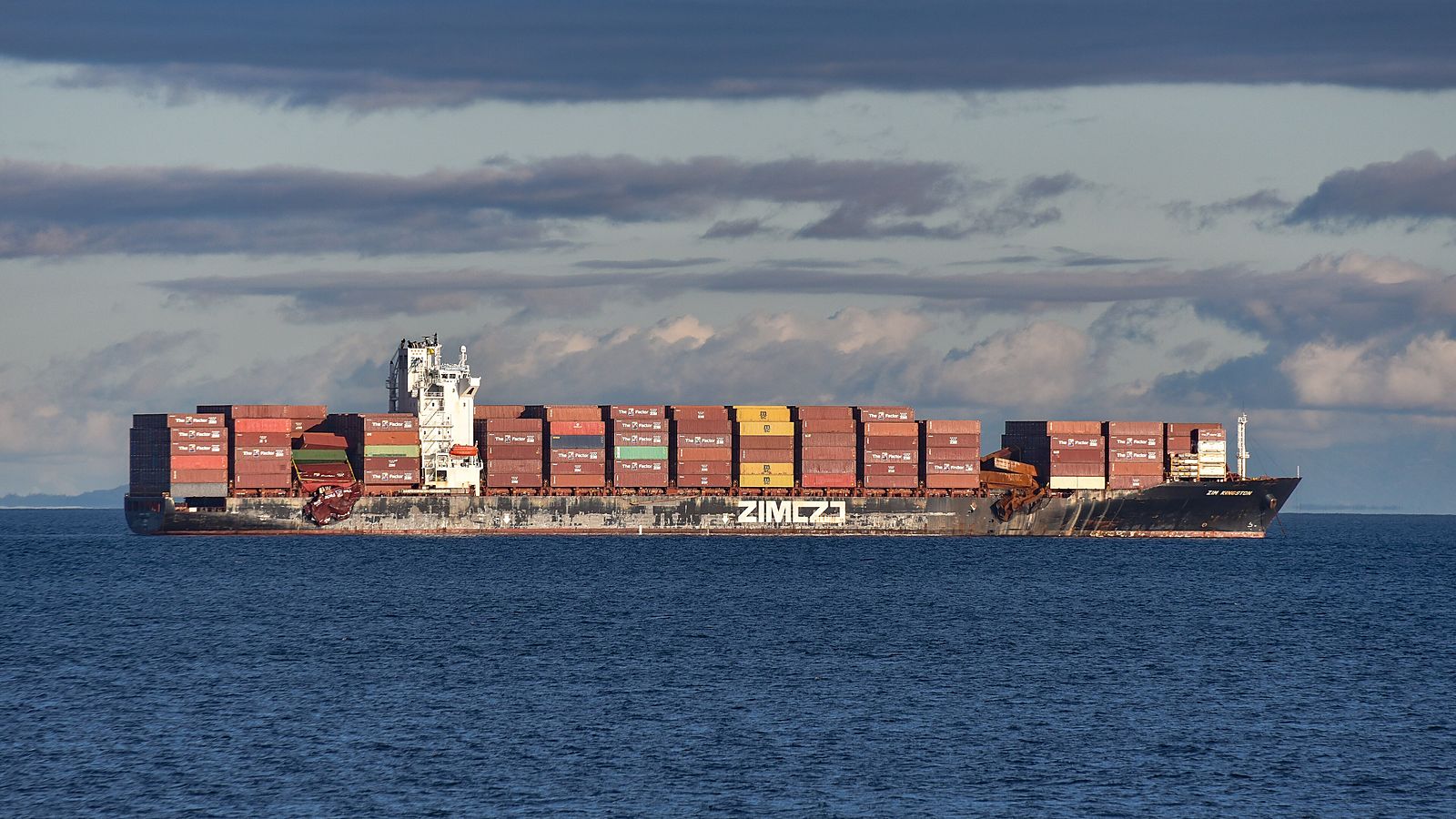
For most of this war, the ships Iran has gone after in the Strait of Hormuz have been tankers. On Wednesday a container ship sank. The GFS Pride, a 2,824-TEU box ship registered in Singapore, went down after being hit and catching fire, and a second Singapore-flagged vessel from the same fleet, the GFS Giselle, was struck hours later. A container ship carries the goods of hundreds of shippers rather than the oil of one exporter. Sinking one sends a message to every line that sails the Gulf.
All 21 crew members of the GFS Pride were safely evacuated and no injuries were reported, according to the Maritime and Port Authority of Singapore. The vessel was transiting the strait on Tuesday when it was struck by what the authority described as an unidentified projectile; it sustained damage and a fire on board, and later sank. Pakistani maritime authorities issued a navigational alert warning of containers floating in the water.
"Such attacks are unprovoked, unjustifiable and a breach of international law." — Maritime and Port Authority of Singapore
The Giselle was hit on Wednesday. It sustained hull damage but reached a safe anchorage under its own power, and all 22 of its crew were reported safe. The GFS Pride, built in 2008, is managed by GFS Ship Management FZE in the United Arab Emirates, which did not immediately respond to requests for comment, according to Reuters.
A mine or a missile — and why the difference matters
Iran's account is different. The Islamic Revolutionary Guard Corps said, via the state news agency Tasnim, that the ship exploded and sank after striking a naval mine while attempting to use an "unauthorised and high-risk route" through the strait. The Guard also alleged the vessel was carrying contraband. None of those claims has been independently verified.
The maritime security firm Marisks said there was no independent evidence that a mine sank the GFS Pride. It described Iran's claims as "consistent with an ongoing psychological operations campaign aimed at generating fear, increasing uncertainty and discouraging commercial shipping" in Hormuz. The UK Maritime Trade Operations Centre's warning on Tuesday described a projectile strike.
The distinction is not academic. A projectile is a decision: someone chose that ship. A mine is a condition: it threatens any hull that strays into the wrong water. By attributing the sinking to a mine in a lane it calls unauthorised, Tehran is reinforcing the navigation regime it has been trying to impose for months — directing traffic into a northern lane close to its own coast and treating other routes as illegal. Whether or not a mine was involved, the claim is designed to make every captain reconsider the route.
That is why the uncertainty itself is the weapon. Ship operators and their insurers price risk on what they cannot see. A strait where ships are sunk by projectiles is dangerous; a strait where nobody can say for certain whether a ship was sunk by a projectile or a mine is worse, because there is no route that is demonstrably safe.
How many ships have been lost
Counts differ. CNBC, citing the International Maritime Organization, described the GFS Pride as the third commercial ship sunk during the Iran war. Reports based on Reuters data cited the IMO as counting it the second vessel lost since the war began on February 28. Earlier losses include a UAE tug sunk in March and an Indian dhow in May; separately, US forces have struck and sunk tankers accused of breaching the blockade of Iran. Which vessels are counted depends on who is keeping score and how they classify them.
There may soon be another. The Antigua and Barbuda-flagged bulk carrier Cape Dao, struck by a projectile on September 23, is reportedly sinking after an unsuccessful salvage attempt, according to the maritime risk group Vanguard.
What is not in dispute is the pace. More than 20 vessels, mostly oil tankers, have come under attack this month in Hormuz, the Persian Gulf and the Gulf of Oman, according to incident reports from the UK Maritime Trade Operations Centre. The attacks have left two sailors missing and more than a dozen injured, according to the IMO.
Behind those numbers are crews. The seafarers who move cargo through Hormuz are overwhelmingly civilians from countries with no part in the war, working ships owned, managed and flagged in different jurisdictions. Singapore's authority noted that no Singaporean nationals were aboard the GFS Pride — a reminder that the flag on the stern and the people on deck are rarely the same, and that the risk is borne by crews who have no say in which lane their ship takes.
The September recovery is unwinding
The escalation has a clear economic target. Crude oil exports through Hormuz recovered to pre-war levels in September as the US military guided tankers through the strait, CNBC reported. Iran has since stepped up its strikes in what analysts describe as an effort to choke off that rebound.
It is working. Exports through the strait averaged 8.5 million barrels a day in the week ended October 12 — nearly 40% below normal pre-war levels, according to the ship-tracking firm Kpler. Total shipments from the Middle East, including pipelines that bypass Hormuz to the Gulf of Oman and the Red Sea, stood at 14 million barrels a day, nearly 20% below pre-war levels.
The pattern has repeated before. During a formal ceasefire earlier in the conflict, which in practice lasted about 25 days, crude flows through the strait averaged 9.8 million barrels a day, according to Tanker Trackers. When that truce ended, attacks resumed and flows fell away again. September's escorted recovery was the second time the strait had been brought back toward normal. October is the second time that recovery has been pushed back.
Daily flows are extremely volatile. Only 3 million barrels of crude transited Hormuz on Monday, Kpler said, against 6 million on Friday. That volatility is itself evidence of the problem: tankers are waiting, bunching and making individual go or no-go decisions rather than moving on a schedule.
Oil prices closed only slightly higher on Wednesday. Markets have spent more than seven months pricing a disrupted strait, and one more sinking does not change the barrel count. What it changes is the duration — how long the disruption is likely to last — and that shows up less in the crude price than in freight rates, insurance and, eventually, consumer prices.
Why a container ship changes the calculus
Tankers are the obvious target in an oil war, and shipping markets had adjusted to treating Hormuz as a tanker problem. A container ship is different. It is part of a liner network that calls at Gulf ports on a fixed rotation, carrying consumer goods, machinery and food for dozens of customers. When a box ship is sunk, it is not only an energy shipment that is at risk; it is the supply chain of every economy on the Gulf's western shore.
Lines and their insurers now have to weigh whether Gulf calls inside the strait are worth the risk at all. Every voyage that is cancelled or rerouted pushes cargo onto overland routes or into ports outside the strait, adding cost and delay that reach importers long after the headlines fade.
The cost is already visible far from the Gulf. In the United States, September's consumer price data, released the same day, showed gasoline up 34.2% from a year earlier and diesel at $6.29 a gallon after a record high in late September. An energy shock that originates in one narrow strait arrives, eventually, at every petrol pump and grocery checkout.
The case against reading too much into one sinking
There is an argument for restraint. One vessel lost, with no casualties, in a month in which more than 20 were attacked, does not by itself prove a change of strategy; it may say more about where a weapon happened to hit than about intent. The Giselle survived a similar strike and reached anchorage. And September demonstrated that flows can recover quickly when naval escorts are in place and attacks ease.
But the durable point does not depend on intent. The strait was reopened in September by escorts and confidence, and confidence is the easier of the two to destroy. A ship that sinks in disputed circumstances — mine or missile, authorised lane or not — teaches every operator the same lesson: the waterway is open only for as long as Iran chooses not to close it.
This report is based on statements from the Maritime and Port Authority of Singapore, reporting by CNBC, Reuters (via WorldCargo News) and Al Jazeera, Iranian state media as cited by those outlets, security alerts from Marisks and Vanguard, incident data from the UK Maritime Trade Operations Centre and the International Maritime Organization, and export data from Kpler and Tanker Trackers. The cause of the sinking is disputed and has not been independently established. Iran's claims about the ship's route and cargo are unverified. Counts of vessels sunk differ between sources. Flow data are weekly averages and subject to revision.