
A defence startup backed by Andreessen Horowitz and Peter Thiel's Founders Fund has opened a Dallas missile factory, promising 1,000 cruise missiles in its first year
Covenant came out of stealth on Wednesday with $250 million raised, a 105,000-square-foot plant, two Pentagon agreements and a long-range cruise missile it says costs a fraction of a Tomahawk. It arrives seven months into a war that has drained the American stockpile of exactly this weapon.
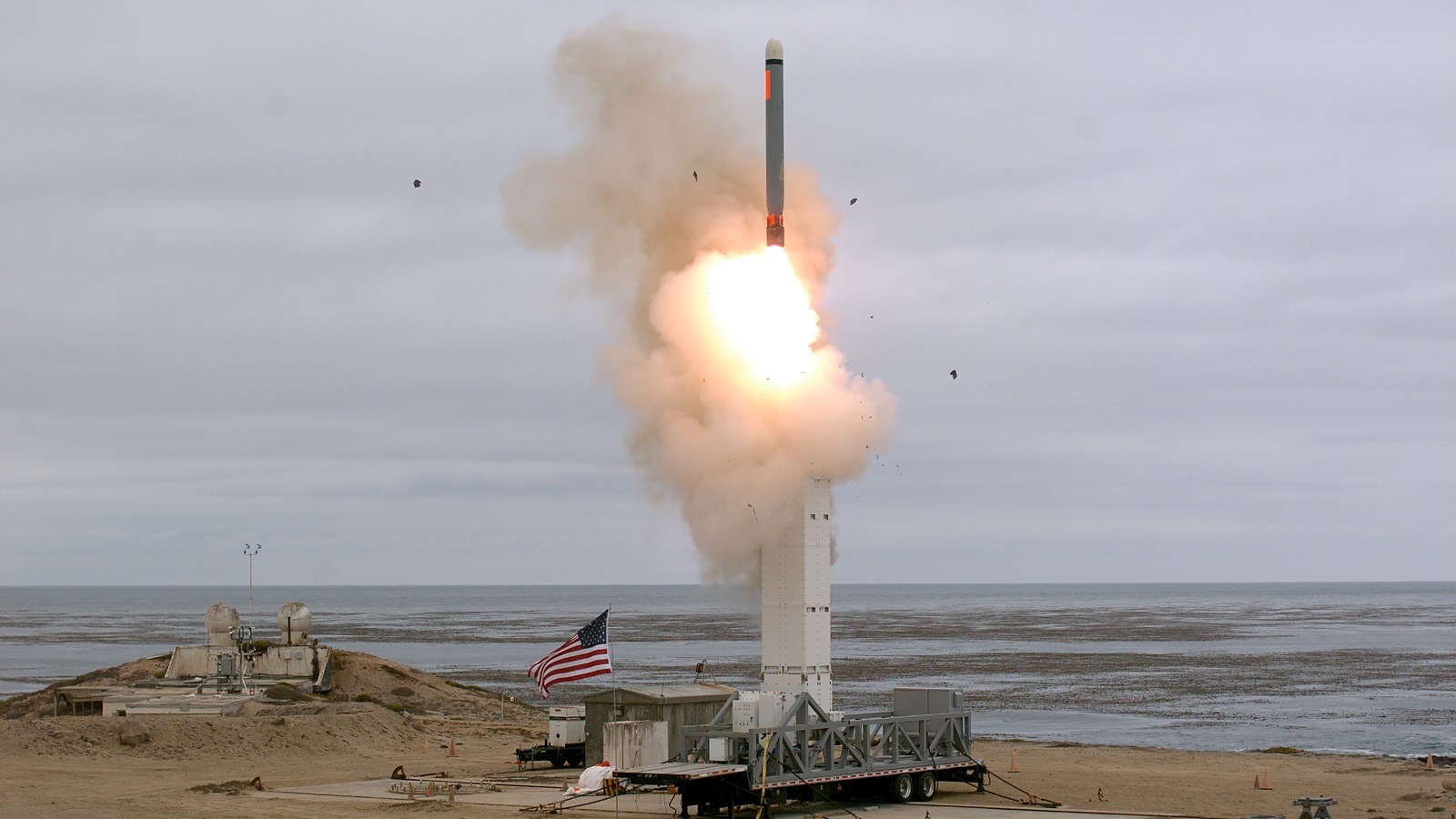
The most interesting number in Covenant's coming-out announcement on Wednesday is not the $250 million it has raised or the 105,000 square feet of factory floor it has taken in Dallas. It is 1,000 — the number of long-range cruise missiles the company says that factory will produce in its first year of serial production, beginning in the first quarter of 2027, scaling eventually to 5,000 a year.
That figure is worth holding next to a second one. RTX, the prime contractor that builds the Tomahawk, signed an agreement with the Defense Department in February 2026 to raise annual Tomahawk production toward 1,000 units over a potential seven-year span. A company founded in 2024 that nobody had heard of on Tuesday is proposing to match, in year one, a production rate that the incumbent needs a multi-year framework agreement to approach.
Whether Covenant can do that is entirely unproven. But the reason anyone is willing to fund the attempt is not speculative at all, and it is the real story here.
The stockpile problem that created the opening
The United States has been expending long-range strike munitions at a rate its industrial base was never built to replace. Reporting through 2026 has documented the scale: American forces launched at least 850 Tomahawk cruise missiles in roughly the first month of the campaign against Iran, a rate of consumption far beyond any previous conflict in which the weapon was used. The war is now in its seventh month.
Set that against production. Tomahawk output in recent years has been measured in dozens — on the order of 68 rounds in fiscal 2023 and 34 in fiscal 2024, according to figures cited in defence trade coverage. A stockpile accumulated over decades has been drawn down in a handful of years against a replacement line running two orders of magnitude slower than the expenditure. The Navy's 2027 budget request sought an increase in Tomahawk procurement of well over a thousand per cent, which is the procurement system's way of admitting the arithmetic does not work.
This is the gap that a well-funded newcomer walks into. It is not a technology gap. It is a throughput gap, and throughput is the thing venture-backed manufacturing companies have most credibly claimed to be good at.
What Anthem is supposed to be
Covenant's weapon is called Anthem, described as a long-range, heavy-payload cruise missile positioned against a class dominated by the primes — most directly RTX's Tomahawk, which costs the Navy roughly $2 million a round in recent production lots, with estimates for the newest variants running higher. Covenant says Anthem costs a fraction of legacy systems. It has not published a unit price.
The company's stated positioning is more specific than simple cost-cutting. Abby Denburg, Covenant's president and chief growth officer, framed it to CNBC as filling a hole in the middle of the munitions inventory, between the cheap short-range drones that have defined the war in Ukraine and the expensive long-range weapons that only the primes build.
There is a gap in the middle of that for affordable mass and strategic range, and that's the gap that Anthem was filling. — Abby Denburg, president and chief growth officer, Covenant, speaking to CNBC
"Affordable mass" is the operative phrase, and it describes a genuine doctrinal argument rather than a marketing one. A weapon that costs $2 million cannot be fired at a $200,000 target, and a cheap attack drone cannot reach a target a thousand miles away with a warhead heavy enough to matter when it arrives. Everything a modern campaign wants to hit sits somewhere on that curve, and the American inventory is currently well supplied at the bottom and structurally short at the top.
The war in Ukraine is what made the argument legible to procurement officials. It demonstrated that cheap, mass-produced strike systems can do work that had been assumed to require exquisite ones, and it did so in public, at a scale that could not be waved away as an outlier. Denburg pointed directly at that lesson and at its limit: the drones that have dominated that war are short-range and low-payload, and no amount of them substitutes for a weapon that has to fly across a theatre.
Two Pentagon agreements and a factory that exists
Covenant announced two Defense Department deals alongside the factory: one with the Army to accelerate a test and qualification programme, and one with the Navy to adapt Anthem for maritime use. Neither is a production contract. Test and qualification is the stage at which most defence startups discover what the primes' overheads are actually paying for, and a maritime adaptation agreement is a study of whether a weapon can be made to work from ships, not an order for any.
What distinguishes the announcement from the genre is that the manufacturing is not hypothetical. The company says it already operates production facilities in Germany and northern Israel and employs more than 200 people worldwide. The Dallas plant is an addition to an existing industrial footprint rather than the first one, which is an unusual position for a company exiting stealth two years after being founded.
That footprint cuts both ways. Existing lines abroad explain how a company founded in 2024 can credibly talk about serial production in early 2027, because the hardest institutional knowledge in munitions manufacturing is held by people who have already done it rather than by a building. It also means a supplier proposing to arm the US military at scale has most of its established capacity outside the United States, in two countries — one a NATO ally, one an active belligerent in the region the weapons are being consumed in. Whether that reads as resilient distribution or as concentration risk is exactly the kind of question the qualification process the Army agreement funds is designed to answer.
The investor list is the policy story
Covenant's backers are Andreessen Horowitz, Peter Thiel's Founders Fund, Lux, 8VC, Aleph, Lightspeed and Altimeter Capital. That roster is not a neutral fact about a private financing round. It is a description of where influence over American defence procurement has migrated.
Thiel's standing in Washington has risen sharply under the current administration; he backed Donald Trump's 2016 campaign and supported JD Vance's 2022 Senate run, and Vance previously worked at Mithril Capital, which Thiel co-founded. Marc Andreessen was named to the Pentagon's defence policy board this summer, alongside Blake Masters of Thiel Capital. Andreessen Horowitz has also announced a multibillion-dollar fund dedicated entirely to US aerospace and defence.
So the same firms that fund the entrants now sit on the board that advises on the policy governing entry. Denburg's own framing of the moment was that new market entrants are being understood as critical to the defence ecosystem "and we're seeing that in this administration." That is an accurate description of the environment and also an unusually candid one.
The case against
The obvious objection is that building a missile is the easy part. The primes' costs are dominated by qualification, testing, safety certification, secure supply chains and the ability to guarantee delivery of a weapon that works after a decade in a magazine. Startups have repeatedly demonstrated they can build a first article quickly and then discovered that the twentieth through thousandth articles are a different business entirely.
The specific chokepoint is solid rocket motors, which have constrained American munitions output regardless of who is doing the assembly. RTX's own expansion has depended on partnering with Anduril, Northrop Grumman, Avio USA and Nammo precisely to widen that supply base. A new factory in Dallas does not by itself create motor capacity, and a 1,000-unit first year requires 1,000 sets of propulsion from a sector that has been the binding constraint on everyone.
There is also a procurement-cycle objection. Covenant's serial production begins in the first quarter of 2027. If the Iran campaign ends before then, the company will be scaling into a demand environment defined by a peacetime replenishment budget rather than a wartime expenditure rate — and defence startups have historically been funded on the former and killed by the latter.
What the announcement actually establishes
Strip out the projections and what remains is still substantive: a two-year-old company has raised $250 million across three rounds, operates plants on three continents, employs more than 200 people, has signed two agreements with two services, and has opened a factory in Texas. That is a real industrial position, and it was assembled while the incumbent supply chain was visibly failing to keep pace with consumption.
The claims that follow — 1,000 rounds next year, 5,000 eventually, a fraction of legacy cost — are forecasts made by a company on the day it started selling itself, and they should be read as such. The durable point is the one underneath them. The US expended a decade of Tomahawk production in a single month of one campaign, and that fact has done more to open American missile procurement to new entrants than any policy argument made in the preceding twenty years.
This report is based on Covenant's announcements of September 9, 2026 and reporting by CNBC, including comments by Abby Denburg; on the RTX–Defense Department Tomahawk production agreement of February 4, 2026; and on published defence trade reporting regarding Tomahawk unit costs, recent production volumes, expenditure in the Iran campaign and the Navy's fiscal 2027 procurement request. Covenant has not published a unit price for Anthem, and its production, cost and scaling figures are company projections that have not been independently verified. Munitions expenditure totals in an ongoing conflict are estimates and are revised.