
Dolly Parton, who wrote more than 3,000 songs and gave away more than 300 million books, dies at 80 after a brief battle with cancer
The country music legend died Tuesday at the Vanderbilt-Ingram Cancer Center in Nashville, surrounded by loved ones, her family said. Flags fly at half-staff for a week for the songwriter behind 'Jolene,' 'I Will Always Love You' and '9 to 5' — a one-woman American institution whose reach ran from the Grand Ole Opry to a COVID vaccine.
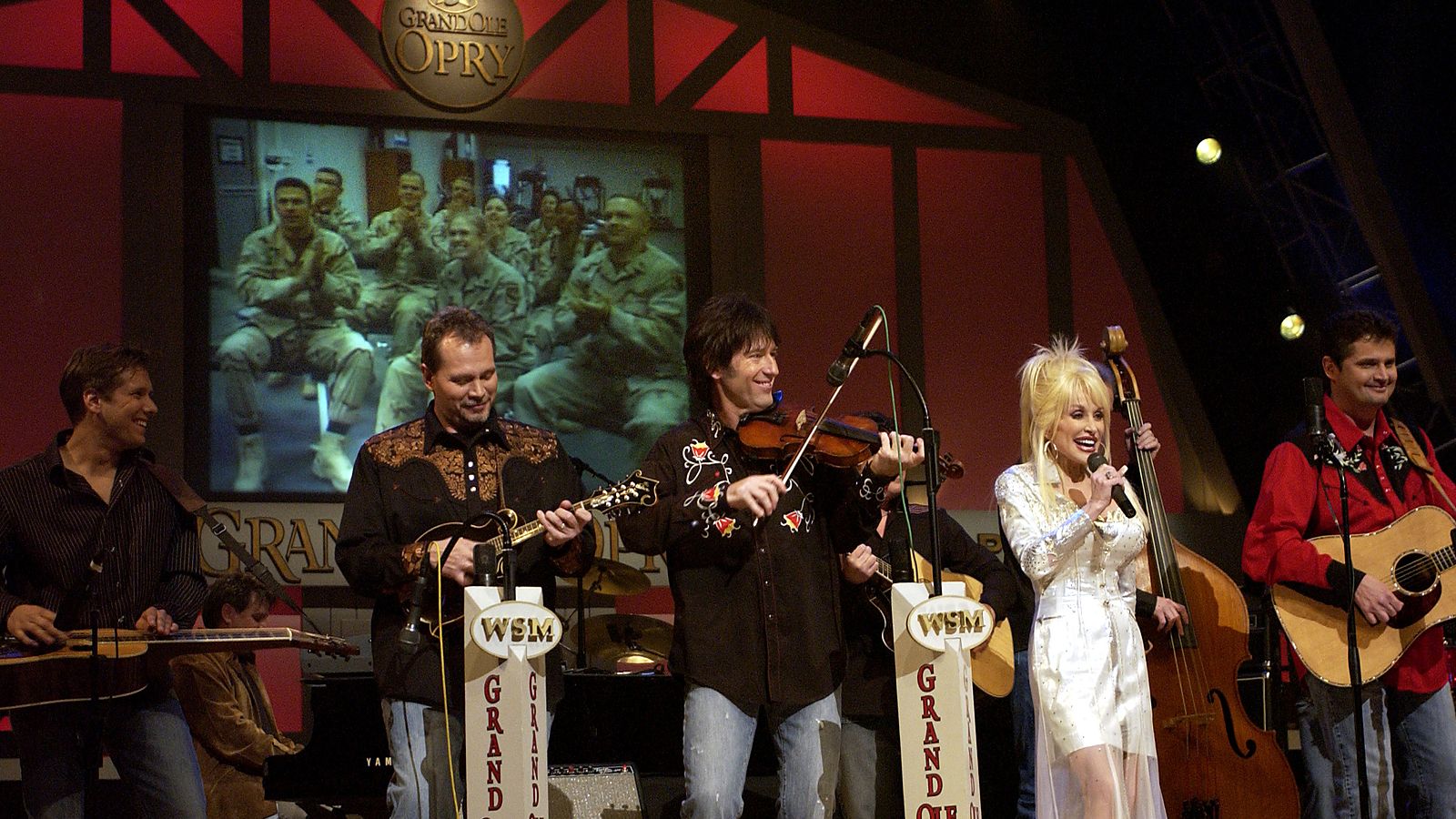
Dolly Rebecca Parton Dean, the fourth of twelve children born in a one-room cabin in Sevier County, Tennessee, who became the most beloved figure in the history of country music and one of the most consequential philanthropists America has produced, died Tuesday in Nashville. She was 80.
"After bravely facing a brief battle with cancer, Dolly departed her Earthly life today at the Vanderbilt-Ingram Cancer Center surrounded by loved ones," her longtime publicist, Marcel Pariseau, said in a statement. The family did not disclose the type of cancer. The announcement itself came the way almost nothing in celebrity culture does anymore — from family. Her nephew Brian Seaver, her longtime head of security, delivered it in a video posted to her social channels: "I'm representing the Parton and Owens family today announcing the passing of my aunt, Dolly Rebecca Parton Dean — Sister, Sis and Granny to one generation and Gigi to the next." He said she "has lived in the light and is in the arms of Jesus."
A small private service is planned for close family. In lieu of flowers, the family asked that fans honour her with donations to her Imagination Library — which is, as final requests go, about as Dolly Parton as it gets.
The songwriter first
The wigs, the rhinestones, the one-liners — she wrote all of that herself too, and she used it, by her own cheerful admission, as packaging for one of the great songwriting minds of the twentieth century. Parton wrote more than 3,000 songs across 49 albums and more than 100 million records sold, winning 10 competitive Grammys from 55 nominations plus a lifetime achievement award, and holding a Guinness World Record for the longest span of number-one hits on the US country chart — 43 years between the first and the last.
Two of the biggest arrived in a single burst in 1973. "Jolene" was inspired, she liked to say, by a bank teller who flirted with her husband — "It was kinda like a running joke between us." And "I Will Always Love You" was not written for a lover at all but as a farewell to Porter Wagoner, the television host who had made her famous and would not let her leave. "So I went home and wrote that song," she recalled. "So I sang it, and he was crying." A year later she declined to let Elvis Presley record it because his manager demanded half the publishing — a decision that looked stubborn until 1992, when Whitney Houston's version topped the Hot 100 for a then-record 14 weeks and earned Parton roughly $10 million in royalties. Business acumen, like everything else about her, wore rhinestones.
"9 to 5" made the point again in 1980: she agreed to star in the film alongside Jane Fonda and Lily Tomlin only if she could write and perform the theme, then composed its clatter by strumming her acrylic nails like a washboard. The song won two Grammys and brought her first Oscar nomination.
The catalogue ran deeper than the hits everyone can name. Her debut album, "Hello, I'm Dolly," arrived in 1967 behind the single "Dumb Blonde" — a title she spent the next six decades gleefully refuting. "Coat of Many Colors," her 1971 hymn to a patchwork coat her mother sewed from rags, became the song she called her favourite of everything she wrote. "Joshua" gave her a first solo number one the same year. Later came "Islands in the Stream" with Kenny Rogers, the Trio records with Linda Ronstadt and Emmylou Harris, and a late-career bluegrass turn that reminded Nashville she could out-pick the traditionalists too. Jane Fonda recalled hearing her on the radio for the first time: "My hair stood on end... I thought, Oh my lord. Dolly, Lily and Jane."
From the Smokies to everywhere
What separated Parton from every other superstar of her generation was what she did with the money. In 1986 she bought into a struggling theme park in Pigeon Forge, Tennessee, and renamed it Dollywood; it became the anchor of a tourism economy credited with more than 23,000 jobs and roughly $1.8 billion a year in her home county. In 1995 she started the Imagination Library, mailing free books to children — a tribute to her father, who never learned to read. It now operates across five countries and has given away more than 300 million books. In 2020 she donated $1 million to Vanderbilt's coronavirus research, money that helped fund development of the Moderna vaccine — making her, improbably and characteristically, a footnote in the history of immunology.
The honours piled up almost as a formality: the Country Music Hall of Fame in 1999, Kennedy Center Honors in 2006, the Rock & Roll Hall of Fame in 2022 — a nomination she initially tried to withdraw from, protesting that she wasn't "a legitimate rock star," before accepting the induction and, being Dolly, recording a rock album with Paul McCartney, Elton John and Stevie Nicks to earn it retroactively. She twice declined the Presidential Medal of Freedom. In 2022, Jeff Bezos handed her a $100 million award to give away as she saw fit.
The last year
Her final stretch was hard, and she met it in public the way she met everything — with a wink. Her husband of 59 years, Carl Dean, whom she met outside a Nashville laundromat on her first day in town in 1964, died in March 2025. "When he passed, I didn't take care of myself," she admitted to fans this year. "So I let a lot of things go that I should have been taking care of." She postponed a Las Vegas residency over health challenges last fall, and when her sister publicly asked for prayers, Parton answered with a video titled, in effect, "I ain't dead yet." This spring she disclosed kidney-stone, digestive and immune problems; on August 14 she sent a recorded message to a Dollywood ride opening instead of attending, citing dizziness. Four days before her death, she told People magazine: "Even though I'm still healin', I'm still workin'! I still have so many things I want to achieve."
Her last major public appearance was a surprise one, in June, at Dolly's Tennessean Travel Stop — unannounced, mobbed, and by every account delighted. It was a fitting exit for a performer whose relationship with her audience never had a backstage: she turned up, she stayed too long signing things, and she left everyone feeling like the visit had been their idea.
'There will never ever be another you'
The tributes arrived from every corner of American life at once, which was the point of her. President Donald Trump — whose Medal of Freedom she had twice politely declined — ordered flags flown at half-staff for a week and called her "one of the greatest Country singers, and far beyond, EVER," adding: "This is a true loss for millions of people. There has never been anyone like her, and never will." Senator Bernie Sanders praised "a lifelong philanthropist and advocate for literacy, education, LGBTQ+ rights, healthcare and disaster relief." That the same woman could be claimed, sincerely and simultaneously, by both men is a feat no other American entertainer of her era managed.
A world without Dolly doesn't feel possible, real, or right. — Taylor Swift
Reba McEntire wrote: "There will never ever be another you." Kacey Musgraves: "The world feels a lot less sparkly all of a sudden." Julia Roberts, her Steel Magnolias co-star: "The sun has dimmed today." Carly Pearce, who moved to Pigeon Forge at 15 to sing at Dollywood, put it in the vernacular of the faith Parton sang about all her life: "Heaven got a whole lot sassier, funnier, and brighter today."
The songbook stays open
The catalogue she leaves is not a museum; it is working infrastructure. "Jolene" gets covered somewhere every night. "I Will Always Love You" belongs to three generations who each think it is theirs. "Coat of Many Colors" remains the finest song ever written about being poor and loved at the same time. And the machine she built around the music — the park, the library, the foundation — keeps mailing books to children who will never know her as anything but the nice lady on the bookplate.
She had already written her own epitaph, of course, decades ago, in the song she would not sell to Elvis: and I will always love you. On Tuesday night the marquees dimmed in Nashville, the flags dropped in Washington, and somewhere a child's first book went into an envelope, right on schedule. She was 80 years old, and she is survived by, roughly speaking, everyone.
Sources: family and publicist statements; CNN, CBS News, NPR, ABC News, the Associated Press, Fortune and The Hollywood Reporter obituaries and tribute coverage. Career figures as reported in this week's coverage; outlets differ slightly on album and Grammy counts — the figures above use the most widely corroborated tallies.