
Egypt train collision at al-Ayyat kills seven and injures more than 125, as prosecutors say the driver disabled the automatic control system — the allegation they also made after Sohag in 2021
Two railway employees are in custody and calls for Transport Minister Kamel al-Wazir to go have reached the government's own allies. The harder question is whether years of borrowed money for signalling bought protection that cannot simply be switched off, or left unwatched.
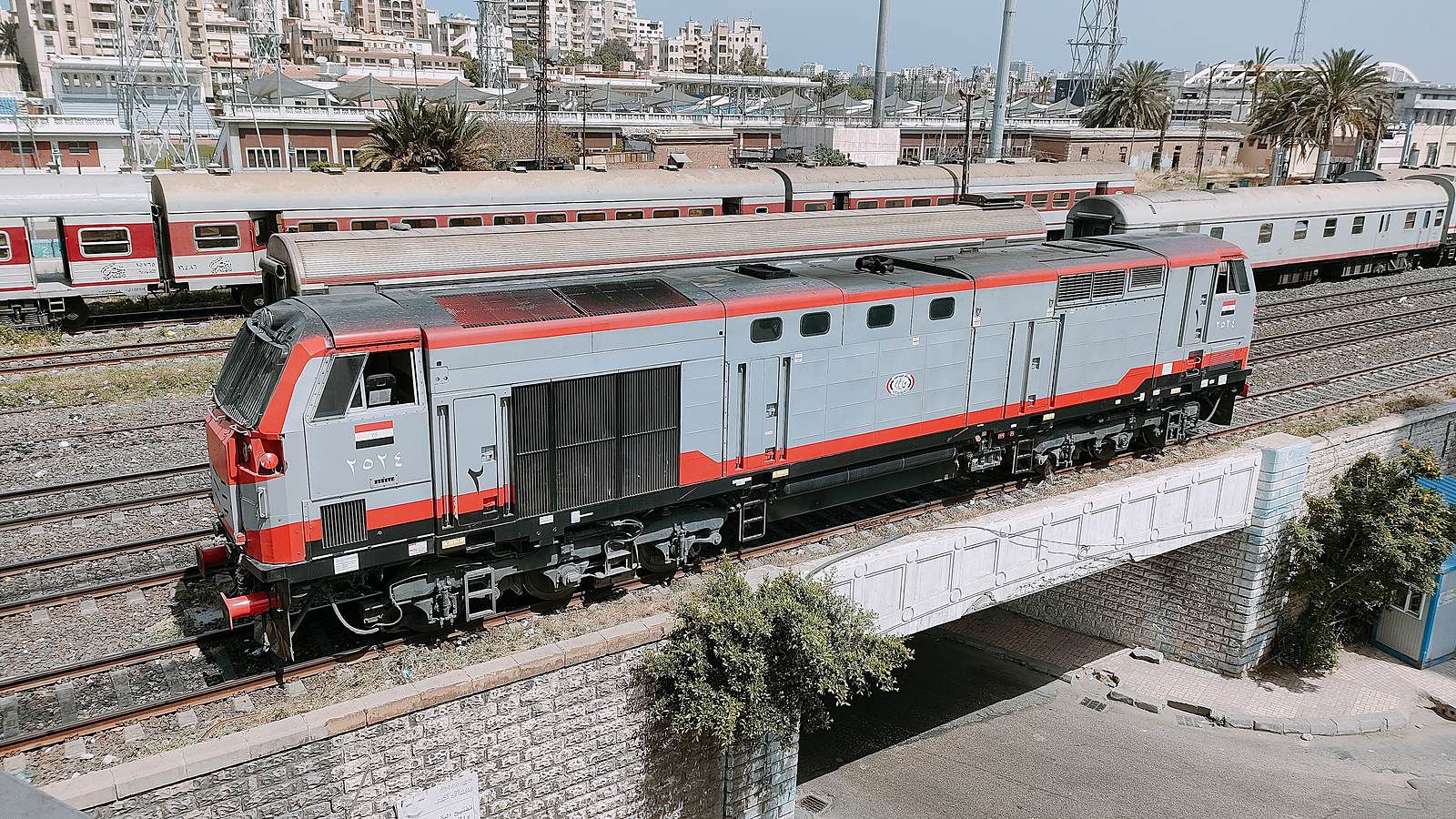
When Egyptian prosecutors gave their first substantive account of Sunday's train collision at al-Ayyat, the most striking finding was one the country had heard before. They said the driver of the Giza-to-Fayoum service had disabled his train's automatic control system. In April 2021, after two passenger trains collided in Sohag, prosecutors alleged that a driver and his assistant had done the same thing.
That repetition helps explain why a crash with a far lower toll than Egypt's worst rail disasters has produced demands for the transport minister to go, including from parties allied to the government. At least seven people died and more than 125 were injured, according to Ministry of Health and Population figures cited by Al Jazeera on Tuesday. The driver was among the dead.
The count moved quickly. The Health Ministry's early statement on Sunday gave four dead and 88 injured, Al Manassa reported, while an anonymous source quoted by Masrawy put the injured near 150, a figure never officially confirmed. By Monday, Egypt Independent and The National were citing seven dead and 114 injured, before the ministry's total rose again.
What prosecutors say happened
The Egyptian National Railways authority identified the trains as No. 134, a "Tahya Misr" service from Giza to Fayoum, and No. 2010, from Cairo to Aswan. Train 134 struck the rear of train 2010 on Sunday afternoon between Kafr Ammar and al-Reqqa stations, about 52 kilometres south of Cairo. Several carriages derailed, and traffic on the Upper Egypt line stopped in both directions until the railway restored it on Monday.
Neither the Transport Ministry nor the railway authority has published a cause. The nearest thing is the Public Prosecution's preliminary statement on Monday evening. According to The National and the Egyptian Gazette, it said examinations established that the driver had disabled the automatic system, without explaining why. The controller and stationmaster at al-Reqqa acknowledged failing to watch the control panel showing a signal's status, and the controller is accused of altering the signalling log to hide that failure. Both were remanded in custody, and the driver's assistant is being held for questioning. The driver cannot answer the allegation against him, and none of it has been tested in court.
Much remains open. Hassan Mahdy, a highway engineering professor at Ain Shams University, told Al Jazeera that investigators must establish why the Aswan train stopped on the main line and whether the second train's system warned its driver. Ahmed el-Derby, secretary of parliament's transport committee, said information from the signalling director showed the signals had issued a stop instruction, but that it was unclear whether the driver received it in time.
A safeguard that can be switched off
A rear-end collision is the failure train protection exists to prevent. A stopped train occupies a section of track, the signals behind it should hold the next train back, an onboard system should enforce that if the driver does not respond, and staff at a panel should see trouble developing. On the prosecutors' account, at least two of those layers were lost to human conduct at al-Ayyat, while how the signal itself performed has yet to be fully explained.
The shape of the accident is familiar. At al-Ayyat in October 2009, a train halted after hitting a water buffalo and another ran into it from behind; Daily News Egypt reported 18 deaths. At Sohag in 2021, a stopped train was likewise struck from behind. Prosecutors there also reported, according to Arab News, that an assistant driver forged a document, an echo of the altered log alleged this week.
Sohag exposed something more uncomfortable. Mada Masr and Ahram Online reported at the time that Transport Minister Kamel al-Wazir acknowledged having allowed the system to be deactivated in certain areas, in Mada's account to keep trains on time. One driver claimed verbal instructions to run with it off, which prosecutors disputed. Nothing reported suggests such an instruction applied on Sunday. It does show that the off switch has been a question of operating practice as well as individual misconduct.
Al-Ayyat's record, and what followed it
The place name carries particular weight. A fire on a train heading from Cairo to Upper Egypt in February 2002 remains the country's deadliest rail disaster, with reported tolls ranging from 361, the figure Daily News Egypt used, to the more than 370 cited to Al Jazeera this week. Al Manassa counted three crashes in the area in 2016 that killed 14 people, and two freight trains collided in the same district in September.
"The recurrence of train accidents in the al-Ayyat area, despite what the Transport Ministry has repeatedly announced regarding the development of the railway system, reflects the absence of genuine accountability for the officials responsible for those accidents." — Abdel Moneim Imam, MP and head of the Justice Party, to Al Jazeera
Ministers have paid for some of these disasters. Ibrahim el-Demeiri left office after the 2002 fire. Mohamed Lotfy Mansour went in October 2009, a day after telling television viewers he would stay and describing the crash as human error. Hisham Arafat resigned within hours of an unmanned locomotive hitting a barrier at Cairo's Ramses station in February 2019, killing at least 22 people.
Those departures did not end the sequence, and criminal responsibility has tended to settle lower down. A Cairo court acquitted all 11 officials tried over the 2002 fire. The people put on trial after the 2009 crash included conductors and signalmen, and the eight detained after Sohag were drivers, their assistants, a traffic control head and control tower guards.
Where the money went
The Transport Ministry says about $37 billion was allocated to transport investment between 2014 and 2024, Al Jazeera reported. That figure covers the whole sector, including monorails and high-speed rail, so it says little about conventional lines. MP Reham Abdel Nabi put railway investment since 2014 at about 300 billion Egyptian pounds, while Al Manassa cites a 225 billion pound plan for 2014 to 2024.
Irene Saeed, who leads the Reform and Development Party's bloc, has asked what share of the ministry's loans under al-Wazir went to safety, signalling and maintenance. It is the right question, because a headline investment total cannot show whether the money reached the equipment that stops one train hitting another. No answer had been reported by Tuesday.
The location sharpens the point. In March 2021 the World Bank approved a $440 million loan for a $681.1 million programme covering signalling on the Cairo–Giza–Beni Suef segment and an upgraded safety management system. Al-Ayyat lies on that corridor. None of the reporting reviewed for this article establishes how far that work had advanced at Kafr Ammar and al-Reqqa, or what signalling was in use there on Sunday. The ministry could settle that by publishing it.
The case for caution, and who answers
There is a serious argument against reading this crash as proof that the upgrades failed. Mahdy points to a shift towards electronic systems, and el-Derby cautions against direct comparison with earlier crashes because signalling has changed. Government statistics cited by Al Manassa show train accidents falling 22.7 percent to 170 in 2025. If prosecutors are right, people bypassed equipment that might have prevented this collision.
That defence has limits. The same statistics agency recorded serious incidents rising from 289 in 2020 to 752 in 2024, which cannot be squared at face value with 220 train accidents in 2024, so the two series plainly count different things and neither settles the argument. And if the allegations hold, a protection system that a driver can disable and a log its keeper can alter are weaknesses in the design of the safety regime, as well as in the people working within it.
The political response has split along revealing lines. The Justice Party, which won seats on the pro-government list, filed three urgent motions, and its MP Hussein Haridy urged al-Wazir to resign. Pro-government host Amr Adib asked on air how many must die before the minister leaves. The largest parties were more guarded, with Homat El Watan calling for accountability without naming him, while Tagammu's Atef el-Maghawry called for the whole government to go.
Al-Wazir, a former head of the army's Engineering Authority who took the post after Ramses, had apologised to injured passengers on Monday and pledged that those responsible would be punished. No resignation had been reported by Tuesday, when the transport committee met with him present. El-Derby said beforehand that the session was not meant to interrogate him.
"We do not support the hasty demands to dismiss officials, and dismissals alone do not represent a solution to the crisis." — Ahmed el-Derby, secretary of parliament's transport committee, to Al Jazeera
The record since 2002 supports him on dismissals, which puts the weight on the inquiry. Prosecutor General Mohamed Shawky has ordered Cairo University engineers to examine signalling and oversight across the railway authority, assess whether development work has actually prevented crashes, and identify anyone negligent, whatever their position. Egypt has tried new ministers and new loans. The test now is whether that report is published, and whether it goes further up than the signal cabin.
This report is based on Egyptian Public Prosecution, Health Ministry and railway authority statements as carried by Al Jazeera, The National, Egypt Independent, the Egyptian Gazette, Al Manassa and ABC News, as of Tuesday November 10, with archive reporting from Al Jazeera, Arab News, Euronews, Daily News Egypt and the World Bank's published project details. Casualty totals are provisional and may change. The prosecution's findings are preliminary allegations, no one has been convicted and the technical committee has not reported. The 2021 remarks attributed to the minister on automatic train control rest on search extracts of Mada Masr and Ahram Online, whose full articles could not be retrieved. Transliterations of names and stations vary between outlets.