
Formula One's owner missed Q2 estimates as revenue fell 15%. The stock rose anyway — and four banks spent August raising their price targets
Liberty Media's FWONK tracker posted its weakest quarterly numbers in years on August 6, then watched Wall Street lift targets as high as $134. The gap between the headline and the business explains why.
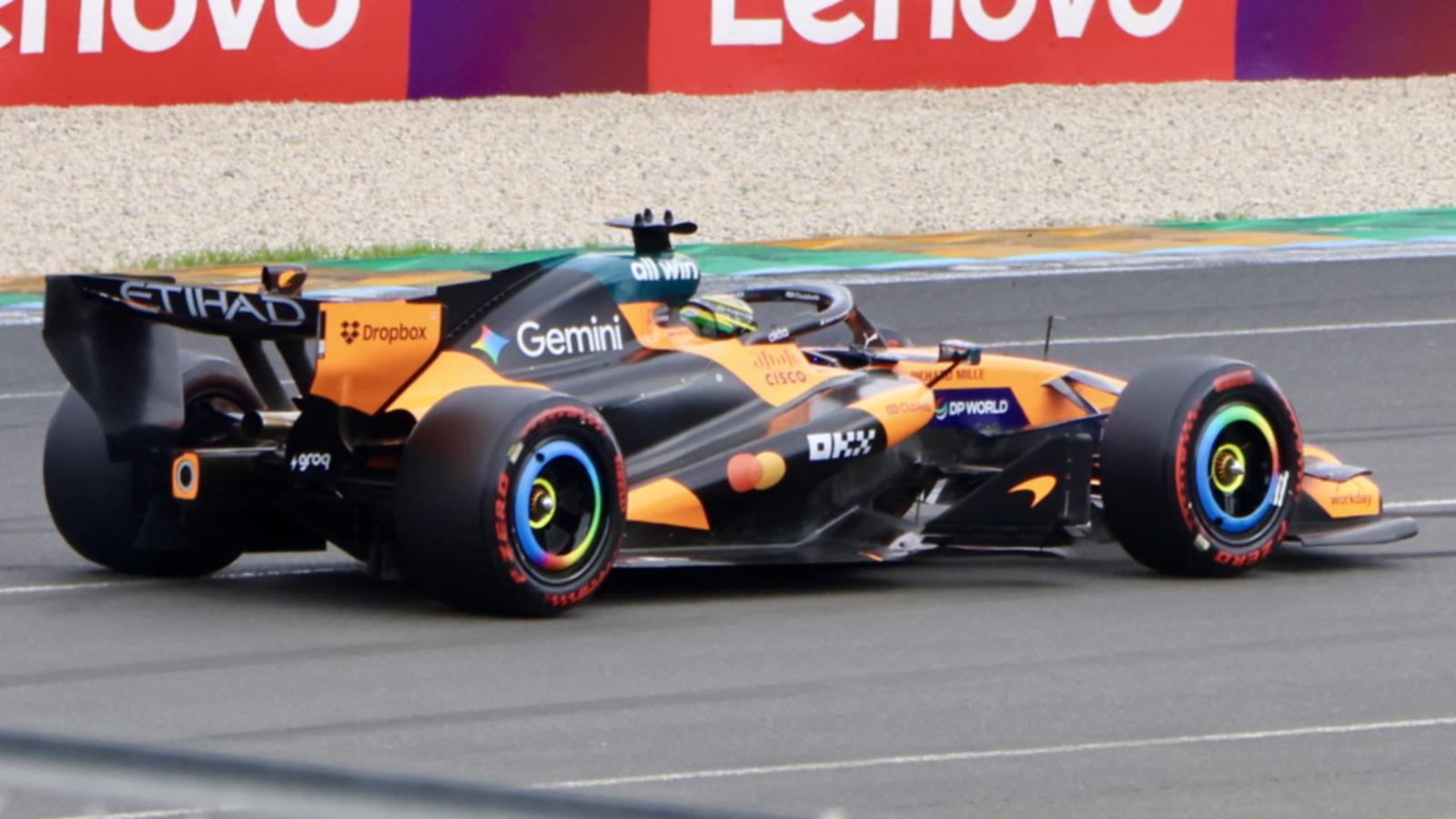
Formula One Group, the Liberty Media tracking stock that trades on Nasdaq under FWONK, is having one of the more unusual months a public company can have. On August 6, the company reported second-quarter results that missed Wall Street estimates on both the top and bottom lines — and the stock went up anyway. In the two weeks since, at least four major banks have raised their price targets on the shares.
Understanding why requires looking past a single quarter's numbers and into the structural story Liberty has been building around the world's fastest-growing motorsport franchise — a story that this year added a second racing series, a new American broadcast home, and a decade-long lock on its most valuable race.
An ugly headline with a simple explanation
On paper, the second quarter was a rough one. Liberty posted adjusted earnings of $0.24 per share against a consensus forecast of roughly $0.26, on revenue of $934 million versus the $957 million analysts expected. Net earnings from continuing operations collapsed to just $8 million, compared with $386 million in the same quarter a year earlier. Year-to-date Formula One revenue is down 15 percent, and adjusted OIBDA — the cash-flow measure Liberty prefers — is down 30 percent.
Those numbers look alarming until you see the asterisk: the race calendar. Formula One held just five grands prix in the second quarter of 2026, compared with nine in the same window last year. Because F1 recognizes most of its revenue when races actually happen, a back-loaded calendar mechanically drags reported results down in the first half of the year and inflates them in the second.
Management has been explicit that the shortfall is calendar variance, not softening demand — and investors, who have seen this movie before, largely agreed. FWONK shares rose about 3 percent in the session following the report and have traded in the mid-$90s since, giving the tracker a market capitalization of roughly $24 billion.
MotoGP: the second engine starts firing
The most important new line item in Liberty's results is MotoGP, the motorcycle racing world championship it acquired in July 2025. A year into ownership, the numbers suggest the playbook that transformed Formula One is being run again. MotoGP contributed $170 million of revenue in the second quarter and $264 million across the first half, with adjusted OIBDA of $76 million in the quarter and $92 million year to date.
Growth came from higher sponsorship revenue, improved race-promotion income and lower expenses — the same three levers Liberty pulled at Formula One after taking control of it in 2017. Management also points to a more stable commercial foundation underneath the sport, with new manufacturer and team agreements locked in through 2031.
For shareholders, the significance is diversification. FWONK is no longer a single-sport bet: the company now owns the commercial rights to the two premier motorsport championships on the planet, and the second one is already profitable under its ownership.
The Apple bet is paying off early
The biggest strategic swing of the past year was Formula One's decision to move its US broadcast rights from ESPN to Apple TV, in an exclusive five-year deal that began with the 2026 season. Apple is paying about $150 million per year — a substantial step up from ESPN's reported $90 million — but the move carried real risk: putting the sport behind a streaming paywall could have throttled the American audience growth that "Drive to Survive" spent years building.
So far, the fear looks unfounded. Apple said viewership for the opening race weekend was up year over year and exceeded both companies' expectations, and just three races into the season the company was describing audience numbers as well ahead of ESPN's, with more viewers across all three days of the race weekend.
The 2026 Formula 1 season on Apple TV is off to a strong start, with fans responding positively and viewership up year over year for the first weekend, exceeding both F1 and Apple expectations. — Eddy Cue, Apple senior vice president of services
Liberty Media chief executive Derek Chang has said the backlash executives braced for simply never materialized, pointing instead to stronger engagement and positive consumer reaction. Skeptics note that neither party has published detailed US audience figures — F1's own half-year review praised the partnership's "excellent viewership" without providing data — but the directional signals, and the roughly 67 percent step-up in rights fees, are unambiguously good for the top line.
Las Vegas, locked in through 2037
Liberty also spent the spring securing its crown-jewel assets. In June, Formula One signed a ten-year extension keeping the Las Vegas Grand Prix on the Strip through 2037 — a landmark commitment to a race Liberty promotes itself, backed by a reported $3.2 billion in local economic impact. This year's edition runs November 19–21. Miami, meanwhile, had already been extended through 2041.
Long-dated race contracts matter enormously for a rights business: they convert future promotion revenue from a hope into something close to a contractual annuity, which is precisely the kind of visibility that lets analysts underwrite higher multiples.
A new-look sport on the track
The commercial story is landing in the middle of the most consequential sporting reset in a generation. The 2026 regulations introduced smaller, lighter cars — roughly 30 kilograms off the minimum weight — powered by new hybrid units that split output 50:50 between combustion engine and electric power, running on fully sustainable fuel. Active aerodynamics have changed how drivers manage a lap.
The grid also expanded to eleven teams with the arrival of Cadillac, the first new constructor since 2016, fielding the veteran pairing of Sergio Pérez and Valtteri Bottas and bringing General Motors — and a massive American marketing machine — into the paddock. New rules eras historically shuffle the competitive order, and unpredictability is good television. An eleventh team also means an eleventh entity paying its way into the ecosystem while deepening F1's penetration of the US market, still the sport's most important growth frontier.
Wall Street's verdict
The analyst community has responded to all of this by looking straight through the second-quarter miss. On August 7 — the day after earnings — UBS raised its price target on FWONK from $104 to $110, and another firm lifted its target from $114 to $117, citing strong underlying F1 economics. J.P. Morgan maintained its buy rating on August 11. Deutsche Bank went to $115 from $105 on August 16, and Guggenheim followed a day later, raising targets to $134 and $124 on the two share classes. Against a share price in the mid-$90s, the street's consensus implies meaningful upside.
On the balance-sheet side, Liberty priced a $600 million private offering of senior notes on August 10, adding capital flexibility as it continues integrating MotoGP.
The bottom line
FWONK enters the back half of 2026 with a loaded second-half race calendar set to reverse the first half's optics, a new US media deal outperforming expectations, its marquee American races locked up for a decade or more, a second global championship now contributing real profit, and a refreshed on-track product with an American manufacturer on the grid.
The second quarter's headline numbers were the weakest in years; the underlying business may be the strongest it has ever been. That gap — between what the quarter said and what the company is — is exactly what Wall Street spent August repricing.
TNN Analysis is independent commentary based on public filings, company statements and reporting from major outlets. It is not investment advice.