
Tesla raised the Cybertruck's price by $5,000 overnight without changing a single specification. US sales of the truck fell 45 percent in the first quarter
The configurator was quietly updated on Monday night. The Dual Motor now costs $74,990 — up from a promoted $59,990 in February — and the Premium is $84,990. Tesla sold about 3,519 Cybertrucks in the United States in the first quarter, against a Texas plant built for 125,000 a year. Raising the price of a slow seller is either confidence or capacity arithmetic.
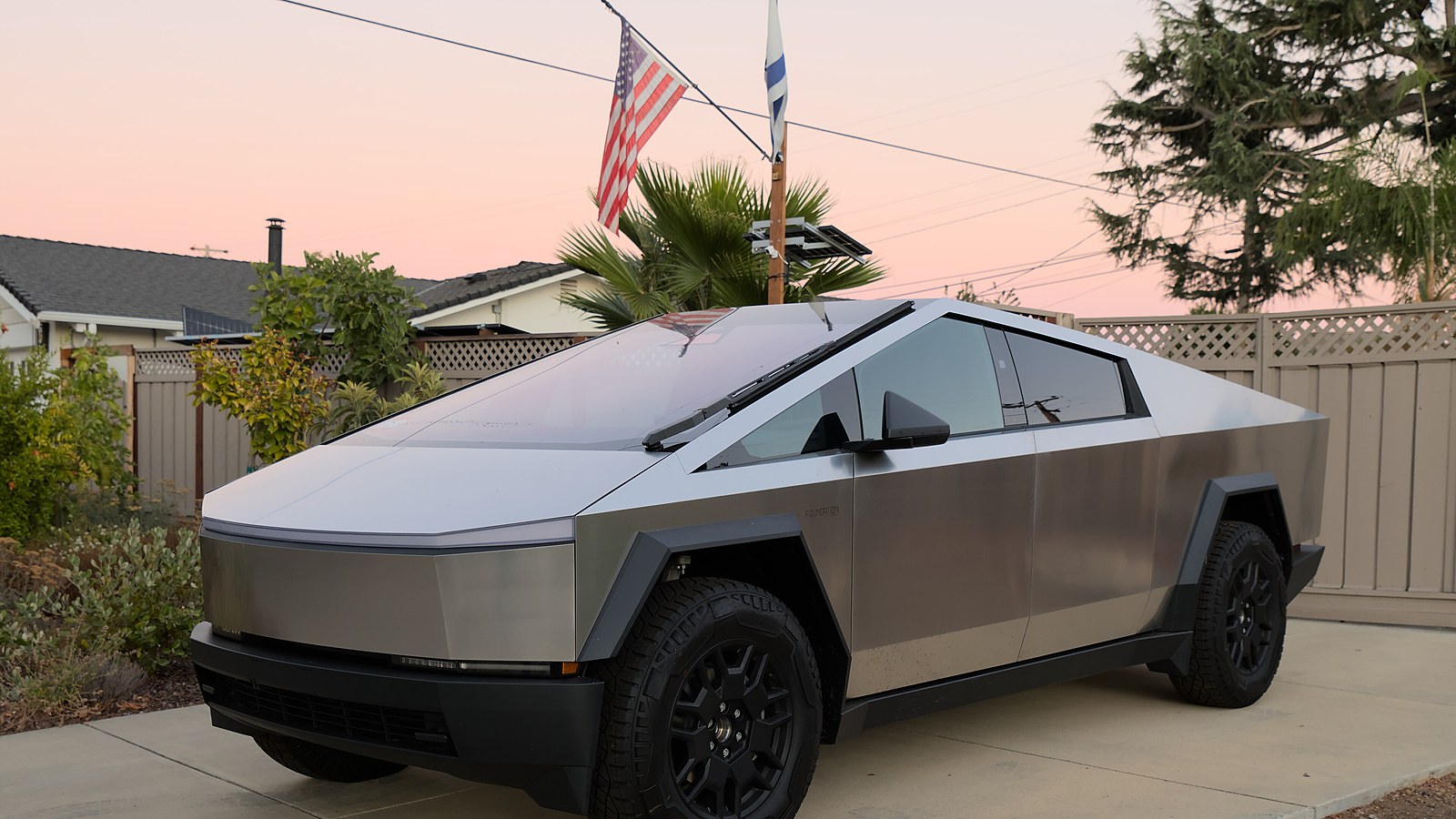
There was no announcement. On the night of August 24, Tesla's US configurator changed two numbers. The Cybertruck Dual Motor all-wheel drive went from $69,990 to $74,990. The Premium all-wheel drive went from $79,990 to $84,990. Nothing else moved — not the specifications, not the range figures, not the options list. The range-topping Cyberbeast stayed at $99,990.
Tesla shares fell 3.83 percent on Monday and recovered to trade roughly 1 percent higher before Tuesday's open. The move is small. What it reveals about the truck is not.
The price history is the story
A $5,000 increase reads differently depending on where you start counting. Tesla launched the Dual Motor Cybertruck at a promoted $59,990 in February 2026 — the long-awaited cheaper version, the one buyers had been told to wait for. It went to $69,990 in March. It is now $74,990. In six months, the entry price of the Cybertruck has risen 25 percent, and the Premium trim has gone from $79,990 to $84,990 over the same stretch.
The increases are 7.1 percent on the Dual Motor and 6.2 percent on the Premium. Because the Cyberbeast was left alone, the gap between the Premium and the top trim has narrowed from $20,000 to $15,000 — which, whether by design or by accident, makes the most expensive version an easier upsell for anyone already comparing all three.
What the sales numbers look like
Tesla delivered roughly 3,519 Cybertrucks in the United States in the first quarter of 2026. That is down about 45 percent from the 6,406 delivered in the same quarter a year earlier, and down about 15 percent from the 4,140 of the preceding quarter. It was the weakest quarter the truck has had since deliveries began in late 2023.
The trajectory behind it is steeper than any single quarter suggests. The Cybertruck sold 38,965 units in 2024, its first full year. It sold 20,237 in 2025, a decline of 48.1 percent. The Giga Texas line that builds it was configured for around 125,000 units a year. On 2025's volume, the plant ran at roughly a sixth of what it was built to do.
There is a defensible explanation for part of the first-quarter drop: buyers were waiting for the cheaper all-wheel-drive version, which had been promised and not yet shipped in volume. That explanation has a short shelf life. The cheaper version arrived in February at $59,990 and has since been repriced twice, to a level $15,000 above where it launched. Anyone who waited for the affordable Cybertruck waited for a truck that no longer exists at that price.
It is worth remembering what the truck was supposed to be. When the Cybertruck was unveiled in 2019, Elon Musk described a vehicle that would take on the Ford F-150 — the best-selling vehicle in the United States for four decades — and Tesla reported reservation numbers in the hundreds of thousands. The pickup segment was chosen precisely because it is the largest and most profitable in the American market. Three years into production, cumulative deliveries since launch are well under 70,000, which is roughly what Ford sells in five weeks.
Two readings of a price rise
The charitable reading is that demand at the current price exceeds supply. Tesla has raised prices on models with long wait times before, and a manufacturer with more orders than output has no reason to leave money on the table. If Cybertruck order backlogs have lengthened since the Dual Motor launch, a $5,000 increase is simply the market clearing.
The less charitable reading is that this is cost, not confidence. The Cybertruck's stainless steel body, 48-volt architecture and steer-by-wire system make it the most expensive vehicle Tesla builds per unit, and it is being built far below the volume the line was designed for — which means fixed costs are spread across a fraction of the intended units. Tariffs on imported components and the memory and battery input costs moving through the entire industry this year push in the same direction. At 3,500 trucks a quarter, the economics of the programme are difficult regardless of what the sticker says.
A third possibility sits between them. Tesla may simply have concluded that the Cybertruck's remaining buyers are not price-sensitive. The people still ordering one in the third year of production are not cross-shopping on monthly payments; they want this specific object. A buyer like that will absorb $5,000. A buyer weighing a Rivian R1T or a loaded F-150 Lightning Platinum — both of which the Dual Motor now sits much closer to — may not.
Tesla moves prices often, and that pattern hits resale and ownership costs harder than any single change in MSRP.
The competitive backdrop has not helped. The electric pickup segment as a whole has grown far more slowly than manufacturers planned, and every entrant has retrenched: Ford scaled back Lightning ambitions, General Motors reworked its electric truck plans more than once, and Rivian's volumes remain modest against its capacity. Buyers who want a work truck have been slow to accept range that falls sharply when towing, and charging infrastructure built for cars is not built for something towing a trailer. A niche does not become a mass market because three companies decided it should.
The resale problem the increase makes worse
Frequent, large price changes are corrosive to a vehicle's used value, because the used market prices against whatever the new one costs today. Cybertruck resale has been the weak point of the programme for two years; trade-in and auction reporting has put some high-specification trucks that stickered near $100,000 at values around $63,000.
A price rise nominally helps that arithmetic — a higher new price should lift used values under it. But it only helps if the higher price holds. Tesla's record on the Cybertruck is a promoted launch price, a $10,000 increase a month later, and a further $5,000 five months after that. Buyers who have watched that sequence have no reason to treat today's number as durable in either direction, and uncertainty is itself a discount.
For small businesses weighing a Cybertruck against depreciation and Section 179 treatment, that uncertainty is the operative cost. The sticker is knowable. What the truck is worth in three years, on a model whose price has moved three times in six months, is not.
Tesla's own disclosure practice makes the truck harder to assess than it should be. The company reports deliveries in two buckets — Model 3 and Model Y in one, "other models" in the other — so Cybertruck volumes are never published directly. Every figure quoted about the truck, including the ones in this article, is derived from vehicle registration data compiled by third parties. That is reliable enough for direction and imprecise at the margins, and it is a choice: a product selling well is usually one a company breaks out.
A footnote to a company having a good year
None of this is Tesla's main story. The company delivered 480,126 vehicles in the second quarter of 2026, up 25 percent year over year, roughly 74,000 above Wall Street estimates and its best second quarter ever — ending two years of delivery declines. Revenue reached $28.24 billion.
The profitability underneath was thinner: operating margin compressed to 1.4 percent, automotive gross margin excluding regulatory credits fell to 16.3 percent, and free cash flow was negative $1.09 billion as capital spending on AI, robotics and manufacturing ran hard. The stock fell 8 percent on the delivery report and has spent the year down. Investors are not pricing Tesla on how many cars it sells.
They are pricing it on autonomy and robotics, which is where the company's attention has gone. The steering-wheel-free Cybercab is due in Austin on September 3. Robotaxi permits, fleet expansion and the humanoid programme absorb the capital and the narrative. The Cybertruck, launched as the company's most conspicuous product, has become a line item.
Which is what makes Monday night's edit legible. A company that expected the Cybertruck to be a volume product would be cutting the price to fill the plant. Tesla raised it on a truck selling at a sixth of the line's capacity, quietly, with no announcement, on the two trims aimed at ordinary buyers — and left the halo version alone. That is the pricing of a low-volume specialty vehicle, not a pickup meant to take on Ford. The strategy may well be correct. It is simply no longer the strategy the Cybertruck was launched with.
Pricing changes are as recorded on Tesla's US configurator on August 24–25, 2026, and reported by Motor1, Reuters and Benzinga. Cybertruck delivery estimates are US registration-derived figures as reported; Tesla does not break out Cybertruck volumes. Company-level delivery, revenue and margin figures are from Tesla's second-quarter 2026 results.