
Flydubai co-pilot planned to crash flight FZ1073 into Ben Gurion airport, investigators believe — after Oman Air had already grounded him over extremist views
The Omani first officer attacked his captain with the cockpit crash axe and sent a Boeing 737 MAX with about 174 passengers into a 14,000-foot dive. The plot failed because the wounded captain unlocked the one door built to keep attackers out. The harder question is how the man got into that seat.
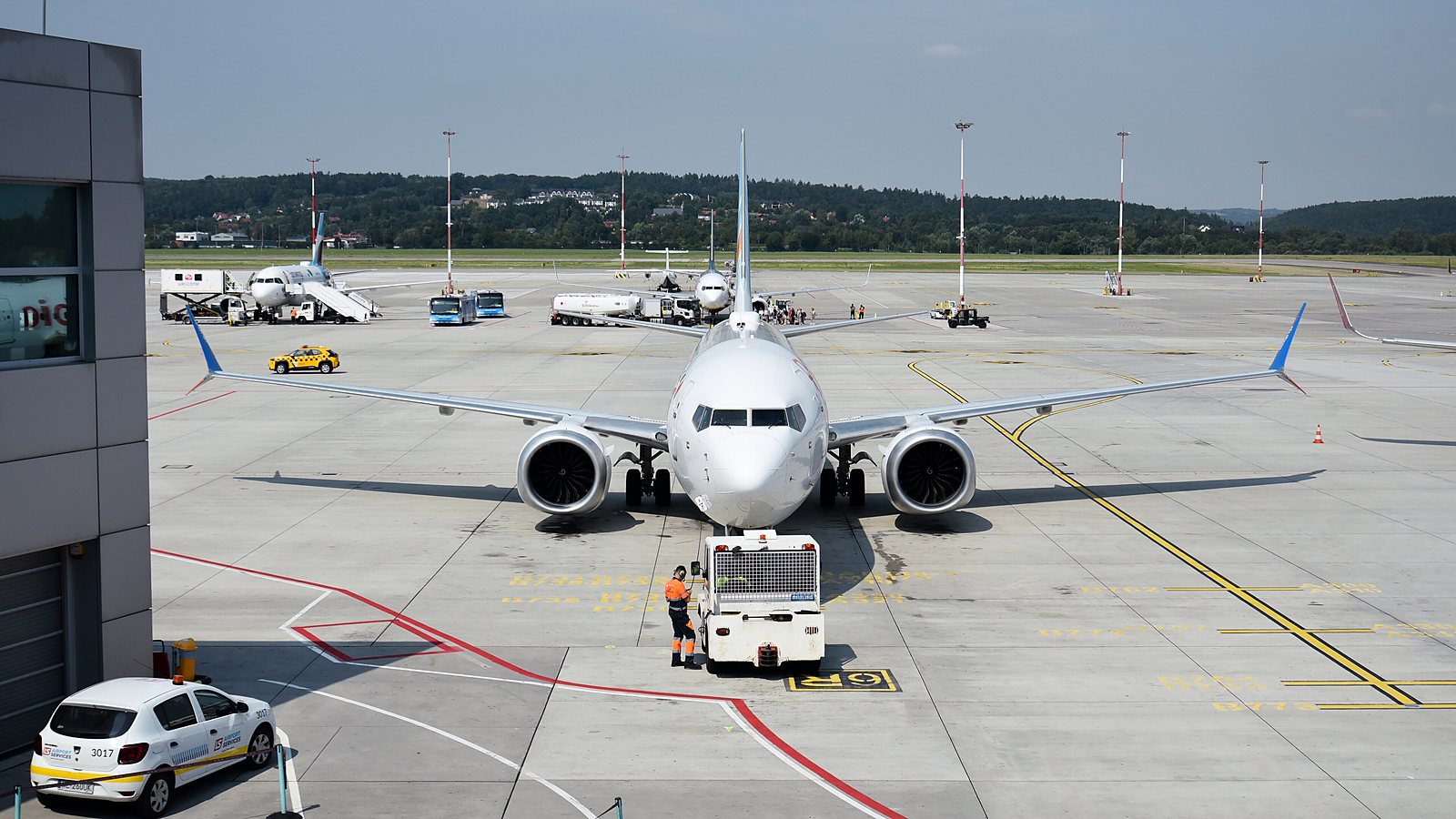
The most important fact about flydubai flight FZ1073 is not the axe, the dive or the passengers who stormed the flight deck. It is that the man accused of trying to turn a Boeing 737 MAX into a missile had, according to regional officials, already been taken off flying duties by his previous airline because of concerns about his extremist views — and was then hired by another carrier, cleared through standard checks, and rostered on a flight into the one country whose rules say a pilot of his nationality should never have been there.
An investigation into last Wednesday's attack has found that the co-pilot intended to crash the aircraft into Israel's Ben Gurion International Airport, a person familiar with the matter told NPR on Monday. Israeli media, cited by the BBC, went further: the co-pilot reportedly told investigators that after disabling the captain he planned to keep flying normally into Israeli airspace, accept landing clearances, and then fly the jet into the airport or a tower block in central Tel Aviv, in the manner of the September 11, 2001 attacks. None of this has yet been confirmed by Emirati or Israeli authorities.
What happened on board
FZ1073 left Dubai at 7:05 a.m. local time on Wednesday, September 30, bound for Tel Aviv, and climbed to 34,000 feet, according to Flightradar24 data reported by Al Jazeera. A little over two hours into the flight, it began to fall. Flightradar24 said that at one point the aircraft descended more than 14,000 feet in under 30 seconds.
Inside the cockpit, the first officer had attacked the captain, Smit Machchhar, an Indian national. On Saturday the UAE's attorney general, Hamad Saif Al Shamsi, confirmed for the first time that the weapon was the crash axe — a lightweight emergency tool that every airliner carries on the flight deck for cutting through panels after an accident — and that the co-pilot had "attempted to take control of the aircraft's controls".
Machchhar, badly wounded, did the thing that decided the outcome. Lying on the cockpit floor and feeling the aircraft plunge, he reached the door and unlocked it. Passengers and crew poured in and overpowered his attacker. One passenger, an Israeli plumber named by ABC News as Yaniv Hayoun, said he pulled back on the controls to steady the jet until off-duty pilots travelling in the cabin took over. The aircraft levelled out around 15,000 feet, its transponder was set to 7500 — the code for unlawful interference — and it landed at Tabuk in north-western Saudi Arabia at 9:45 a.m. local time.
"When I was down, I could feel that the aircraft was plummeting, and I knew this is the last chance to do something." — Captain Smit Machchhar, speaking to Indian Prime Minister Narendra Modi from hospital in Abu Dhabi
Everyone on board survived. The airline put the number of people on the flight at 172; other reports put the passenger count at 174, and the BBC at more than 180. A second flydubai aircraft carried the stranded passengers on to Israel late Wednesday. Photographs of the jet at Tabuk show it missing a large section of its rudder — a measure of how close the dive came to the airframe's limits.
The door that worked both ways
The reinforced cockpit door is the central security innovation of the post-9/11 era. It was designed to stop hijackers in the cabin from reaching the controls, and on that measure it has been a success. Its blind spot has been known since March 24, 2015, when the co-pilot of Germanwings flight 9525 locked his captain out and flew an Airbus A320 into the French Alps, killing all 150 people on board. French investigators concluded he had acted deliberately and had been suffering from a mental illness he had concealed from his employer.
After Germanwings, Europe's aviation regulator, EASA, recommended that two people be in the cockpit at all times. The rule did not last. In July 2016 EASA replaced the blanket recommendation with a bulletin asking each airline to assess its own risk, and German carriers ended the mandatory practice by June 2017.
FZ1073 shows the inverse of Germanwings. This time the captain was inside, the door held the cabin back, and the attacker was already on the flight deck. The door only stopped being a barrier because the injured captain opened it from within. Had he been unconscious, the people who saved the aircraft would have been on the wrong side of the hardest wall on the plane. That is why the security question now being asked is not about doors at all. It is about who is allowed through them in the first place.
A pilot who should not have been on the roster
Multiple outlets, including ABC News and the Associated Press, have named the co-pilot as Hamam al-Hammami, a 29-year-old Omani citizen; CNN reported that he was born in the UAE to a Syrian mother. Officials told ABC News that while he was a co-pilot trainee at Oman Air in 2024 he was found with extremist material and moved to an administrative job. The Wall Street Journal reported that Oman barred him from flying after government surveillance logged visits to radical websites. There has been no official confirmation of his identity or his views.
His later path is partly on the record. Royal Air Maroc confirmed to ABC News that he completed a three-month theoretical training period with the airline in 2025 as part of its pre-employment process, and was not selected. Australian federal police said a joint counter-terrorism team in Victoria is investigating his links to Australia, where local media report he studied between 2015 and 2017. He joined flydubai roughly eight months ago, according to Simple Flying, after what regional officials described as standard security checks that did not look for signs of radicalisation.
Then there is the roster. Israel does not permit pilots who are citizens of countries without diplomatic relations with it — Oman among them — to operate flights into its airspace. Regional officials told the AP that the Emirati side shared the passenger and crew list ahead of departure. Israel's Shin Bet security agency says the transport ministry is responsible for vetting such lists from foreign airlines; Transport Minister Miri Regev says her ministry never received them and that oversight belongs to the Shin Bet and the Mossad. Somewhere in that gap, an Omani first officer was cleared to fly a full aircraft into Ben Gurion.
The politics landing on top of it
Flydubai has suspended all flights to Tel Aviv at the request of the authorities. The route is one of the more visible commercial dividends of the 2020 Abraham Accords, and the investigation is being run by the UAE — which asserts jurisdiction because the aircraft is Emirati-registered — with Israeli officials briefed and involved in questioning. On Sunday night Prime Minister Benjamin Netanyahu ordered the head of the National Security Council to review all security aspects of foreign civil aviation into Israel, after saying the attacker had slipped through a "loophole" and had undergone "Islamist radical indoctrination".
The timing is acute. Israel goes to national elections within weeks — the first since the Hamas-led attack of October 7, 2023 — and Netanyahu has campaigned on being the leader who keeps external threats at bay. His opponents have seized on the vetting failure as another breach on his watch. NPR reported that analysts nonetheless expect the episode to move few votes in a tight race.
The case for caution
There are good reasons not to treat the investigators' account as settled. Much of what is known about the co-pilot's intentions comes from anonymous sources briefing Israeli and American media while he is in Emirati custody, and from his own reported statements to interrogators — including a claim that he called off an earlier attempt because he recognised someone on board. The UAE attorney general has said only that the full circumstances, motives and links will be announced when the investigation concludes.
It is also worth being precise about what failed. The aircraft did not. The captain's training did not, and the crew and passengers who intervened performed exactly as post-9/11 doctrine hopes the cabin will. What appears to have failed is the human layer upstream: an airline's concern that apparently did not travel with the pilot, a hiring check that did not ask the right question, and two Israeli agencies each saying the crew list was the other's to read.
That is the durable lesson of FZ1073. Cockpit doors, transponder codes and dive recovery are engineering problems that the industry has largely solved. Whether a warning raised about a pilot at one carrier reaches the next carrier, and the next country, is an information-sharing problem — and it is the one that put a man with an axe in the right-hand seat of a flight to Tel Aviv.
This analysis is based on reporting by NPR, the BBC, ABC News, Al Jazeera, the Associated Press and Simple Flying, and on statements from the UAE attorney general, flydubai and the Israeli prime minister's office, as of Monday, October 5. The co-pilot's identity, his alleged extremist views and his reported plan to target Ben Gurion airport have not been officially confirmed by Emirati or Israeli authorities and rest on unnamed sources. Passenger counts differ between the airline and media reports. The investigation is ongoing and its findings may change this account.