
A fund that returned 439 percent in six months fell from $45 billion to about $10 billion in days. The SEC has now subpoenaed the four banks that lent it the leverage
Goldman Sachs, JPMorgan, Citigroup and Bank of America have been asked for records of Situational Awareness's trades, its use of leverage and its communications with them. Nobody has been accused of wrongdoing. What the inquiry will document is how much borrowed money is standing behind the AI trade.
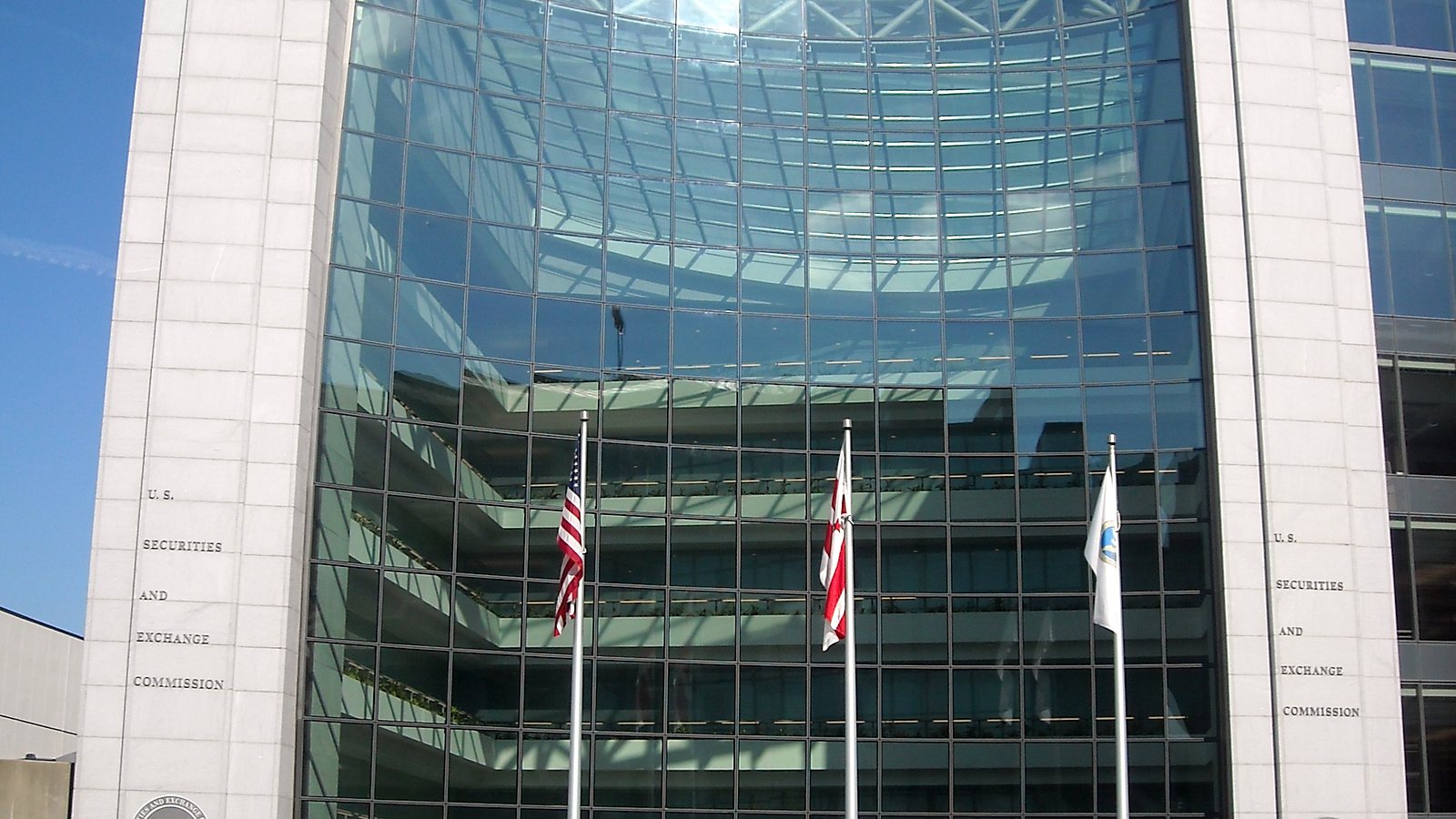
The Securities and Exchange Commission has sent subpoenas to Goldman Sachs, JPMorgan, Citigroup and Bank of America seeking information about their role in the near-collapse of Situational Awareness, the AI-focused hedge fund run by former OpenAI researcher Leopold Aschenbrenner. Regulators want records of the fund's trades, its use of leverage, and its communications with the banks that financed it.
Goldman Sachs, JPMorgan and Citigroup declined to comment. The fund itself issued a statement that is, in its way, entirely reasonable. "It is to be expected that regulators would closely examine any funds that are high profile, produce significant returns, or have particularly dramatic drawdowns," it said. "We are a highly-regulated business and will cooperate to the fullest extent with any regulatory request."
It is worth stating plainly what an information request is and is not. Neither the fund nor any bank has been accused of wrongdoing. SEC inquiries frequently end without enforcement action. The subpoenas are notable not because someone is in trouble but because of what they will assemble: a documented record of how much borrowed money was standing behind one investor's bet on artificial intelligence, and who supplied it.
What happened in late July
Situational Awareness had been the most spectacular performance story on Wall Street. According to an investor letter dated July 24 and reviewed by the Financial Times, the fund returned 439 percent net in the first half of 2026. Assets stood at roughly $45 billion.
Within days it was down to about $10 billion. The mechanism was straightforward and violent. The fund ran large, concentrated, levered positions — SK Hynix and CoreWeave among them — with reported leverage of up to 400 percent. In late July the market turned against the AI capital-expenditure trade: memory makers and infrastructure names were sold hard while the software sector, long unloved, rallied. Both sides of the book moved the wrong way at once. Margin calls followed from several prime brokers.
At that point the fund had no discretion left. Forced to raise cash against positions that were themselves falling, it unwound essentially its entire public equity portfolio. Ken Griffin's Citadel bought the bulk of it, at a discount understood to be around 10 percent. Griffin told investors in a letter on Friday that Citadel has since offloaded roughly 80 percent of the risk it took on. SK Hynix and CoreWeave have rallied since.
About two-thirds of the fund's holdings were long and short positions in public equities, according to people familiar with it. The remainder was private stakes, dominated by a multibillion-dollar investment in Anthropic — illiquid, and therefore untouched by the unwind.
Why the banks are the subject
The SEC is not asking the fund what happened. It is asking the fund's lenders. That choice reflects where the interesting information actually sits.
Leverage of 400 percent means roughly four dollars of exposure for every dollar of capital. No single prime broker extends that to one client on one set of positions; it is assembled across several, each of which sees its own slice of the book. The risk that emerges — a highly concentrated position, financed several times over, in securities that all move together — is visible to nobody in full, including sometimes the fund.
That structure is precisely what regulators examined after the collapse of Archegos Capital Management in 2021, which cost its prime brokers more than $10 billion between them. The lesson drawn then was that prime brokers underwrite each client in isolation while the client's actual leverage is the sum of what they all agreed to. Subpoenaing four banks at once, for trades and for communications, is how you reconstruct that sum after the fact.
Prime brokerage is also a business with its own incentives, and they run toward saying yes. A fund returning 439 percent generates enormous financing fees, securities-lending revenue, and execution flow; it is the client every desk wants and no desk wants to lose. The risk officer who declines to extend another turn of leverage to the best-performing fund on the street is making a decision that looks wrong every day until the one day it looks right. That asymmetry, rather than any individual failure of judgement, is what regulators keep returning to.
The debacle has cast light on the various ways in which leverage is increasingly underpinning the wider AI boom.
The part that matters beyond one fund
There is a difference between an expensive market and a levered one. An expensive market falls and stays down until earnings catch up. A levered market falls faster than anyone intends, because falling prices force selling, and forced selling lowers prices further. The distinction is the whole of what late July demonstrated.
The AI build-out is being financed with an increasing amount of borrowed money at every level. Data centres are funded through debt and structured vehicles. Chip purchases are backed by vendor arrangements and financing guarantees. And, as Situational Awareness showed, the equity positions expressing the trade sit on prime-brokerage margin. None of that is improper. All of it means a drawdown propagates rather than settles.
The speed of what happened is the evidence. A fund does not go from $45 billion to $10 billion because its thesis was disproved in a week. It goes there because its positions were financed in a way that removed its ability to wait. Aschenbrenner's view of where AI is heading may turn out to be right; SK Hynix and CoreWeave both recovered after Citadel took them on. He was not solvent long enough to find out.
The composition of what survived is instructive too. The public book — the levered, liquid, margin-financed third of the portfolio that could be sold in a day — is gone. The private stakes, led by the Anthropic position, are intact, because nobody can issue a margin call against an asset that has no daily price. An investor who put the same conviction into both halves of the same thesis kept the half that could not be marked and lost the half that could. That is not a comment on which bet was better. It is a description of what liquidity does under stress.
The rescue, and what it says about the plumbing
Citadel's role deserves attention. A single multi-strategy firm was able to absorb the public book of a $45 billion fund inside a day, at a roughly 10 percent discount, and then distribute 80 percent of the resulting risk within a month. That is a demonstration of extraordinary balance-sheet depth, and it prevented a disorderly liquidation that would have hit the same AI names every other investor holds.
It is also a demonstration of concentration. The market's shock absorber, in this instance, was one firm's willingness to catch the position. That worked. It is not a mechanism anyone designed, and it is not one anybody can count on twice.
Aschenbrenner, meanwhile, has not gone away. Days after the near-implosion, the fund completed a $400 million private investment. Still in his mid-twenties, he raised his first $225 million in 2024 from Stripe's Patrick and John Collison, former GitHub chief executive Nat Friedman and investor Daniel Gross on the strength of an essay arguing that artificial general intelligence was closer than governments understood, and he had two of the best years any manager has had in recent memory before the worst week.
What the subpoenas will and will not settle
The likeliest outcome is no enforcement action at all. Concentrated positions are legal. High leverage is legal. Selling into a margin call is not merely legal but compulsory. The banks extended credit against collateral and, unlike the Archegos episode, appear to have come through without catastrophic losses of their own.
What the inquiry produces instead is a record — of how large a single fund's AI exposure had become, how many institutions financed it, and whether any of them understood the aggregate. That record is worth having, because the conditions that made late July possible have not changed. The AI trade is still concentrated in a handful of names, still crowded with investors holding the same thesis, and still financed with borrowed money whose true total nobody publishes.
The market has already moved on: the stocks recovered, the fund raised fresh capital, Citadel took its profit. What remains is the demonstration that a $45 billion position in the most consensus trade in the world could be dismantled in a few days by a price move, and that the only reason it did not become everyone's problem is that one firm chose to buy it.
Subpoena details are as reported by The New York Times, which broke the story, and by Reuters, Bloomberg and CNBC. Performance and asset figures are from investor letters reviewed by the Financial Times and reporting by CNBC. Neither Situational Awareness nor any bank named has been accused of wrongdoing.