
France blames Iran's Revolutionary Guards for the cyberattack that overheated fridges at about 700 supermarkets, as Tehran denies it and France's cyber chief says weak passwords left the controllers open
Paris has named an IRGC-linked unit, Shahid Kaveh, for October's sabotage of refrigeration controllers and wants European sanctions. Iran calls the accusation baseless. The mechanism is better documented than the culprit: internet-facing Danfoss and Dixell panels, unlimited defrost cycles, and temperature alarms switched off overnight.
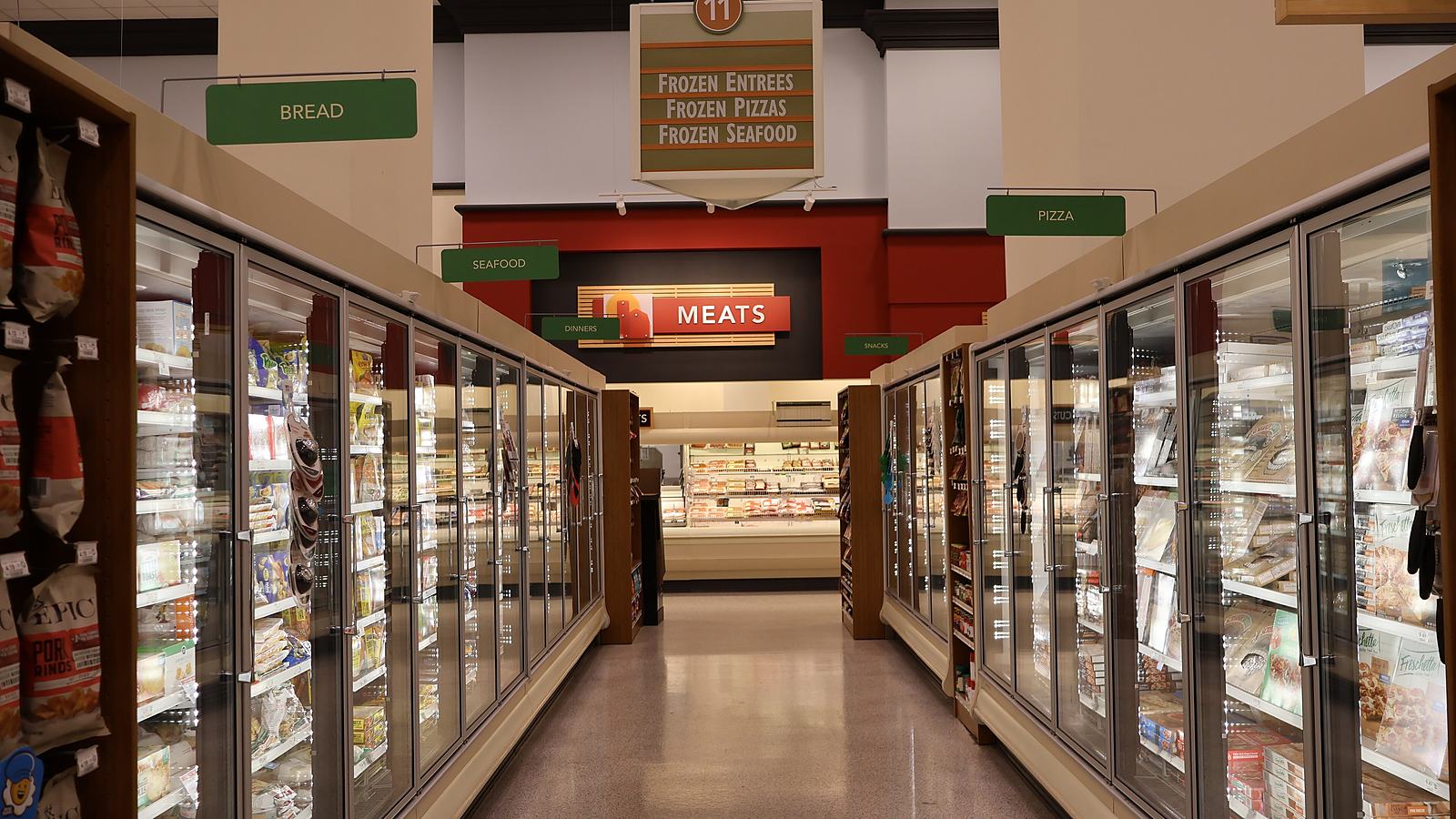
The tool used in what France now calls the first cyber campaign on its soil carried out purely for sabotage was a function already built into the equipment: defrost. According to the Paris prosecutor's office, attackers reached Danfoss and Dixell refrigeration controllers through their web interfaces on the night of October 11 to 12, started defrost cycles with no time limit and switched off the alerts meant to sound when temperatures climbed. Cabinets at about 700 of the country's 10,000 supermarkets reached as much as 50C for around six hours, the Associated Press reported.
On Monday, France put a name to it. The foreign ministry, the Paris prosecutor and the national cybersecurity agency, ANSSI, blamed Shahid Kaveh, a unit they describe as affiliated with the cyber arm of Iran's Islamic Revolutionary Guard Corps. On Tuesday, Iran's foreign ministry categorically rejected the accusation. What happened to the fridges is not in dispute. Who did it is a French government accusation, and Tehran denies it.
How a refrigeration controller ends up on the internet
A supermarket's cabinets are generally run through a central panel that lets temperatures be monitored and adjusted remotely, as analysts told CBC. France's incident response team, CERT-FR, named four affected product families: Danfoss AK-SM, Danfoss AK-SC, Copeland xweb and Dixell xweb. Dixell is an Italian brand owned by the American manufacturer Copeland.
The connection exists for ordinary reasons. Infosecurity Magazine reported that European food-safety rules require timestamped temperature records and an alarm for abnormal rises, and that the same link allows remote maintenance. Coopérative U's chief executive said the group's fridges are connected so that anomalies can be caught around the clock. CERT-FR's advice shows how embedded this is: it tells operators to check their insurance terms before cutting data uploads to their refrigeration contractor.
The weakness lies in how that link is built. Cyber insurer Coalition told The Register that between September 7 and October 6 it counted 1,506 IP addresses exposing a Danfoss web admin panel, 820 of them on French networks. Félix Aimé of the French firm Sekoia put French exposure above 1,700 instances before the attack, a different count from a different method. Neither figure means every device was vulnerable. Both mean a target list could be compiled from outside a retailer's network.
What the attackers changed
Commercial refrigeration has to melt the frost that builds up on its evaporators, so controllers include a heating cycle that normally runs briefly and within limits. A Belgian refrigeration executive told the Belga news agency that the same evaporator defrost mode was forced in later attacks. Amir Preminger, chief technology officer at the industrial security firm Claroty, told Infosecurity he did not consider the operation sophisticated, but said a defrost cannot be triggered by entering a wrong value.
Disabling the alarms is what turned a fault into a loss. The attack ran overnight, with the warnings that would have reached staff turned off. Le Monde, as cited by Infosecurity, described a store near Bordeaux where a freezer setting was changed from minus 22C to 150C, with a technician seeing several settings altered each second, which suggests automation. Aimé told CNN the perpetrators did not appear to have placed malicious code on the controllers, which could make them harder to trace.
France's foreign ministry estimated food losses at several tens of millions of euros, according to The Hacker News, which gives between 15 and about 20 fires. Intermarché alone reported losses of that order in a single day, the AP said. Victims included small butchers and a slaughterhouse as well as the big chains.
The dispute over how they got in
Early coverage pointed to known flaws. Claroty published research in August on dozens of vulnerabilities in Danfoss and Copeland controllers, and the US cybersecurity agency CISA had issued earlier advisories on both brands. Danfoss said affected units were running outdated firmware or had reached end of life. Copeland acknowledged a vulnerability in a discontinued generation of its controllers.
ANSSI's director general, Vincent Strubel, gave senators a different account on October 21. He said the agency's analysis was that those published flaws were not the ones used, a position reported by AFP and Public Sénat.
"These were elementary security failures, starting with refrigeration equipment directly exposed on the internet, administered without any particular protection, weak passwords, that kind of thing." — Vincent Strubel, director general of ANSSI, to the French Senate, as reported by AFP (translated from French)
The distinction has practical weight. A firmware patch does nothing for a panel left reachable with a guessable login, and Preminger cautioned that patching alone does not make internet exposure safe. CERT-FR warns that a factory reset on an unsupported, exposed device removes an intruder's foothold but leaves it likely to be compromised again. Officials have still not published a full account of the entry method, and SecurityWeek reported that the deception firm Lupovis saw login attempts using factory-default credentials against its decoy sensors in late October.
Why food retail was so exposed
Refrigeration tends to sit outside the systems a security team watches. Ken Munro of Pen Test Partners told CNN that management of these units was likely outsourced to third parties who gave security little thought, and that boards should be asking who held contractual oversight. Equipment that outlives its vendor's support compounds the problem.
Regulation has not closed the gap. Strubel told senators ANSSI has no means of compelling supermarkets on how they deploy their fridges, although its guidance has advised against direct internet exposure since 2014. The EU's NIS2 directive lists food businesses engaged in wholesale distribution and industrial production and processing, wording that does not name retail, though a chain's status depends on its activities and on national law. A long-delayed French cybersecurity bill returned to the National Assembly's agenda this week, Public Sénat reported.
The same equipment protects more than groceries. Strubel pointed to research laboratories and pharmacies storing vaccines. On November 2, France's blood service said thresholds on its cold storage were set to excessively high levels; the AP reported the attempt was thwarted before any blood products were harmed.
What France says ties the attack to Tehran
According to The Hacker News, a joint report by France's cyber crisis coordination centre, which includes ANSSI and the DGSE and DGSI intelligence services, cites four indicators. The attack infrastructure was also used to scout Schneider Electric equipment with techniques the unit has used since at least April; the attackers used FOFA, a scanning tool associated with them; a propaganda outlet linked to the unit covered the attack on October 13; and the infrastructure held traces of Persian. Prosecutors separately cited a typical attack method and IP addresses leading to devices in Iran.
France also says Shahid Kaveh operates behind hacktivist personas, and that one of them claimed the 2023 campaign against Israeli-made Unitronics controllers. A joint advisory by agencies including the FBI, CISA, NSA and Israel's cyber directorate said IRGC-affiliated actors using the CyberAv3ngers name compromised at least 75 devices, including at least 34 in the US water sector, by logging in to internet-facing units with default or no passwords. On February 2, 2024, the US Treasury sanctioned six IRGC cyber officials, two of whom Al Jazeera says appear in the French report. A US advisory from April described Iran-affiliated actors disabling shutdown and alarm logic on industrial controllers. The difference is consequence: Treasury said the Unitronics operation did not disrupt critical services, while France describes tons of destroyed food and fires.
"This latest round of allegations — a continuation of previous, repetitive claims — is clearly intended to divert public attention from France's own destructive policies toward Iran and the West Asia region." — Iran's Ministry of Foreign Affairs, in a Google translation of the Farsi statement cited by CNBC
The BBC notes that attribution is extremely hard because hackers can hide their locations, and language traces and IP addresses are the kind of evidence that can be staged. France has published indicators, not the underlying data. Two Russian-aligned hacktivist groups claimed responsibility, a claim the BBC says few believed. Paris's attribution also does not cover November's wave across more than 100 stores in other European countries, and investigators have not established that the two are linked.
What sanctions can and cannot fix
France says it will propose new European sanctions, and Foreign Minister Jean-Noël Barrot told Franceinfo that entry bans and asset freezes are possible. The EU's cyber regime, created in 2019, provides exactly those tools, and in March member states used it against the Iranian company Emennet Pasargad over operations targeting Charlie Hebdo and the Paris Olympics. Prosecutors are also seeking international arrest warrants for the unit's head and two deputies.
Those measures carry legal weight, but they reach people who may never travel to Europe, and some already face US sanctions. They also leave the equipment where it is. Days after the first wave, Coalition still counted 618 Danfoss devices online, 206 of them in France. Whoever is finally held responsible, a machine that keeps food cold should not answer to anyone on the open internet, and that part of the problem does not depend on the attribution being right.
This report draws on statements by the French foreign ministry and Paris prosecutor as carried by CNBC, the BBC, the Associated Press, Al Jazeera and The Hacker News, along with CERT-FR alert CERTFR-2026-ALE-012, AFP and Public Sénat coverage of the October 21 Senate hearing, The Register, Infosecurity Magazine, SecurityWeek, CNN, CBC, CISA advisories and a US Treasury release. Attribution to Shahid Kaveh is France's claim; Iran denies it, and outlets translate its statement differently. TNN did not review the French coordination centre's report directly; its contents are described through press accounts. Store counts, fire counts, losses and the entry method remain provisional.