
Gloria Steinem, who co-founded Ms. magazine and became the public face of American feminism, has died at 92 — having lived to see Roe v. Wade both decided and overturned
Her foundation said she died peacefully at home in New York City on Wednesday. The legal victory she is most associated with lasted 49 years and was withdrawn four years ago. The changes that did not reverse are visible in a different set of numbers — who sits in legislatures, and who practises medicine and law.
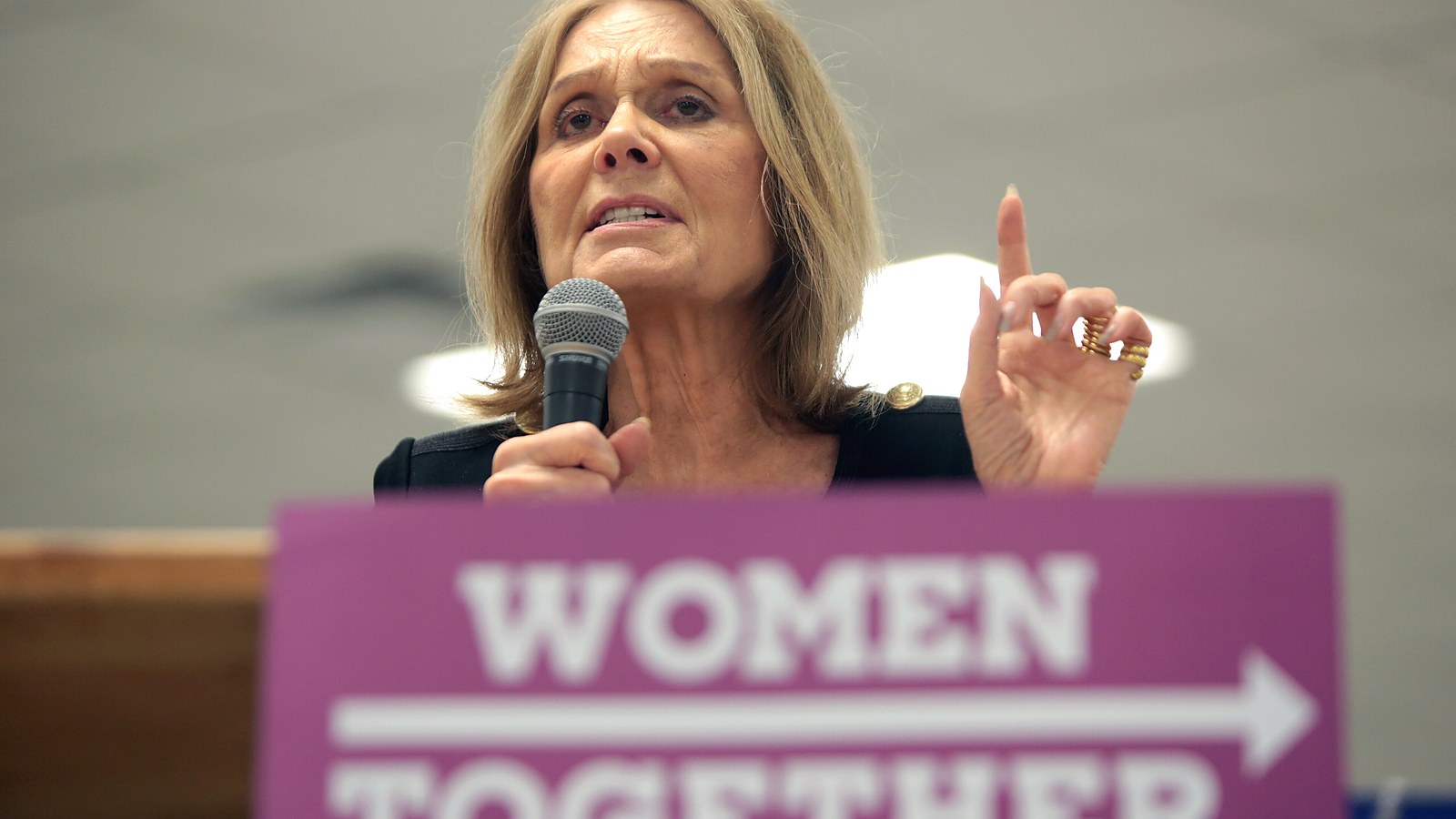
Gloria Steinem died on Wednesday at her home in New York City, aged 92. Her foundation announced the death on Thursday, saying she "passed away peacefully at her home in New York City, surrounded by some of the many who loved her". No cause was given.
She was born in 1934, campaigned for the constitutional right to abortion through the 1960s and 1970s, saw it established by the Supreme Court in 1973, and lived to see the same court withdraw it in 2022. That arc is unusual for a reformer — most do not outlive their own victory — and it is the reason an assessment of what she accomplished cannot rest on the law. She had already made that argument herself.
Speaking to NPR a few weeks before Roe was overturned, she was asked whether the reversal would undo the work. "It will not change the basic fact that we either have decision-making power over our own bodies — women and men — or there is no democracy," she said.
The numbers that did not reverse
In 1971, months before she launched Ms., Steinem helped found the National Women's Political Caucus alongside more than three hundred women, to recruit, train and endorse female candidates. NPR's accounting of the position at that moment is stark: 15 women had been elected to Congress, 363 sat in state legislatures, and seven American cities had a woman as mayor.
The corresponding figures today are 150, 2,476 and 428. That is a tenfold rise in Congress, close to sevenfold in the state houses, and something over sixtyfold in the mayoralties. Those gains were not conferred by a ruling and cannot be vacated by one; they accumulated through several thousand individual elections.
The occupational figures tell the same story with more friction. When Ms. first appeared in 1972, women were 10 per cent of American doctors, 4 per cent of lawyers and 1 per cent of engineers. Five decades later the shares are 38, 41 and 16 per cent.
It is worth reading that last set carefully rather than triumphantly. Law went from 4 per cent to 41 — an almost complete transformation of a profession's intake. Engineering went from 1 per cent to 16, which is a sixteenfold rise and still leaves five in six engineers male. The same half-century of pressure produced near-parity in one field and a persistent minority in another, which suggests the binding constraint was never a single national argument that could be won once.
A byline she could not escape
Steinem's own route into the story ran through a newsroom that would not let her write. "I and lots of women could not write about political subjects for the existing magazines," she told NPR in 2020. "We were thought to be the experts on, you know, food, makeup, babies and celebrities."
Her way around it, in 1963, was to go undercover as a cocktail waitress at one of Hugh Hefner's clubs, working under an assumed name and shaving four years off her age. "A Bunny's Tale", published in Show magazine, documented the low pay, the corsets and the hours on high heels, and directly contradicted Hefner's framing of the Playboy operation as a shared sexual liberation.
It made her famous and did not solve her problem: the assignments that followed were, by her account, often about stockings and hairstyles. Decades later she was still weighing the trade. "To this day when people don't like me they introduce me as a former Bunny, as a put-down," she told the New York Times in 2016. "On the other hand, I did improve the working conditions for those women."
Ms., and the advertising problem that nearly killed it
Ms. magazine, co-founded with the activist Dorothy Pittman Hughes, put its first full issue on newsstands on 1 July 1972, with Wonder Woman on the cover and, inside, a petition of women stating publicly that they had had abortions and demanding the procedure be made safe and legal. Roe was still a year away. The issue sold out inside a week and produced 26,000 subscriptions. The broadcaster Harry Reasoner had given the magazine six months "before they run out of things to say".
The commercial difficulty it then ran into is the most underrated part of the story, because it demonstrates the thing the magazine existed to argue. A cosmetics executive told Steinem that women who read Ms. did not buy makeup. Car manufacturers declined on the grounds that women did not buy cars.
The mechanism is worth naming. Magazine advertising was sold by demographic category, and every category available to a women's title assumed the reader was a housekeeper, a beauty consumer or a wife. A magazine that refused those premises was not selling to a weak market; it was selling to a market the ad industry had no column for. That is why Ms. cycled through owners from the 1980s, published for a period without advertising at all, and eventually became a quarterly — and why it is still publishing.
Its 1977 cover story on sexual harassment pushed a then-unnamed workplace problem into national circulation, and became the basis for the 1980 film 9 to 5. Steinem's 1978 satirical essay "If Men Could Menstruate" is still cited in arguments about gender roles nearly fifty years on.
The turn, and the promise she broke
She came to activism late, in her thirties, at a 1969 meeting where women spoke publicly about obtaining illegal abortions. She had had one herself in London at 22, before travelling to India — a country where two years on a fellowship, working with people organising against caste violence, had already given her a grounding in bottom-up politics.
The London doctor extracted two promises: that she would never use his name, and that she would do what she wanted with her life. In 2015, nearly sixty years later, she deliberately broke the first by dedicating her memoir My Life on the Road to Dr John Sharpe. She also coined the phrase "reproductive freedom", which is credited with making the subject politically speakable and remains in use in the debate today.
I have been refused service in public restaurants, ordered out of public gathering places and turned away from apartment rentals all for the clearly stated, sole reason that I am a woman. — Gloria Steinem, testifying to a Senate hearing on the Equal Rights Amendment, 1970
The criticism, including the parts she conceded
An honest account has to include the attacks that landed. Betty Friedan, whose The Feminine Mystique had launched the movement's second wave, accused Steinem of "ripping off the movement for private profit" and said no one should mistake her for a leader. Ms. was assailed from the right for denigrating family values and from the left for being too conservative. Critics on both sides told her she was too glamorous to be taken seriously.
Some criticisms she later accepted. A 1977 essay on transgender people drew sustained objection; in 2013 she wrote that "transgender people, including those who have transitioned, are living out real, authentic lives. Those lives should be celebrated, not questioned." A 1998 New York Times piece defending Bill Clinton over Monica Lewinsky drew heavy criticism at the time; in 2017 she said she "wouldn't write the same thing now". Her brief early involvement with a CIA-backed student organisation remained a point of contention for decades, and she consistently defended it on the ground that the agency never sought to change the organisation's policies.
The harassment was of a different order from criticism. The pornographer Al Goldstein ran a campaign that included publishing her contact details beside fabricated advertisements, and displaying a graphic centrefold of a Steinem look-alike at the newsstand outside the Ms. offices, where she passed it daily. President Richard Nixon was recorded complaining about her at length; her reply was that there was "some opinion that Richard Nixon is the most sexually insecure chief of state since Napoleon".
What holds
Hillary Clinton, speaking to CBS Mornings on Thursday, called her "one of the architects of the entire structure of women's equality, I mean tearing down those obstacles to young women being able to participate where their talents and hard work took them". She added a characterisation Steinem would likely have accepted: "Gloria was at heart an optimist. Her activism was rooted in optimism, and that's a moral choice, and she made it every day."
Awarding her the Presidential Medal of Freedom in 2013, Barack Obama said that because of her work "more women are afforded the respect and opportunities that they deserve", and that she had "also changed how women thought about themselves". Her foundation said she spent her last years writing and hosting Talking Circles at her home, and "continued working for equality until the very end".
Steinem's own theory of how any of it worked was deliberately unglamorous, and it is the durable point. "Too often we think the tree grows from the top, from Congress," she told NPR. "Trees grow from the bottom." She lived long enough to watch the highest branch she had helped grow be cut off in 2022 — and long enough for that to serve as evidence for her argument rather than against it. The share of American lawyers who are women went from 4 per cent to 41 without a court's permission, and no court can take it back.
This report is based on the statement issued by the Gloria Steinem Foundation on 3 September 2026 and on reporting and archive interviews published the same day by the BBC, NPR and CBS News, including remarks by Hillary Clinton to CBS Mornings. Neither the foundation nor family gave a cause of death. Figures for women in Congress, state legislatures and mayoralties at the founding of the National Women's Political Caucus and today are as published by NPR; the professional participation figures for doctors, lawyers and engineers are as published by CBS News, which compares 1972 with roughly five decades later. Quotations from Steinem are drawn from contemporaneous interviews and her published writing as reproduced in those reports.