
America's first 20 deportees land in Liberia, the country founded by freed American slaves — the opening instalment of a 1,200-person deal priced in visas and a $124m health pledge
The flight that arrived at Roberts International Airport on Thursday carried people US judges had ruled could not safely be sent home. Liberia, the most USAID-dependent country on earth, calls them 'guests of the Republic'; critics at home call the country a dumping ground. An analysis of the largest single agreement in Washington's third-country deportation programme, and of what it cost both sides.
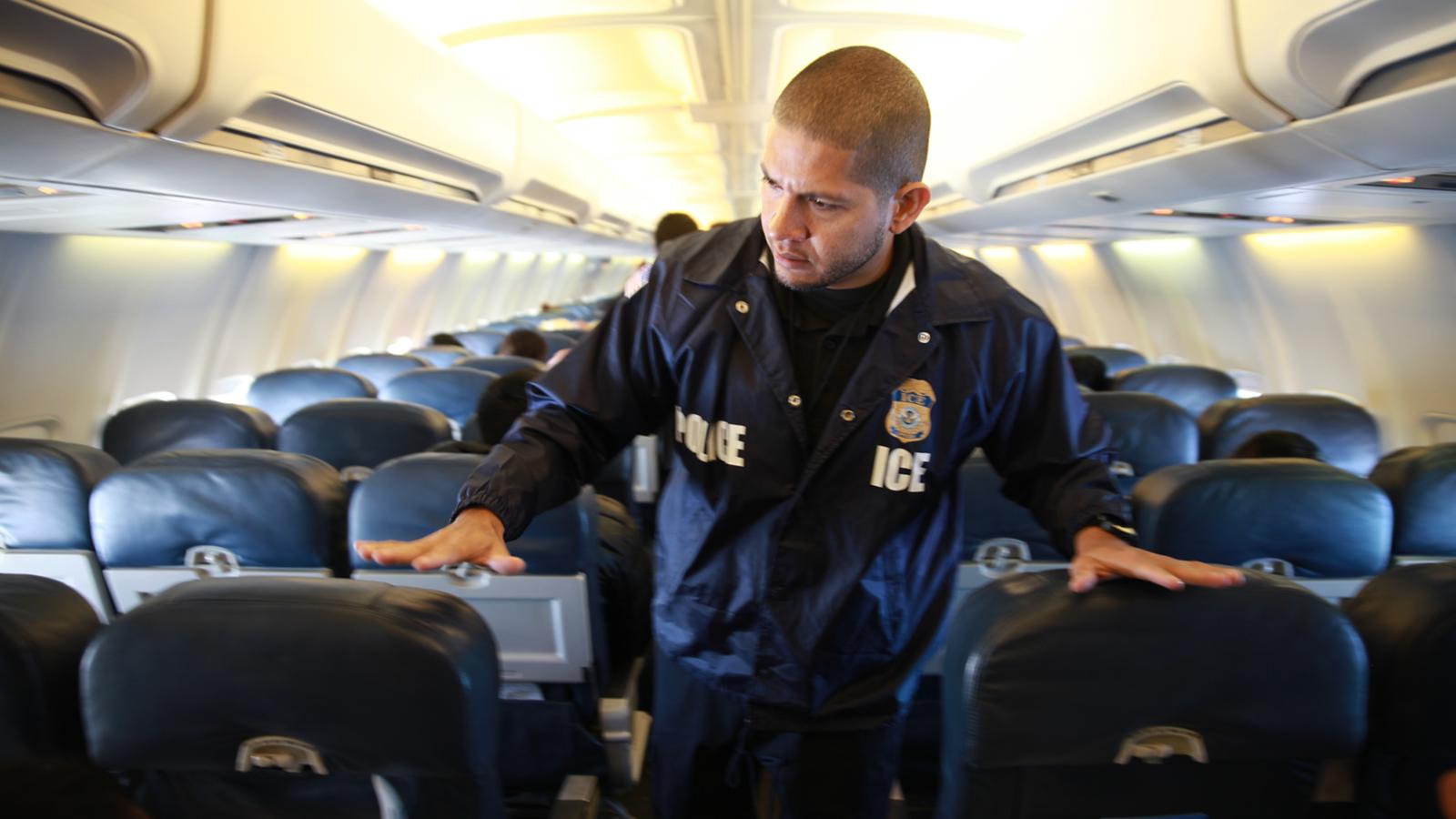
Twenty people stepped off an American aircraft at Roberts International Airport, some 55 kilometres outside Monrovia, on Thursday. They were the first of up to 1,200 deportees Liberia has agreed to accept from the United States within a year — none of them, as far as anyone has said publicly, Liberian. Their nationalities were not disclosed. Where they will be housed has not been announced. What is known about them comes from Reuters, and it is the detail that defines the whole arrangement: most of the people covered by the deal had won legal protection from US immigration judges, who ruled they faced torture or other abuse if returned to their home countries. They are, in other words, people American law says cannot be sent home — so they were sent somewhere else.
Liberia's government has worked hard on the vocabulary. Information minister Jerolinmek Piah says the arrivals are being received as "guests of the Republic" who "remain free to depart the country when they so desire." Justice minister Natu Oswald Tweh told reporters the majority "had committed migration-related violations and offenses," and said they may seek asylum in Liberia if they wish. The State Department declined to discuss details, saying only that it is "unwavering in our commitment to end illegal and mass immigration" and that implementing the president's immigration policies is a top priority.
What Liberia gets
Monrovia insists the deal is "entirely humanitarian" and consistent with the country's traditions — and, specifically, that it is not a quid pro quo. What arrived alongside it, per Al Jazeera's reporting, was an extension of US visa validity for Liberians from 12 to 36 months and a $124 million American commitment to Liberia's health services, plus technical and financial support for the country's migration and border systems. The agreement itself was concluded quietly, by exchange of diplomatic notes in September 2025, and only became public in March; the 1,200-person figure was announced on Tuesday.
The context for that arithmetic is dependency. US assistance has equalled about 2.6 per cent of Liberia's gross national income — the highest share of any country in the world, by the Center for Global Development's measure — and the dismantling of USAID in 2025 hit Liberia harder than almost anywhere. A 10 per cent US tariff on Liberian goods took effect last April. When President Joseph Boakai joined four other West African leaders at the White House in July 2025, the moment that travelled was President Trump complimenting his "good English" — the official language of a country founded by Americans. For a government navigating aid cuts, tariffs and its own domestic protest movement, the leverage behind a request from Washington needs little spelling out.
Liberia is also not alone on its own continent. Reuters lists the Democratic Republic of Congo, the Central African Republic, Ghana and Sierra Leone among the African states already receiving third-country deportees, alongside Rwanda, Eswatini, South Sudan, Uganda, Cameroon and Equatorial Guinea in the trackers' tallies. What distinguishes Monrovia's agreement is its scale — and the openness of the ledger that came with it.
The largest deal in a sprawling programme
Liberia's 1,200 is described by Al Jazeera as the largest single third-country arrangement the administration has struck — the current ceiling of a programme that has grown with remarkable speed and remarkably little publicity. Al Jazeera counts agreements with at least 35 countries and roughly 22,000 people sent to 26 of them by early August; the legal-affairs service JURIST counted more than 17,400 transfers as of May; the US Committee for Refugees and Immigrants' tracker put it at 19,000-plus to at least 25 countries by June, with more than 50 further governments in negotiation. The counts differ by date and method, but the direction is not in dispute. The Associated Press's shorthand: thousands of people, deported under secret agreements to nearly two dozen countries — about ten of them in Africa.
| Destination | Third-country deportees received |
|---|---|
| Mexico | 18,000+ (bulk of all removals) |
| Guatemala | 1,010+ |
| El Salvador | ~252 Venezuelans to the CECOT prison, later returned in a prisoner swap |
| Ghana | 42+ |
| Eswatini | 30 |
| Uganda / South Sudan / Rwanda | 8 / 8 / 7 |
| Liberia | 20, of up to 1,200 agreed |
Selected figures from the US Committee for Refugees and Immigrants' Third Country Deportations Tracker, as of mid-2026; totals vary between trackers.
The programme has a price tag as well as a map. A report by Senate Democrats found that deals with just five countries — Equatorial Guinea, Rwanda, El Salvador, Eswatini and Palau — cost US taxpayers $32 million, with some individual removals costing more than $1 million each. The report's summary of the mechanism was blunt: deportation is being used as a bargaining chip.
The law that made it possible
The legal architecture rests on a single unsigned order. In the class action D.V.D. v. DHS, a federal court in Massachusetts had blocked removals to countries a migrant had never been ordered to — requiring notice and a meaningful chance to claim protection under the Convention Against Torture before anyone was flown to a third state. On June 23, 2025, the Supreme Court stayed that injunction on its emergency docket, without reasoning, letting third-country removals resume while the appeal proceeds. Justice Sonia Sotomayor, joined by Justices Kagan and Jackson, called the stay a "gross abuse" of the Court's discretion. The Liberia agreement itself now faces multiple lawsuits of its own.
The human-rights record of the programme's first year is why the lawyers keep filing. UN human-rights experts warned Washington in July 2025 that diplomatic assurances from receiving states "cannot be taken at face value," and that no one may be sent where they face torture or disappearance. Human Rights Watch documented arbitrary detention, ill-treatment and risk of refoulement in the deals with Rwanda, Eswatini, Ghana and South Sudan, and — in the El Salvador case — torture and enforced disappearance inside the CECOT prison. Immigration lawyers quoted by the AP describe third-country removal as a loophole with a predictable end point: people deposited in countries where they know no one, with little practical choice but to drift back toward the homelands they fled.
One name hangs over the Liberia deal in particular. Kilmar Abrego García — the Salvadoran whose wrongful 2025 removal to CECOT became the programme's defining scandal — is the man the administration has been trying to deport to Liberia since last autumn. A federal judge demanded assurances he would not be sent there; the criminal case against him was dismissed in May as a vindictive prosecution; on Tuesday, the same day the 1,200-person deal was announced, the Justice Department moved to revive it.
A founding irony
No country in the programme carries Liberia's particular history. It was established in 1822 by the American Colonization Society as a settlement for freed Black Americans; its capital is named for President Monroe, its flag is modelled on the Stars and Stripes, and it has been an independent republic — Africa's oldest — since 1847. An opinion essay in Al Jazeera captured the argument now running through Liberian civil society: a nation founded as a refuge from American racism should not become an instrument for enforcing American expulsions. On Liberian social media, per local press reports, the language is harsher — "dumping ground" is the phrase that recurs — and the deal lands on a government already facing mass anti-corruption protests, with the opposition promising a showdown in December.
What happens next is largely unwritten. Roughly 1,180 people are still to come, on no published schedule. The First Circuit appeal in D.V.D. continues; the lawsuits against the Liberia agreement are pending; more than 50 further country deals are reportedly in negotiation. And the practical questions raised by Thursday's flight — where the twenty are sleeping tonight, what an asylum process in Monrovia looks like, who pays when the health pledge meets its first invoice — have no public answers yet. The deal's own vocabulary will be tested by arithmetic: guests, by definition, can leave. For people judged too endangered to go home, delivered to a country they never chose, it is not obvious where.
This analysis draws on Associated Press and Reuters wire reporting, Al Jazeera, NPR, court records and litigation trackers, the UN human-rights office, Human Rights Watch, and the US Committee for Refugees and Immigrants' deportation tracker. Claims sourced to Liberian local press are attributed inline. Figures are as reported on August 20, 2026.