
'Summerween' is real now: Halloween searches double, Skelly sells out in August and slashers own the summer box office
A holiday invented as a cartoon joke in 2012 has become a measurable retail season. Google says searches for 'summerween movies' more than doubled in a month, Spirit Halloween drew 3,000 people to a store opening 37 days before Labor Day, and Hollywood just rode a horror wave to a $4 billion summer.
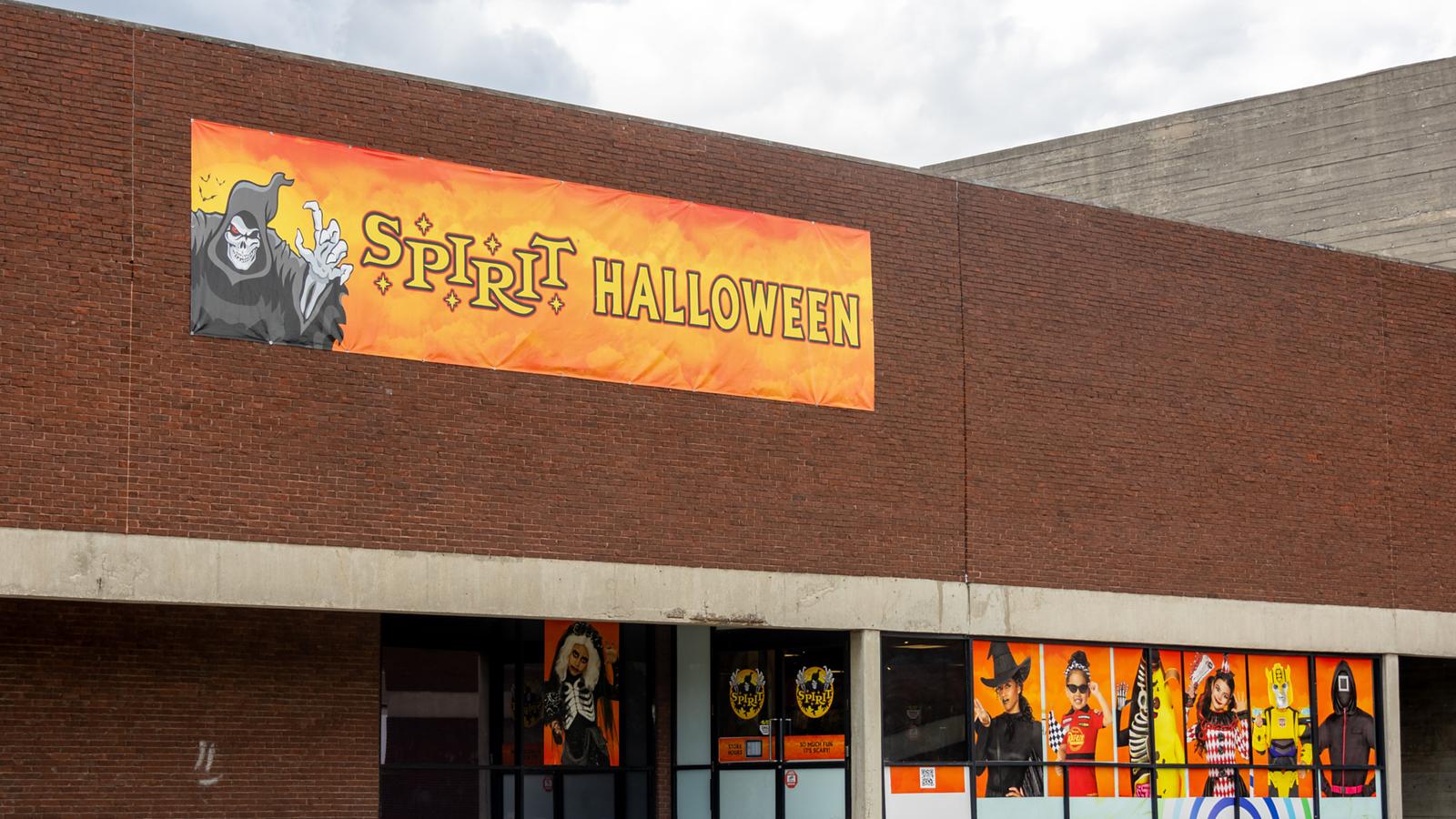
It is August 22, the air conditioning is still running, and the skeletons are already out. Home Depot put its Halloween collection online on July 16. Michaels started stocking spooky merchandise on June 26. Costco had Halloween on the floor in July. And in Egg Harbor Township, New Jersey, roughly 3,000 people showed up earlier this month for the grand opening of a Spirit Halloween store — 37 days before Labor Day.
The phenomenon has a name: Summerween. And this year it stopped being a retail in-joke and became a measurable season. Google's Summergeist trends report says search interest in "summerween movies" more than doubled over the past month, with slasher the top trending sub-genre — the company's own data confirming that a meaningful slice of America now treats late summer as the on-ramp to Halloween.
A cartoon joke becomes a calendar entry
The word itself comes from a 2012 episode of the Disney Channel series "Gravity Falls," in which a town loves Halloween so much it celebrates twice a year, carving "jack-o'-melons" in June because pumpkins aren't ripe. The joke escaped containment around the summer of 2025, when social media turned the fictional holiday into a real one — and retailers, who had already been inching Halloween earlier for years, were happy to meet the demand halfway.
The commercial logic is not subtle. The National Retail Federation's latest survey projected record Halloween spending of $13.1 billion, up from $11.6 billion the year before, with a record $114.45 per person. Candy makers have joined in: Mars ran a "Halfway to Halloween" push in early May, Hershey has leaned into Summerween product lines, and by Mars's own count, 30 percent of twenty-somethings have taken part in a Summerween event. Even pumpkin spice broke containment — La Colombe poured it in early August, with Starbucks following on August 25.
"The guardrails are gone," Mark Lang, an associate professor of marketing at the University of Tampa and a former supermarket executive, told the Philadelphia Inquirer this month — describing seasonal creep as less a tide than a tsunami. "I see the movement as accelerating. If they don't beat last year's seasonal sales, their whole year is off."
Culture, not the calendar, is defining the seasons.
That line belongs to Mars executive Tim LeBel, and it is the industry's cheerful spin on what Lang describes more bluntly: once one retailer moves first, everyone must, or concede the season's first billion to a competitor.
None of this arrived overnight. CNN was covering the "earlier-than-ever Halloween rollout" back in August 2024, when Michaels, Costco and Home Depot first tested summer drops, and the launch date has moved forward every year since. What changed in 2026 is that the audience formally adopted the season as its own. Google's report frames this as "the summer of maxxing," with searches containing that suffix at record highs — and Summerween now sits alongside fibermaxxing and the hugo spritz as one of the summer's defining search trends, a curiosity that hardened into a calendar.
Skelly, upgraded and gone by Labor Day
No product embodies the arms race like Home Depot's 12-foot skeleton, Skelly — the pandemic-era lawn giant that has reportedly sold out every year since its 2020 debut, typically before Labor Day. The 2026 version costs $299 and gained Bluetooth app control: a servo-driven head and mouth, real-time voice modulation, up to 30 recordable sounds and 20 animated eye effects. It leads a lineup that includes an 11-foot LED mummy and an 8-foot animated plant monster, all priced under $300 — the economics of a category that barely existed six years ago.
The mid-summer scare slot has precedent, too. Last July's "I Know What You Did Last Summer" revival grossed $64.8 million worldwide on an $18 million budget — proof, a full year before "Obsession" and "Backrooms" rewrote the math, that horror no longer needed October to open big. Studio schedulers noticed, and this summer's release calendar was built accordingly, with genre titles spaced from May through Labor Day.
The retail calendar tells the same story up and down the aisle: Lowe's put QR-coded previews in stores pointing at its online giant-décor range, Britain's Asda stocked Summerween items in June, and Spirit Halloween's Terrifier-branded line sold through quickly. The pop-up chain that once symbolized October now opens its doors in the first week of August to lines out the door.
The categories underneath the record are worth pausing on: $4.3 billion of the NRF's projected spend goes to costumes, $4.2 billion to decorations and $3.9 billion to candy — decorations having nearly closed the gap with costumes, which is precisely the category a two-month-longer season inflates. A skeleton bought in August stands in the yard for ten weeks; a costume is still worn for one night.
The slasher summer
Hollywood supplied the other half of the season. The summer box office crossed $4 billion for only the second time since the pandemic, and horror did a startling share of the lifting. "Obsession," a micro-budget film from YouTube filmmaker Curry Barker made for roughly $750,000, grossed about $263 million domestically and $488 million worldwide. "Backrooms," directed by 20-year-old YouTube creator Kane Parsons, delivered A24's biggest opening ever — roughly $81 million — and became the studio's first movie to cross $100 million domestically, finishing near $197 million. The "Scary Movie" reboot opened to a franchise-best $55 million.
The wave rolls straight through Summerween weekend itself: "Insidious: Out of the Further" is projected to open near $25 million this very weekend, extending a run that has made August feel like a dress rehearsal for October. Google's data says audiences are searching for slashers in flip-flop weather; the studios, for once, had the supply waiting.
Where the creep stops
The obvious question is whether any of this can keep accelerating — whether a holiday can keep swallowing the calendar behind it without losing what made it worth anticipating. Marketing academics note the machine now runs on its own momentum: seasonal merchandise is the highest-margin traffic driver retailers have, and each year's earlier launch becomes next year's baseline. There is no hard sales figure yet for Summerween itself — Home Depot doesn't break out Halloween revenue, and the NRF's next survey lands in September — but the behavioral evidence keeps arriving in August: the searches, the sell-outs, the crowds in New Jersey.
The likeliest answer is that Halloween is simply becoming what Christmas became decades ago: not a day but a quarter, with its own soft launch, main event and clearance aisle. The difference is who is driving. Christmas creep was pushed by retailers onto consumers; Summerween, born from a cartoon and raised on TikTok, was pulled into existence by shoppers who got there before the stores did. The skeletons come out in August because that is when people want them. The stores are just keeping up.
Box-office figures are as reported by Variety, Forbes and Deadline through August 21; the National Retail Federation's Halloween spending survey for 2026 is expected in September.