
Houthi strikes on Riyadh's King Khalid airport kill at least 14 in two days as the FAA warns US airlines over Saudi airspace until December 10
A missile hit Terminal 3 on Saturday and a projectile hit Terminal 4 on Sunday, in the deadliest attacks on Saudi soil in more than a decade. Riyadh's airport is shut, Delta has pushed back its first Riyadh route to March, and Washington is weighing whether to join the Saudi air war in Yemen.
The most telling line in the Federal Aviation Administration's new warning on Saudi Arabia is not the instruction to "exercise caution". It is the phrase "at all altitudes". Late on Sunday, the FAA told US airlines that military activity around the kingdom posed safety-of-flight risks to aircraft not only taking off and landing but cruising overhead, and that interference with navigation systems was part of the threat. The notice runs until December 10. For a country that has spent a decade selling itself as the safe, open hub of the Gulf, that is a two-month verdict from the world's most influential aviation regulator.
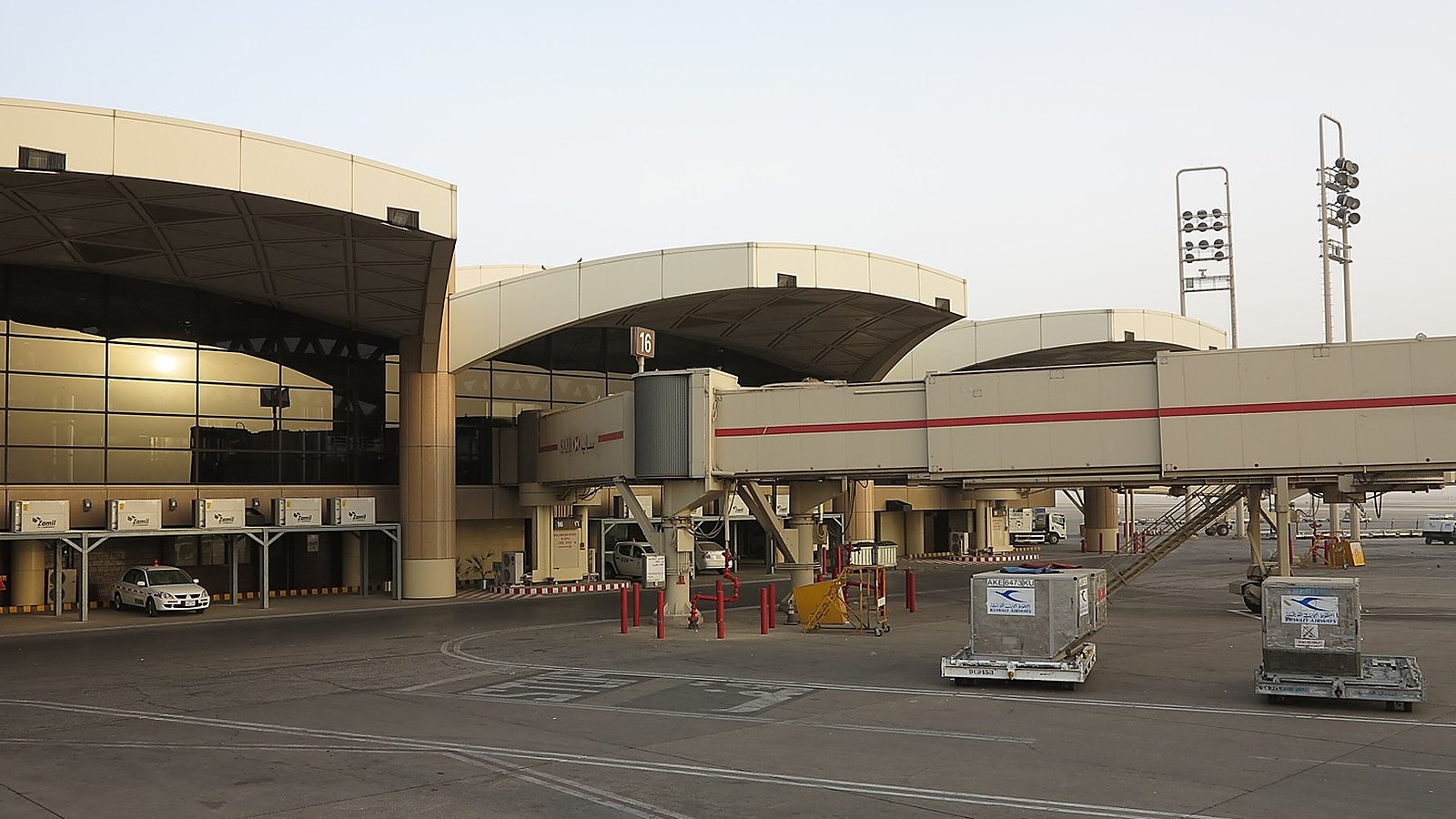
It followed the deadliest attacks on Saudi soil in more than a decade, according to Al Jazeera. Yemen's Iran-aligned Houthi movement has struck King Khalid International Airport in Riyadh four times in the past week. On Saturday, a missile hit Terminal 3, killing at least 12 people and injuring 309, according to the Saudi General Authority of Civil Aviation; later counts, including the BBC's, put the toll at 13. On Sunday, a projectile struck Terminal 4, killing a Pakistani resident and injuring about a dozen others. Together, the two days left at least 14 dead.
A week of attacks on one airport
The escalation began on Thursday, when two strikes on an airport facility and an aircraft on the ground killed three Saudis, including a pilot for the national carrier Saudia. Saturday's victims, the BBC reported, were four Saudis along with two Bangladeshis and one person each from the United States, Egypt, Jordan, Syria, Palestine, Sudan and India — a list that reads like the passenger manifest of any Gulf hub. On Sunday evening, King Fahd International Airport in Dammam was also attacked, without casualties, and the Saudi-led coalition said it intercepted a drone over Eastern Province and a missile aimed at Khamis Mushait.
Riyadh's airport, the kingdom's second-busiest after Jeddah, remained closed on Monday. Lufthansa has cancelled all flights to the city until October 16. Air France-KLM extended its suspension to the end of the month. The United States, Britain, France, Germany and Australia have told their citizens to avoid the area. Delta Air Lines, which was due to launch its first nonstop service from Atlanta to Riyadh on October 23, said on Monday it would delay the route until March.
Why the Houthis are hitting airports
The Houthis say the strikes are retaliation. In a video statement on Sunday, military spokesman Yahya Sarea said the group had fired missiles and drones at the Riyadh and Dammam airports and at two oil and gas facilities in Eastern Province in response to 124 Saudi air strikes in Yemen over the previous 24 hours. He repeated a warning to airlines and passengers to stay out of Saudi airports and airspace — with an exception for flights to and from the holy cities of Mecca and Medina — and promised to impose "a blockade for a blockade" and "an escalation for an escalation".
That phrase points to the origin of the airport war. A largely informal ceasefire that had held since 2022 began to unravel in July, when the Houthis declared a "maritime embargo" on Saudi Arabia, citing what they call a Saudi blockade of ports and airports in their territory. On July 13, Saudi-backed Yemeni government forces struck Sanaa airport, the only gateway for international flights into Houthi-held Yemen, hitting its only working runway. The government said it was trying to stop an unauthorised Iranian aircraft from landing. In the Houthis' framing, Riyadh's airport is the mirror image of Sanaa's.
There is also a calculation about attention. Hisham al-Omeisy, a conflict analyst at the European Institute of Peace, told Al Jazeera the group would keep hitting airports because of the strong public reaction such strikes produce, and predicted it would widen its targets to oil pipelines and energy facilities. "They are a maximalist group and they're there to do whatever they need to do to get to what they want," he said, including "more concessions from the Saudis".
The war behind the strikes
The airport attacks are one front in a war that has re-ignited across Yemen. Last month, the Houthis launched a surprise offensive along the south-western Red Sea coast and drove government forces from positions overlooking the Bab al-Mandab strait. That mattered far beyond Yemen: with the US-Israeli war on Iran, which began on February 28, effectively closing the Strait of Hormuz, Saudi Arabia had come to rely on the Red Sea route for its oil exports. On October 4, the government announced Operation Dawn of Yemen to retake all Houthi-held territory, and it says it has since recaptured the port of Mokha and areas around the strait. The Houthis deny losing ground, and battlefield claims are difficult to verify.
The United Nations special envoy for Yemen, Hans Grundberg, warned on Friday that the country had returned to "full-scale war". On the Houthi side, the group's health ministry said a Saudi air strike on a home in Sanaa on Sunday killed a child and injured six people. UN Secretary-General António Guterres said he was "deeply shocked" by Saturday's strike on the Riyadh terminal and warned that attacks on civilians and civilian infrastructure violate international law.
Riyadh promises a response — and asks Washington for help
Saudi officials have answered in two registers. The coalition's spokesman, Colonel Turki al-Maliki, called Saturday's attack a "war crime" and said the coalition would "respond decisively". Energy Minister Prince Abdulaziz bin Salman opened the WPC Energy Congress — held at a convention centre about 10 kilometres from the airport — by reassuring the ministers and executives in attendance that the kingdom was safe, while acknowledging that recent events had "tested our infrastructure, our institutions, our people, and our resilience".
"The events of recent weeks are serious. Our response must be equally serious." — Prince Abdulaziz bin Salman, Saudi energy minister
Behind the scenes, two Saudi government officials told MS NOW that the kingdom has requested "urgent defense support" from the United States. President Donald Trump, asked on Saturday whether the US would join Saudi strikes, said: "We may. We're going to look at it." The US military is reportedly already providing intelligence and targeting support to the coalition. Last month the administration approved a potential $24.3 billion sale of nearly 50 F-35 fighters to the kingdom, which is under congressional review.
Direct US involvement would be a significant step. The Critical Threats Project at the American Enterprise Institute noted that it would be the first direct US military action against the Houthis since Operation Rough Rider ended in May 2025. Steven Cook of the Council on Foreign Relations wrote last month that after seven months of war there were questions about US capacity to sustain a campaign against the Houthis while staying ready for Iran and contingencies in East Asia. Britain's defence secretary, Wes Streeting, said the UK was examining how to support Saudi Arabia but was not joining offensive operations "at this stage".
Iran's offer, and the case for restraint
The counter-current is diplomatic. On Sunday, Iranian Foreign Minister Abbas Araghchi spoke with his Saudi counterpart, Prince Faisal bin Farhan, in their first publicly reported contact since the escalation, and offered to facilitate talks between Riyadh and the Houthis. "Insisting on a military approach and disregarding a political solution would only further complicate the situation," Araghchi said. Iran denies arming the Houthis. Andreas Krieg of King's College London told Al Jazeera that Tehran was "trying to turn Yemen from a military liability into a diplomatic asset" — positioning itself as part of the solution to a crisis it has helped sustain.
There is a reasonable argument that the airport war has natural limits. The Houthis have pointedly exempted Mecca and Medina, the WPC congress is going ahead, and the Future Investment Initiative, the crown prince's flagship investment conference, is still scheduled for October 26 to 29. Saudi Arabia has absorbed Houthi missile campaigns before, and a closed airport can reopen within days. Saudi officials are betting that the image of business as usual will outlast the image of a burning terminal.
What the FAA notice really measures
But the FAA warning suggests the cost is already being priced in. Airlines, insurers and regulators do not wait for a war to be over before deciding where to fly, and a notice covering all altitudes reaches beyond flights into Riyadh to any routing across Saudi airspace. Delta's five-month delay is the first concrete number attached to that judgement. For a kingdom preparing to host the 2034 World Cup and building its economic future on tourism, events and air connections, the durable damage from this week may be less the terminals than the advisory: a formal finding, in force until at least December 10, that its skies are a war zone.
This report is based on statements by the Saudi General Authority of Civil Aviation, the Saudi-led coalition, the Houthi movement, the FAA and Delta Air Lines, and on reporting by the BBC, CNBC, Al Jazeera, the Associated Press, Reuters and MS NOW, as of Monday, October 12, 2026. Casualty figures for Saturday's strike differ between official Saudi counts (12) and later tallies (13) and may be revised. Battlefield claims by both sides in Yemen have not been independently verified. US intelligence and targeting support for the coalition has been reported but not officially detailed.