
Iceland votes Saturday on reopening EU membership talks — a knife-edge referendum reshaped by Trump's designs on Greenland next door
The question for the nation of 400,000 is whether to resume the accession negotiations it froze in 2013. Polls show a country split in half — between the pull of the euro and the fear of losing its fish, with a new variable neither side chose: doubts about America as a security guarantor.
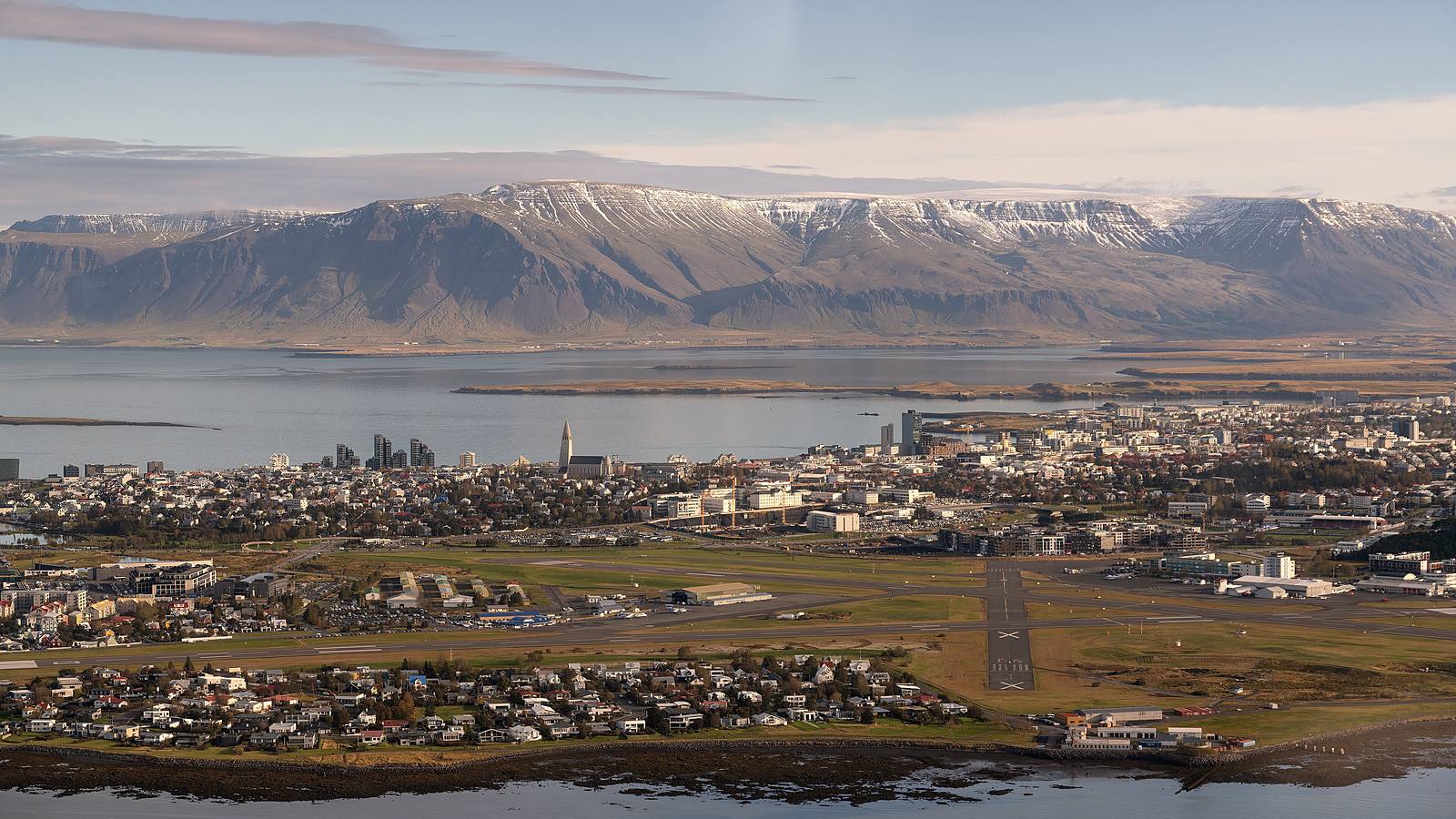
On Saturday, one of the smallest electorates in the democratic world will vote on one of the larger geopolitical questions in Europe. Iceland — population just under 400,000 — holds a referendum on whether to resume negotiations to join the European Union, reopening a file the country closed thirteen years ago. The question on the ballot is disarmingly simple: "Should Iceland resume accession negotiations with the European Union?" The polling is anything but: surveys indicate a country split effectively in half, with the advisory vote likely to go down to the wire, according to CNBC. In an electorate this size, the margin may come down to a few thousand ballots.
It is worth being precise about what Saturday does and does not decide. A yes vote does not take Iceland into the EU; it restarts talks. If those negotiations produce a membership agreement, that deal would then be put to a second referendum for Icelanders to accept or reject. A no vote, conversely, shelves the question again — as a euroskeptic coalition government did in 2013, four years after Iceland first applied in the wreckage of its 2008 banking collapse. That original application was born of emergency: a country whose three big banks had failed, whose currency had cratered, and whose government reached for the anchor of the euro. The emergency passed, the economy recovered, and the application was quietly frozen — which is why the vote on reviving it is really a vote on whether the world has become dangerous enough, again, to want an anchor.
The neighbour problem
What has changed since 2013 is not primarily Iceland. It is the neighbourhood. The Arctic has become a contested arena for critical minerals, and the accelerating melt of sea ice is opening seasonal shipping routes across the top of the world. And President Donald Trump has spent the past two years pressing, repeatedly and publicly, for American control of Greenland — Iceland's closest neighbour — on national security grounds. At the World Economic Forum in Davos earlier this year, the president appeared to repeatedly mix up Greenland and Iceland during a special address.
"All of the arguments put forth by the U.S. president for why it would be necessary for the U.S. to acquire Greenland actually equally applied to Iceland. The only difference is that Iceland is formally an independent country," said Eiríkur Bergmann, professor of politics at Iceland's Bifröst University.
That observation lands differently in Reykjavík than it would almost anywhere else, because of the peculiar shape of Iceland's security arrangements. The country is a founding member of NATO but the only ally with no military of its own. Its defence rests on a bilateral agreement with the United States dating to 1951 — and on geography: Iceland sits astride the GIUK Gap, the naval choke point between Greenland, Iceland and the UK through which Atlantic-bound Arctic traffic must pass — the stretch of ocean NATO planners spent the entire Cold War watching, and which a warming, opening Arctic is making strategically valuable again. A country with no army, parked on real estate like that, thinks about its guarantors carefully. "Now many people are sort of reconsidering the validity of that defense agreement," Bergmann said.
Iceland's foreign minister, Thorgerdur Gunnarsdottir, made the connection explicit at the start of the year, writing that deeper dialogue and collaboration with the EU would be key to shoring up the country's interests. "It is clear that the international system we have lived in since the end of World War II is in turmoil," she wrote in the newspaper Visir.
The old wound: fish
For all the geopolitics, analysts stress that the campaign has been fought mostly on domestic ground — the economy, sovereignty, and above all fishing. Iceland has fought repeated battles with EU member states over control of its fishing grounds, and Jon Danielsson, director of the Systemic Risk Centre at the London School of Economics, describes the industry's status in the debate as "totemic" given its economic weight. Ceding any measure of control over those waters to a common European fisheries policy is, for a large share of the electorate, simply not on the table at any price.
The price on the other side of the ledger is monetary. "For the Icelanders, the key issue in joining is the euro and to get away from the instability of its own currency and very high interest rates," Danielsson told CNBC on Friday. "Even if it voted to join, the vast majority of the population would be looking at the fishing and whether the EU would provide the necessary conditions — which, to my mind, seems doubtful." In that single sentence sits the referendum's central tension: the currency argues for Brussels, the fish argue against, and every voter weighs the two differently.
The no side has a prominent standard-bearer in former Prime Minister Katrín Jakobsdóttir, who argues the case for membership was never made. Iceland already collaborates closely with the 27-nation bloc, she notes, and its citizens enjoy some of the highest living standards anywhere. "If a majority of the people wants to apply, it is very important to listen to that majority, but I haven't changed my position," she told CNBC in April.
She has a structural point. Through the European Economic Area, Iceland already has access to the EU's single market without full membership; through Schengen, its citizens already travel passport-free across most of Europe. What accession would actually add is narrower than the campaign rhetoric on either side suggests: a seat and a vote in the institutions that write the single market's rules, the prospect of the euro — and, on the debit side, the common fisheries obligations that sank enthusiasm the first time round.
The yes side's structural rebuttal is that the EEA is a one-way street. The arrangement obliges Iceland to adopt great volumes of single-market regulation written in Brussels while giving it no vote on any of it — the standing complaint of every EEA state, and the reason 'we already have the access' and 'we have no say in the rules governing that access' are both true at once. Whether a seat at the table is worth the fish is, reduced to its essentials, the entire question on Saturday's ballot.
Why Brussels wants this one
Seen from the EU's side, Iceland is the accession candidate of dreams. The bloc has been short of good news on enlargement since Britain left in 2020, and political analysts say it is in the market for a success story. "Bigger is better in this day and age, it seems," Steven Blockmans, deputy director at the International Centre for Defence and Security, told CNBC — adding that admitting a country ranked among the world's leaders in GDP per capita and democratic performance would lend "extra shine to the European integration project."
The clock matters too. Iceland's Social Democrat-led government — the same political family that lodged the original application in 2009 — is, in Blockmans's phrase, reheating its bid to close "unfinished business." Its next general election must be held no later than August 2028, and Bergmann argues a yes vote could therefore produce a negotiated agreement relatively quickly, while the government that wants the deal still holds office.
That urgency is also the strongest argument for scepticism about what Saturday can settle. The vote is advisory. The country is split in half. A narrow yes would launch negotiations that a future government could suspend exactly as one did in 2013 — and a narrow no would leave the underlying anxieties about currency, security and the neighbourhood entirely intact. Referendums of this kind resolve governments' mandates; they rarely resolve the questions themselves.
The durable point sits a level above the result. Thirteen years ago, Iceland walked away from EU accession in part because the existing order — NATO, the American security guarantee, open markets — made membership feel optional. That the question is back on a ballot at all, and that the campaign around it has been conducted substantially in terms of whether the United States can still be relied upon, is the real measurement Saturday will record. Whichever box a majority ticks, the assumption of 2013 is gone.
This analysis is based on CNBC reporting published August 28, including comments to CNBC by Eiríkur Bergmann, Jon Danielsson, Steven Blockmans and Katrín Jakobsdóttir, and Foreign Minister Gunnarsdottir's article in Visir as translated and quoted by CNBC. The referendum result was not known at time of writing; polling characterisations reflect pre-vote surveys, which in close votes have repeatedly proved unreliable.