
Jensen Huang faces a board inquiry and a Nov. 18 House briefing request over reports linking him to an alleged Chinese spy, as Nvidia sheds about $200 billion on a day chip stocks surged
No US agency has said publicly that the Nvidia chief passed information or broke a law. But the reports, his admission of infidelity and the board's investigation have put his influence over chip-export policy, Nvidia's disclosures and its succession risk in question at once.
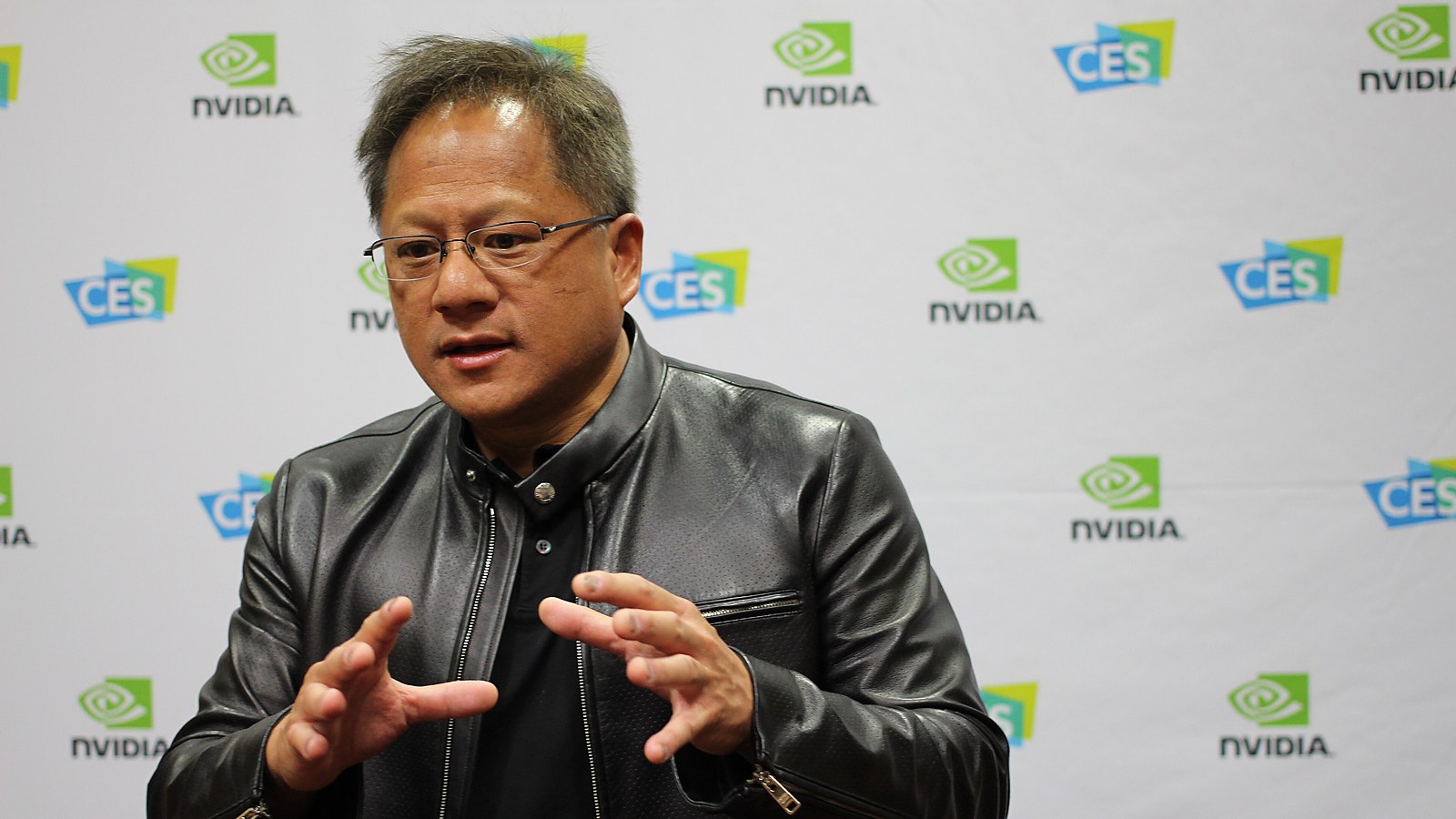
On Monday the Philadelphia Semiconductor Index rose 7 percent and the Nasdaq-100 gained 3.4 percent, CNBC reported. Nvidia fell 4.27 percent, losing about $200 billion in value by CNBC's and NBC's estimates and about $190 billion by Reuters'. Investors were not marking down artificial intelligence that day. They were repricing one company's dependence on one executive.
That executive, co-founder and chief executive Jensen Huang, told staff on Sunday that he had been unfaithful to his wife. His board opened an independent investigation the same day, citing reports that he had been the target of a foreign intelligence effort. The stakes run past his family. Analyst Patrick Moorhead told CNBC that in 35 years he had not seen a chip CEO with as much direct influence on export policy.
What is established, what is alleged and what is denied
Established, on the record: Huang's staff email, published by CNBC, says he was unfaithful. It names no one, as CBS and Reuters both noted. Nvidia's board said a committee of independent directors, assisted by outside counsel, will oversee the inquiry, and it set no date for finishing. Huang said he supports the investigation and will cooperate fully. Nvidia says he will keep leading the company.
Alleged, through unnamed sources: The New York Times first reported in late October that US intelligence agencies had surveilled Alice Huang, an executive at Nvidia customer Megaspeed, as a suspected asset of China's Ministry of State Security, and that she had developed a close relationship with Jensen Huang. The two are not related. Some outlets call her a former executive. The Financial Times reported on Friday that the US government believed the relationship was romantic. CNBC and NBC now describe the affair as being with her.
Denied or unanswered: China's foreign ministry called the spy claim a smear. Megaspeed denies wrongdoing. Nvidia's board says it has no reason to believe national security or company secrets were compromised, and President Trump said Huang told him he "had absolutely no idea" the person was a spy. Nvidia did not respond to CNBC for its Tuesday report on his China ties. No US agency has said publicly that Huang passed information or broke a law, and no report reviewed here says he has been charged with anything.
Why the export-control question comes first
Last December, Trump said Nvidia could ship its H200 chips to China if the US received a 25 percent cut of sales, CNBC noted, after Huang pressed for looser limits. According to the Times, as relayed by CNBC, intelligence agencies worried about his access to the president, and Trump was briefed on the surveillance about a year ago and "chose not to do anything." Accounts of a later Times report say Secretary of State Marco Rubio oversaw a classified memo on the matter before Trump's May trip to China.
Rep. John Moolenaar, the Michigan Republican who chairs the House China select committee, set out his questions on CNBC on Tuesday: whether Huang shared privileged information, whether he was influenced to lobby against chip restrictions, and whether China received preference for scarce advanced chips. Those are questions, not findings.
"If it becomes less of an investigation, more of damage control, that's not going to work because people have to have confidence." — Rep. John Moolenaar, on CNBC
Moolenaar, Foreign Affairs chair Brian Mast and Intelligence chair Rick Crawford invited Huang to a joint closed-door briefing on Nov. 18, the day after Nvidia's quarterly results, in a letter dated Nov. 4. It seeks details of his dealings with Alice Huang and of Nvidia's "security protocols against foreign adversary espionage." Nvidia did not directly tell CNBC whether he would attend. Democrats, who won control of Congress last week, want a full briefing too, House Minority Leader Hakeem Jeffries said.
The legislation that was already waiting
Reuters reported that three measures are slated for possible inclusion in the annual defense bill and sit in the Senate's management package: the AI Overwatch Act, giving Congress power over advanced chip exports; the Chip Security Act, requiring companies to track chips; and the Match Act, on chipmaking equipment. One former congressional staffer told Reuters that Nvidia is the biggest opponent of the first two. Senators Elizabeth Warren and Jim Banks said the affair makes the concerns "even more urgent."
Export licensing has largely been an executive-branch decision, which rewards access to the executive. Congressional review and location tracking would reduce the value of that access whoever holds it. Reuters quoted an advocate saying the remaining hurdle is the White House, which did not comment. Wedbush analyst Matt Bryson wrote that Huang would lose some credibility with government officials regardless of the investigation's outcome.
The direct revenue at stake is smaller than the politics suggest. China was nearly a quarter of Nvidia's sales before the 2022 controls and 8 percent in the latest quarter, CNBC reported, including non-data-center products. H200 shipments were under 1 percent of data center revenue in the July quarter, and Beijing has not approved large-scale imports, Moorhead said. A short seller, Culper Research, which profits if the stock falls, alleged in May that indirect China exposure was above 20 percent of compute revenue.
Megaspeed and the enforcement trail
Two law enforcement sources told CBS that the Justice Department's National Security Division is investigating Megaspeed over potential export violations. The Times, cited by CBS, put Megaspeed's Nvidia purchases above $4.8 billion over two years. The company says inspections found no violations, and Nvidia said last month that diversion allegations against it were "investigated and debunked." No report reviewed here says Megaspeed has been charged.
The Times reported Monday that Nvidia's general counsel, Tim Teter, emailed Commerce Department investigators in August 2025 seeking information on the probe, saying Undersecretary Jeffrey Kessler had authorized the contact. Investigators declined. NBC, citing one person, reported that the Justice Department then asked Commerce to pause. Accounts of the Times story say a Commerce official insisted the case was to be handled by the book, and that the paper found no evidence Nvidia shaped the outcome. Enforcement is discretionary too. Yahoo Finance counted no additions to Commerce's Entity List, the main tool for cutting firms off from US technology, since Oct. 9, 2025. CBS's sources describe the inquiry at Justice as continuing. If NBC's account is right, the Commerce track, with its administrative penalties, was paused, and why is not established.
Disclosure, clearances and the board
A proposed class action filed in San Jose five minutes after Monday's close accuses Nvidia and Huang of concealing the relationship. Reuters, which noted that such suits commonly follow sharp declines, said Nvidia did not immediately respond. An Anadolu account of the complaint says it targets Nvidia's statements that a review found no diversion and Huang's description of its Megaspeed dealings as normal.
That focus fits the law. In Macquarie v. Moab in 2024, a unanimous Supreme Court held that pure omissions cannot support a private claim under Rule 10b-5(b), while half-truths can. On that reasoning, silence about a private relationship is a weaker theory than a public statement that leaves it out. NBC quoted Huang saying earlier that their interactions were "related to Megaspeed" and "completely normal." Whether that was misleading is for a court, and no court has ruled.
The security-clearance question has a blunter answer: no report reviewed here says Huang holds one. The usual lever of revoking access therefore has no visible application. What has opened instead is a warning gap. Nvidia spokesman John Rizzo told CBS the company trusted that the government would have notified it of a genuine threat. CNBC said Nvidia had implied it received no such briefing, and no agency has addressed that in the reports reviewed here.
The board's position carries its own tension. It announced an inquiry and, in the same statement, declared "confidence in Jensen and his leadership team." That states a view before the evidence is gathered, and it is the opening Moolenaar's warning aims at. Citi's Atif Malik listed governance, export-control compliance and leadership stability as investors' key issues.
What investors are pricing, and the case for caution
Analysts disagree about how much Nvidia depends on Huang. Dan Ives of Yorkville Ives said on Tuesday, in comments carried by Yahoo Finance, that the company would be worth 25 to 30 percent less without him. Investor Dan Niles countered that he has a deep bench. Shares were down nearly 4 percent again on Tuesday morning, and results on Nov. 17 will arrive before any finding.
The strongest counter-argument is that almost nothing here has been tested in public. Being targeted is not being compromised, and an affair is not espionage. The intelligence is anonymous, Beijing disputes it, and the people amplifying it include short sellers and political rivals. George Chen of the Asia Group put it plainly in comments to reporters: the key questions "require evidence rather than speculation."
Yet the policy consequence does not wait for that evidence. For four years, America's chip controls have turned on licenses, list decisions and access to the president. This episode has shown how much of that system rests on trust in a few people. Whatever the committee finds, the argument for writing those judgments into statute has become harder to resist.
This analysis rests on reporting by CNBC, NBC News, CBS News and Reuters, statements from Nvidia and its board, and the Nov. 4 House letter as described by CNBC. TNN could not access the New York Times or Financial Times originals; their claims are relayed through outlets that cited them, and some details of the Times's Commerce and Rubio reporting come from secondary summaries. The intelligence claims rest on unnamed sources. TNN has not read the lawsuit complaint. Accounts differ on whether Alice Huang is a current or former Megaspeed executive. Investigations by the board, the Justice Department and Congress are continuing, and Tuesday's share figure is intraday.