
Jensen Huang resigns as Nvidia CEO after an affairs and spy scandal; CFO Colette Kress named interim chief as Nvidia appoints its first board chair in 33 years
The co-founder left both the chief executive's job and the board with immediate effect. Shares fell as much as 14% before closing down 4.3% at $166.19, taking Nvidia's losses since last Friday to almost $500 billion. The bigger change may be the one most investors missed: Nvidia has a board chair for the first time.
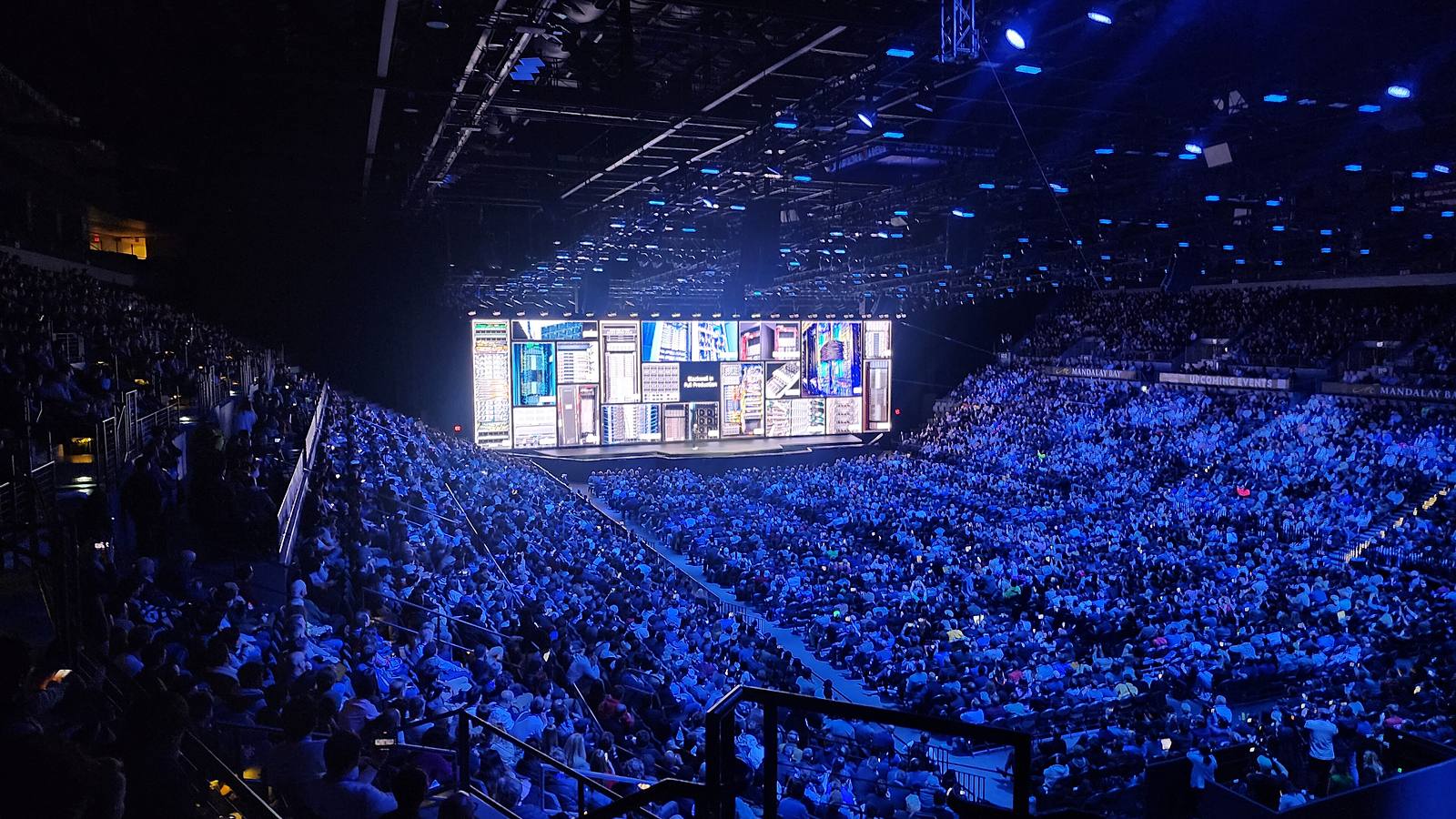
For 33 years, Nvidia did not have a chair of its board. It did not need one, in the view of the people who ran it, because it had Jensen Huang. He co-founded the company in 1993, ran it ever since, had more than 60 people reporting directly to him, and was so closely identified with its strategy that Bernstein analyst Stacy Rasgon summed up the view on Wall Street this week in four words: 'Jensen is Nvidia.'
On Thursday morning, that arrangement ended. Nvidia's board announced that Huang, 63, had resigned as chief executive and as a director with immediate effect. Chief financial officer Colette Kress becomes interim CEO while keeping her finance role. Harvey C. Jones, the former chief executive of Synopsys and a Nvidia director since its founding year, becomes the company's first chair. The board said it will search for a permanent chief executive and consider internal and external candidates.
The resignation follows five days in which the story moved from a personal admission to a national security investigation to a governance crisis. Each step made it harder for the board to keep him.
How the week unfolded
On Sunday, Huang acknowledged having an affair. The Financial Times reported that the woman involved was Alice Huang, also known as Huang Le, an executive at Megaspeed International, a Singapore-based data center company. US intelligence officials believe she is a spy for China. The two are not related. President Trump said this week that the FBI is investigating romantic and business ties between them.
Megaspeed is at the center of the export-control side of the case. According to US investigators cited by CBS News, Alice Huang gained access to 240,000 Nvidia chips that are banned from export to China, and Megaspeed is under investigation in the United States and Singapore over allegations that it smuggled them there. The Information reported this week that Megaspeed helped facilitate at least $7.5 billion of Nvidia chip shipments to Chinese companies.
On Wednesday, the New York Times reported that five Nvidia employees had come forward alleging that Huang had a relationship with Kimberly Powell, Nvidia's vice president of health care, who reported to him. On Thursday, after the resignation was announced, Reuters reported a relationship with a second, unnamed employee. CBS News and the Wall Street Journal reported on Wednesday night that the board was preparing to remove him.
Rasgon told CNBC that an alleged relationship with a direct report made it 'much tougher for the board to leave him in position'. That is the key distinction. A relationship with an outside executive under investigation is a security and reputational issue. A relationship with a subordinate, which the Times reported was known inside the company, appears to breach Nvidia's own code of conduct, which tells employees to avoid conflicts arising from 'personal relationships'. That is a matter the board is directly responsible for policing.
What the market priced
Nvidia shares fell as much as 14.3% on Thursday before recovering to close down $7.54, or 4.3%, at $166.19, according to CBS News. That followed a 9.6% fall on Monday and Tuesday. Taken together, Nvidia has lost almost $500 billion in market value since the close of trading last Friday. CNBC noted that the stock spent most of the day below a $4 trillion valuation before finishing just above it, and that it was already down more than 20% over the past month.
The recovery during the day says something. Before the resignation, several analysts had told CNBC that Huang's departure could cut the stock by 20%. In the end it closed down 4%. Part of the worst case had already been priced in during the week, and part of it was offset by relief that the board had acted. Dan Ives of Yorkville Ives said in a note that the board 'did what we said it needed to do, which is rip off the band-aid'. He still cut his estimate of Nvidia's value to $225 a share without Huang, from $300 with him.
"There is no credible way to put a precise revenue loss on his departure. Customers buy Nvidia's computing power, software and networking ecosystem, and those advantages wouldn't disappear with its CEO." — Ipek Ozkardeskaya, senior analyst, Swissquote, to CBS News
The board chair is the real change
The first-ever board chair matters more than the interim chief executive. Kress has been Nvidia's CFO since 2013 after nearly 25 years in finance roles at companies including Cisco and Microsoft. Analysts told CBS News she is a sound caretaker but is unlikely to be named permanently. Jones, 73, is a different kind of appointment. He ran Synopsys from 1987 to 1998, co-founded the chip design company Tensilica, has managed the venture firm Square Wave Ventures since 2004, and has sat on Nvidia's board since 1993.
His statement on Thursday was intended to reassure customers: 'We expect the company's operations, customer commitments and product roadmap to continue without interruption.' But Fortune raised the obvious question. A director with more than three decades on the board, and a seat on its nominating and corporate governance committee, oversaw a company with no clear succession plan, a chief executive with dozens of direct reports, and, according to the Times, a relationship with a subordinate that employees knew about. 'The board cannot simply present itself as the solution without examining its role in creating the problem,' Jonathan Tower, managing partner at the venture firm Catapult, told Fortune.
Who could run Nvidia
The search is expected to take months. Bloomberg reported that Nvidia has already hired a recruiting firm. The most-discussed internal candidate is Ian Buck, who joined in 2004, runs Nvidia's data center business and is closely associated with CUDA, the software platform that keeps developers tied to Nvidia hardware. On the prediction market Kalshi, traders gave Buck a 42% chance of getting the job as of Thursday afternoon, with Kress at 12% and Apple's chief hardware officer Johny Srouji at 9%. Semafor reported that Srouji is among those the board is considering.
External names include Arm chief executive Rene Haas, a former Nvidia executive, and Palo Alto Networks chief executive Nikesh Arora. President Trump wrote on Truth Social that there was 'only one man' for the job: former Apple chief executive Tim Cook, who stepped down as Apple CEO in September and is now its executive chairman. The president's involvement is itself part of the story. He has been close to Huang, awarded him a National Medal of Science this year, and last year allowed Nvidia to sell its advanced H200 chips to approved customers in China, with the US government taking a 25% cut.
The questions that do not leave with him
The resignation ends Huang's role at Nvidia. It does not end the investigations. Senator Elizabeth Warren said on Thursday that 'Mr. Huang, NVIDIA executives, and NVIDIA's board of directors still owe Congress answers about the company's compliance with U.S. export controls'. CNBC reported, based on research by the private intelligence firm Tesari, that businesses linked to Alice Huang held stakes in a Shenzhen data center whose main customer was Huawei Cloud, at roughly the same time she and Jensen Huang were first seen together in public in December 2023. Nvidia has described Huawei as one of its main competitors. Nvidia, Huawei and Jensen Huang did not respond to CNBC's requests for comment.
What investigators will want to know is whether anyone at Nvidia, and Huang in particular, knew or should have known where Megaspeed's chips were going. A chief executive leaving does not change the answer to that question. It does mean the answer will now be given by someone else.
The case against overreaction
The strongest argument for calm is the one Swissquote's Ozkardeskaya made. Nvidia's competitive position rests on hardware that customers are waiting years to receive, a software ecosystem built over nearly two decades, and networking technology that ties its systems together. Nikesh Arora said last month that Huang could not give him chips until 2028. That backlog did not resign on Thursday.
The counterargument is about structure. Patrick McGee, author of 'Apple in China', told CBS News that Nvidia was 'an organization set up for him to run the next 20 years'. A company with dozens of executives reporting directly to its founder has not been developing the layer of leaders who make decisions independently. That gap will not show up in next quarter's revenue. It will show up in the choices made over the next ten years, which is exactly the period Rasgon said Huang's judgment had been credited with shaping.
The durable lesson is one that applies well beyond Nvidia. For years, investors treated Huang's control of the company as a strength, and there was evidence to support that view. This week showed the cost. The company valued at around $4 trillion had no chair, no named successor and no clear way to remove its founder until he chose to go. As of Thursday, it has a chair, an interim chief executive and a search under way, five days after the scandal began.
This report is based on Nvidia's board announcement and statements by Harvey Jones and Colette Kress; reporting by CBS News, CNBC, Fortune, NPR, the New York Times, the Financial Times, Reuters, the Wall Street Journal, Semafor, Bloomberg and The Information as cited; analyst comments to CBS News and CNBC; and Kalshi market prices as of Thursday afternoon. The allegations about Alice Huang come from US officials and media reports and have not been tested in court; she could not be reached for comment. Reports of Huang's relationships with Nvidia employees rest on unnamed sources and have not been confirmed by the company. Market values and prediction-market odds are as of Thursday's close and will change.