
Jim Copenhaver, shot twice at Trump's 2024 Butler rally, dies at 76 — the shooting's second death comes more than two years after the gunfire, with his lawsuit against the Secret Service still open
Copenhaver was hit in the arm and abdomen on July 13, 2024, and carried one of the bullets beside his spine for the rest of his life. He died in a Pittsburgh hospital on Wednesday of complications from those wounds. His death lands in the middle of a federal negligence suit and a security post-mortem that has produced suspensions but no firings.
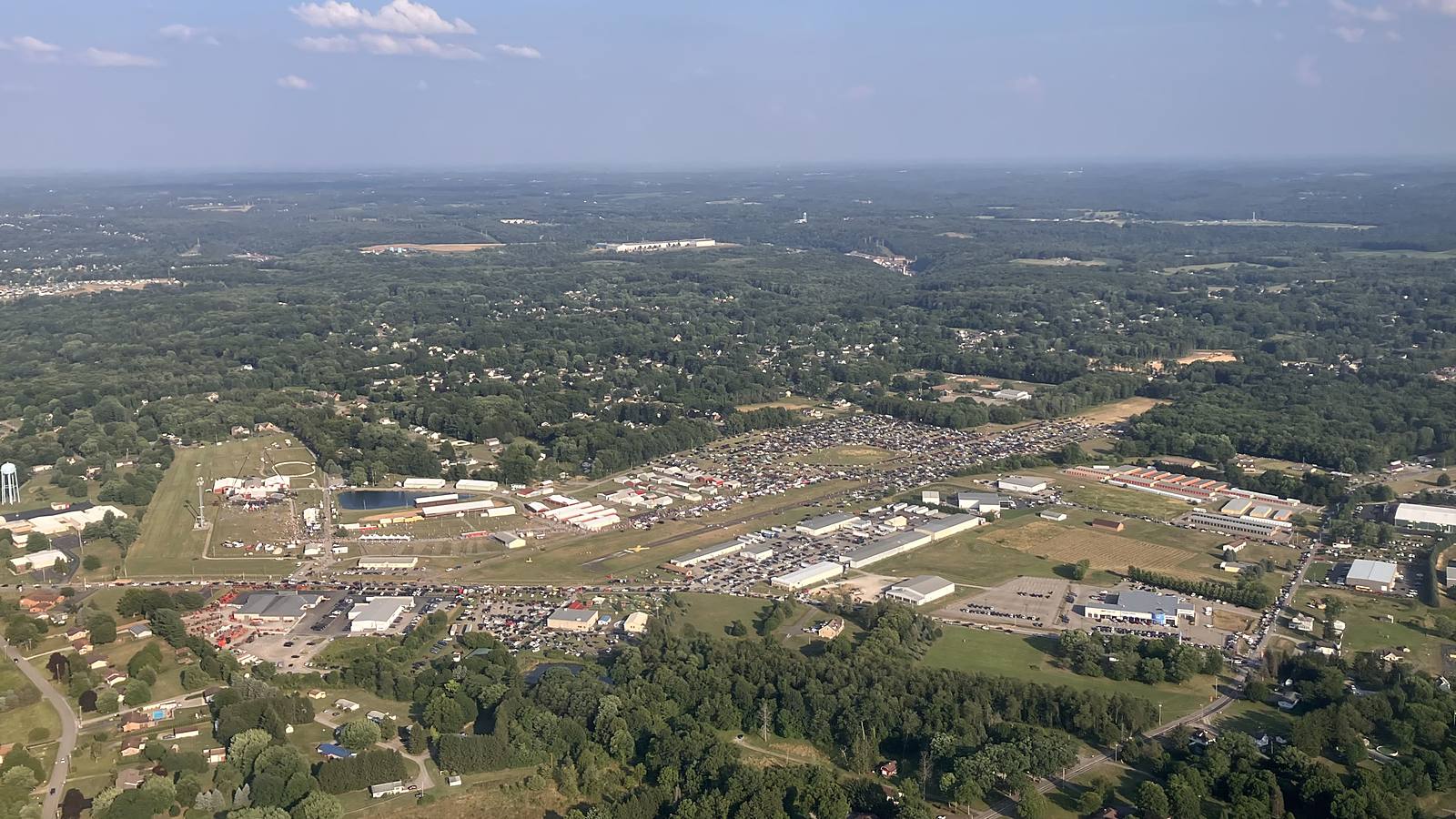
The Butler shooting now has a second death, and it arrived 802 days after the gunfire. James "Jim" Copenhaver, 76, one of the three rally-goers struck when Thomas Crooks opened fire on Donald Trump's campaign rally in Butler, Pennsylvania, on July 13, 2024, died on Wednesday at a hospital in Pittsburgh, according to a statement from the Allegheny County medical examiner reported by local media and confirmed by the Pennsylvania attorney general's office. The cause, according to the attorney general, was complications stemming from his injuries.
That timing matters more than it might first appear. Corey Comperatore, a former Buffalo Township fire chief, was killed on the field that evening while shielding his family. Copenhaver and a third attendee, David Dutch, were wounded and survived. Trump's right ear was grazed. For two years the shooting's toll has been recorded as one dead and three injured. As of this week the record has to be read differently: two men are dead as a result of what happened on that rooftop, one of them slowly.
What the bullets did
Copenhaver was hit twice, in the arm and in the abdomen. In an interview with CBS News a year after the rally, he and Dutch described a recovery of infections and repeated surgeries rather than a single hospital stay. One of the bullets, Copenhaver said then, was still lodged in his body next to his spine, and he walked with a cane. The Hill reported that the wounds left him with permanent nerve damage. The lawsuit he filed in June describes injuries to his abdomen, spine and left arm.
A delayed death from a gunshot wound is medically unremarkable and legally significant. Abdominal wounds carry a long tail of complications: infections, obstructions, organ damage that surfaces months later, and the cumulative strain of surgery on an elderly patient. Medical examiners in the United States routinely classify deaths from the late complications of an old gunshot wound as homicides, on the reasoning that the injury set the chain of events in motion. The medical examiner's statement reported this week gave the cause; the formal manner-of-death ruling, which decides whether Copenhaver is counted as a homicide victim of the July 2024 attack, had not been made public as of Friday.
His family's lawyer, in a statement to CBS News, described his service as a defining part of his life. "As a veteran, he proudly served our nation in the armed forces, and his love of country never wavered," the statement said. His death was first announced on Thursday by the House Republican Conference, which said he had "endured unimaginable hardship with strength and perseverance."
The lawsuit his death now changes
In June, Copenhaver and Dutch filed separate but closely matched lawsuits in the United States District Court for the Western District of Pennsylvania, each joined by his wife. The defendant in both is the United States government. The complaints allege that the Secret Service and the Department of Homeland Security were grossly negligent in failing to secure the rally site, and they lean on the finding that has become the shorthand for the whole episode: a "cascade of preventable failures," the phrase used by the Senate Homeland Security Committee.
The specific failure at the centre of both complaints is the roof. Crooks fired from the top of a building in the AGR International complex, roughly 400 feet from the stage, a vantage point that had been identified as a vulnerability before the rally and was left outside the secured perimeter. Local police and the Secret Service later gave conflicting accounts of who was responsible for it. The lawsuits argue that the agency knew the roof was a problem and did not fix it.
Copenhaver's death does not end his claim, but it changes what it is. A personal-injury suit against the federal government seeks compensation for the plaintiff's own pain, medical costs and lost quality of life. When the plaintiff dies of the injuries in question, his estate can typically pursue a wrongful-death claim, and the damages calculus shifts to what his family lost. Nothing in the public docket yet reflects that change; the filing was less than four months old when he died. But the government's lawyers now face a case in which the harm they are accused of failing to prevent is a death, not a disability.
His passing should serve as continued motivation to provide sufficient answers and closure for the investigation into the attempted assassination of President Trump in Butler, where two innocent lives have now been lost.
That was Representative Andy Biggs of Arizona, in a post on Thursday. The phrase "two innocent lives" is the first time a member of Congress has publicly folded Copenhaver into the death toll, and it is likely to be the framing used from here.
What the security post-mortem found, and did not do
The Butler shooting produced the most detailed public dissection of a Secret Service failure in decades, and its conclusions are not in dispute. Kimberly Cheatle resigned as director on July 23, 2024, a day after a congressional hearing in which she was unable to answer basic questions about the site plan. The Senate committee's investigation later found that she had given Congress inaccurate information when she said no security requests for the rally had been rejected; the committee documented requests for additional resources during the 2024 campaign that were denied.
On the first anniversary of the shooting, in July 2025, the committee's final report under Chairman Rand Paul catalogued the missed warnings, the communication breakdowns between local police and federal agents, and the unsecured roof. Its most quoted line was administrative rather than tactical: "not a single person has been fired." The Secret Service had by then disciplined six employees, with suspensions ranging from 10 to 42 days without pay. Nobody lost their job.
That is the backdrop against which the lawsuits were filed. The Federal Tort Claims Act, the law that lets private citizens sue the United States for the negligence of its employees, requires plaintiffs to first present a claim to the agency itself and wait for it to be denied or ignored before suing; the June filings followed that route. The Act also contains an exception for "discretionary functions," which the government routinely invokes to argue that operational judgments, such as how to lay out a security perimeter, cannot be second-guessed in court. That exception, more than the facts of the day, is what the Copenhaver and Dutch cases will turn on.
The counter-argument
The government's likely defence is not that the Secret Service performed well; three separate reviews have said it did not. It is that federal law shields agencies from liability for the way they exercised judgment, however badly, and that the person who caused the deaths in Butler was Thomas Crooks, who was killed by a Secret Service counter-sniper within seconds of firing. Courts have accepted versions of that argument in past cases against law-enforcement agencies, and there is no guarantee that a sympathetic set of facts overcomes it.
There is also the question of causation over time. A death 26 months after a wound invites the government to argue that intervening factors, including age and unrelated illness, contributed. That is the ordinary terrain of a wrongful-death case, and it is where the medical examiner's ruling and Copenhaver's medical records will do the work.
What Trump said
Trump, who has described his own survival in Butler as providential and has returned to the site for a rally since, posted twice about Copenhaver on Truth Social. On Thursday he called him "a true American patriot" and his death "a tremendous loss." "More than two years ago in Butler, Pennsylvania, a crazed gunman attempted to stifle our America First Movement. Instead, Jim and so many other wonderful Patriots who love our Country, stood united in defense of our shared values of Freedom, Liberty, and Justice," he wrote, adding that Copenhaver had "courageously continued to FIGHT, FIGHT, FIGHT" through his recovery.
On Friday he followed with a shorter post: "God bless American Patriot and Warrior, James Copenhaver, and his incredible family. May he rest in peace!!!" The White House has not said whether the president will attend a funeral, and the family has not announced arrangements.
The durable point is the one Copenhaver himself made a year after the shooting, when he told CBS that the bullet was still inside him. The Butler attack has been treated as a single evening with a settled outcome: a gunman dead, a fire chief killed, a candidate grazed, a director resigned. For the two men wounded on the field it was never a single evening. One of them has now died of it, and the question of who was responsible for the roof he was shot from is, as of this week, a wrongful-death question before a federal court.
This report is based on statements from the Pennsylvania attorney general's office and the Allegheny County medical examiner as reported by the BBC, CBS News and The Hill; the June 2026 complaints filed in the Western District of Pennsylvania as described by UPI and Fox News; the Senate Homeland Security Committee's reports of September 2024 and July 2025; and public posts by President Trump, the House Republican Conference and Representative Andy Biggs. The medical examiner's manner-of-death ruling and any amendment of the Copenhaver lawsuit had not been made public as of Friday afternoon. Descriptions of the Federal Tort Claims Act are general and do not predict the outcome of either case.