
Kenya confirms its first ever Ebola case after a traveller from Congo passes airport screening and dies in Nairobi — 28 contacts and a planeload of passengers are being traced
The patient had been ill for a month, had been through several hospitals in the Democratic Republic of Congo, and still cleared the thermal screen at Jomo Kenyatta International Airport. Why that happened, and why this outbreak has no vaccine to fall back on, are the two questions that matter for East Africa this week.
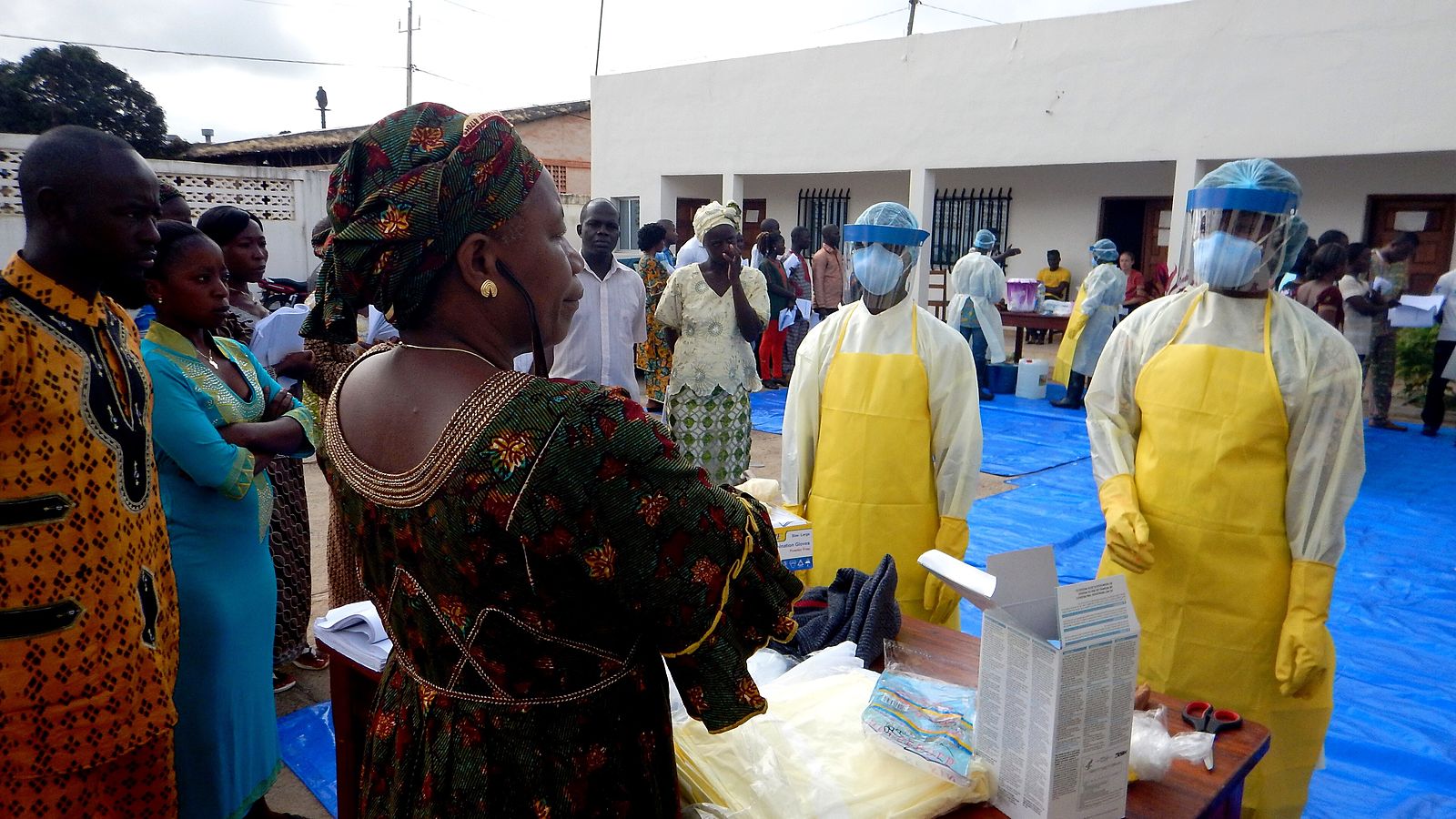
The patient walked through the screening point at Jomo Kenyatta International Airport on Saturday afternoon and nobody stopped him. He had been ill for about a month. He had been treated in several hospitals in the Democratic Republic of Congo. He had travelled by road from Congo to Kampala and boarded a Jambojet flight to Nairobi with 23 other passengers and four crew. A relative collected him from the terminal and drove him to Nairobi Hospital. By Monday night he was dead, and on Tuesday Kenya's Health Minister Aden Duale confirmed what the sample had shown: Ebola, Bundibugyo species, the first case ever recorded in Kenya.
The man was a Kenyan citizen who had lived in Congo for the past seven years, according to the Ministry of Health. At Nairobi Hospital he was isolated and then moved to the facility's East Wing isolation unit, which was built during the Covid-19 pandemic. There, Duale said, he 'developed fever, chills, intense fatigue and weakness, painful swallowing, muscle pain and bleeding under the skin.' Doctors suspected a viral haemorrhagic fever from the symptoms and the travel history, took samples, and the sample came back positive. He died at 11:30pm on Monday and was buried on Tuesday under Ebola safety protocols, with the Kenya Red Cross Society overseeing the burial.
At least 28 contacts, including family members and health workers, have been identified, the BBC reported. Authorities are tracing the 23 passengers and four crew on the flight. Dr Patrick Amoth, the ministry's director-general, said contacts 'will remain in isolation for 21 days,' the maximum incubation period for the virus. Duale urged Kenyans 'not to panic, as all systems are in place to mitigate the spread of the disease,' and asked health workers to be 'extra vigilant' regardless of what condition a patient presented with.
Why the airport screen did not catch him
A senior health ministry official told the BBC the patient may have passed screening because medication he was taking masked his symptoms. That is plausible, and it points to the structural weakness of airport screening rather than a lapse by any one officer. Thermal scanners detect fever. A traveller who has taken paracetamol or another antipyretic in the hours before a flight will not register one. Ebola's early symptoms, fever, fatigue, muscle pain, a sore throat, are indistinguishable from malaria or influenza, and a person can carry the virus for up to three weeks before showing any.
Kenya had, in fact, prepared. Since Congo declared its outbreak in May, the country had tightened checks at airports and border posts, activated public health emergency centres at national and county level, and tested 267 suspected samples across five laboratories, all negative, the Associated Press reported. The system that failed on Saturday at the airport worked within roughly 48 hours at the hospital, where clinicians put symptoms and travel history together and isolated the patient before the test result came back. In outbreak terms, that is the layer that matters most.
There is precedent for a single imported case being contained. In July 2014, at the height of the West African epidemic, a Liberian-American official named Patrick Sawyer flew into Lagos while symptomatic and collapsed at the airport. Nigeria, a country of some 170 million, traced hundreds of contacts, recorded 20 cases and eight deaths, and was declared Ebola-free by the World Health Organization that October. Kenya's starting position, with the index patient isolated and a defined contact list, is better than Nigeria's was.
The outbreak behind the case
The disease arrived from the second-deadliest Ebola outbreak ever recorded. Congo declared the outbreak in mid-May in Ituri province in the country's north-east, and it has since spread to seven provinces. As of this week the WHO had recorded 8,544 cases and 4,114 deaths, the BBC reported, making it the largest outbreak in the history of the country where the virus was first identified in 1976, and second globally only to the West African epidemic of 2014 to 2016, which killed more than 11,000 people.
Médecins Sans Frontières believes the real toll is higher, because of gaps in surveillance and testing across a region that has been at war, on and off, for three decades. On Monday the charity said the virus was spreading 'like a megafire,' with new hotspots in North Kivu province, which borders Ituri and now accounts for nearly 40 per cent of newly confirmed cases nationwide. Eastern Congo's multiple armed groups, mass displacement and shattered health infrastructure are the reasons an outbreak that might have been contained in months is now in its fifth.
Uganda, which shares the border and reported cases within days of Congo's declaration, offers the counter-example. It recorded 20 cases and two deaths, isolated them, and was declared free of the disease over the summer, with the WHO confirming in August. France recorded a single imported case. Until Saturday, every known case since Uganda's clearance had been inside Congo.
Doctors suspected a viral haemorrhagic fever based on his symptoms and travel history and collected samples for testing. The sample tested positive for Ebola Bundibugyo virus. — Aden Duale, Kenya's Health Minister, as quoted by the BBC
Why Bundibugyo is a harder virus to fight
The species matters enormously, and it is the part of this story most often lost in the wire copy. There are several species of Ebola virus. The one that caused the West African epidemic and the 2018 to 2020 outbreak in Kivu was Zaire ebolavirus, against which the world now has a licensed vaccine, Ervebo, and approved antibody treatments. During the Kivu outbreak, ring vaccination of contacts and contacts-of-contacts was the central tool, and more than 300,000 people received the shot.
Bundibugyo ebolavirus is different. It was first identified in 2007 in Bundibugyo district in western Uganda, in an outbreak of around 130 cases, and caused a second outbreak in Isiro, in north-eastern Congo, in 2012. Until this year it had never caused more than a few dozen deaths at a time. There is no approved vaccine against it and no approved treatment. The Zaire vaccine is not licensed for it. That is why Kenya's response on Tuesday was quarantine and contact tracing, the tools of 1976, rather than vaccination, the tool of 2019.
Candidates are being rushed forward. The BBC reported four vaccines in development, with human trials for one launched in July. The Coalition for Epidemic Preparedness Innovations announced funding in June for candidates from Moderna, IAVI and the University of Oxford, whose adenovirus-based shot entered an early-phase trial in late July. In September, more than 2,000 Congolese health workers received the Zaire vaccine in a trial to see whether it offers any cross-protection. None of these is a tool a Kenyan contact tracer can use this week.
A country already arguing about Ebola
Kenya's case lands in a charged domestic context. In June, the government's decision to allow a United States-funded Ebola quarantine facility in Laikipia County drew protests from activists who argued it would expose Kenyans to the virus, and at least three protesters died in clashes with police, The Standard reported. The facility was intended for precisely the scenario that unfolded this week. Its opponents will now have to argue that a country with a confirmed case and 55 people being traced or isolated is safer without one.
Nairobi is also the hub the rest of East Africa flies through. Jomo Kenyatta International Airport handles connections for the region, and the patient's route, by road from Congo into Uganda and then by air to Kenya, is the ordinary route of trade and family across three countries. Closing it is not an option. Screening it better, with symptom questionnaires and travel-history declarations rather than thermal cameras alone, is what the WHO has recommended since 2014 and what Kenya's health ministry said on Tuesday it is now intensifying.
The honest counter-argument is that one imported case is not an outbreak. The patient was isolated before he died. The contacts are known and counted. Kenya's hospitals are far better resourced than those of eastern Congo, and the chain of transmission, if there is one, is at most two days old. The WHO said on Tuesday it was backing Kenya, Congo and Uganda jointly, and an Africa CDC team is due in Nairobi.
What endures from this week is the lesson of the airport. A month-long illness, several hospital visits and a bus ride across a border were not enough to stop a man carrying Ebola from boarding a regional jet, because the only thing anyone measured was his temperature. The outbreak that produced him is still growing, it has no vaccine, and it is now five months old. Kenya's 28 contacts will tell the region in three weeks whether the hospital layer held. The airport layer, it already knows, did not.
This report is based on statements by Kenya's Ministry of Health on October 6, 2026, as reported by the BBC, the Associated Press, The Standard and Kenyan broadcasters; World Health Organization case counts for the Democratic Republic of Congo as cited by the BBC; and published records of the 2007, 2012 and 2014 to 2016 outbreaks. Contact numbers in the first days after an imported case are provisional and are routinely revised upward as tracing proceeds. The number of passengers and crew on the flight is as given by the ministry.