
A military judge has set a June 2028 trial date for Khalid Sheikh Mohammed — almost 27 years after the September 11 attacks
Air Force Lt. Col. Michael Schrama rejected the prosecution's request to start in January 2027, giving the parties 18 more months to fight over what evidence a jury may hear. The case has been scheduled for trial before. The last date was set for 2021.
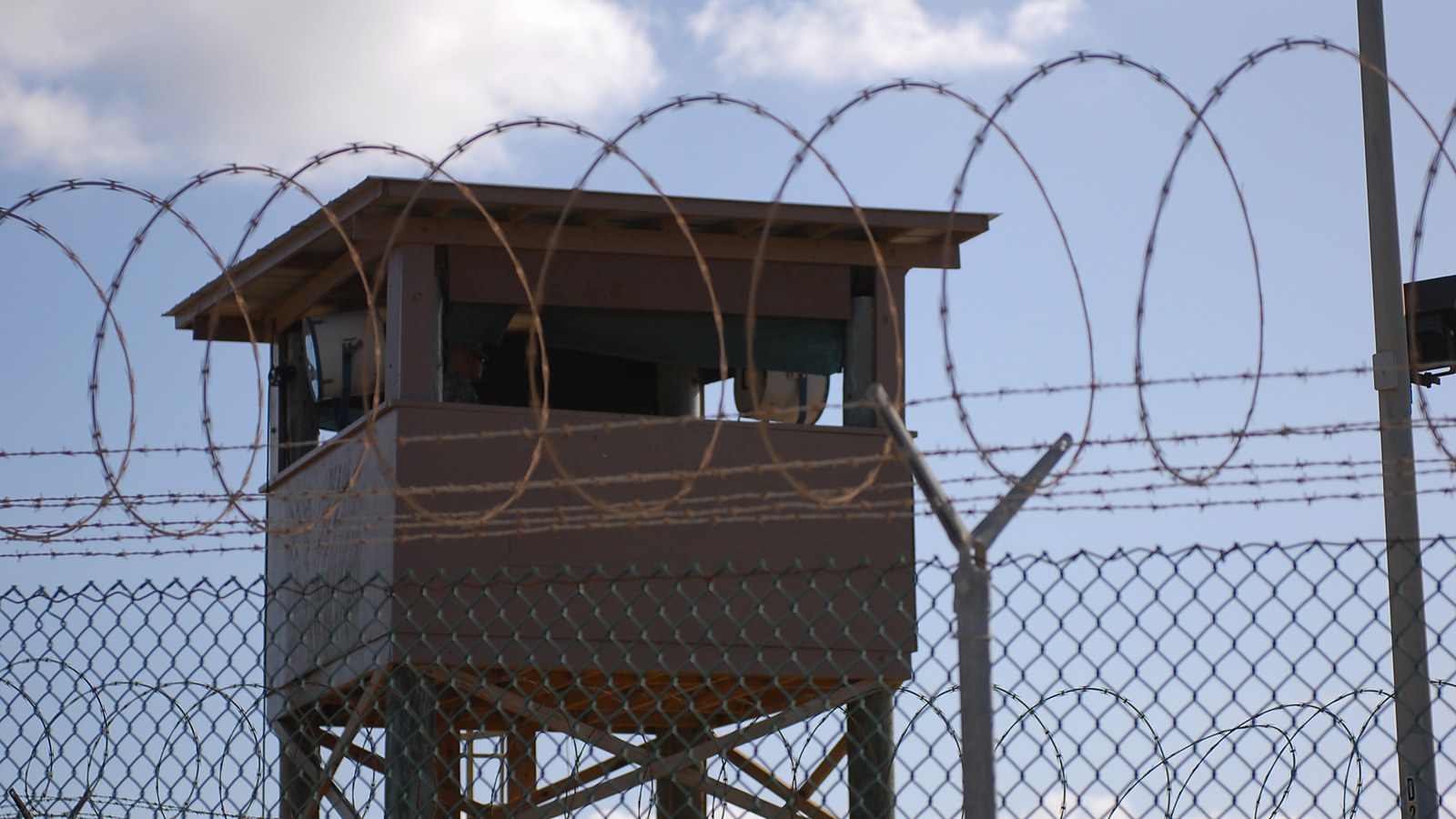
A trial date is normally the least newsworthy thing a court produces. In the case of the United States against Khalid Sheikh Mohammed and three co-defendants, it is the only thing the court has managed to produce in twenty years, and even now it comes with conditions.
Air Force Lt. Col. Michael A. Schrama, the military judge presiding at Guantanamo Bay, issued a scheduling order on Wednesday setting opening proceedings for June 5, 2028. That is eighteen months later than the January 2027 start prosecutors had asked for. Schrama's stated reason was procedural and, in the context of this case, almost understated: a realistic trial date, he wrote, must account for the hearing and resolution of pretrial evidentiary and compliance motions.
What the order actually schedules
The sequence laid out is conventional for a capital case and unprecedented for this one. A jury of military service members will be selected first. Opening statements follow thirty days later. The defence begins presenting its case sixty days after the prosecution rests. The proceedings close with a separate sentencing phase — the structure required when the government is seeking death.
Alongside Mohammed, the defendants are Walid bin Attash, Ali Abdul Aziz Ali and Mustafa al-Hawsawi. All four have been held at Guantanamo since 2006. Mohammed was captured by US forces in Pakistan in March 2003 and spent roughly three years in the CIA's network of secret prisons before arriving in Cuba. He is accused of developing and directing the plot to fly hijacked airliners into the World Trade Center and the Pentagon; a fourth aircraft came down in a Pennsylvania field.
If the schedule holds, the trial will open two years and ten months from now, and twenty-six years and nine months after the attacks. The defendants will have been in American custody for twenty-five years without a verdict.
Why it has taken this long
The answer is not bureaucratic drift, though there has been plenty of that. It is a single unresolved legal problem that has consumed the case since arraignment: what a court may do with evidence connected to torture.
Mohammed and his co-defendants were held in CIA custody and subjected to what the agency called enhanced interrogation and what the Senate Intelligence Committee's 2014 report described, at length, as torture. Everything that follows from that period — statements, derivative evidence, the reliability of later interviews conducted by clean teams of FBI agents, the classification of the programme's records, the ability of defence counsel to see them, the ability of witnesses to testify about them — has been litigated, appealed, remanded and litigated again.
This is the substance behind Schrama's dry phrase about evidentiary and compliance motions. He is not scheduling a docket. He is estimating how long it will take to finish an argument that has been running since 2008.
The plea deal that would have ended it
In 2024, after two years of negotiation, military prosecutors reached agreements with Mohammed and two co-defendants under which they would plead guilty in exchange for sentences of life without parole rather than face execution. The deals carried an obligation that mattered enormously to some families: the men would have been required to answer, under oath, the outstanding questions victims' relatives had about the attacks.
The political reaction was immediate and hostile, and then-Defense Secretary Lloyd Austin revoked the agreements within days of their announcement — an extraordinary intervention by a cabinet officer into a prosecution's charging discretion. The defence challenged the revocation as beyond his authority. An appeals court ultimately upheld Austin's action, throwing out the deals and returning the case to the path it is on now.
That decision is the direct cause of Wednesday's order. Without it, the case would have been over. With it, the government is committed to trying four men on capital charges, using an evidentiary record built partly inside a programme the United States has officially disavowed.
The families are not of one mind
It is easy, and wrong, to describe the September 11 families as a bloc. Some regarded the plea agreements as a betrayal — an outcome in which the men who planned the deadliest attack in American history negotiated their way out of a death sentence. Others regarded them as the only realistic route to two things the trial process has never delivered: finality, and answers.
The second group's argument has grown stronger with every year of delay. A plea would have produced sworn testimony from the defendants in 2024. The trial now scheduled will not begin until 2028, will run for months, and will be followed by a capital appellate process that, on the historical record of military commissions, could last another decade. The families in question are, by now, in their sixties, seventies and eighties.
A realistic trial date must account for the hearing and resolution of pretrial evidentiary and compliance motions.
There is also a practical problem the delay creates for the prosecution, and it cuts against the government's own interest. Capital cases are built on witnesses, and this one's witness list reaches back to 2001 — first responders, air traffic controllers, FBI agents from the original investigation, intelligence officers who handled the defendants. Every year of postponement thins that list and ages the testimony of everyone left on it. Delay in an ordinary criminal case is usually thought to favour the defence. Here it degrades the evidence on both sides at once.
The court has done this before
A trial in this case was previously scheduled for 2021. It did not happen. Schrama's own order acknowledges the fragility of the new date: the June 2028 start depends on the case meeting its intervening deadlines and milestones, and it can be moved again if it does not.
That caveat is not boilerplate. The commission has cycled through a succession of judges, several of whom departed mid-case, each departure resetting familiarity with a classified record measured in tens of thousands of pages. Hearings are held in a compound on a naval base in Cuba that must be flown to, with counsel, court reporters, translators, security officers and observers all transported for each session. The physical logistics alone impose a tempo no ordinary federal court would tolerate.
The comparison nobody in the commission system likes
Federal district courts in the United States have tried and convicted hundreds of terrorism defendants since 2001, including plotters connected to the same organisation, under ordinary rules of evidence and in ordinary courtrooms. The military commission at Guantanamo was created on the premise that the ordinary system could not handle these cases. Twenty years on, the commissions have produced a handful of convictions, several of which were later overturned, and no completed capital trial.
The premise has been tested and it has not held up well. The reason is not that military judges are less capable than federal ones. It is that the commissions were asked to do something no court can do cleanly: adjudicate a capital case whose foundational evidence was gathered in a programme designed on the assumption that no court would ever see it.
The four defendants are also among the last people still held at Guantanamo, a facility whose population has fallen from roughly 780 at its peak to a residual group of a few dozen. Keeping the base's detention operation running for a shrinking handful of men costs the government an amount per detainee that has been repeatedly described by the Pentagon's own auditors as the most expensive incarceration in the world. The trial schedule now guarantees that operation continues into the 2030s regardless of who occupies the White House.
What June 2028 means
Mohammed has been, by the account of observers who have watched him across two decades of hearings, a defendant acutely conscious of the stage. He has asked to appear in court in military-style clothing, complained about a courtroom sketch of himself, and successfully litigated for the right to send a letter to a sitting president. A trial gives him an audience of a size he has not had since 2003. That is one of the arguments the plea deals were meant to foreclose.
For the government, the date is a commitment it has avoided making for years, and one that now runs through a presidential transition and, in all likelihood, a change of defence secretary. For the four defendants, it is another twenty-two months in a detention facility that successive administrations have promised to close.
For everyone else, the number to hold onto is the one the order makes unavoidable. The attacks were on September 11, 2001. The trial is scheduled to open on June 5, 2028. Whatever a verdict is worth after that interval, it is not what anyone had in mind in the autumn of 2001, and the system that produced the delay is the one that will be asked to deliver the result.
This report is based on the scheduling order issued by Air Force Lt. Col. Michael A. Schrama on Wednesday, August 26, 2026, and on reporting by CBS News, the Associated Press, Reuters and Al Jazeera. The June 5, 2028 date is contingent on the case meeting intervening deadlines and may be moved.