
Kyiv blackout and water shortages follow a Russian strike of 172 drones and 36 ballistic missiles on substations that link the capital to Ukraine's nuclear power plants
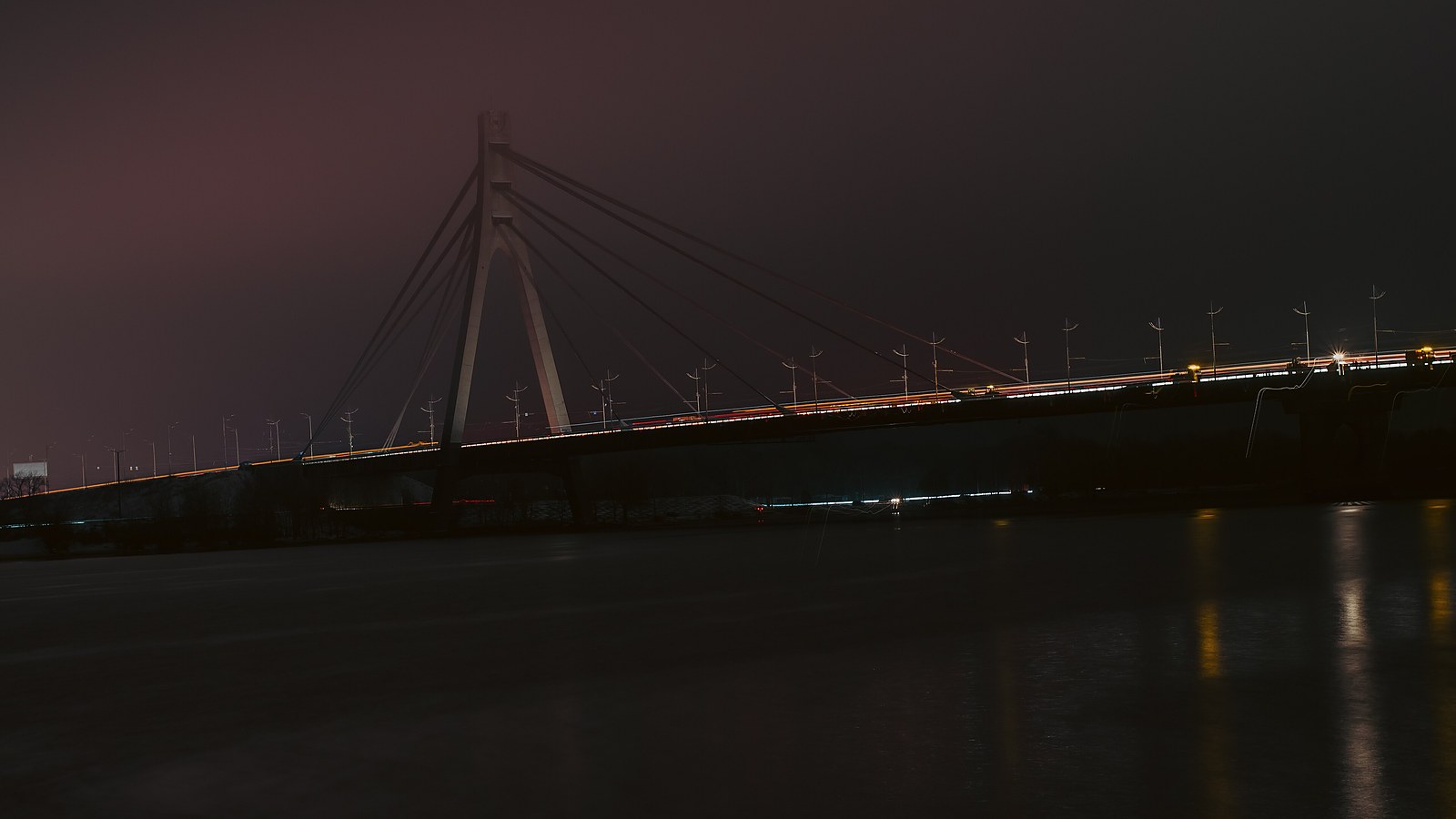
The overnight attack on November 7 hit the grid node that carries power from the Rivne and Khmelnytskyi nuclear plants to Kyiv, damaged the Northern Bridge over the Dnipro and left the city short of electricity, water and heat. It was the second mass strike on Ukraine's energy system in five days, and it landed three days before peace talks in Abu Dhabi.
The most important target in Russia's overnight attack on Kyiv was not in the city at all. According to President Volodymyr Zelenskyy, one of the substations struck early on Saturday sits in Kyiv Oblast and connects the Rivne and Khmelnytskyi nuclear power plants, far to the west, to the capital and Ukraine's central regions. Ukraine's Ministry of Energy said networks carrying electricity from nuclear plants to the capital had been damaged. That is the difference between a bad night of outages and a structural problem: Kyiv does not generate most of what it consumes, and the wires that bring it in are now the front line.
By Saturday morning the capital was facing what Zelenskyy called serious difficulties with electricity, water and heat. He accused Moscow of trying to "plunge Kyiv and the entire country into a blackout", in remarks reported by the Guardian. Mayor Vitali Klitschko said several missiles had struck the Northern Bridge across the Dnipro, damaging the roadway, trolleybus lines and a power line, and the bridge was closed while crews worked on it.
What was fired, and what got through
Ukraine's Air Force said Russia launched 172 long-range attack drones overnight, 137 of them jet-powered, alongside Iskander-M, Zircon, KN-23 and S-400 missiles. Zelenskyy put the number of ballistic missiles at 36 and said all of them were aimed at Kyiv and the surrounding region. The Air Force reported that air defences brought down 149 drones and four missiles, with drone impacts recorded at 24 locations.
Those two figures, read together, explain the night. The drone interception rate was high, which is now routine. The missile rate was not. Ballistic missiles fall too fast for most of the systems Ukraine uses against drones, and only a narrow class of interceptors can engage them. A strike package built mostly of ballistic weapons and aimed at a single metropolitan area is designed to exhaust exactly that scarce layer. The Kyiv Independent, which tracks the figures, reports that Russia has launched more than 500 ballistic missiles at Ukraine since the start of 2026.
Klitschko said five people were injured in the city, among them a 14-year-old girl, and two were taken to hospital. In the wider Kyiv Oblast, the National Police said one person was killed and two injured, with energy facilities damaged in the Bucha and Obukhiv districts. The power company DTEK said one of its facilities in the region had been hit again, cutting power to part of Brovary district, and that restoration would take time.
Not one city but six regions
Zelenskyy said substations were also damaged in the Vinnytsia, Zhytomyr, Rivne, Kharkiv and Dnipropetrovsk regions, and that twelve regions besides Kyiv came under attack. The Ministry of Energy reported that consumers in Dnipropetrovsk, Donetsk, Kyiv, Zhytomyr and Kharkiv regions were without power on Saturday morning, and that hourly outage schedules remained in force across most of the country, with capacity limits for industry.
The ministry's own assessment was blunt. Russia, it said, had caused significant damage to many energy facilities in the capital region, substantially complicating the transmission of electricity to Kyiv and limiting the ability to supply neighbouring regions. "Restoring such a volume of damaged equipment will take time," it said, adding that constant air raid alerts were delaying repair crews.
"The capital is facing serious difficulties with its electricity, water, and heat supplies. Residential buildings and the Northern Bridge were damaged." — President Volodymyr Zelenskyy, on X, November 7
Russia's Defence Ministry said its strikes were aimed at energy and transport targets. According to Ukrainian media reports of its statement, it claimed hits on the Trypilska thermal power plant, the Kyivska electrical substation and a facility producing rocket fuel components. None of those claims had been independently verified by Saturday afternoon.
Why water and heat fail with the lights
The water shortages are not a separate story. Urban water systems run on electric pumps, and Kyiv's district heating depends on combined heat and power plants and pumping stations that also need a working grid. When a substation feeding a district goes down, taps lose pressure in upper floors and radiators cool, even if no pipe has been touched.
It is also why the targeting of transmission matters more than any single power plant. A grid can route around a lost generator if the lines are intact. It cannot easily route around a destroyed high-voltage node, because that node is the route. Saturday's strike on the substation linking the western nuclear plants to the capital went for the route.
The transformer problem
The equipment inside those substations is the bottleneck of the whole repair effort. Ukraine's backbone grid runs at 330 and 750 kilovolts, higher than the voltages most common in western Europe. Speaking to the Kyiv Independent a year ago, Vitaliy Zaichenko, head of the state grid operator Ukrenergo, said 750-kilovolt circuit breakers and transformers are rare globally, used by only a handful of countries, and that the company had used up nearly all suitable second-hand stock. He said newly manufactured 750-kilovolt equipment can take up to a year to produce.
The same reporting described DTEK turning down two decommissioned Swiss transformers because they were incompatible, and searching as far as Africa and the Middle East for parts matching Soviet-era specifications. Donor countries had by then sent more than 1 billion euros of equipment through a fund run by the Energy Community. Each mass strike draws that stock down faster than it is refilled.
A pattern four winters old
Russia's systematic campaign against the grid began in October 2022, when a barrage of cruise missiles and drones on October 10 opened months of rolling strikes. Within days, Ukraine's energy minister said around 30 percent of the country's energy infrastructure had been hit. In April 2024 a strike on the Trypilska thermal power plant, a major supplier to the Kyiv region, destroyed it completely, according to its operator Centrenergo. Saturday's strike returned, by Moscow's own account, to the same site.
What has changed is the tempo and the focus. This was the second mass attack on the energy system in five days. On November 3, Deputy Prime Minister and Energy Minister Denys Shmyhal said Russia used 289 drones, 17 ballistic missiles and 59 cruise missiles, and directed three drones at a substation critical to the stable operation of the Khmelnytskyi nuclear plant. He called it a serious escalation and said Ukraine had reported it to the International Atomic Energy Agency. On November 6, Zelenskyy warned that intelligence pointed to a new attack on energy infrastructure and on bridges over the Dnipro. Both arrived the next night.
The nuclear dimension is the one with consequences beyond Ukraine. Nuclear plants need a stable connection to the grid both to export power and to run safety systems from outside supply. In earlier episodes of substation damage, the IAEA has reported Ukrainian reactors cutting output because the grid could not take their power. A strike on the line between the Rivne and Khmelnytskyi plants and Kyiv does two things at once: it starves the capital and it forces otherwise healthy generation offline.
Bombing before the table
The timing is political. Negotiators from Russia, Ukraine and the United States are due to meet in Abu Dhabi on Tuesday and Wednesday. Zelenskyy said Moscow's preparation for the talks consisted of firing ballistic missiles at a city of millions. In an interview with CNN he described the latest framework set out by Jared Kushner as "Yalta 2.0", the Guardian reported, while Donald Trump said on Friday that a "big beautiful agreement" involving all of Europe could be close.
There is a counter-reading. Moscow says it is striking energy and transport targets that support Ukraine's war effort, and Ukraine is itself hitting Russian energy sites: the Kyiv Independent reported Ukrainian strikes overnight on an oil refinery in Saratov and a factory in Oryol. On this view the grid war is mutual and leverage-seeking on both sides, a way to arrive at Abu Dhabi with something to trade. Kyiv's answer is that refineries feed an army, while a substation feeding pumps and radiators in a capital of millions in November is a civilian target, and its officials call the attempt to freeze civilians a war crime.
There is also friction at home. On November 6, Kyiv's city-run heating company, Kyivteploenergo, accused police of pressuring it and seizing documents tied to the capital's energy resilience plan, the Kyiv Independent reported, deepening a public dispute between Zelenskyy's government and Klitschko's city hall over winter preparations.
The durable point is about arithmetic, not any one night. A missile is spent in seconds; a new 750-kilovolt transformer can take a year to arrive. As long as that gap holds, every mass strike on transmission subtracts more from Kyiv's winter than repair crews can add back, and the outcome for the people of the capital will be set less by what is agreed in Abu Dhabi than by how many interceptors and spare transformers reach Ukraine before the coldest months.
This report is based on statements from President Volodymyr Zelenskyy, Ukraine's Air Force, the Ministry of Energy, Kyiv Mayor Vitali Klitschko, the National Police and DTEK, as reported by the Guardian, the Kyiv Independent and UNN on November 7, 2026, and on Denys Shmyhal's statement on the November 3 attack reported by LIGA.net. Missile counts differ between sources: the 36 ballistic missiles figure is Zelenskyy's, and the Air Force did not give a total. Russian claims about the Trypilska plant and Kyivska substation are unverified. Casualty figures, outage areas and repair timelines were changing through the day and are provisional. Background on equipment shortages draws on Kyiv Independent reporting from November 2025.