
Merz calls the AfD's 'remigration' policy a synonym for ethnic cleansing and cancels a call with Trump, after the far right won almost 44 per cent in Saxony-Anhalt
The AfD took the strongest result for a far-right party in any German state since the Nazi period and fell three seats short of an absolute majority. Trump congratulated it on Truth Social. The German chancellor responded by cancelling their scheduled September 11 anniversary call.
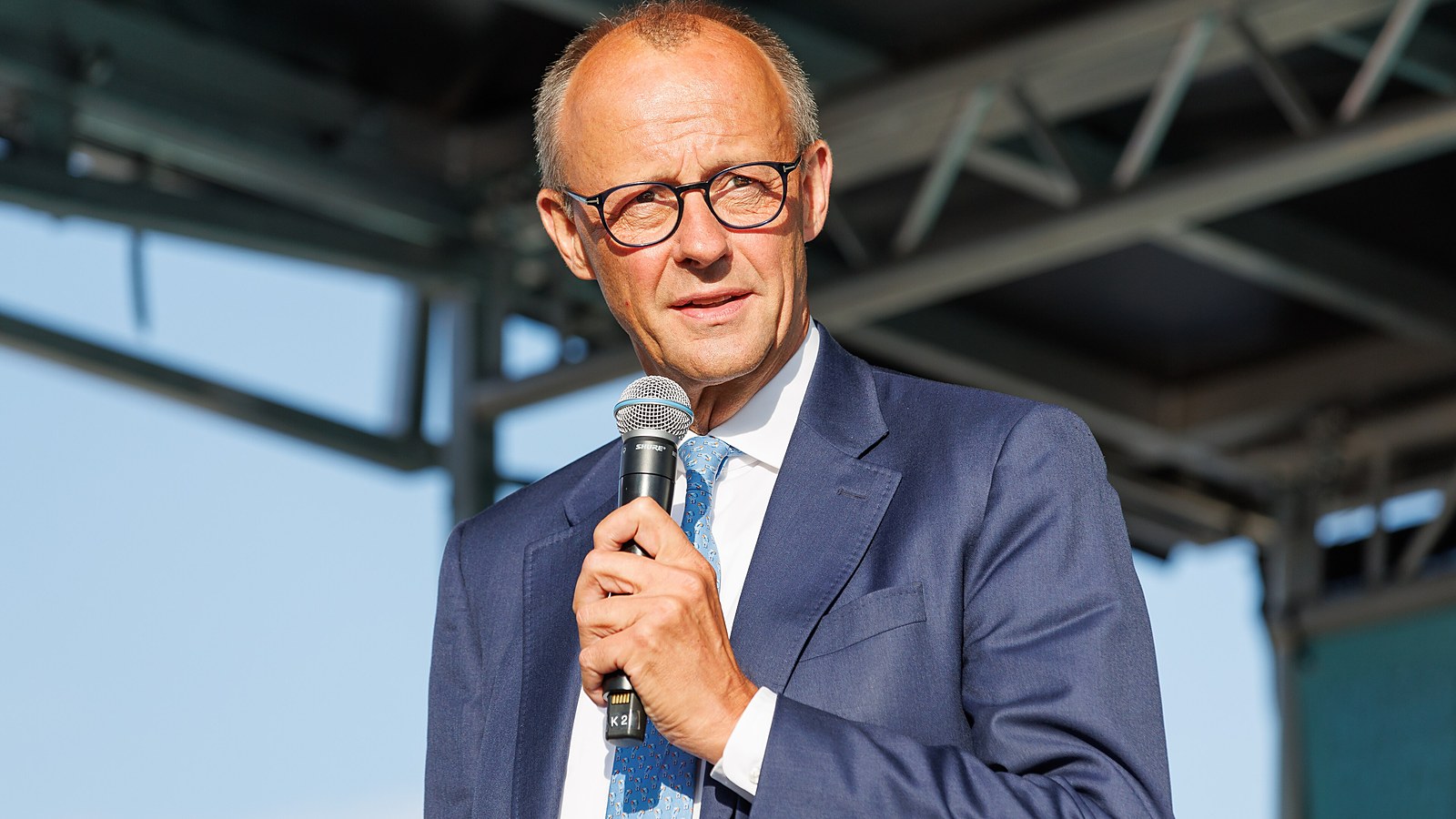
Two things happened in Berlin on Wednesday, and the second one explains the first. Friedrich Merz stood in the Bundestag and told the Alternative für Deutschland that its central policy is a synonym for ethnic cleansing. Then he cancelled a scheduled phone call with the president of the United States, who had spent the previous day congratulating that same party on its victory.
The victory in question was in Saxony-Anhalt, where the AfD took nearly 44 per cent of the vote on Sunday. That is the strongest showing for a far-right party in any German state since the Nazi period. It fell three seats short of an absolute majority, which is the only reason the arithmetic of the next few weeks is complicated rather than settled.
The word Merz chose
The AfD's programme is built on "remigration," a term for large-scale expulsion of migrants that the party has pushed into mainstream German political vocabulary over the past several years. Merz attacked the word itself rather than arguing around it.
The term 'remigration' is nothing but a synonym for ethnic cleansing based on origin and skin colour. — Friedrich Merz, German chancellor, in the Bundestag, September 9, 2026
The line drew applause from the other parties in the chamber and heckling from the AfD group, which interrupted him repeatedly through the speech. Coming from a conservative Christian Democrat who has spent his chancellorship hardening German border policy, it was a deliberate escalation of register — the argument moved from whether the AfD's migration policy would work to what kind of thing it is.
Merz then made an economic case rather than only a moral one, which is the more revealing half of the speech. If people working in Germany have to leave because of remigration, he said, the skilled trades will no longer function: not a single care home will remain open, not a single hospital will remain operational, and not a single restaurant will be able to stay in business.
That is an argument about dependency, and it is the argument a chancellor makes when the moral one has stopped moving voters. Germany's care sector, hospitals and hospitality industry are staffed to a degree that mass deportation would not merely inconvenience but halt. Merz is telling AfD voters that the policy they voted for would close the care home their parents live in.
The distinction he needs to hold
Merz did not defend the status quo. He conceded that Germany still has "problems in the area of migration," said that many people in the country should not have permanent residency, and stated that the governing coalition agrees more deportations are needed. His claim is that his government distinguishes between people who work and contribute and people without permanent residency who must leave, and that the AfD does not.
This is the line that has defined his political position for eighteen months and the line that Sunday's result put under severe strain. Merz took office at the head of a coalition with the centre-left Social Democrats and has since adopted a hard border policy explicitly aimed at recovering AfD voters. Support for him has fallen sharply amid disappointment over economic growth and the cost of living. In Saxony-Anhalt his party's vote was halved.
The strategic problem is familiar across Europe and has a consistent record. A mainstream party that adopts a restrictionist frame in order to neutralise a far-right challenger tends to validate the frame without capturing the voters, because voters who have decided immigration is the central question generally prefer the party that has believed it longest. Merz has now run that experiment for a year and a half and produced the strongest far-right state result in postwar German history.
Why the Trump call was cancelled
On Truth Social, Donald Trump hailed the AfD's "really big night" in Saxony-Anhalt, writing that Germans had "finally got tired of the absolutely horrible Immigration rules and regulations which have hurt Germany so badly." The two leaders had been due to speak on Wednesday to mark the twenty-fifth anniversary of the September 11 attacks. Berlin postponed the call and set no new date.
A spokesperson for Merz declined to give a reason but noted that the chancellor had always objected in general terms to interfering in or commenting on another country's domestic political situation, particularly regarding elections. The German government also said the cancellation was not due to scheduling — a specific denial that removes the only face-saving explanation available.
The choice of occasion sharpens it. Cancelling a September 11 commemoration call is not a routine diplomatic slight; it is the deliberate forfeiture of a piece of alliance symbolism in order to register an objection. Merz calculated that being seen to accept the congratulations was worse than being seen to refuse the call.
What happens in Magdeburg
No far-right party has held power in any of Germany's sixteen states since the Second World War. Saxony-Anhalt is where that could change. The AfD's lead candidate, Ulrich Siegmund, is three seats short and is seeking support among the other parties to be elected state premier.
The obstacle is the firewall — the long-standing refusal of Germany's mainstream parties to cooperate with the AfD in forming governments. Three seats is a small gap in ordinary parliamentary arithmetic and an enormous one when every other party has committed to not closing it. The Saxony-Anhalt branch of the party is classified as right-wing extremist by Germany's domestic intelligence service, which raises the cost of any defection considerably.
Merz accused Siegmund of "electoral fraud" for seeking the premiership at all, on the grounds that he had promised during the campaign not to try to govern if he failed to win outright. "Fifty-six per cent of voters in Saxony-Anhalt didn't vote for you," Merz told the AfD — a true statement, and one that describes a party's ceiling rather than its trajectory.
The Russia charge
Merz also attacked the AfD over Ukraine, accusing it of opposing military assistance and of making common cause with Russia, which Berlin has accused of running a sabotage and disinformation campaign on German soil. He pointed to a failed drone bomb attack at Leipzig airport last month, saying there was clear evidence it had been planned in Russia for months and specifically directed against Germany, and that the AfD had said nothing about it.
This is the second front of the argument and the one where the chancellor is on firmer ground with the broader electorate than on migration. It also explains the shape of his strategy: unable to beat the AfD on the issue it owns, he is trying to attach a second issue to it on which its position is less popular.
The counter-case
Alice Weidel's response from the podium was that the CDU had been "pulverised" and that the election was a referendum on Merz's leadership. "Your time is up," she told him. "The public want a change in policy, and they will get it." She reiterated the party's aim of forming a federal government in the foreseeable future.
The polling gives that more support than a governing party would like. The AfD stands at 28 to 29 per cent nationally, in first place. Merz's coalition would not command a majority in a general election held now. Two more state votes follow this month, in Berlin and Mecklenburg-Western Pomerania, with momentum behind the party. The next federal election is not due until 2029, which is the government's principal remaining asset.
The durable point
Merz himself called the result seismic and acknowledged that his own unpopularity contributed to it. Both of those admissions are unusual and both are accurate. A chancellor who moved right on migration to hold off the far right has watched the far right take nearly 44 per cent in a state where his own party's vote halved, and has responded by using the strongest language of his career against them and refusing a call from the American president who cheered them on.
What that sequence establishes is that the containment strategy of the past eighteen months is over, not that a replacement exists. The firewall in Magdeburg may well hold on three seats. But a barrier that depends on every other party's continued refusal is a procedural fact, not a political one, and it does not address why 44 per cent of a German state voted the way it did.
This report is based on proceedings in the Bundestag on September 9, 2026 and contemporaneous reporting by The Guardian and BBC News, including direct quotations from Friedrich Merz, Alice Weidel and a German government spokesperson, and on Donald Trump's posts to Truth Social. The Saxony-Anhalt result and the three-seat shortfall are as reported following Sunday's election; coalition and premiership outcomes in the state remain unresolved. National polling figures are current at the time of publication and are subject to normal margins of error.