
Microsoft unveils its Maia 300 AI chip and says its own silicon will now handle most of its AI inference — 96 chips a rack, production starting in 2027
The third-generation accelerator packs twice as many chips per rack as Maia 200 and, Microsoft says, pushes 40% more tokens per megawatt than GPUs. It is a bet on the cost of answering questions, not training models — and on the same day two chip CEOs warned that money, not silicon, may be the next AI bottleneck.
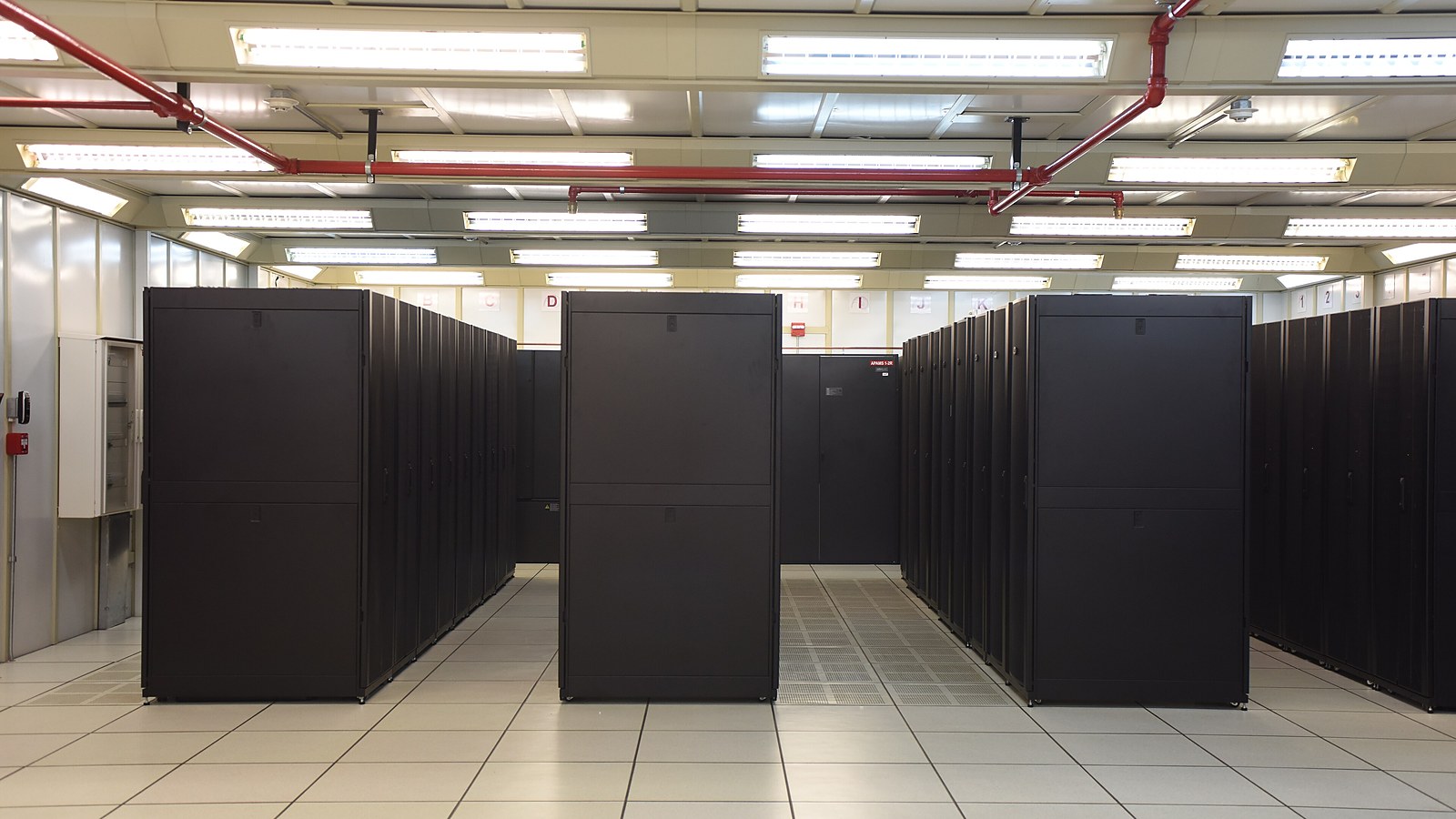
The most important word in Microsoft's chip announcement on Monday was not "Maia". It was "incoming". Starting with its third-generation Maia accelerator, the company said, it will mainly rely on its own silicon to handle incoming requests — the questions users type into Copilot, the code completions in GitHub, the calls customers make to models running on Azure. That is the part of artificial intelligence that never stops costing money, and Microsoft has decided it wants to own the machine that does it.
For a company whose data centres are filled with Nvidia graphics processors, and whose biggest AI partners train their models on them, that is a significant change of posture. It does not mean Nvidia is leaving Redmond. It does mean that the single most repetitive workload in Microsoft's AI business is being moved, deliberately, onto hardware Microsoft designs itself.
What Microsoft actually announced
The new chip, Maia 300, goes into production in 2027, according to CNBC, which was briefed by the company. Microsoft expects to pack 96 of them into each data-centre rack, double the density of the Maia 200. It says the new version can push up to seven times more AI tokens through a rack, and 40% more tokens per megawatt of power, when compared with GPUs. A blog post from Scott Guthrie, the executive vice president who runs Microsoft's cloud and AI division, says the company is targeting multi-gigawatt deployments of chips in the Maia family.
Alistair Speirs, a general manager on the project, declined to put a timeline on those gigawatts. He framed the hesitation as flexibility rather than doubt.
"We reserve a little bit of optionality there, because this is an industry that's changing very fast, and we want to deploy the right silicon for the right models that we're using at the right time as well." — Alistair Speirs, general manager, Microsoft
Jim Kleewein, a technical fellow at Microsoft, said parts of Microsoft 365 Copilot should run faster on the new chip. That is the clearest signal of where Maia 300 is headed first: into Microsoft's own products, where the company controls the model, the software and the hardware at once.
The road from Maia 100 to Maia 300
Microsoft introduced its first AI chip, the Maia 100, in 2023. The second generation arrived this January. In a post dated January 26, Guthrie described Maia 200 as an accelerator built for inference, with more than 140 billion transistors and more than 10 petaflops of performance at 4-bit precision, inside a 750-watt power envelope. He claimed three times the 4-bit performance of Amazon's third-generation Trainium chip and 8-bit performance above Google's seventh-generation TPU.
In July, chief executive Satya Nadella told analysts that Maia 200 "delivers 30% better performance per dollar than the latest generation hardware in our fleet" and that it was already serving OpenAI models. Finance chief Amy Hood told a Goldman Sachs conference last month that using its own chips had helped with "margin improvement over the course of a decade" — a reference to the longer history of Microsoft's in-house central processors, which it already runs alongside parts from Intel and AMD.
Why inference is the workload worth owning
The distinction between training and inference is the key to reading this announcement. Training a frontier model is a huge, episodic job: thousands of chips run for weeks, and then it is over. Inference is the opposite. Every time anyone asks the model anything, chips must run again to generate the answer, one token at a time. As usage grows, inference becomes the recurring bill — and for a company selling AI inside Office, Windows, GitHub and Azure, that bill scales with every subscriber.
Inference also suits custom silicon better than training does. A company serving its own models knows exactly what shapes of maths those models need, how much memory each request consumes and how fast data must move. It can design a chip around those facts and strip out the general-purpose flexibility that makes a GPU good at everything. Guthrie made a version of this argument in January, writing that raw compute is not the only ingredient for faster AI and that feeding data to the chip matters just as much.
The metric Microsoft chose to lead with — tokens per megawatt — explains the rest. Power, not floor space, is now the binding constraint on new data centres. "We need new architectures that will give us essentially better performance, better use of the power that we have," Speirs said. "You can think of power translating pretty directly into operational cost for something like a data center as well." If the 40% figure holds in production, the same grid connection serves 40% more answers.
The capital question hanging over every chip
The timing of the announcement is worth noting. On the same Monday, in Singapore, the chief executives of Broadcom and Intel warned that the next constraint on the AI boom may not be chips, memory or electricity, but money. "I think might be the biggest constraint is capital," Broadcom's Hock Tan said at the DBS Asia Future Forward Conference. Intel's Lip-Bu Tan pointed to the rising cost of capital and said that in the longer run "people want to see the ROI".
Both executives still described demand as running ahead of supply — Hock Tan said that imbalance could persist through 2029 and possibly into 2030 — but their warning reframes what a chip like Maia is for. When borrowing gets more expensive, the company that can produce each AI answer for less money and less power has more room to keep building. A custom inference chip is, in that light, as much a financing decision as an engineering one.
Where Nvidia still fits
None of this makes Microsoft independent of Nvidia, and the company was careful to say so. When it comes to training models, Speirs said, Microsoft partners with Nvidia and AMD. Nvidia chief executive Jensen Huang appeared at a Microsoft event last week where the company announced a Surface laptop containing an Nvidia processor. Nvidia's GPUs remain the standard for AI workloads, fill Microsoft's existing data centres and are used to train models from OpenAI and Anthropic.
Analysts at Evercore ISI, in a note to clients last week, estimated that Maia will account for about 10% of Microsoft's spending on AI chips by the first quarter of 2027. The firm rates Microsoft a buy. Ten per cent is meaningful at Microsoft's scale, but it also implies that roughly nine of every ten dollars Microsoft spends on AI chips in early 2027 will still go to someone else.
The case for scepticism
The strongest objection to reading too much into Monday's figures is that nobody outside Microsoft can check them. Unlike Google's tensor processing units, or Amazon's Inferentia and Trainium chips, Microsoft's accelerators cannot be rented by the hour by other companies. "Nobody has tested them outside of Microsoft yet," said Patrick Moorhead, chief executive of the advisory firm Moor Insights and Strategy. Comparisons such as "40% more tokens per megawatt" depend on which GPUs, which models and which settings are used as the baseline, and Microsoft chose all three.
There is also the question of time. A chip that enters production in 2027 will meet whatever Nvidia, AMD and the other cloud providers ship in 2027, not what they ship today. The industry has moved quickly enough that Speirs himself described the deployment plan as deliberately flexible. A performance lead on a slide in October 2026 is a target, not a result.
What it adds up to
The durable point is not that Microsoft has built a faster chip. It is that the three biggest cloud providers — Google, Amazon and now Microsoft — have all concluded that the cost of serving AI, at the volumes they expect, is too large to leave entirely to a single outside supplier. Google and Amazon reached that conclusion earlier and rent their chips to customers. Microsoft has, for now, chosen to keep its own for itself, and to point them at the part of the business that charges by the question.
Whether Maia 300 delivers on its numbers will be visible in Microsoft's own margins long before it is visible in any benchmark. Hood has already told investors that in-house silicon helps the margin line. If Copilot answers get cheaper to produce in 2027 without getting worse, that will be the evidence. If they do not, Microsoft will still be one of Nvidia's biggest customers, which it has been all along.
This analysis is based on Microsoft's announcement as reported by CNBC on October 12, 2026, Scott Guthrie's January 2026 post on Maia 200 as relayed in trade coverage, remarks by Satya Nadella and Amy Hood cited by CNBC, an Evercore ISI client note as reported by CNBC, and remarks by Hock Tan and Lip-Bu Tan at the DBS Asia Future Forward Conference. Performance and efficiency figures are Microsoft's own claims and have not been independently verified. Production timing and deployment scale are company targets and may change.