
Nigeria has quietly observed a ceasefire with Boko Haram since June, an investigation reports, after paying 5 billion naira to recover 360 abducted villagers
The government's stated policy is that it does not negotiate with Boko Haram, and it denies paying a ransom. The New Humanitarian reports that a truce has held around Ngoshe for three months and may be extended by another 40 days. What a tactical pause in a fractured war is actually worth.
Nigeria's government has spent more than a decade insisting that it does not negotiate with Boko Haram, a group it designates as a terrorist organisation. According to an investigation published this week by The New Humanitarian, it has been observing a ceasefire with that group since June — an arrangement that began with the release of 360 abducted villagers and which, three people with contacts among Boko Haram members told the outlet, is now likely to be extended by a further 40 days.
The claim is significant less for the pause itself than for what the pause implies. A ceasefire is not a document. It is a decision by two commands to stop shooting at each other in a defined place, and it requires channels of communication that both sides have publicly denied having. If the reporting is accurate, those channels exist and have been working since the early summer.
The New Humanitarian said it contacted government, defence and army spokespeople to verify the account and received no response before publication. Al Jazeera, relaying the investigation on Wednesday, said it had not been able to independently confirm either the ceasefire or the payment said to have secured it. Nothing below should be read as settled: this is a single-outlet investigation resting on sources who cannot be named, in a conflict where both sides have strong reasons to lie about it.
What happened at Ngoshe
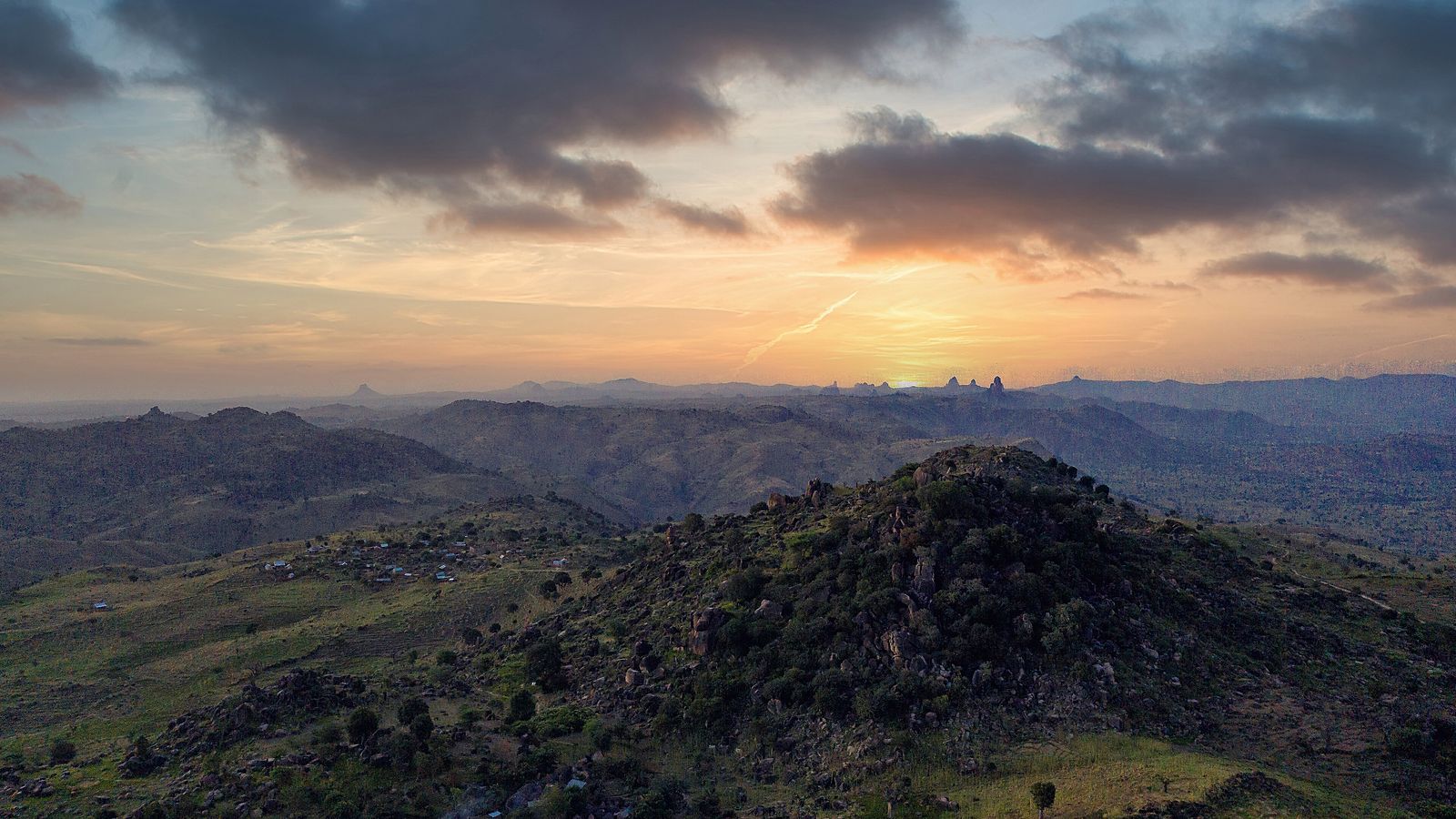
The village at the centre of the account is Ngoshe, in the foothills of the Mandara Mountains in Nigeria's northeast, close to the border with Cameroon. In March, according to The New Humanitarian, Boko Haram fighters attacked a nearby army base and carried off 360 civilians from the surrounding community. The negotiations to bring those people home are what produced the truce that followed in June.
Two of the outlet's sources said attacks had stopped in the communities around Ngoshe, an area targeted repeatedly over more than a decade of fighting. That is the most concrete claim in the report and also the most testable one, because a ceasefire is visible mainly in what stops happening. An absence of raids in a district that has been raided routinely is a data point that local residents, aid agencies and the military can all observe independently, even when none of them will describe the agreement behind it.
The five billion naira that officially does not exist
The negotiations that freed the 360 villagers reportedly included a payment of five billion naira — about $3.7 million — by the Nigerian government. That figure has become the most contested element of the story inside Nigeria, where the government denies that it paid a ransom.
The denial is not merely reputational. Nigerian officials have long argued that acknowledging payments would convert kidnapping from a tactic into a revenue model, giving armed groups a reason to take civilians specifically because civilians can be sold back. Mass abductions in the region have followed a pattern consistent with that concern. A government that confirms one payment invites the next abduction, which is why states across the region maintain the position in public whatever they do in private.
The posture President Bola Tinubu has taken publicly runs the other way entirely. In July he announced plans to recruit 30,000 additional military personnel and to create four new army divisions — an expansion of capacity, not an opening of talks. A secret truce and a troop surge are not strictly contradictory, but they describe two different theories of how this war ends, being pursued at the same time.
Why this has happened before, and collapsed before
There is a direct precedent, and it is not encouraging. In October 2014 the Nigerian government announced that it had reached a ceasefire with Boko Haram which included the promised release of more than 200 schoolgirls abducted that April from Chibok. The deal followed talks in Saudi Arabia involving the then president of Chad, Idriss Déby, and senior Cameroonian officials. It was presented as a breakthrough.
Within roughly two weeks it was gone. In a video released at the start of November 2014, the group's then leader, Abubakar Shekau, denied that any ceasefire had been agreed and said the Chibok girls had been converted and married off. The announced truce had been real enough to be announced by a government and unreal enough to be repudiated by the other party on video, which is a useful description of the category of agreement now being reported.
It could be just a temporary, tactical ceasefire that benefits both sides, but doesn't really affect the trajectory of the war. — Malik Samuel, conflict researcher, speaking to The New Humanitarian
Samuel's distinction is the one that matters. A tactical ceasefire is a pause that each side accepts because the pause is individually useful — to recover, to resupply, to reposition, to bank a political win. A strategic ceasefire is a step toward settlement. The two look identical from the outside for the first several months, and are told apart only by what follows them.
The faction that is not in the deal
The reported agreement does not include the Islamic State West Africa Province, the rival group that operates across the same territory and the wider Lake Chad basin. ISWAP emerged from a split in 2016, when an Islamic State-aligned faction broke away while Shekau retained the organisation that kept the Boko Haram name. The two have fought each other ever since, alongside fighting the state.
That exclusion changes the meaning of the pause. In a war with one insurgent army, a truce reduces violence. In a war with two insurgent armies that are also fighting each other, a truce with one of them removes a single pair of hands from a three-sided fight and frees that party to concentrate on the other. Fighting between Boko Haram and ISWAP has continued through the reported ceasefire, according to The New Humanitarian. Civilians in the contested districts are not obviously safer because one of three combatants has stood down in one area.
Two of the outlet's sources raised a sharper version of the same worry: that Boko Haram could use the pause to move equipment into the Mandara Mountains. The range is the reason the concern is credible. Steep, broken and straddling an international border, it is terrain that rewards whoever is dug into it and punishes whoever has to clear it, and materiel moved there during a quiet period does not have to be moved there under fire later.
The scale the pause is being measured against
The conflict Boko Haram began in 2009 has produced one of the largest displacement crises in the world. United Nations agencies count roughly 2.7 to 2.9 million people displaced across Nigeria, Cameroon, Chad and Niger, the large majority of them inside Nigeria. A UN Development Programme assessment has put total deaths attributable to the conflict at around 350,000 when indirect causes — collapsed health systems, destroyed food supply, displacement itself — are included, with the overwhelming majority of those deaths among children.
Against that, three quiet months in the districts around one village is a small thing. It is also not nothing. Three hundred and sixty people who were taken in March are at home, and by two accounts the raids in their area have stopped. Humanitarian access in the northeast has historically expanded and contracted with exactly this kind of informal local arrangement, negotiated by people who are never named and covered by agreements nobody signs.
What would tell us which kind of ceasefire this is
The honest position is that the distinction Samuel draws cannot be resolved from outside yet. But it has observable tests. If the pause is extended past the reported 40 days and widens geographically beyond the Ngoshe area, it is behaving like the start of something. If it lapses on schedule, or holds in one district while attacks intensify elsewhere, it was a local transaction that bought the return of 360 people and a season of quiet — which is a real achievement and not a peace process.
The other test is institutional. Every previous attempt at dialogue in this conflict, according to The New Humanitarian's account of security officials, diplomats and mediators involved in earlier efforts, has been conducted through deniable back channels and collapsed when one side found denial more useful than the deal. An arrangement that no government will confirm is an arrangement no government has to honour. That is what makes it easy to reach, and it is the same thing that makes it easy to abandon.
This report is based on the investigation published by The New Humanitarian on September 7, 2026, as relayed by Al Jazeera on September 9, together with contemporaneous reporting on the 2014 ceasefire announcement and its repudiation, and displacement and mortality estimates published by United Nations agencies and the UN Development Programme. The New Humanitarian said Nigerian government, defence and army spokespeople did not respond to requests for verification before publication, and Al Jazeera said it could not independently confirm the ceasefire or the reported payment. The Nigerian government denies paying a ransom. Every element of the reported truce — its existence, its terms, the payment and the possible 40-day extension — rests on unnamed sources and should be treated as unconfirmed.