
Nigeria confirms its first Ebola case in more than a decade — the Ugandan-born wife of a Swiss diplomat in Abuja, infected with the Bundibugyo strain that has no licensed vaccine
The 42-year-old tested positive on October 20, twelve years to the day after the WHO declared Nigeria free of Ebola. She spent about a week at private clinics before diagnosis, investigators still cannot say where she was infected, and health authorities are tracing beyond the 44 contacts first identified.
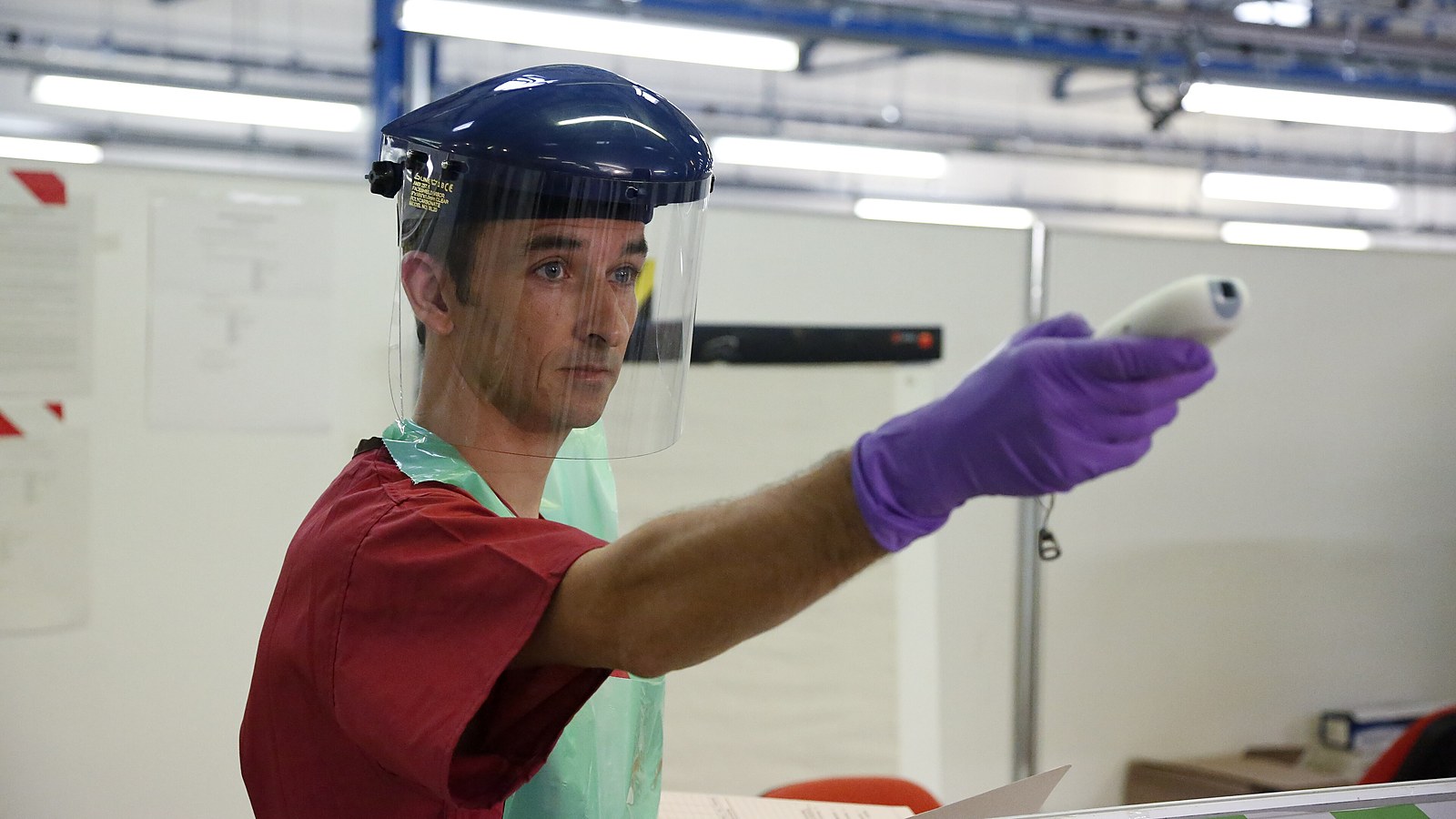
Twelve years ago this week, on October 20, 2014, the World Health Organization declared Nigeria free of Ebola. The country had contained an imported outbreak to 20 confirmed cases and eight deaths in Lagos and Port Harcourt, tracing and monitoring nearly every contact. On October 20, 2026, a 42-year-old woman in Abuja tested positive for the virus, becoming Nigeria's first confirmed Ebola patient in more than a decade. The question now is whether the system that worked in 2014 can work again against a strain for which there is no licensed vaccine.
Switzerland's foreign ministry confirmed on Thursday that the patient is the wife of a Swiss diplomat posted to Nigeria. She is a Ugandan-born national who lives in the capital. The couple travelled to Uganda earlier this month. Her husband is in isolation and has not developed symptoms, the ministry said.
According to the WHO, she is being treated in isolation and is showing signs of improvement.
A week in private clinics before the diagnosis
The timeline is the part that worries epidemiologists. According to the BBC, the woman returned to Nigeria on October 3 after about two and a half weeks in Uganda. She developed symptoms four days after arriving in Abuja and sought treatment at two private health facilities, spending about a week at one private clinic, before she tested positive on October 20.
That gap matters because of how Ebola spreads. The virus passes through direct contact with the blood or bodily fluids of an infected person, or with contaminated objects; it does not spread through the air like influenza, and people are not considered infectious before they develop symptoms. The highest-risk period is therefore exactly the one this patient spent undiagnosed: symptomatic, being cared for by clinicians who had no reason to suspect a viral haemorrhagic fever.
Nigerian authorities initially identified 44 contacts and are now tracing more people who may have been exposed. The Swiss foreign ministry said all 25 staff at its embassy, eight Swiss and 17 local employees, were in good health, and that the decision not to isolate them was taken in consultation with Nigeria's health ministry and the WHO. The embassy remains open with health and safety measures in place.
Where was she infected? Nobody can yet say
The source of the infection is disputed. The Swiss ministry believes she contracted the virus while travelling in Uganda. Ugandan health officials have said she travelled to eastern Democratic Republic of Congo for business. The Swiss government told Reuters on Friday that she did not travel to DR Congo, and the WHO, the Africa Centres for Disease Control and Prevention and Nigeria's health ministry said they had received no verified information that she had visited the country. Uganda, which has been declared free of Ebola since August, maintains it has no confirmed active cases and says her transit through the country does not necessarily mean she was infected there.
"The source of exposure is still not known. The travel history of the patient is still being pieced together." — Dr Patrick Otim, WHO emergency response official
Otim said interviews with the patient had been limited while she remained in hospital. Africa CDC is examining one possible link: a Kenyan man who travelled from DR Congo through Uganda's main airport on the same day before arriving in Nairobi on October 3, and who died shortly afterwards as Kenya's first recorded Ebola death. Dr Wessam Mankoula, the agency's head of emergency preparedness and response, called shared equipment or other contact at the airport "one of the possible scenarios" but stressed that no link had been established.
The answer will come from the virus itself. Nigeria's Centre for Disease Control is carrying out genomic sequencing. It has already been confirmed that the patient has the Bundibugyo species of Ebola, the same species driving the outbreak in DR Congo. "Genomic sequencing is given a high priority," said Dr Pavel Ursu, the WHO's representative in Nigeria. A close genetic match to the Kenyan cluster would point to a shared exposure; a match to a distinct Congolese lineage would point elsewhere.
Sequencing works because the virus mutates slowly but steadily as it passes from person to person. Samples taken from patients in a single chain of transmission share near-identical genomes, while samples from separate introductions carry distinct sets of mutations. Comparing the Abuja sample against genomes already sequenced from Congo and Kenya is the fastest way to settle a dispute that travel histories, assembled from interviews with a hospitalised patient and conflicting official accounts, have not been able to resolve.
Why Bundibugyo is a harder problem
Most of the tools built after West Africa's 2014–2016 epidemic were built for a different virus. The licensed vaccine Ervebo targets the Zaire species of Ebola. According to Gavi, the vaccine alliance, there is no licensed vaccine or specific treatment for Bundibugyo. The WHO has been deploying Ervebo against it through a phase 3 trial, on evidence of possible cross-protection, and the scientific picture on whether it protects is unsettled.
That shifts the burden back onto the older public-health playbook: find every contact, monitor them for 21 days, isolate anyone who develops symptoms and treat early. It is the method Nigeria used successfully in 2014, when WHO reported that virtually every contact in Lagos had been reached. It is also slow, labour-intensive and only as good as the first link in the chain, which in this case was a week of undiagnosed illness in private care.
The scale of the regional outbreak explains the anxiety. Some 4,600 people have died in what is the country's deadliest Ebola outbreak, according to the BBC. The WHO declared the situation a public health emergency of international concern in May. Kenya has now confirmed nine cases, all of which, its health director-general Dr Patrick Amoth said, are linked to the first patient, with no evidence of wider community transmission. "We are not out of the woods," he warned.
Uganda's position in the story is awkward. Two people died there shortly after the regional outbreak began in May, but the country contained its linked cluster and has been declared free of Ebola since August. Its officials now find themselves defending that record while two travellers who passed through the country in early October have tested positive elsewhere. Their insistence that transit is not the same as infection is epidemiologically correct, and it is also exactly the question the sequencing will answer.
The border problem
The Nigerian and Kenyan cases together point to the weakness every Ebola response eventually runs into: movement. Thousands of people cross between DR Congo and Uganda every day for trade, work and family visits. Otim said the long and porous border made it difficult to screen everyone, because many people use unofficial crossing points. A single airport hub, used on the same day by two travellers who later tested positive in two different countries, is the kind of node that screening is supposed to catch.
The WHO's regional director for Africa, Dr Mohamed Janabi, called for "regional vigilance", urging countries to strengthen surveillance, investigate infections and protect front-line health workers. That last item is not boilerplate. Health workers who treated an undiagnosed patient are, by definition, among the most exposed contacts.
The case for measured concern
There are solid reasons not to treat Abuja as the start of a Nigerian epidemic. The patient is improving. Her husband has no symptoms. The embassy staff are well. Nigeria has a national disease-control agency with direct experience of containing an imported Ebola case in a megacity, and the WHO, Africa CDC and Swiss authorities are cooperating openly. Kenya's nine cases, all traced to one source, show that even a missed import can be contained if contacts are found quickly.
The counterweight is the week. Every day the patient spent in private clinics without an Ebola diagnosis widened the circle of people who need to be found. The contact list has already grown beyond its first count, and the source of infection is still unknown, which means investigators cannot yet rule out other exposed travellers.
The durable lesson from 2014 was that Nigeria beat Ebola not with a vaccine, which did not then exist, but with the speed and completeness of contact tracing. Twelve years later, against a strain the vaccine was not designed for, the country is relying on the same method again. The next three weeks, the length of the incubation window for the contacts already identified, will show whether it still works.
This report is based on statements from the Swiss foreign ministry, the World Health Organization, the Africa Centres for Disease Control and Prevention, Nigeria's Centre for Disease Control and Kenya's health ministry, as reported by the BBC on October 23, 2026, and on Reuters reporting of the Swiss government's account of the patient's travel. Historical figures for Nigeria's 2014 outbreak are from the WHO's declaration of October 20, 2014, as reported by the Associated Press. Vaccine status is from Gavi. The source of infection, the contact count and the patient's condition are provisional and may change as genomic sequencing and contact tracing continue.