
A human-caused fire outside Reno burned 15,000 acres in 36 hours with zero containment. Nearly 90,000 people have been told to leave or be ready to
The Hawk Fire was reported just after 11 a.m. Saturday in the Sierra foothills. By Sunday night the go-now zone reached the edge of the University of Nevada, six people were injured, and the governor had activated the National Guard. It is the third major fire in northern Nevada this month.
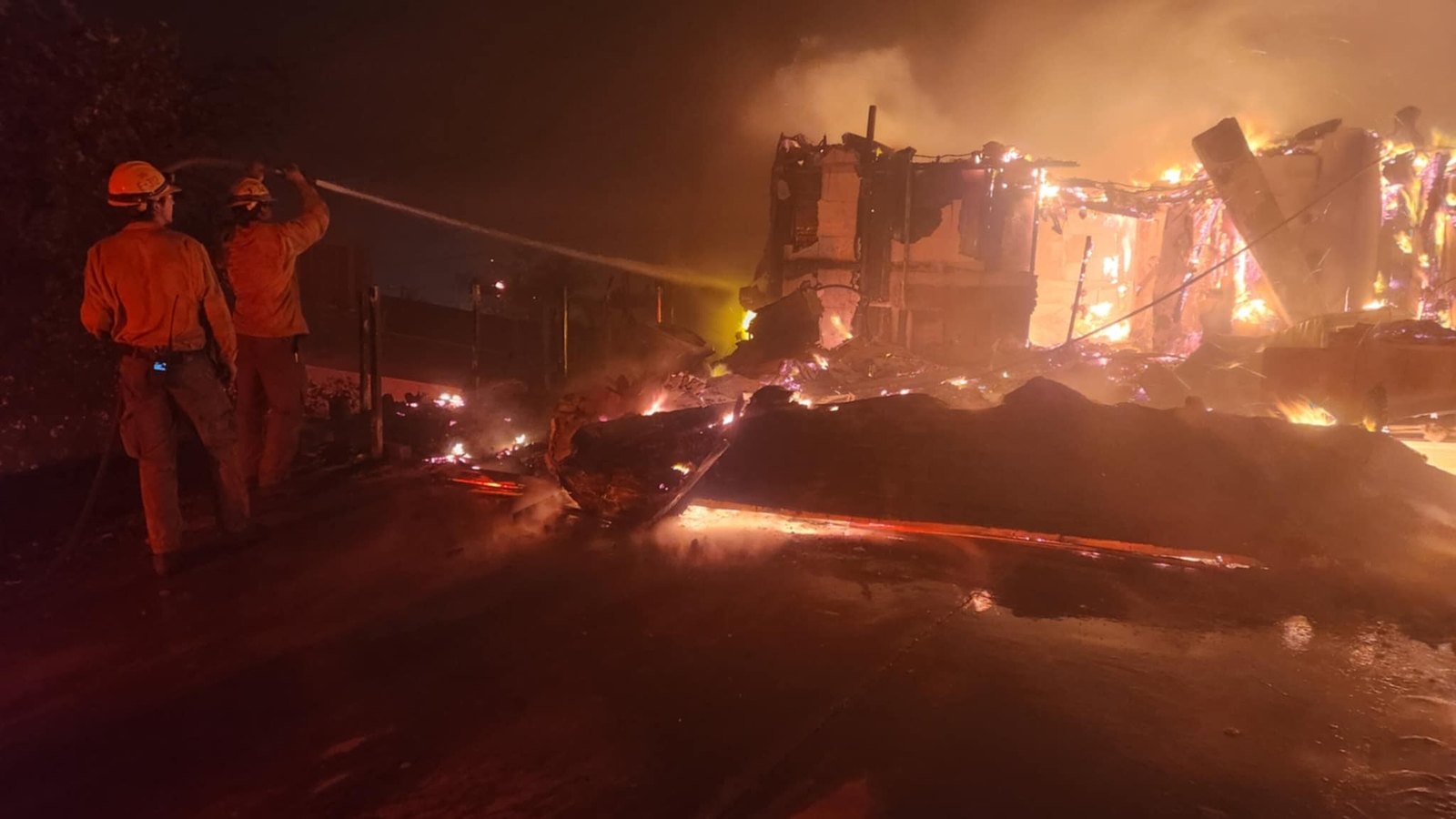
The first reports came in just after 11 a.m. Pacific on Saturday, from the foothills of the Sierra Nevada northwest of Reno, near Peavine Mountain. By late Sunday the Hawk Fire had burned more than 15,000 acres, according to data posted to the National Interagency Fire Center's Inciweb, and it was zero percent contained. Some 42,000 people were under orders to leave immediately. Another 45,000 had been told to be ready to.
That is close to 90,000 people in a metropolitan area of roughly half a million, moved or put on notice inside a day and a half. Roughly 13,700 residences sit inside the designated evacuation area. By Sunday afternoon the "go now" zone had reached the edge of the University of Nevada campus.
Wind, not fuel, is running this fire
"The Hawk Fire is a very dynamic incident for us, as it's being driven by the winds," Richard Edwards, fire chief at Truckee Meadows Fire and Rescue, said in a video posted on Saturday. "The wind-driven fires move very rapidly into our residential areas, creating a lot of challenges for our firefighters to save homes and protect lives." Red flag conditions — warm temperatures, low humidity, strong wind — were in place when it started.
That distinction matters operationally. A fuel-driven fire can be fought at its edges by crews cutting line ahead of it. A wind-driven fire in cured grass and brush throws embers a mile or more downwind and starts new fires in gutters, on decks and against fences, well inside the perimeter anyone drew that morning. The containment figure stays at zero not because nobody is working, but because there is no held line to report.
The Monday forecast for the northern Sierra Front offered no relief: minimum relative humidity of 11 to 21 percent, southwest gusts around 25 miles an hour, patchy smoke. Those are the numbers that make an unlined fire grow.
Aircraft help less in these conditions than people expect. Retardant and water drops are precision work flown low and slow, and above roughly 30 miles an hour of sustained wind the drops break up before they reach the ground and the aircraft are grounded for safety. The hours when a fire like this moves fastest are frequently the hours when the air attack cannot fly. That leaves engines, hand crews and dozers working in front of a fire that is being pushed by the same wind.
What is known about the damage, and what is not
At least six people have been injured — three first responders and three civilians — and several properties have been destroyed, incident commanders said at a Sunday morning briefing. The count of homes lost has not been released, and officials were candid about why: conditions inside the burn area have been too dangerous to send damage assessment teams through it. Around 10,000 customers lost power. At least two medical centres moved patients out.
Between 800 and 1,000 emergency personnel are working the fire, depending on which agency's count is used and which shift is counted. Shane Akerson, a battalion chief with the Truckee Meadows Fire Protection District and one of three incident commanders, confirmed the cause on Sunday: "We can confirm that the fire was human caused. However, that is still undergoing active investigation." Officials have not said how it started, or whether it was set deliberately.
"Human caused" is a category, not an accusation, and it covers a wide range: a dragging trailer chain throwing sparks along a highway shoulder, a mower blade striking rock in cured grass, a power line down in wind, an unattended campfire, arson. Roughly nine in ten American wildfires are started by people rather than by lightning, so the finding is unremarkable in itself. What makes it consequential here is liability and timing — a cause determination governs who pays for the losses, and investigators will not be rushed toward one while the fire is still running.
If you can get out now, I would ask you please to do that.
That was Washoe County Sheriff Darin Balaam, explaining that residents who leave early make it easier for firefighters and first responders to do their work. He also urged people to follow Watch Duty, the app that carries real-time incident data, rather than wait for official pushes. Governor Joe Lombardo declared a state of emergency in Washoe County — which contains Reno and part of Lake Tahoe — and activated the Nevada National Guard, releasing federal resources.
"This is an active and rapidly evolving situation, and I urge everyone in the affected areas to remain vigilant and follow the direction of local officials," Lombardo said on Saturday. The Reno-Sparks Convention Center opened as an evacuation point; hundreds of people spent Saturday night there, according to NPR member station KUNR. Evacuees have been told to plan on staying away for several days.
The distinction between the two evacuation statuses is doing a lot of quiet work in a city this size. An order to go now is enforceable and immediate. A "be ready" designation is a request that 45,000 people pack, fuel their cars and stage their documents and pets without leaving — because if all 87,000 moved at once, the same road network would seize, and the fatalities in America's worst recent fires have overwhelmingly occurred on roads rather than in houses. Officials repeated the point on Sunday: leaving early is the cheapest safety measure available, and it costs the fire service nothing.
Reno's terrain complicates it further. The North Valleys and the subdivisions climbing the flanks of Peavine are reached by a limited number of arterials, and smoke that closes one of them can turn a twenty-minute drive into an hour. That is the practical reason evacuees were told to plan on several days away rather than an overnight: re-entry is decided by fire behaviour and by whether power, water and gas can be restored safely, not by whether a given street burned.
The third fire in three weeks
Balaam noted that the Hawk Fire is the third major wildfire to hit northern Nevada in the last few weeks, and the arithmetic of the other two explains why the region's resources were already thin. The Bug Fire, which started on August 8 just north of the Hawk Fire's footprint, has burned nearly 94,000 acres and is around 94 percent contained. The Stallion Fire, which began two days after that, is 98 percent contained after taking just over 40,000 acres.
Together those two fires burned an area more than eight times the size of the Hawk Fire's first day and a half — but they burned mostly in open country. The Hawk Fire's problem is geographic rather than arithmetic. It started on the wrong side of the city, in the foothills that Reno's northern subdivisions have been climbing into for two decades, and the wind has been pushing it downhill toward them.
That is the pattern of the most destructive American fires of the past ten years. The acreage is not what kills people or destroys neighbourhoods; the interface is. A 15,000-acre fire in remote Nevada rangeland would not be national news. The same fire on Peavine Mountain has 13,700 homes in front of it.
The fuel underneath it is the other half of the explanation. Two wet winters grow grass; a hot, dry summer cures it into something that carries fire at the speed of the wind rather than the speed of a flame front in timber. Grass fires are the ones that take neighbourhoods, because they arrive fast, burn light and move on, leaving the structures they ignited to burn for hours after the front has passed. That is what the crews on the Hawk Fire have been doing since Saturday afternoon: not holding a line so much as defending individual buildings while the fire runs past them.
A season that is already the worst in a decade
More than 7.7 million acres have burned in the United States so far this year — the largest year-to-date figure in a decade, according to the National Interagency Fire Center. Firefighters were working to contain 79 large fires across 18 states as of Sunday. The Hawk Fire is competing for crews, aircraft and incident management teams in that environment, which is part of why an initial attack that would have been overwhelming in a quieter year came to 800 people.
There is an uncomfortable detail in the numbers, too. Nevada's Air National Guard operates a Reno-based airlift wing whose C-130s fly the Modular Airborne Fire Fighting System — the aerial retardant capability that gets sent wherever the season is worst. This month, the worst is at home.
The immediate questions are narrow and answerable within days: whether Monday's winds push the fire into the North Valleys subdivisions, how many structures the assessment teams find when they can finally walk the burn, and what investigators mean by human caused. The longer question is the one Reno has been deferring, along with every other western city that grew uphill into cured grass and sagebrush during a warming, drying quarter-century.
Acreage and containment figures are from Inciweb via the National Interagency Fire Center as of late Sunday, August 23, and will have changed. Injury and evacuation counts are as reported by incident commanders and the Washoe County Sheriff's Office at Sunday's briefings.