
Nobel Prize in Medicine 2026 goes to Karl Deisseroth, Peter Hegemann and Georg Nagel for optogenetics — the algae protein that lets scientists switch brain cells on and off with light
The prize rewards a chain that ran from a pond alga's eyespot to frog eggs to the brains of living mice. Twenty years on, optogenetics is in nearly every neuroscience lab — and its first human use, partly restoring sight to a blind man, shows how far the medicine still has to go.
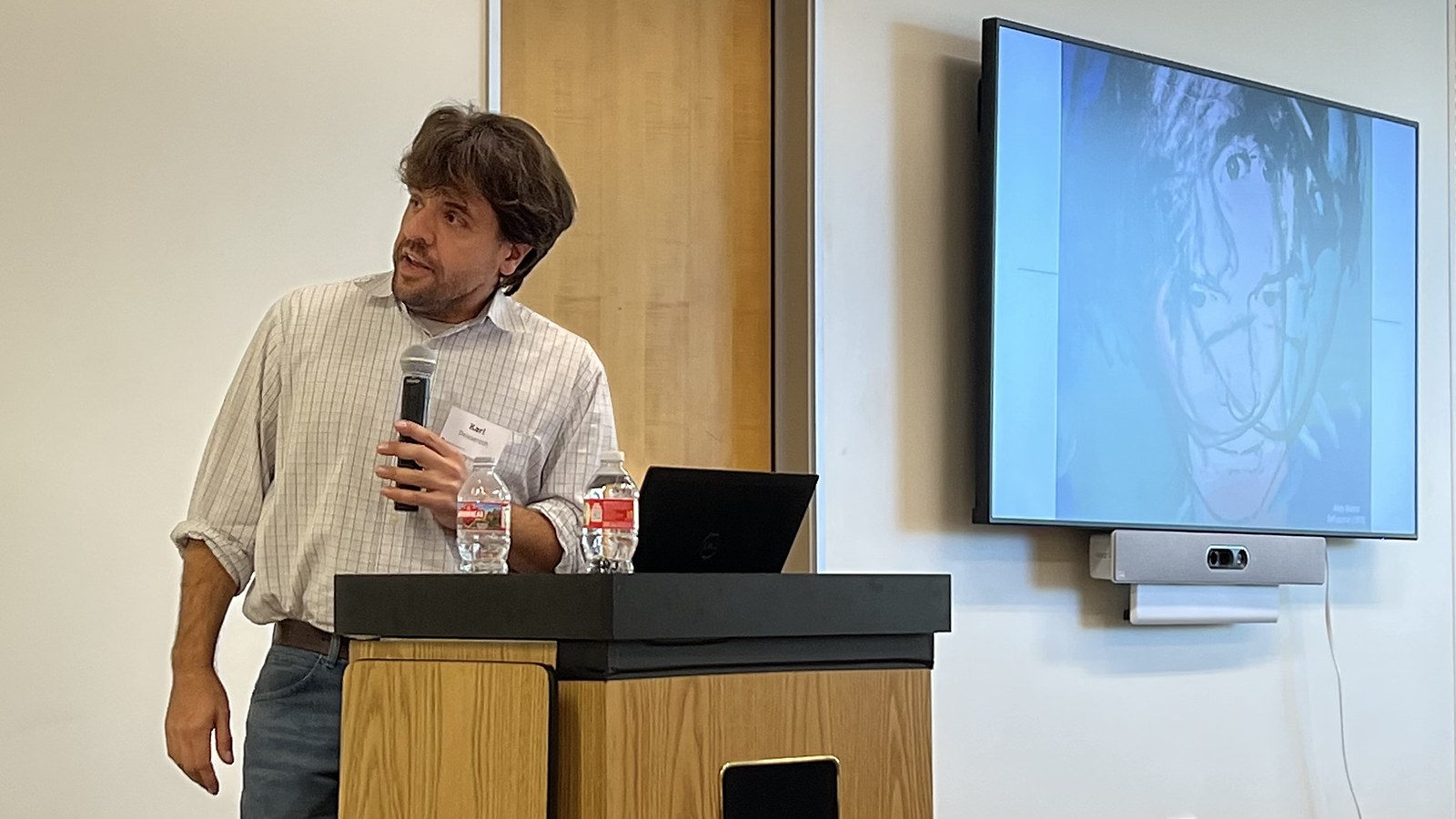
The 2026 Nobel Prize in Physiology or Medicine was awarded on Monday for a discovery that began with a question almost nobody was asking: how does a single-celled pond alga react to light so fast? The answer, worked out over fifteen years by two German biophysicists and then turned into a laboratory tool by an American psychiatrist, gave neuroscience something it had wanted for a century — a way to switch individual types of nerve cell on and off, in a living brain, at the speed the brain itself works.
The Nobel Assembly at Sweden's Karolinska Institutet gave the prize jointly to Karl Deisseroth, 54, of Stanford University; Peter Hegemann, 71, of Humboldt University in Berlin; and Georg Nagel, 73, of the University of Würzburg, "for discoveries concerning light-gated ion channels and optogenetics". They will share 12 million Swedish kronor. Thomas Perlmann, the assembly's secretary general, said all three were surprised, and that each told him it was "absolutely wonderful" to share the prize with the other two, whom they called friends.
Half a millisecond in an eyespot
The story starts with Chlamydomonas, a green alga famous for swimming towards light. It senses light through an eyespot, a tiny orange dot containing retinal, the same light-capturing molecule found in the human eye. In the early 1990s, at the Max Planck Institute for Biochemistry near Munich, Hegemann measured the electrical signal the eyespot produced and found it arrived about half a millisecond after the light did. In the human eye, the equivalent process runs through a multi-step chemical cascade and takes at least ten milliseconds.
Hegemann proposed that something much simpler must be going on: a single protein that both caught the light and acted as an ion channel, opening a pore in the cell surface so that charged particles could flow through. The idea was met with scepticism. Researchers knew of many ion channels, but none that could respond to light on its own, and the eyespot proteins fell apart whenever anyone tried to isolate them. The breakthrough came around the turn of the millennium, when Japanese researchers published the alga's genetic code and Hegemann's group spotted two genes that looked like light-capturing proteins.
Hegemann sent them to Nagel at the Max Planck Institute for Biophysics in Frankfurt. Nagel injected each gene into frog eggs, which produced the proteins on their surface, and found that both were ion channels that opened when hit by light. The second, channelrhodopsin-2, opened within 0.2 milliseconds. When the pair put its gene into human and hamster kidney cells, those cells became light-sensitive too. Their 2003 paper proposed that channelrhodopsin-2 could become a tool for generating electrical signals in cells with light.
From a petri dish to a living brain
Deisseroth took the next step. Trained in medicine and drawn to psychiatry by the suffering he saw on a clinical rotation, he wanted to understand how brain circuits misfire in depression, autism or psychosis — and concluded that slices of brain in a dish could not tell him. After hearing about channelrhodopsin-2, he wrote to Nagel asking for the DNA. His group put it into rat nerve cells, worried the neurons would reject the foreign protein, and found that they did not: a flash of blue light made them fire.
That 2005 paper, published in Nature Neuroscience, is generally treated as the founding moment of the field. The technique was named optogenetics the following year. In 2007 Deisseroth's group used a thin optical fibre fed through a small hole in the skull to activate motor-cortex neurons in living mice and move their whiskers, and, with collaborators, woke sleeping mice by lighting up a single class of neurons suspected of controlling wakefulness. In 2012, working with the 1987 laureate Susumu Tonegawa, the technique was used to reactivate the specific cells holding a fear memory in mice, which then behaved as if afraid.
"Using light, researchers are now able to switch individual neural circuits on or off in the brain. They can bring memories to life, create feelings, drive behaviours." — the Nobel Committee for Physiology or Medicine
Why it mattered so much
The importance is easiest to see against what came before. Twentieth-century neuroscience mapped which regions of the brain did what, largely by studying damage, recording activity, or stimulating tissue with electrodes. Electrical stimulation excites every cell near the tip; drugs act for minutes and spread widely. Neither could prove that a particular type of neuron caused a particular behaviour. The Nobel committee likened the picture that emerged to a blurry photograph. Francis Crick, the DNA pioneer, had suggested decades earlier that light might be the ideal control signal, but admitted the idea sounded far-fetched.
Optogenetics solved both halves of the problem. Genetics decides which cells receive the light-sensitive channel; light, delivered through a fibre, decides exactly when they fire, down to the millisecond. In a brain of around 90 billion neurons where cells governing completely different functions sit side by side, that selectivity is the whole point. Researchers have since used it to identify circuits for pain, thirst, feeding, reward, attention and social behaviour, and to find that different parts of a single behaviour, such as how mice gather and groom their young, run on separate circuits. The committee also cited insights into how nerves talk to the heart and gut.
Part of what made the method spread so quickly was that Deisseroth's lab, as the Nobel committee notes, shared the tools widely and kept extending them. Researchers soon found related light-sensitive proteins that respond to different colours of light, including ones that silence neurons rather than fire them. That turned a single on-switch into a toolkit: scientists could now ask not only whether activating a circuit produced a behaviour, but whether shutting it down abolished one — the two halves of a proper causal test.
For psychiatry, the field Deisseroth set out to serve, the change is conceptual as much as technical. Conditions like depression and anxiety were long described in terms of brain chemistry or broad regions. Optogenetic experiments in animals have pushed researchers to think of them as problems in specific, identifiable circuits — a shift that the Nobel committee's own statement captures when it describes switching on circuits behind memories, feelings and behaviours relevant to psychiatric disorders.
The first steps into medicine
The clinical story is real but still small. In 2021 a team led by the ophthalmologist José-Alain Sahel reported in Nature Medicine that a 58-year-old man diagnosed with retinitis pigmentosa four decades earlier could locate and count objects on a table and recognise a pedestrian crossing after gene therapy delivered a light-sensitive protein to surviving cells in his retina. He had to wear goggles that projected amplified light onto the eye to make it work. The Nobel committee pointed to such trials as the "first steps" towards optogenetic treatment; researchers also hope to use the method in cochlear implants.
The constraint is the same one that made the technique powerful in mice: it requires adding a foreign gene to human cells and delivering light to them. The eye is uniquely suited because it is transparent and accessible. Most of the brain is neither. For now, the larger medical return is indirect — a far sharper understanding of the circuits involved in conditions such as Parkinson's disease, epilepsy, depression and addiction, which may in time point to better treatments.
Who was left out
As with most Nobels, the three-person limit leaves names off the list. The landmark 2005 paper had five authors: Edward Boyden, now at MIT, was first author, alongside Feng Zhang, Ernst Bamberg, Nagel and Deisseroth. When the Lasker Foundation honoured optogenetics in 2021, its basic research award went to Deisseroth, Hegemann and Dieter Oesterhelt, whose earlier work on microbial light-driven proteins underpinned the field — not to Nagel. Monday's choice settles on the algal channel itself and the step that brought it into neurons.
The award also continues a run of Nobels for tools and mechanisms rather than single cures: mRNA vaccine technology in 2023, microRNA in 2024 and peripheral immune tolerance in 2025. Each recognised a basic biological finding that turned out to unlock much more than its discoverers set out to study. Hegemann was trying to understand an alga. Nagel was characterising proteins in frog eggs. Neither was setting out to map the circuits of fear.
That is the durable point of this year's prize. Optogenetics did not come from a programme to build a brain-control tool; it came from following an odd measurement — half a millisecond in a pond organism's eyespot — far enough that it ran into one of medicine's oldest problems. The Nobel Prizes will be presented in Stockholm on December 10. The chemistry and physics prizes are announced on Tuesday and Wednesday, literature on Thursday, peace on Friday and economics on October 12.
This report is based on the Nobel Assembly's prize announcement and popular-science background published on nobelprize.org, and on reporting by the BBC, Reuters via CBC News and Scientific American, as of Monday, October 5. Details of the 2005 Nature Neuroscience paper, the 2021 Lasker award and the 2021 Nature Medicine vision-restoration case come from those publications and the Lasker Foundation. Clinical uses of optogenetics in humans remain experimental.