
Europe's World Cup boycott is still standing three weeks after FIFA surrendered — and the real fight has barely started
Eleven days after Spain lifted the trophy in New Jersey, all 55 European federations voted unanimously to walk away from FIFA competitions over a plan to sell a stake in the World Cup's commercial future. FIFA killed the plan in 24 hours. The boycott didn't die with it.
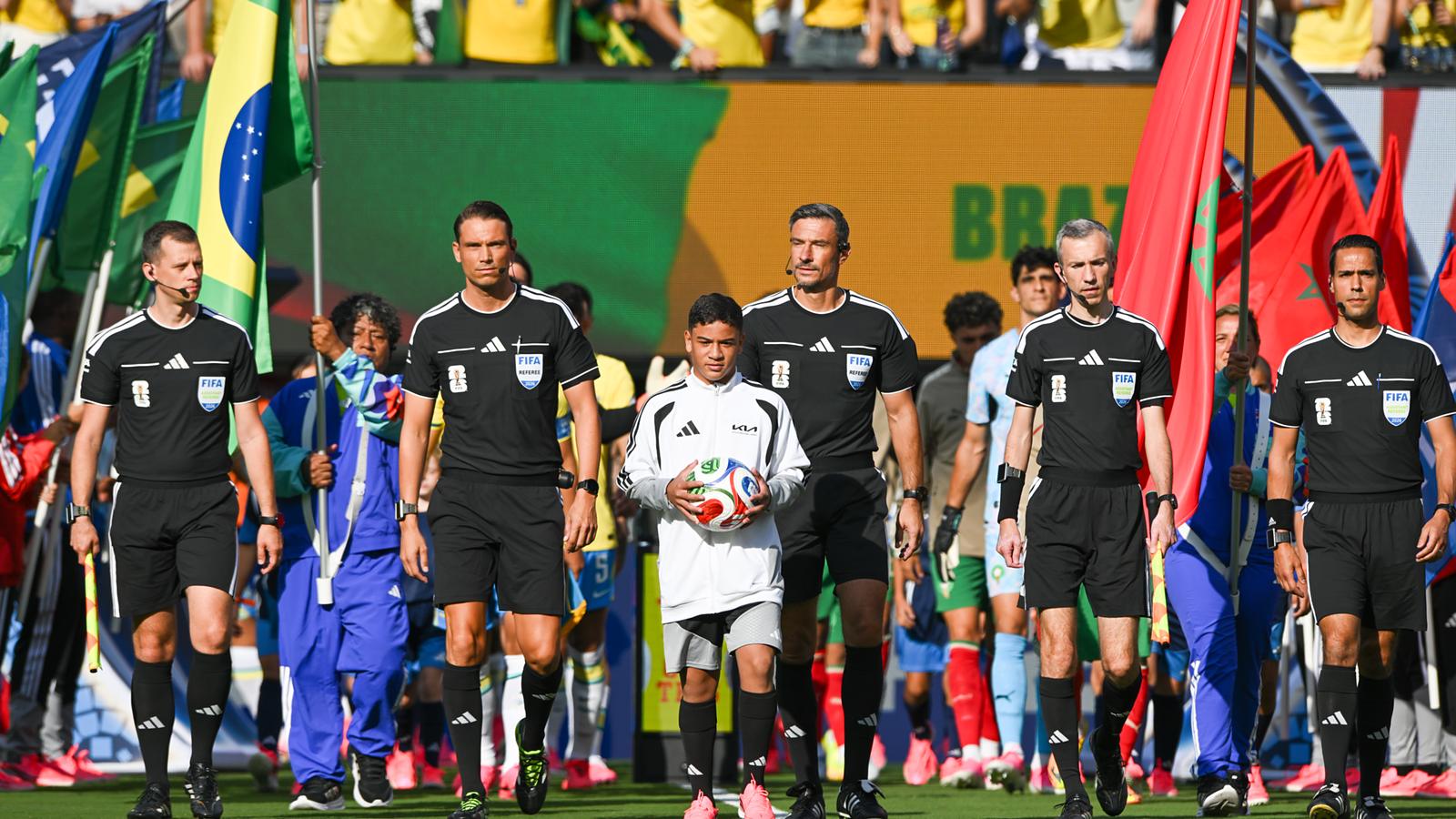
The fastest climbdown in FIFA's modern history took 24 hours. On Thursday, July 30, all 55 member federations of UEFA — every national association in European soccer, from Germany to Gibraltar — voted unanimously in an emergency online meeting to boycott FIFA competitions, men's and women's World Cups included, for as long as president Gianni Infantino's plan to sell a stake in the tournament's commercial machinery stayed alive. By Friday evening, the plan was dead.
"Having listened carefully to all the views, it has become clear that the project has created divisions," Infantino conceded. "This proposal will not proceed."
That should have been the end of the story. Three weeks later, it is conspicuously not. UEFA confirmed in early August that the boycott formally remains in force, said it has "no confidence" in Infantino, accused him of an "egregious act of poor governance," and sent FIFA a legal letter demanding it preserve documents — the kind of letter you send before you sue. The withdrawal of the plan satisfied only one of Europe's two conditions; the second, binding guarantees that such a sell-off "will never be made again," remains unmet. What began as a revolt over a financial transaction has hardened into something bigger: a fight over who actually owns the World Cup, aimed squarely at FIFA's presidential election in Rabat next March.
What Infantino tried to sell
The scheme, announced on July 28, would have spun FIFA's commercial and event operations into a new entity — "FIFA Forward Enterprise" — and sold roughly 20 percent to private investors, raising about $4.2 billion on a valuation near $20 billion. The consortium expected to lead the investment was headed by a firm founded by Joshua Kushner, the venture capitalist and brother of Jared Kushner. To bring FIFA's 211 member associations along, each was offered payouts starting around $20 million — with an acceptance deadline of mid-September that critics called artificially short.
The backlash was not confined to Europe. Concacaf's 41 members rejected the plan the same day, citing a "lack of due process." The Asian confederation demanded an urgent review of FIFA governance. Inside FIFA House, senior adviser Carlos Cordeiro resigned calling it "a bad deal for football," and chief operating officer Kevin Lamour said staff had been "deceived" by what he called "a project of one person." Even Arsène Wenger, FIFA's most famous employee, distanced himself.
The boycott's written terms left no ambiguity about scope: no European national team in any FIFA competition "for so long as these proposals remain alive, unless this proposal has been abandoned in its entirety." That covered the 2027 Women's World Cup in Brazil and, if sustained, the 2030 World Cup itself — the centenary edition, already awarded across three continents.
The World Cup cannot be treated as an investment product. No part of it should ever be surrendered to private investors. The World Cup is not for sale.
UEFA's statement, issued the night of the vote, is the sentence this whole affair will be remembered by — and the reason the story didn't end when the deal did. Europe's grievance was never only the transaction. It was that the man running world soccer tried to sell a piece of its crown jewel with three days' notice and a check attached.
Eleven days after the final
The timing gave the revolt its sting. On July 19, Spain beat Argentina 1-0 after extra time at MetLife Stadium — substitute Ferran Torres scoring in the 106th minute of a final marred by Enzo Fernández's red card — to win the most lucrative World Cup ever staged, on American soil, before a global audience. Three of the four semifinalists were European. Eleven days later, the federations that supply the tournament's sporting weight voted to walk away from it entirely. A World Cup without Europe is not a diminished product; it is not a product at all, and everyone in the negotiation knows it.
That is what makes the boycott a credible weapon rather than a gesture — and also what makes it delicate. Its first practical test arrives September 5, when the Under-20 Women's World Cup kicks off in Poland. As of mid-August, no European team had formally withdrawn: Poland says preparations are on course, and France, England and Spain all still intend to play. Europe, in other words, is maintaining the boycott on paper while quietly not enforcing it on children's soccer — a sign the measure is best understood as leverage held in reserve, not a standing army.
The road to Rabat
The leverage has a destination. Infantino announced in April that he will seek another term; candidates must declare by November 18, and the vote comes at the FIFA Congress in Rabat on March 18, 2027. FIFA's leadership met in Morocco in early August, reaffirmed its support for the president and apologized to the membership for how the proposal was handled — an apology for the process, notably, not the idea. Concacaf president Victor Montagliani is the most-touted potential challenger, though no rival has declared.
Former Portugal star Luís Figo, who ran against Sepp Blatter a decade ago, said Infantino has "debased the office" and should step down. Whether Europe's federations convert three weeks of fury into an actual candidate is now the central question of soccer politics — because votes, not statements, are the only currency FIFA's congress respects, and Infantino has spent a decade cultivating the 156 federations that are not European or North American, many of which just watched a $20 million check evaporate.
Hanging over all of it is Saudi Arabia's 2034 World Cup, awarded unopposed in 2024 over the objections of 21 human-rights groups, and the subject of a formal complaint that FIFA is breaching its own human-rights policy. Rights organizations framed August's governance crisis as proof the institution cannot police itself. Europe's boycott letter and Riyadh's tournament are, in the end, the same argument from opposite directions: FIFA's president has concentrated more unilateral power over the sport's crown jewels than any of his predecessors — and July 30 was the first time in his reign that anyone made him give something back.
The plan is dead. The precedent is not. Europe proved, in one Thursday afternoon call, that a unanimous UEFA can veto anything FIFA does — and FIFA proved, by folding in a day, that it knows it. Whatever happens in Rabat, world soccer's constitutional question has been asked out loud, and it does not go back in the box: the World Cup belongs to whoever can afford to walk away from it.
Financial figures for the scrapped proposal vary by outlet; the valuation and stake described here follow Al Jazeera's and CNBC's reporting. Developments are as reported through mid-August; UEFA's most recent formal statement on the boycott was August 6.