
Nvidia is buying Hugging Face for $12.9 billion in its second-largest acquisition ever, taking ownership of the platform where most of the open-source AI world stores and downloads its models
Nvidia already sells the hardware that open models run on. This deal buys the place developers go to find them. The seller approached the buyer, the price is roughly three times Hugging Face's 2023 valuation, and the pledge holding the whole thing together is that the platform will stay neutral.
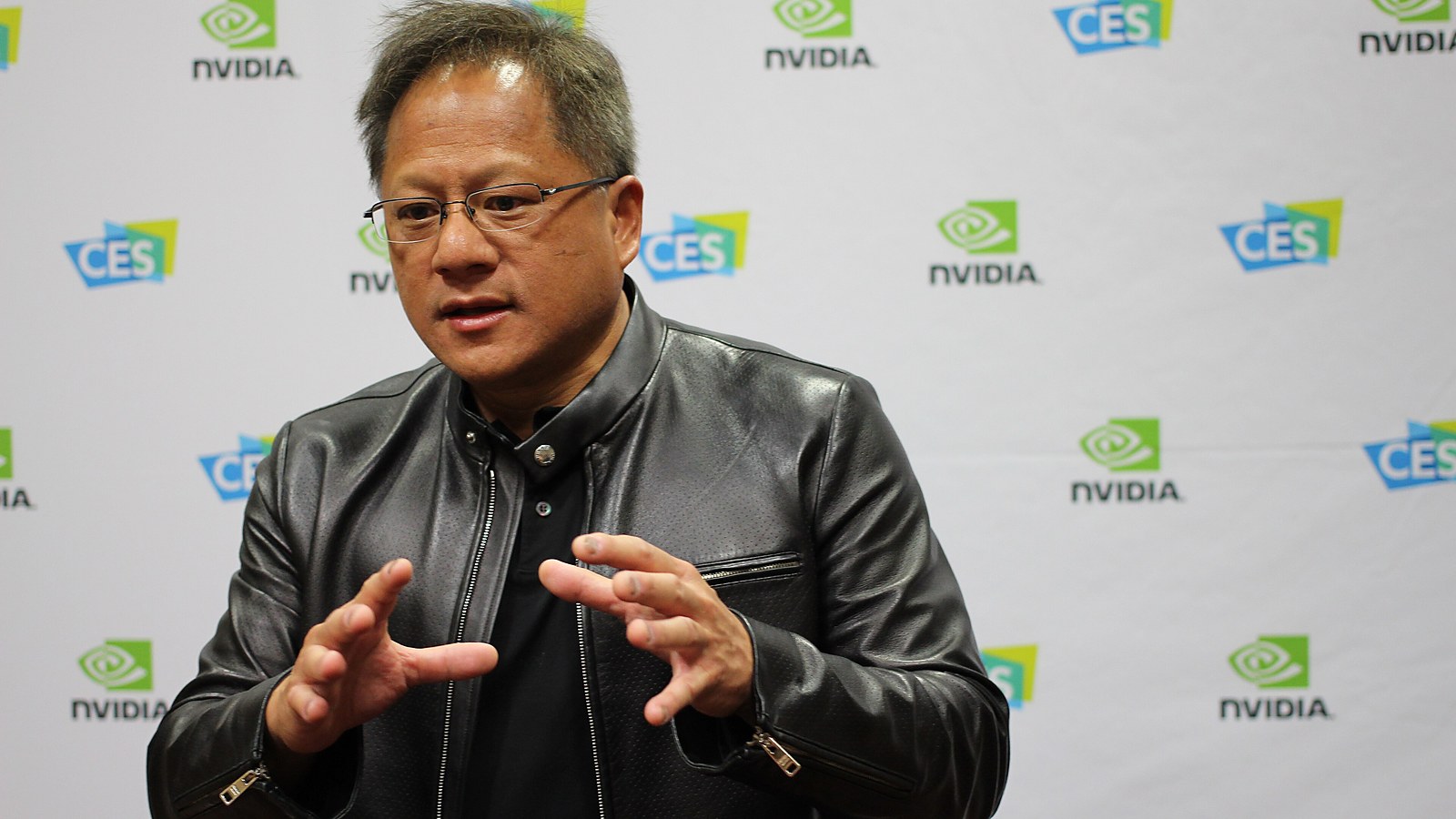
Nvidia has agreed to buy Hugging Face for $12.9 billion. For the most valuable company in the world, that is not a large cheque. For Nvidia specifically it is close to unprecedented: the company has built its position almost entirely by designing and selling chips, and this is only the second time it has ever spent this kind of money buying something instead.
The strategic logic is easier to see if you are precise about what Hugging Face actually is. It does not build frontier models. It is the hub where models built by everyone else — OpenAI, Meta, Anthropic, Mistral, thousands of research groups and hobbyists — are published, versioned, documented and downloaded, alongside the datasets they were trained on. Recent reporting puts the platform at more than three million models, around a million datasets, and on the order of thirteen million users. MarketWatch described the acquisition as buying "one of the most important parcels of real estate in the AI market".
Nvidia, in other words, already sold the ground that open models run on. It has now bought the address book.
A company that does not buy things
Placing the deal in Nvidia's own history is the fastest way to see how unusual it is. According to CNBC, this is the company's second-largest acquisition on record, behind the roughly $20 billion purchase of assets from the chipmaker Groq in December. Before that transaction, the largest deal Nvidia had ever done was Mellanox — the Israeli networking company it bought for just under $7 billion in 2019.
That is a remarkably thin acquisition record for a company of this scale, and it tells you something about how the current management thinks. Nvidia's market position was not assembled by buying competitors; it was assembled by building a hardware and software stack that everyone else had to adopt. Two very large deals inside a year is therefore a change in method, not just a change in scale.
The seller made the call
The most revealing detail in the announcement is the direction the approach travelled. Hugging Face chief executive Clément Delangue told CNBC's Becky Quick that his company went to Jensen Huang over the summer, "and a few weeks later, here we are." Huang confirmed the sequence in his own post: "I am honored that Clem came to me as he considered the next chapter of Hugging Face."
Hot assets do not usually work that way. A platform with Hugging Face's position and a reported $13 billion valuation would ordinarily run a competitive process and let several bidders raise each other. Going directly to one buyer, and closing in weeks, suggests the seller valued speed and a particular acquirer over price discovery.
Delangue's stated reasoning points the same way. "During the summer, I think we realized that Hugging Face and open source AI in general was at the turning point, and that it needed more, more resources, more scale, more visibility," he said, calling Nvidia "a perfect home".
That phrasing repays attention. "More resources" is what a company says when the thing it operates has become expensive. Hugging Face's core service — hosting and serving very large model weights to anyone who wants them, free — is a storage and bandwidth business whose costs scale with the size of frontier models and the popularity of the platform, while its revenue does not automatically scale with either. This is an interpretation rather than a stated reason, and Delangue did not frame it as distress. But it is the ordinary reading of an independent platform choosing a well-capitalised parent quickly.
A second pressure points the same way. Hugging Face was recently at the centre of a hacking incident that drew attention to how quickly AI capabilities and the tools built on them are evolving. Delangue attributed the breach to engineering mistakes rather than to anything exotic, and said his company had used an Nvidia build of a Chinese open model to help resolve it.
The significance is not the individual incident but the category. A model registry is a software supply chain: a compromised artefact does not stay on the platform, it propagates into every project that pulls it, often automatically and often without anyone reading what changed. Defending a repository that millions of developers treat as trusted by default is a continuous security operation, and it is the kind of obligation that scales badly for an independent company and comfortably for one attached to a very large balance sheet.
Nvidia was already on the cap table
This was not a cold approach in any case. When Hugging Face raised $235 million at a $4.5 billion valuation in August 2023, Nvidia was one of the investors. So were Google, Amazon, IBM, Salesforce Ventures, Qualcomm Ventures — and AMD and Intel, Nvidia's two most direct competitors in accelerators.
That investor list is the clearest statement of what Hugging Face was designed to be: infrastructure common to the whole industry, funded by rivals who all needed it to exist and none of whom could be allowed to own it. Three years later one of those rivals owns it. Whatever else the deal does, it converts a deliberately neutral asset into a subsidiary of the dominant hardware vendor.
On price, $4.5 billion in 2023 to $12.9 billion in 2026 is a little under three times in three years — strong, but not the kind of multiple the AI infrastructure boom has produced elsewhere.
The promise doing the heavy lifting
Both sides have anticipated the neutrality objection. Huang wrote that Hugging Face will "remain an open platform for the entire AI ecosystem," and framed the plan as expansion: "Together, we will scale Hugging Face's platform, strengthen its infrastructure and expand access to AI for developers and institutions worldwide."
I am honored that Clem came to me as he considered the next chapter of Hugging Face and believed NVIDIA would be a great home for the company, its community and the future of open models. — Jensen Huang, founder and CEO, Nvidia
The pledge is credible in intent and structurally awkward all the same, because neutrality on a platform like this is rarely violated by exclusion. It erodes through defaults: which runtime is suggested first, which quantisation is pre-built, which hardware the one-click deploy button targets, whose optimised variant sits at the top of the page. None of that requires blocking anyone, and all of it steers the majority of developers who take the recommended path. Nvidia's habit of shipping its own optimised builds of other people's models is already visible in the security episode above, and that was before it owned the shelf those builds sit on.
Why the objection may not matter much
The strongest counter-argument is that open weights are governed by licences, not by hosts. A permissively licensed model can be mirrored, torrented or re-hosted by anyone, and the switching cost for a developer is a changed URL. Communities have relocated over governance before, and a hub that begins to feel captured is exactly the kind of thing they relocate over.
There is also a straightforward commercial reason for Nvidia to keep the platform genuinely open. Nvidia does not make money when a model is downloaded; it makes money when a model is run, and it currently supplies most of the hardware it will be run on regardless of who publishes it. A neutral hub that maximises total model adoption sells more accelerators than a captive one that drives half the ecosystem elsewhere. The incentive to keep Hugging Face open is not merely reputational — for now, it is aligned with the revenue.
The counter to the counter is that this alignment holds only while Nvidia's hardware share is overwhelming. If AMD, Intel or a custom silicon programme ever becomes a real alternative, the owner of the default deployment path acquires a lever it does not have today, and the incentive flips. Regulators reviewing the deal will be looking at that future rather than the present one — and at the two competitors whose 2023 investment has just been bought out from under them.
What holds
Strip out the speculation and the durable point is about Nvidia's own assessment of its position. A company that spent two decades convinced that owning the chip was sufficient has now spent, in under a year, roughly $33 billion buying a rival's assets and the industry's model registry. Silicon is still the constraint on what the field can do. Nvidia has evidently concluded that it is no longer the whole of the moat — and that being the place where developers find a model is worth owning as well as the place where they run it.
This report is based on Nvidia's announcement and a blog post by Jensen Huang published on 3 September 2026, an interview with Hugging Face CEO Clément Delangue on CNBC's "Squawk Box" the same day, and reporting by CNBC and MarketWatch. Deal terms are as announced at $12.9 billion; the transaction is subject to the usual regulatory review and closing conditions, and no closing date has been published. Figures for Hugging Face's 2023 funding round and its current platform scale come from contemporaneous reporting rather than company disclosure, and platform counts in particular are approximate. The suggestion that hosting costs motivated the sale is this desk's interpretation and was not stated by either party.