
October CPI rose 0.4%, beating forecasts, as a third straight 0.3% core reading met Fed Governor Christopher Waller's test for weighing a half-point December rate hike
Energy faded from the report and inflation stayed hot anyway, carried by shelter, food and a broad run of services. With no official annual rate because of last year's shutdown, the monthly core figure has become the number the Federal Reserve is arguing over before it meets on December 8-9.
Drivers paid less for gasoline in October, and the consumer price index still recorded a 1% increase. Before seasonal adjustment, the Bureau of Labor Statistics said on Tuesday, gasoline prices fell 0.7%. After adjustment they rose 1.0%, which means the agency's seasonal factors had allowed for a steeper decline at this time of year than actually happened. The puzzle of falling pump prices and hot inflation starts there, but does not end there.
All items rose 0.4% in October, ahead of the 0.3% economists surveyed by Dow Jones had expected and down from 0.6% in September. Core prices, which exclude food and energy, rose 0.3% against a forecast of 0.2%, the same pace as in August and September. That third reading mattered more than the headline, because hours earlier a Federal Reserve governor had told an audience in London what a number like it would mean.
Christopher Waller said at the Bank of England Watchers Conference that he was leaning toward a quarter-point increase in December even if inflation improved. He then set a condition: if October looked "similar to the past two monthly readings," with core CPI inflation "around 0.3 percent or even higher," then "a stronger policy move may be needed."
"In that case, I believe a 50 basis point hike in the policy rate should be considered at the December meeting. Hiking only 25 basis points would put our credibility at risk, a risk I am not eager to take." — Christopher Waller, Federal Reserve governor, in London, November 10
The annual rate that does not exist
TNN's report on the September data turned on two annual figures: 3.7% headline and 2.6% core. Neither can be updated this month. The BLS did not collect prices in October 2025 because of the government shutdown, so it has no base for most 12-month comparisons. Only a few series carry one in the new release, among them gasoline, up 37.4%, new vehicles, up 0.7%, and used cars and trucks, down 3.3%.
An estimate is possible, with a caveat attached. Using the published index levels and the average of September and November 2025 as a stand-in for the missing month, TNN calculates that prices rose about 4.0% over the year and core prices about 2.8%. These are not official statistics, and a different stand-in gives a different answer, but both point to acceleration from September.
The monthly pace makes the same point without needing the fill-in. Three consecutive core gains of 0.3% compound to an annual rate of roughly 3.7%, well above the 2.6% last published and nearly twice the Fed's 2% goal, which is formally set on a different index.
What drove the increase once energy stepped back
Multiplying each category's published change by its weight in the basket gives a rough map, subject to rounding. Energy, up 0.7%, supplied about 0.05 of a percentage point in October. In September, when energy jumped 5.2% and gasoline alone accounted for more than half the monthly rise, it was by far the largest driver. Food added about 0.07 point. Core categories added about 0.24. The war in Iran has receded as the direct explanation for the monthly figure, even as it remains in the background of the rest.
Shelter is the largest single piece. It rose 0.3%, a shade slower than September's 0.4%, and the BLS said it accounted for over thirty percent of the monthly increase. Owners' equivalent rent, the agency's estimate of what homeowners would pay to rent their own homes, rose 0.3%, and rent rose 0.2%. At about 35% of the index, even an unremarkable gain in shelter carries weight, and because leases reset slowly it tends not to reverse quickly.
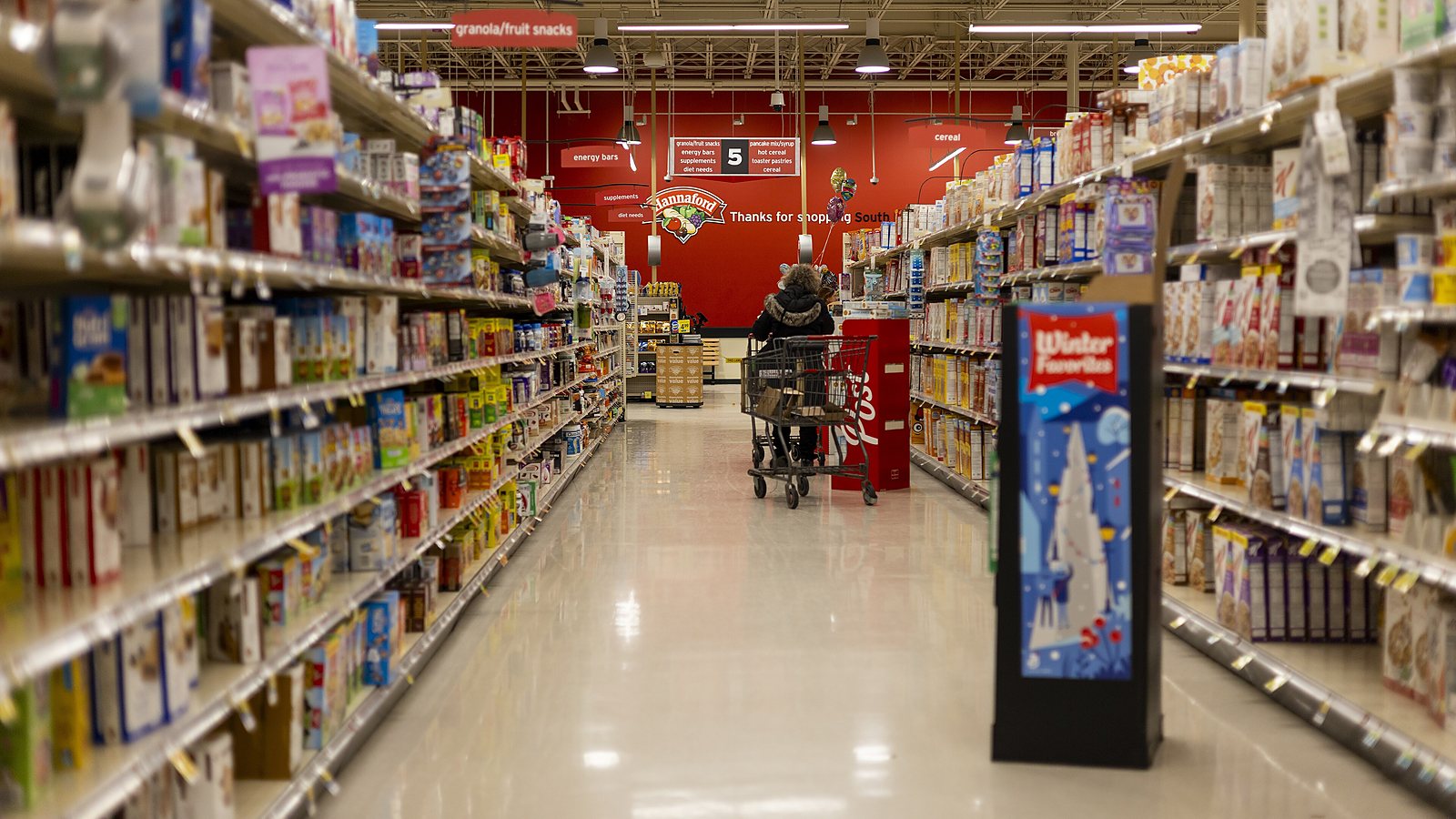
Food was the sharper change. It rose 0.5% after being flat in September, with food at home up 0.4% and restaurant prices up 0.5%. Snacks rose 1.0%, beef 0.9% and fresh fruits and vegetables 0.8%, while coffee fell 3.6%. TNN argued last month that record diesel prices would reach store shelves with a lag. October's grocery figures fit that account, though the release assigns no causes and one month cannot prove it. Vanguard has raised its year-end core inflation forecast to 3.2%, citing a longer-lasting pass-through from energy.
Services account for much of what worries officials. Motor vehicle insurance rose 0.7%, hospital services 0.8%, recreation services 0.9% and transportation services 0.8%. Waller told his London audience he was "particularly concerned about the breadth of price increases," and that Fed staff work suggests energy pressures could persist well into 2027. Electricity rose 0.9%, which CNBC called a potential complication of the artificial intelligence buildout.
Goods prices firm, and sub-$4 gasoline arrives too late
Goods excluding food and energy rose 0.2%, which looks benign. The composition is less so. Used cars and trucks fell 1.2%, and by TNN's rough arithmetic the rest of core goods rose closer to 0.4%. Household furnishings and supplies rose 0.7% after falling 0.2%, footwear rose 1.0%, and toys climbed 1.8% on top of September's 4.2%. Apparel, which CNBC called tariff-sensitive, rose only 0.1%, and new vehicles 0.2%.
Those are the categories where import costs would be expected to show, but the evidence is circumstantial. The BLS release does not mention tariffs. MUFG flagged reinstated tariffs and elevated shipping costs as upward risks to core goods before the data came out, and CNBC reports that Fed officials are concerned the effects of tariffs and the war are becoming embedded. The fair reading is that goods prices outside used cars firmed in the places tariffs would predict.
The national average for gasoline fell below $4 a gallon on Tuesday for the first time in nearly four months, according to AAA, as reported by CBS News, which attributed the decline to cheaper winter blends, reduced travel and softer oil prices. That is a November event. Energy Information Administration weekly readings put regular gasoline between $4.27 and $4.35 through October, reaching $3.995 only on November 9.
The timing has a consequence. The November CPI is scheduled for December 10, the day after the Fed concludes its meeting, so officials will vote on October's price data without seeing the month in which gasoline fell most visibly. Yahoo Finance notes they will still get the personal consumption expenditures index, their preferred gauge, before they meet. Waller said core inflation on that measure was 3.1% in the year to September.
What Waller's test commits the Fed to
"Should be considered" is a long way from a vote. Waller is one of 12 voters, and his argument is about credibility more than any single data point. He backed the hold in October on the grounds that markets had already priced in tightening and that hikes need not come at consecutive meetings. If promised increases are not delivered, he said, expectations fall and policy loosens by itself.
Markets have accepted the direction and largely not the size. CNBC reported after the release that traders had fully priced a quarter-point increase and put the odds of a half-point move at 13.6%, up from about zero, on the CME FedWatch tool; CBS News, in a story updated at 10:21 a.m. Eastern, cited 15%. A half point would lift the federal funds range from 3.75%-4% to 4.25%-4.5%. The Fed has not raised rates by that much in one move since December 2022.
The officials who want tighter policy do not agree on method. Governor Lisa Cook and Cleveland Fed President Beth Hammack dissented in October in favor of an immediate quarter-point hike, while Waller voted to wait. Yet Hammack, speaking in Zurich last week according to American Banker, argued for getting there in small steps.
"I prefer getting to that stance through more frequent smaller adjustments when possible, something which would be less disruptive to households, businesses, and financial markets." — Beth Hammack, president of the Federal Reserve Bank of Cleveland
The case for not overreacting
There is a serious argument against a larger move. Headline inflation slowed, shelter eased, and lodging's rise cooled to 0.6% from 2.0%. Gasoline is now falling, and higher rates do nothing to reopen supply. Hiring is thin, too: Waller himself described a low-hire, low-fire labor market with six-month payroll gains near 80,000 a month. The BLS said average hourly earnings rose 0.4% in October, exactly matching prices, so real pay was unchanged. Wages are not obviously pushing inflation higher.
The rebuttal is that the economy shows little sign of needing protection. Waller cited third-quarter growth of 3.4% and unemployment of 4.1%. CNBC reported that a net 37% of small firms in the National Federation of Independent Business survey plan to raise prices within three months, the highest share since July 2022, and that inflation has run above 2% for some five and a half years.
A month's relief at the pump can move the headline, and November's figure may well show it. What it cannot do is explain three straight core readings of 0.3%, the last of them in a month when energy contributed little. That is the part of the report that has moved the Fed's debate from whether to raise rates to how far.
This report is based on the BLS October 2026 CPI and Real Earnings releases and tables, which TNN read directly; Governor Waller's text as posted by the Federal Reserve, dated November 10 (CBS News placed the remarks on Monday; the Fed's text, CNBC and American Banker place them on Tuesday); EIA weekly gasoline data; and reporting by CNBC, CBS News, Yahoo Finance and American Banker. Annual estimates and category contributions are TNN calculations from rounded published data and are not official; the September 2025 index levels used came from secondary reporting of BLS data and match the published 3.7% and 2.6% annual rates. CME FedWatch probabilities are from Tuesday morning and change continuously. CPI data are subject to seasonal-factor revision. This article is analysis and not investment advice.