
Uber was approved to run 1,000 robotaxis in Las Vegas. It doesn't own a single one of them
Nevada regulators cleared 8,000 driverless cars for Clark County on Thursday — 5,000 for Tesla, 1,000 for Waymo and 1,000 for Uber, whose fleet will be supplied entirely by Hyundai's Motional and Amazon's Zoox. The approval is the clearest test yet of whether a ride-hail platform can win the robotaxi era without building a robotaxi.
The Nevada Transportation Authority did something on Thursday that no American regulator had done at this scale: it voted, unanimously, to let three companies operate up to 8,000 paid robotaxis in a single county. Tesla received permission for as many as 5,000 vehicles in Clark County, home to Las Vegas, with unique authority to expand statewide on notification. Waymo, which has been running fully driverless cars in the city since July, was cleared for 1,000, according to TechCrunch. And Uber — a company that has never manufactured a car, retired its self-driving program six years ago, and owns precisely zero autonomous vehicles — was cleared for 1,000 of its own.
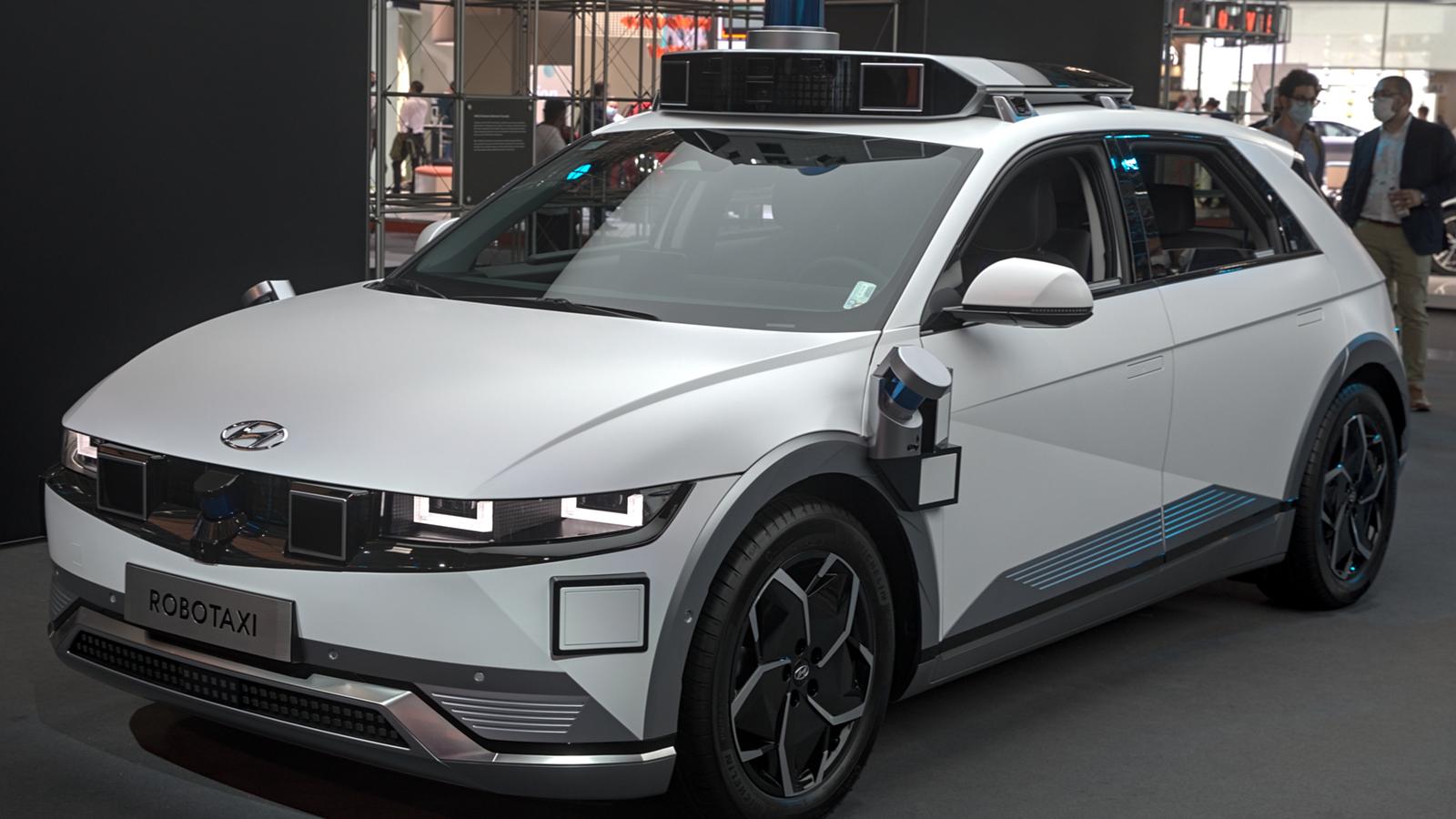
That last permit is the strange one, and arguably the most consequential. Uber's 1,000 robotaxis will be supplied and operated by two partners: Motional, the autonomous-driving company majority-owned by Hyundai Motor Group, and Zoox, the Amazon subsidiary whose toaster-shaped pods have no steering wheel at all. The cars belong to them. The riders belong to Uber.
The fleet Uber doesn't own
The mechanics are already running. Since March 13, Las Vegas riders requesting UberX, Uber Comfort or their electric variants have been eligible to be matched with a Motional Hyundai Ioniq 5 robotaxi at no extra cost, with pickups at designated zones including Resorts World, the Westgate, Downtown and the Town Square shopping district, per announcements from Uber and Hyundai. The cars launched with safety operators behind the wheel; Motional has targeted fully driverless operation by the end of 2026. The agreement between the two companies runs ten years.
Zoox came aboard two days before Motional's launch. Its March 11 agreement with Uber was the first time the famously go-it-alone Amazon unit agreed to put its vehicles on anyone else's platform, CNBC reported — Uber-app rides in Las Vegas from this summer, Los Angeles by mid-2027, with Zoox keeping its own app in parallel. Zoox has moved fast since: a federal exemption from motor-vehicle safety standards for its wheel-free design in July, and paid fares on the Strip since August 10. It also holds its own separate Nevada permit for 100 first-party robotaxis, distinct from the Uber-dispatched fleet.
The two partners could hardly be less alike, which is part of the design. Motional's robotaxi is a recognizable Hyundai crossover with a steering wheel and, for now, a safety operator who can grab it. Zoox's pod is a symmetrical, bidirectional carriage with four seats facing each other and no driver's position to supervise — it needed a federal exemption from eight separate motor-vehicle safety standards just to exist on a public road. Uber's app will treat both the same way: as supply.
The arithmetic that matters sits underneath the permits. Uber booked 3.9 billion trips in the second quarter, up 18% from a year earlier, on gross bookings of $58 billion, and its trailing free cash flow crossed $10 billion for the first time, according to its August 5 earnings release. Every robotaxi its partners deploy plugs into that demand machine on day one. Neither Motional nor Zoox has to build a consumer brand in Las Vegas. Uber already built it.
That is the whole platform argument in miniature. An autonomous-vehicle developer that goes to market alone has to solve autonomy, manufacturing, fleet operations, insurance and customer acquisition simultaneously, in every city it enters. One that plugs into Uber solves the last problem instantly and rents the answer to the others. Uber, in exchange, gets robotaxi supply without robotaxi capital costs — no depots, no depreciation schedules, no sensor stacks on its balance sheet — while collecting its usual take on every ride.
Thirty partnerships and a divorce
"Our ambition is straightforward: to become the world's leading commercialization platform for autonomous vehicles," chief executive Dara Khosrowshahi told analysts on the company's second-quarter call. It is not an idle boast. By TechCrunch's count, Uber has struck more than 30 autonomous-vehicle partnerships in roughly two years — Waymo in Austin and Atlanta, WeRide in the Middle East, Wayve in Tokyo and London, Baidu, Pony.ai, May Mobility, Volkswagen's MOIA, and a premium San Francisco and Houston service built around Nuro software and Lucid vehicles, backed by roughly $500 million of Uber's money.
The strategy was born from failure. Uber's own Advanced Technologies Group burned through years of losses and, in 2018, was involved in the first pedestrian fatality caused by a self-driving test vehicle. In December 2020 the company sold the unit to Aurora and chose to buy autonomy rather than build it — a decision that looked like retreat at the time and looks like arbitrage now. Uber still holds a 19.7% stake in Aurora, and has said it plans to deploy about $10 billion over the next few years helping partners scale their fleets.
But Thursday's vote also carried a warning for the platform thesis, in the fine print of who asked for what. Waymo did not take its 1,000 Nevada robotaxis through Uber's network, as it does in Austin and Atlanta. It took its own permit. That follows the quiet end of the two companies' Phoenix arrangement in July — Waymo has been seeking to exit the partnership well before its 2028 expiration, per TechCrunch. The most successful robotaxi operator in America increasingly prefers to go direct, keeping the rider relationship and the margin. Uber's aggregation model works best on partners who need its demand. The strongest partner is concluding that it doesn't.
The economics of the divorce are easy to follow. A Waymo ride booked through Waymo's own app keeps the entire fare in Mountain View. The same ride booked through Uber shares it. As long as Waymo was capacity-constrained and unknown outside Phoenix, Uber's demand was worth the split. With a national brand and a fare-charging Las Vegas permit of its own, the calculus shifts — and every AV company watching will run the same math the moment its technology matures.
The ceiling and the floor
Tesla's presence loomed over the hearing. Its permit ceiling of 5,000 vehicles is five times anyone else's, though its own Cybercab chief engineer, Eric Early, told regulators the number "has always been a ceiling for us," adding that the company "would be extremely happy" to reach 2,500 within a year, per TechCrunch. Markets read the day plainly: Tesla shares rallied about 4% on Friday, while Uber's rose roughly 2% — the autonomy premium concentrating, as it usually does, in the company that owns the metal.
The incumbents read it just as plainly. The Livery Operators Association and local taxi companies opposed the permits at the hearing, with attorney Kimberly Maxson-Rushton warning of "oversaturation of the commercial transportation industry" in the so-called Golden Triangle between Harry Reid International Airport and the Strip — the densest, most lucrative taxi corridor in Nevada, and precisely where the robotaxis will hunt.
Aggregating other companies' robotaxis may not be the durable advantage implied by the rising share price.
Skeptics of the platform model make a version of that argument, as The Motley Fool did in June: Uber's roughly $10 billion in partner commitments and its Nuro-Lucid investment amount to paying up to make sure the cars exist — a sensible hedge, but a quiet admission that demand aggregation alone may not be defensible. If robotaxis stay scarce and capital-hungry, Uber's network is the fastest way for their owners to earn revenue, and Uber collects a toll on every ride. If they become abundant, the Waymo playbook — build the car, keep the customer — starts to look repeatable.
Las Vegas is now the country's most concentrated test of both propositions at once. Within twelve months, one county could host Tesla's owned fleet, Waymo's owned fleet, Zoox's owned pods, and a thousand borrowed cars flying Uber's flag. Uber is live with autonomous vehicles in seven cities and has said it expects roughly fifteen by year-end. The company's bet is that in every one of them, whoever builds the best robot still needs someone to fill the back seat. Thursday's vote means the bet finally gets tested at scale — on the one strip of asphalt in America where every competitor showed up at once.
There is one more wrinkle worth watching. Zoox is keeping its own consumer app alongside the Uber integration, and Motional's ten-year deal gives Uber time but not exclusivity forever. If the Las Vegas experiment proves riders don't care whose logo is on the door — only who arrives fastest and cheapest — the platform wins. If it proves the robotaxi itself is the brand, as Waymo increasingly believes, then Uber has spent $10 billion incubating its own disintermediation. Either way, the answer now arrives on a meter.
TNN Analysis is Torbrook News Network's original-reporting desk. Figures are drawn from Nevada Transportation Authority proceedings, company earnings releases and filings, and reporting by TechCrunch, CNBC, Bloomberg and Engadget as cited.