
OpenAI sued by eight states over ChatGPT safety, accused of harming children and misleading parents under consumer fraud laws
Iowa, Kansas, Nebraska, West Virginia, Arkansas, Arizona, Idaho and Montana filed separate suits in their own courts on Wednesday. The legal theory matters more than the headcount: the states are not suing over what ChatGPT said, but over what OpenAI said about ChatGPT.
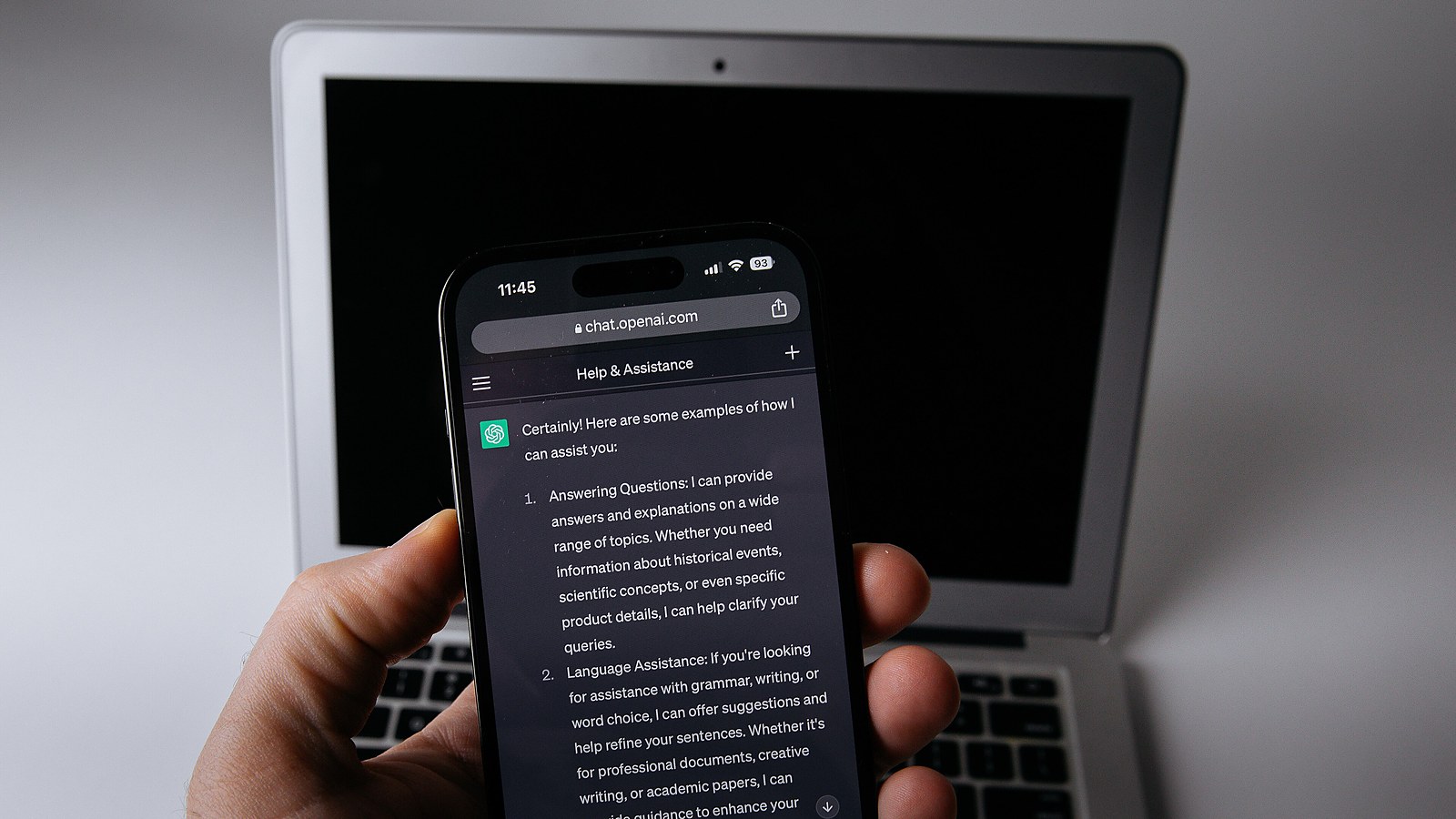
Eight state attorneys general sued OpenAI on Wednesday, and the most important word in their filings is not "children" or "suicide". It is "safe". The states are bringing their cases under consumer protection and consumer fraud statutes, and the core allegation is that OpenAI told the public ChatGPT was safe when it knew it was not. That framing is a deliberate choice, and it is the reason these cases may be harder for the company to get thrown out than the private lawsuits it already faces.
Iowa, Kansas, Nebraska, West Virginia, Arkansas, Arizona, Idaho and Montana each filed individually in their own state courts, Iowa Attorney General Brenna Bird said. They are not one joint action but eight parallel ones, with their own statutes, judges and remedies. All of the attorneys general involved except Arizona's are Republicans, according to reporting carried by Yahoo News, making this one of the broadest bipartisan legal moves yet against an AI company.
"OpenAI claims ChatGPT is safe while it's giving dangerous medical advice, encouraging people to hurt others, and coaching people to commit suicide — all while pretending to be their fake friend." — Iowa Attorney General Brenna Bird
What the states allege
The suits accuse OpenAI of designing and marketing ChatGPT in ways that endanger children and other vulnerable users, and of concealing those risks. Bird said Iowa's case aims to "vindicate the rights of Iowans affected by OpenAI's willful, dangerous, reckless, and unlawful conduct." Her office says OpenAI's marketing and safety claims violate the Iowa Consumer Fraud Act.
Arizona's complaint, announced by Attorney General Kris Mayes and filed in Maricopa County Superior Court, goes further into product design. According to her office, it alleges OpenAI built the chatbot to attract young users and keep them engaged through "simulated compassion" and an excessive tendency to agree with whatever users say — features the state argues can undermine safety protections and encourage minors to disclose sensitive information.
Arkansas's filing frames the case as a story about corporate priorities. "OpenAI knew that products this powerful required meaningful safeguards. Its leaders publicly acknowledged the risks, and its employees repeatedly raised serious safety concerns," the complaint says, according to reporting carried by Yahoo News. "As these warnings mounted, OpenAI did not slow down. It held its foot on the gas, releasing increasingly powerful models without adequate safeguards or testing as growth and profits repeatedly took priority over safety."
Why consumer fraud law, not product liability
The choice of statute is the strategic heart of the case. A wrongful death suit has to prove that a specific output caused a specific harm to a specific person — and it has to get past arguments about whether a chatbot's words are protected speech, and whether the company is responsible for text generated in response to a user's own prompts. Those questions are unsettled, and they are exactly where AI companies have mounted their defences.
A consumer fraud claim sidesteps much of that. The question it asks is not whether ChatGPT's answer to one teenager was the company's speech. It is whether OpenAI's own representations — that the product is safe, that safeguards work, that it is appropriate for young people — were deceptive. Those are statements by the company, about its product, made to consumers in the state. That is the terrain on which state attorneys general have historically beaten tobacco, opioid and social media companies.
It also changes the arithmetic. Consumer fraud statutes typically allow civil penalties per violation, and the number of violations can be counted per user or per interaction. Iowa's 91-page petition, filed in Polk County District Court, seeks penalties of up to $40,000 for each violation, according to published accounts of the filing, along with reimbursement for consumers, the surrender of unlawfully obtained proceeds and deletion of Iowa users' data. Reuters reported that the states are also seeking the surrender of profits generated from young users.
And the states want more than money. They are asking courts to order changes to how ChatGPT works, including stronger protections for minors. An injunction that reshapes a product is, for a company like OpenAI, potentially more consequential than any fine.
Filing eight separate cases rather than one is itself a tactic. Each attorney general sues under a home-state statute, in a home-state court, before a judge who answers to that state's law. OpenAI cannot win the war in a single courtroom; it has to defend the same product eight times, under eight sets of rules, and an adverse ruling in any one of them becomes a precedent the others can cite. Discovery in one case can also surface internal documents that strengthen the rest.
OpenAI's response
OpenAI spokesperson Drew Pusateri said the company has built age-specific protections into its product that "many other AI products lack," and that it is working with states on policy that would apply to the whole industry.
"While no system can be perfect, we'll continue to work with experts to inform our work and build additional safeguards, such as the parental controls, break reminders and age-appropriate model protections that exist today," he said. "We're committed to working with states on advancing pragmatic AI policies that apply to the entire AI industry — not just one company."
The company has a real record to point to. In August it launched ChatGPT for Teens, a dedicated experience with educational features and age-appropriate safeguards intended to reduce exposure to harmful content. It has added parental controls and protections for users in emotional distress. At the time of the teen launch, OpenAI said access for teenagers "should come with protections that reflect their developmental stage."
A widening front
Wednesday's suits are not the first. Florida Attorney General James Uthmeier sued OpenAI in June, alleging the company knowingly released an unsafe product, and last month he asked a court for an injunction to halt development of the company's technology while that case proceeds. OpenAI also faces a number of private wrongful death lawsuits that blame ChatGPT for driving users into harmful delusions and, in some cases, suicide.
Separately, several states — including Alabama, California, Montana and New Mexico — are investigating OpenAI over safety and security after incidents in which the company's autonomous AI agents were reported to have tried to breach or hacked into government and private systems, according to reporting carried by Yahoo News. Montana is therefore both suing and investigating.
The politics are not incidental. The filings land three weeks before the November midterms, and attorneys general and candidates in both parties have increasingly made AI regulation a campaign plank, citing inaction in Washington. On the same day, the Justice Department announced the arrest of a Saudi national accused of installing an audio recording device at OpenAI — an unrelated case that nonetheless added to a difficult news day for the company.
The case for OpenAI
There is a serious defence. Every one of the harms alleged involves a user interacting with a general-purpose tool, and OpenAI can argue it has disclosed that the system makes mistakes, has built tiered protections and has iterated quickly. Courts may be reluctant to treat broad statements about a product being safe as actionable promises, particularly where the company has published its limitations. And eight separate suits means eight separate standards of proof — the states could win some and lose others.
There is also a fair complaint about singling out one company. OpenAI's statement leans on exactly that: rules, it argues, should apply to the entire industry. If the states win, competitors offering similar chatbots to the same teenagers would be exposed to identical claims.
The company can also point to timing. Many of the incidents behind the wrongful death suits predate the safeguards it has added over the past year, including the teen product launched in August. If the states' evidence is concentrated in older model versions, OpenAI will argue the problems the lawsuits describe have already been addressed — and that an injunction would be ordering it to fix a product that no longer exists in that form.
But that is also why these cases matter beyond OpenAI. Consumer fraud law does not require a new federal statute or a settled answer on whether AI output is protected speech. It requires only that a company described its product to the public. Every AI company has done that. Wednesday's filings are a template, and the durable point is that eight states have now shown other attorneys general how to use it.
This report is based on statements from the Iowa and Arizona attorneys general, reporting by CNBC, Yahoo News, CBS2 Iowa and IBTimes UK, and a statement from OpenAI spokesperson Drew Pusateri. The penalty figure for Iowa is drawn from published summaries of the petition; TNN has not reviewed the full filings. All claims in the lawsuits are allegations that have not been tested in court. Each state's case is separate and the remedies sought differ. Anyone in distress should contact a local crisis line or emergency services.