
Paramount closes its $110 billion takeover of Warner Bros. Discovery and renames the combined company Skydance — with $80 billion of debt, a $6 billion cost-cutting target and CNN and CBS News under one owner
Thirteen months after Warner Bros. rejected its first bid, David Ellison's company owns the studio behind Harry Potter, the network behind Game of Thrones and roughly a third of American basic cable. The deal was saved by a settlement with 12 state attorneys general struck less than two weeks before a penalty clause would have raised the price.
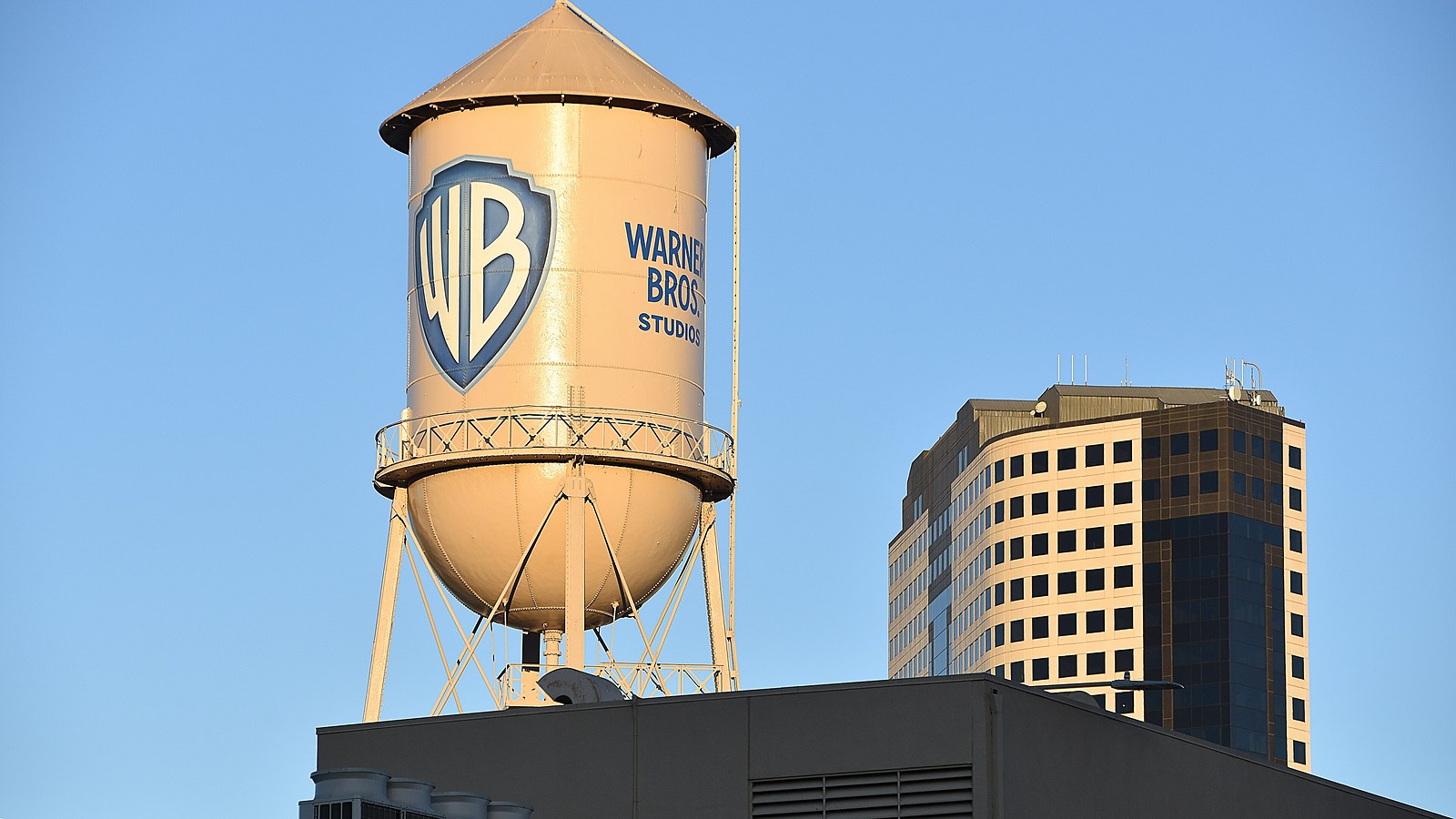
The company that closed the largest media merger in a generation on Tuesday is not called Paramount and it is not called Warner Bros. It is called Skydance, after the production outfit David Ellison founded two decades ago with his father's money, and it begins life owning both of the century-old studios whose names it declined to use. That choice, explained at length in a 'Day 1' email to staff, is the clearest statement of what the deal is: not a merger of two Hollywood institutions but the absorption of both into a new one built by a 43-year-old who, as recently as August 2025, ran neither.
Paramount Skydance said on Tuesday it had completed its acquisition of Warner Bros. Discovery, a transaction valued at about $110 billion on an enterprise basis, according to CNBC, or $111 billion by The Hollywood Reporter's count. Warner Bros. Discovery shareholders receive roughly $31 a share in cash. The combined company trades on the New York Stock Exchange under the ticker SKYD, with Ellison as chief executive alongside co-CEO Ynon Kreiz, who ran the toymaker Mattel until last week.
What they now own is extraordinary in its breadth. Two of the big five film studios. Two large streaming services, Paramount+ and HBO Max. The cable networks TNT, TBS, Comedy Central, Nickelodeon, MTV, Food Network and, CNBC calculated, nearly one-third of all basic cable programming. Franchises including Harry Potter, Game of Thrones, the DC Universe, The Lord of the Rings, Yellowstone and the Godfather films. And two national news organisations, CBS News and CNN, now under a single owner for the first time.
How a rejected bidder won
The path to Tuesday ran through five rejections and a rival deal that was already signed. Warner Bros. Discovery announced in June 2025 that it would split itself in two. Paramount, newly merged with Skydance in August of that year, made three offers through September and October 2025, the third for just under $24 a share, and was turned down each time, CNBC's timeline records. In December Warner Bros. agreed to sell its studio and streaming assets to Netflix for nearly $83 billion and to spin off its cable networks.
Ellison's response was to go over the board's head. On December 8 he launched a hostile tender offer for the whole company at $30 a share in cash. 'We're really here to finish what we started,' he told CNBC. 'We put the company in play.' The board rejected him again in January, even after Larry Ellison personally guaranteed the financing. Paramount sued. Netflix converted its offer to all cash at $27.75. Paramount added a 'ticking fee' that would raise its price if regulators delayed closing, and agreed to cover the $2.8 billion break-up fee Warner Bros. would owe Netflix. On February 24 it raised to $31. Two days later Netflix declined to match, and on February 27 the two companies signed.
Shareholders approved in April. The Justice Department cleared the deal on June 12. European regulators followed on July 22, extracting a promise to divest Paramount's stake in United International Pictures and to stay out of European distribution deals with Universal for ten years. The hard part came from the states.
The settlement that set the clock
On July 13 a coalition of 12 state attorneys general led by California's Rob Bonta sued to block the merger, arguing it would mean higher prices and worse content, and the Writers Guild of America filed its own suit. A temporary restraining order followed. On July 24 Paramount agreed to push its outside closing date as far as June 2027, a delay that, CNBC noted, briefly chilled media dealmaking across the industry. The question was whether Ellison would wait a year or settle.
He settled, on September 21, and the timing tells you why. The ticking fee that Paramount had itself introduced to sweeten its bid was now less than two weeks from kicking in and raising the price Paramount would pay its own target. The terms Bonta's office announced were specific: Skydance must produce at least 30 films in each of the first two years after closing, may not sell or close the Paramount or Warner Bros. lots in Los Angeles for at least five years, and must establish an editorial board to 'help CNN and CBS maintain editorial independence.' The Writers Guild settled once the states did.
Those are unusual conditions for an antitrust settlement. They say nothing about prices to consumers, the ostensible basis of the suit, and everything about jobs in California and the independence of two newsrooms. They are the price of the deal, and they will be the yardstick by which the new company is judged for the next five years.
Today is a historic day, not just for Skydance but for our entire industry. From the start, our ambition was to bring these two storied studios together and create a stronger competitor. — David Ellison, in a statement on the closing, as published by The Hollywood Reporter
$70 billion of revenue, $80 billion of debt
The company Ellison and Kreiz described to employees on Tuesday has nearly $70 billion in annual revenue, making it one of the largest media businesses in the world. It also carries more than $80 billion in debt, according to The Hollywood Reporter, much of it inherited from Warner Bros. Discovery's own 2022 merger and the rest raised to pay $31 a share in cash. Servicing it is the first job.
The second is the savings. The executives told staff they are 'targeting at least $6 billion in synergies, which will make us leaner and more nimble.' In media mergers, synergies are overwhelmingly people. 'Integrating two companies will bring change, including difficult decisions that affect our workforce,' the email said. 'We are committed to handling this process thoughtfully and respectfully.' A $6 billion target against a cost base that includes two studios, two streaming platforms, two ad-sales operations and two news divisions implies cuts on a scale Hollywood has not seen.
The leadership chart announced on Monday shows where the knives are not. Casey Bloys, who built HBO's current slate, oversees streaming and television alongside George Cheeks and JB Perrette. CBS Sports chief David Berson takes global sports. At the news organisations, Bari Weiss leads CBS and Mark Thompson, the former BBC director-general and New York Times chief executive, leads CNN. The editorial board the settlement requires will sit above both.
Why the name is Skydance
The staff email devoted several paragraphs to the question. 'We realized early on that simply combining the two names — WarnerParamount, ParaWarner or ParamountWarner — accomplished none of what we wanted,' Ellison and Kreiz wrote. 'Every variation somehow made two giants feel smaller, not greater.' Both studios will keep their names and logos on screen; the Paramount mountain and the Warner Bros. shield survive. The corporate parent takes a name with no history in exhibition, distribution or news.
The practical reading is that a holding company with a neutral name can close a studio, fold a network or sell a lot without appearing to kill a brand. The settlement forecloses the lots for five years. It does not foreclose the networks. One-third of basic cable is a share of a shrinking market, and the new company's own 'Day 1' letter describes 'profound change' in which 'audiences have more choices than ever.' Discovery Global, the networks spin-off Warner Bros. planned in 2025, no longer exists as a plan; the networks are Skydance's problem now.
The counter-argument
Gerry Cardinale of RedBird Capital, a Skydance director, framed the deal as applying an 'owner-operator model' to 'an unmatched portfolio of iconic franchises, premium original programming, and live sports rights.' The case for it is the case for scale: Netflix spends more on content than either legacy company could alone, and Amazon, Apple and Google treat entertainment as a line item. A combined Paramount+ and HBO Max, if they are combined, would be the only streaming service outside Netflix and Disney with a library to match.
The case against is that the last person to try this was David Zaslav, whose 2022 combination of WarnerMedia and Discovery promised $3 billion in synergies, delivered years of write-downs and ended in a sale. Scale did not save Warner Bros. Discovery from its debt; it created it. Skydance starts with more revenue, more debt and a larger savings target, in a linear television market that has declined every year since Zaslav's deal closed.
What is settled on Tuesday is ownership, and what remains open is everything else. The deal is done, the price is paid, and the conditions are public: 30 films a year, two lots untouched for five years, two newsrooms with a board between them and their owner. Those commitments, not the ticker symbol, are what the next five years of Skydance will be measured against, by the states that extracted them and by the people who work there.
This report is based on Paramount Skydance's closing announcement of October 6, 2026, the 'Day 1' email to employees as published by The Hollywood Reporter, CNBC's timeline of the transaction, CBS News's account of the settlement terms as described by California Attorney General Rob Bonta's office, and public filings. The $110 billion valuation is an enterprise-value estimate and the debt figure is as reported by The Hollywood Reporter. Job-cut numbers have not been announced; the $6 billion is a company target.