
Russia plague scare: a 28-year-old lab worker at the Irkutsk anti-plague institute is dead and nearly 200 people are under observation — but Moscow still calls it 'pneumonia of unknown aetiology'
Darya Shipilova reportedly broke a tube of live plague bacteria a week before she died in Shelekhov. A regional governor said plague, then said 'maybe'. Russia's health watchdog says nothing from her work was found in her samples. The gap between those accounts is now the story.
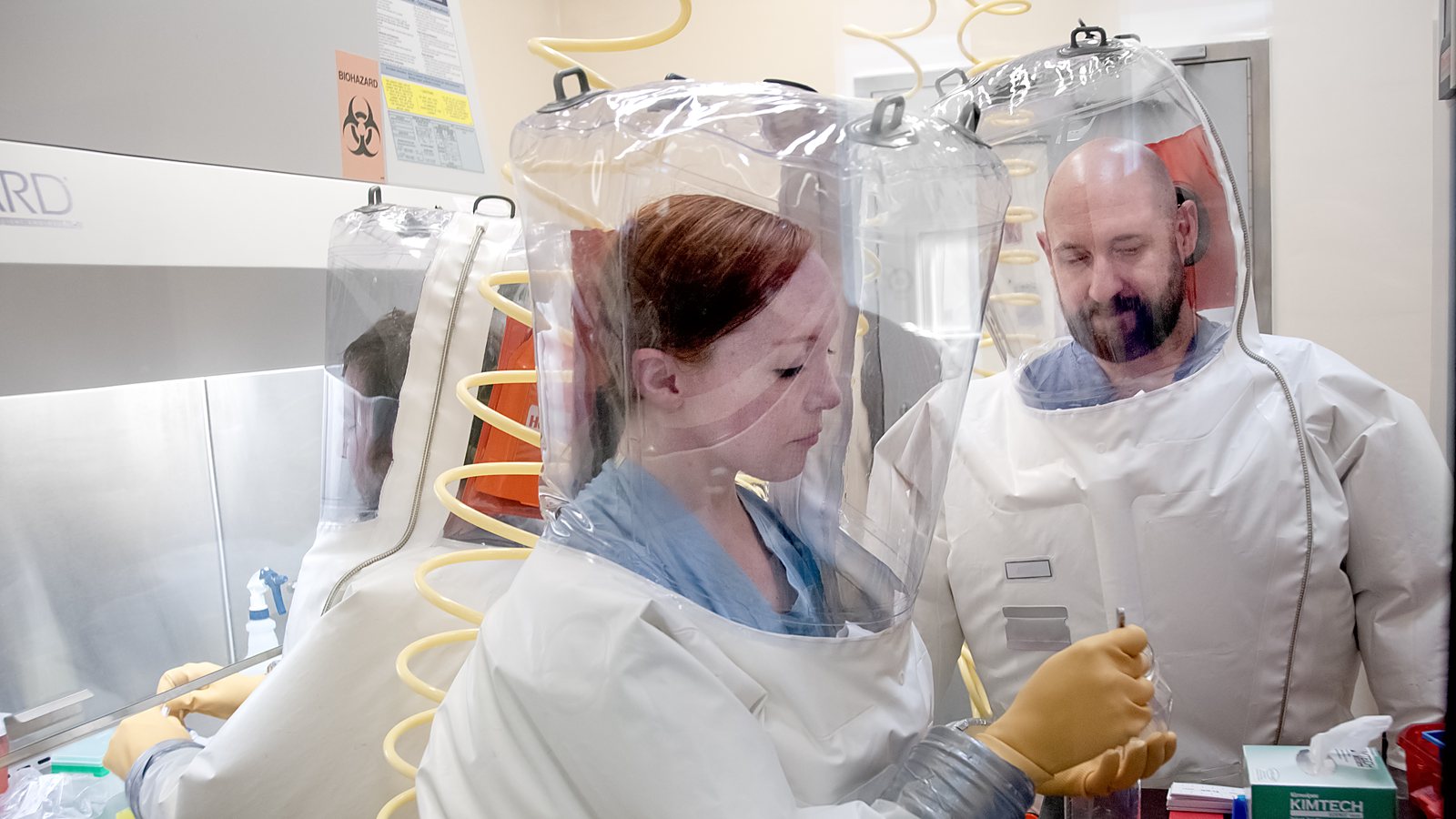
The most revealing thing about the death in Irkutsk is not the disease that may have caused it. It is the vocabulary. In four days, Russian officials have described the illness that killed a young laboratory worker as "a particularly dangerous infection", as plague, as "maybe" plague, and finally — in the formal language of the national health watchdog — as "pneumonia of unknown aetiology". The facts on the ground have barely changed in that time. The wording has changed a great deal.
What is not in dispute is this. An employee of the Irkutsk Anti-Plague Research Institute of Siberia and the Far East, named by local media as 28-year-old laboratory technician Darya Shipilova, died in intensive care at the district hospital in Shelekhov, a town just outside the regional capital, in the early hours of October 2. The World Health Organization said it was aware of reports that a laboratory worker in Irkutsk oblast had died of severe pneumonia that day, and that it had offered Russia support. According to local media reports, between 189 and 197 people have been placed under medical observation.
The broken tube
The account circulating among her colleagues and in independent Russian media, reported by Euronews and the Moscow Times, is that on September 25 Shipilova accidentally broke a test tube containing live Yersinia pestis — the bacterium that causes plague — while working with biological material. Two days later her condition suddenly worsened. Doctors at Shelekhov, initially unaware of what had happened, reportedly suspected a severe case of Covid-19 and admitted her to a coronavirus ward before the speed of her decline prompted rapid tests for dangerous infections. She was put on a ventilator and died.
No official has confirmed that account. Rospotrebnadzor, Russia's consumer health watchdog, said on Sunday that expanded testing of samples from the patient found no microorganisms associated with her professional work, and that the institute's own commission had found no emergency or security breach. It said no staff member had sought medical help for an infectious disease in the previous ten days. Yet Moscow Times, citing reports, said law enforcement had opened a criminal investigation into possible health-safety violations resulting in death.
The political messaging has been just as uneven. Alexei Tsydenov, head of the neighbouring Republic of Buryatia, wrote that the woman had died of plague, then edited his post to say she had "possibly" died of it — while stressing that she had never visited his region. Authorities in the town of Baikalsk briefly urged residents not to travel to Shelekhov over a possible plague infection, then deleted the post. Irkutsk governor Igor Kobzev spoke only of a suspected "particularly dangerous infection" and did not mention the death at all.
"Locals are angry that they are not being told anything." — Elena Trifonova, journalist with the exiled Siberian outlet People of Baikal, speaking to the Guardian
Why pneumonic plague is the form that matters
Plague is not one illness but three presentations of the same bacterium. Bubonic plague, the form associated with the Black Death, is usually passed by flea bites, causes painfully swollen lymph nodes, and does not generally spread from person to person. Untreated, the bacteria can reach the bloodstream (septicaemic plague) or the lungs. When they reach the lungs, the disease becomes pneumonic plague, which can also be caught directly by breathing in infectious particles.
That is why the reported mechanism — a broken tube in a laboratory — is the alarming part. An aerosol from a cracked vessel goes straight to the lungs, skipping the flea and the lymph node entirely. Pneumonic plague develops very fast and is almost always fatal without prompt, targeted antibiotics; it is also the only form that spreads readily between people, through respiratory droplets. Brendan Wren, a professor at the London School of Hygiene & Tropical Medicine, told CNBC that a lab-acquired pneumonic case "could be transmitted by the respiratory route", but that the bacterium is "not as transmissible as SARS2/COVID".
The other half of the picture is reassuring. Plague is curable with common antibiotics if it is treated early, and the people around Shipilova were identified quickly. Rospotrebnadzor says daily testing of her contacts has found two cases of Covid-19 and two of rhinovirus, and nothing else. The WHO says none of the contacts has shown symptoms and that, on the unofficial information available, the risk to the general population appears low. Governor Kobzev said on Monday that relatives in quarantine could be discharged next week.
A disease Siberia never lost
Plague persists naturally in wild rodents and their fleas across parts of Siberia and the Russian Far East, which is precisely why an anti-plague institute exists in Irkutsk. Human cases, though, are rare. Before this one, Russia's last recorded human infection was in 2016, when a 10-year-old boy in the Altai Republic caught plague after helping to butcher a marmot. Globally, Wren told CNBC, there are still around 2,000 cases a year. The WHO says animal plague is present on every continent except Oceania, including the western United States.
The most recent large human outbreak shows what the pneumonic form can do in a city. In Madagascar in 2017, the WHO recorded 2,417 confirmed, probable and suspected cases and 209 deaths between August and late November, about three-quarters of them classified as pneumonic, in densely populated places including the capital, Antananarivo. That outbreak was contained with antibiotics and contact tracing — the same tools now being used around Shelekhov, on a far smaller scale.
Laboratory cases are rarer still. In 2009 Malcolm Casadaban, a University of Chicago geneticist working on a plague vaccine, died after exposure to a weakened strain of Yersinia pestis in his lab; the US Centers for Disease Control and Prevention found he had hemochromatosis, an iron-overload condition that may have allowed the attenuated bacteria to turn virulent. The CDC said it was the first laboratory-acquired plague infection in the US in 50 years.
Why the wording matters
The reason Russia's language draws so much scrutiny is history. In April 1979, anthrax spores escaped from a military facility in Sverdlovsk, now Yekaterinburg, and killed at least 68 people. For thirteen years Soviet authorities insisted the deaths were caused by contaminated meat. Only in 1992 did Boris Yeltsin — who had been the regional party chief at the time — acknowledge to President George H.W. Bush that the outbreak came from a biological weapons installation.
Nobody has suggested anything comparable in Irkutsk, and the institute is a public-health body whose job is surveillance of a disease that occurs naturally in the region. Wren noted that a lab of this kind would plausibly be working with plague samples to improve vaccines for endemic areas. But the precedent explains why foreign governments are paying attention. The US State Department said it was monitoring the case with the CDC and urged Russian authorities "to share accurate information quickly and openly". Some US lawmakers have called for bans on flights from Russia.
On the ground, precaution has outrun explanation. Radio Free Europe/Radio Liberty, cited by the Guardian, reported that several Irkutsk hospitals were under quarantine and that institute staff had been isolated inside the building since October 2; local media later said most hospitals were running normally apart from localised restrictions. The Irkutsk aluminium smelter in Shelekhov made masks compulsory, and public events in Irkutsk were cancelled over the weekend. Anna Popova, the head of Rospotrebnadzor and Russia's chief sanitary doctor, flew in to chair an emergency commission.
The case against alarm
There are real grounds for calm. Gennady Onishchenko, a former head of Rospotrebnadzor, told TASS the illness was most likely not plague, and that even if it were, cold weather would prevent spread — Siberia's rodents and fleas usually go dormant by early October. More than a week has passed since the reported exposure with no confirmed secondary case. And a single fatal infection, in a known person, with traced contacts and antibiotics on hand, is the scenario public-health systems are built to handle.
But reassurance only works if it is believed, and the official account has a gap at its centre. If Shipilova's samples contained nothing from her work, what killed a 28-year-old in days, and why did a national chief sanitary doctor fly to Siberia, a criminal inquiry open, and hospitals lock their doors? Either the precautions were far larger than the risk, or the diagnosis is not yet the whole story.
That is the durable point. The bacterium is old, treatable and well understood. What decides whether a single lab accident stays a single lab accident is how fast and how plainly the people responsible say what happened. On that measure, Irkutsk's first four days have done more to spread fear than any microbe yet has.
This analysis is based on statements from Rospotrebnadzor, the World Health Organization, the US State Department, the governor of Irkutsk region and the head of Buryatia, and on reporting by CNBC, the Guardian, the Moscow Times, Euronews, Al Jazeera, CNN and TASS, as of Monday, October 5. The cause of death has not been officially confirmed. The account of a broken test tube rests on unofficial reports from colleagues and independent media and has not been verified. The number of people under observation varies between reports. Historical figures for Sverdlovsk, Madagascar and the 2009 Chicago case come from the WHO, the CDC and published histories.