
September CPI: US inflation rises to 3.7% as gasoline jumps 34% from a year ago — and core prices accelerate, raising the odds of an October Fed rate hike
Headline inflation beat forecasts and broke a two-month plateau at 3.4%. The energy shock from the Iran war explains most of it. The core reading, at 2.6%, explains why markets now see a 90% chance of another Fed hike this year, three weeks before the midterms.
The headline number was expected to be bad. It was a little worse. Consumer prices rose 3.7% in the year to September, according to the Labor Department, against a consensus forecast of 3.6% and up from 3.4% in each of the previous two months. But the figure that moved the bond market on Wednesday was the smaller one: core inflation, which strips out food and energy, rose to 2.6% from 2.4% in August, above the 2.5% economists expected.
That distinction is the whole report. An energy shock caused by a war is something a central bank can, in principle, look through — it raises prices once, and if fuel stabilises, the effect fades. Core inflation rising at the same time is the signal that the shock is no longer staying in its lane. September's data suggests it is starting to leak.
Inflation has risen sharply since the start of the year, driven by energy prices pushed up by the war with Iran and by Russia's war in Ukraine, CBS News noted. For two months it appeared to have levelled off at 3.4%. September ended that plateau, and it ended it in the worst way for policymakers: with both the volatile component and the stable one moving up together.
Gasoline did most of the work
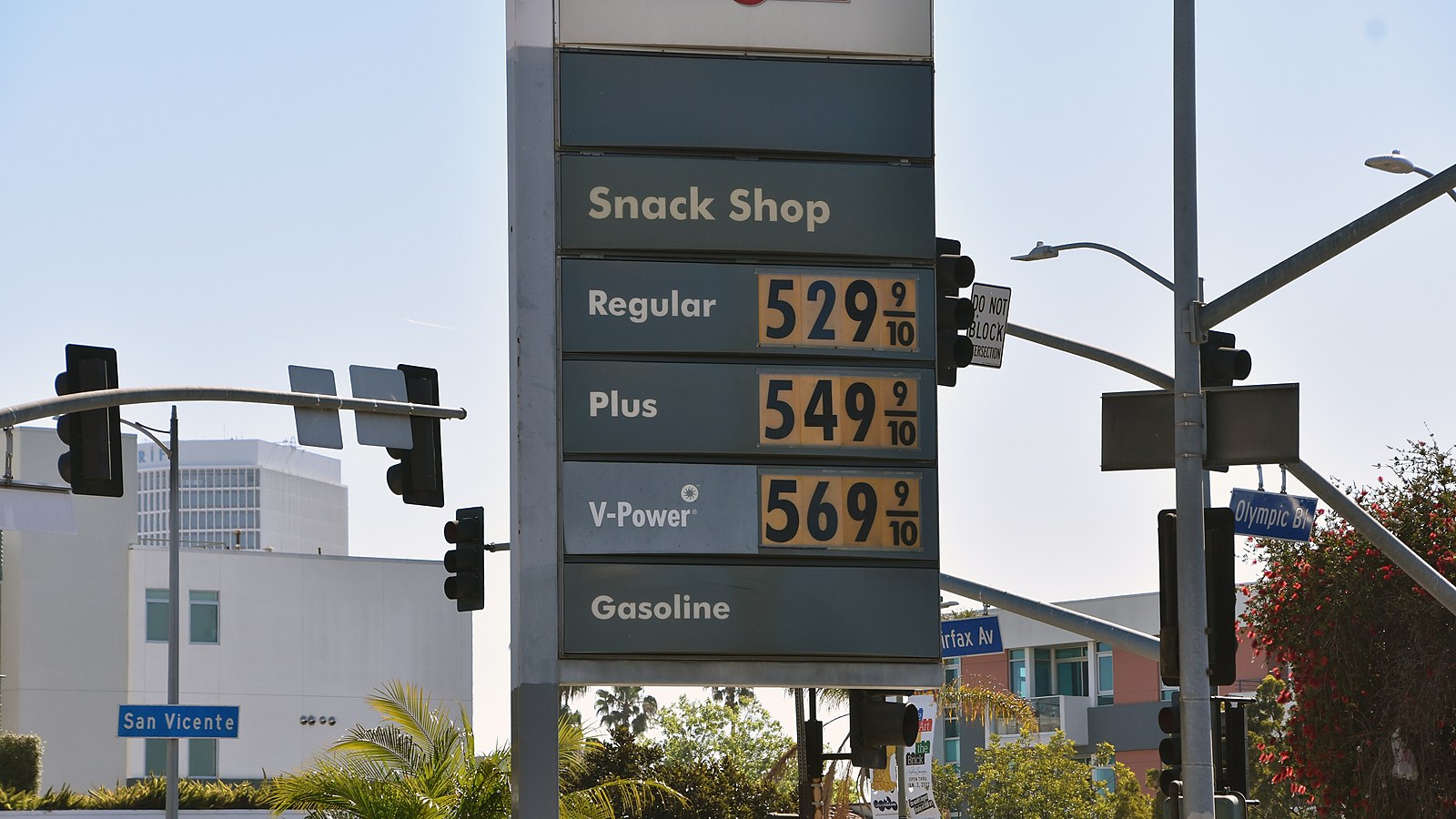
Gasoline prices rose 9.1% in September from August and accounted for more than half of the month's increase in the index, the Labor Department said. Over twelve months, energy prices are up 20.4% and gasoline 34.2%.
The pump price makes the scale concrete. The national average for a gallon of regular stood at $4.33 on Wednesday, according to AAA, compared with $2.98 before the war with Iran began. Diesel averaged $6.29 a gallon after hitting a record high in late September. Prices at the pump have cooled slightly in recent weeks, but they remain far above pre-war levels.
Diesel is the transmission belt. It moves freight, and freight moves groceries, building materials and almost everything else sold in the country. A record diesel price does not stay at the truck stop; it shows up weeks later on store shelves. That is one of the channels by which an energy shock turns into broader inflation — and it is why the core reading, not the headline, is the one to watch.
"Energy prices being so high for so long is starting to seep into the broader economy." — Adam Crisafulli, Vital Knowledge, in a note to clients
Where the core increase came from
Within core, the standout was air travel. Airline fares were up 22.4% from a year earlier — a category that sits inside core inflation but is driven heavily by jet fuel costs. In other words, part of the core acceleration is the energy shock arriving through a side door.
Not all of it, though. Economists also pointed to rising shelter and used car costs, neither of which is a simple fuel story. Shelter is the single largest component of the index and moves slowly; when it turns higher, it tends to stay higher. Used car prices have historically been volatile, but their rise alongside fares and housing suggests price pressure is broadening rather than narrowing.
This is why central banks treat core as the better guide to where inflation is heading. Food and energy prices swing with harvests, weather and wars, and frequently reverse. The rest of the basket — rents, services, insurance, cars, fares — tends to move more slowly and more persistently, because it reflects wages, contracts and pricing decisions that are not revisited every week. When core turns up, it usually takes longer to bring back down.
"The CPI was clearly hot, and there aren't many ways to sugarcoat it," Crisafulli wrote, adding that energy prices may not head lower soon as the wars in the Middle East and Ukraine escalate.
What it means for the Fed
The Federal Reserve raised interest rates in September for the first time since 2023, lifting the federal funds rate to a range of 3.75% to 4%, and officials signalled they expected to raise again before the end of the year. The question after Wednesday is whether the next move comes at the October 27–28 meeting or waits until December 8–9.
Markets moved toward sooner. Futures-implied odds of a quarter-point hike on October 28 rose to roughly 35% from 22.1% a day earlier, according to CME's FedWatch tool, as reported by CNBC. Stephen Brown, chief North America economist at Capital Economics, put the market-implied chance closer to 50%, up from 20% before the data. The measures differ, but they agree on direction.
Further out, the pricing is less ambiguous. FedWatch showed a more than 90% probability of at least one more increase before year end, and a 40% chance that rates finish the year a half-point higher — double the odds of the day before.
"Today's hotter-than-expected CPI report shows that inflation is still well above the Fed's target, and that the current rate-hiking cycle isn't likely to end anytime soon," said David Royal, chief financial and investment officer at Thrivent. Christopher Rupkey, chief economist at Fwdbonds, was blunter: "Inflation is alive and the only way the Warsh Fed knows how to kill it is with another dose of higher rates."
The bond market's reaction
Treasury yields jumped on the release, then reversed. The 10-year yield — the benchmark for mortgages, car loans and credit cards — ended the day down about 2 basis points at 5.19% as stocks sold off and investors rotated back into bonds. The S&P 500 fell more than 1%. The 2-year yield, which tracks expectations for Fed policy most closely, rose to 4.808% after touching its highest level since September 29.
That split is telling. The short end rose because traders expect the Fed to act. The long end eased because a Fed that tightens into an energy shock raises the risk of slowing the economy — and because equities falling sent money looking for safety. A 10-year yield above 5% still means mortgage costs well above what most homeowners locked in during the past decade.
Higher yields bite hardest on the most indebted borrowers, and Wednesday showed it. The same session saw a sharp sell-off in heavily leveraged AI infrastructure companies, with CoreWeave's bonds trading at yields close to 15% and the Nasdaq Composite closing down 1.9%. A rate path that stays higher for longer is a refinancing problem long before it is a recession problem.
The case for patience
There is a reasonable argument that the Fed should wait. A 2.6% core rate is not far above the central bank's 2% target, and core inflation was lower than this for much of the summer. If the war-driven energy shock eases — and pump prices have already cooled slightly from their peak — the pass-through into fares and freight should ease with it. Raising rates into a supply shock risks punishing borrowers for a problem that rates cannot fix: higher interest rates do not reopen a shipping lane.
The counter is that the Fed has seen this film before. An energy shock that lasts long enough changes expectations, and expectations change wage demands and pricing decisions. Fed officials have to judge whether September is the moment the shock started to become persistent. Royal and Rupkey's reading is that it is.
The political backdrop
The data lands three weeks before the November midterm elections. Nine in ten Americans say prices are the most important factor shaping their view of the economy, according to a CBS News poll published earlier this month. A hotter inflation print and the prospect of higher borrowing costs are not news any incumbent wants in the final stretch.
More data arrives Thursday: the producer price index for September, where economists polled by Dow Jones expect a 0.6% monthly rise and 5.5% annual gain, along with retail sales and weekly jobless claims. A PPI near that forecast would confirm that cost pressure is still building in the pipeline.
The durable point is not the 3.7%. It is the 2.6%. Headline inflation will rise and fall with oil and with the war. Core inflation rising alongside it is the evidence that the energy shock has begun to reach the rest of the economy — and that is what the Fed is paid to stop.
This report is based on the Labor Department's September consumer price index release as reported by CBS News and CNBC, fuel price data from AAA, market pricing from CME's FedWatch tool as reported by CNBC, and comments from Vital Knowledge, Thrivent, Capital Economics and Fwdbonds. Market-implied probabilities change continuously and differ by measure. Treasury yields are as of Wednesday's close. Thursday's PPI and retail sales releases may revise the picture.