
Paramount wants 12 states to post a $1.88 billion bond before they can keep blocking its Warner Bros. deal — the meter starts September 30
A clause Paramount agreed to itself will send roughly $7 million a day to Warner Bros. Discovery shareholders for every day the merger stays unclosed. With trial set for March, the company is asking a federal judge to make the attorneys general who sued pay for the delay. California's Rob Bonta calls it desperation.
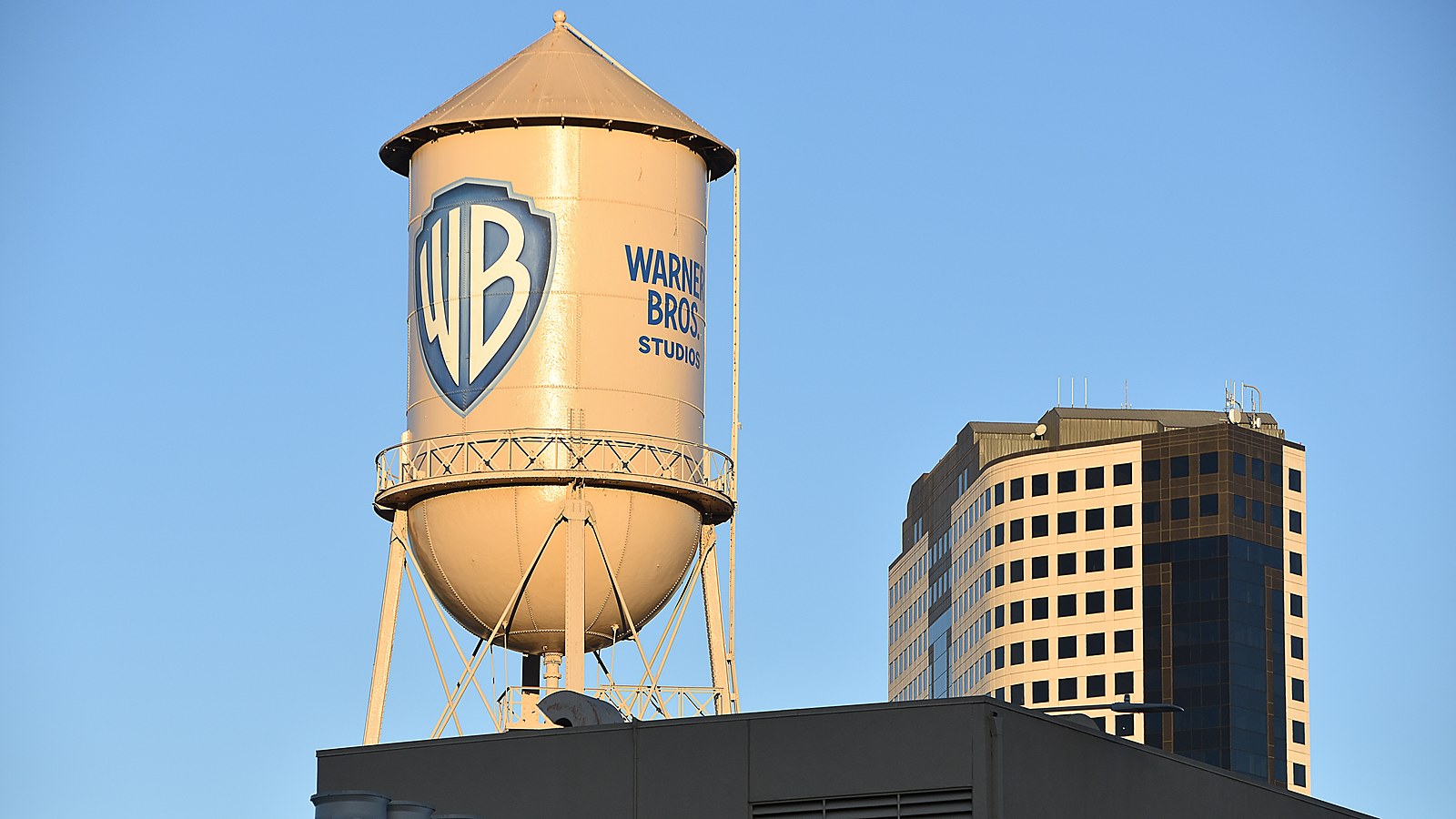
Paramount Skydance has asked a federal court to require the twelve state attorneys general suing to stop its acquisition of Warner Bros. Discovery to put up $1,884,726,092.73 — and to dissolve the order holding the deal if they have not posted it by September 30.
The figure is not rhetorical. It is, by Paramount's own account, arithmetic: "a straightforward calculation of the maximum potential ticking consideration and financing costs from this litigation." The company's filing on Monday argues that federal law entitles it to security when plaintiffs obtain relief that halts a transaction. "Here, every month of delay carries substantial and quantifiable financial consequences," Paramount said.
The response from California Attorney General Rob Bonta's office was shorter. "Paramount went into this process with eyes wide open," a representative said. "They are lying in a bed of their own making." Bonta himself, to CNN: "I mean, honestly, this reeks of desperation."
The clock Paramount built
Both sides are describing the same clause, and the clause is the reason the case has a price tag. Under the merger agreement, Paramount agreed to what dealmakers call a ticking fee: beginning September 30, it owes Warner Bros. Discovery shareholders an additional 25 cents per share per quarter until the transaction closes. That works out to roughly $650 million in cash value every quarter — on the order of $7 million for each day the deal sits unclosed.
Paramount had long planned to be finished by the end of September. Last month it agreed to push the outside date as late as June 2027 so the states' case could be tried. "By the time trial concludes and the parties submit their final briefs, Paramount will have paid Warner Bros. shareholders an unrecoverable $1.3 billion in ticking fees alone," the company told the court, adding that "delay also threatens to nullify the regulatory approvals that Defendants have already spent months securing."
That last point is not trivial. Paramount has cleared the Antitrust Division of the U.S. Justice Department and every other global jurisdiction whose sign-off the deal requires, including Britain's Competition and Markets Authority, which concluded the combination would not substantially harm competition in theatrical film distribution, children's linear channels or subscription streaming there. Approvals expire. A merger that has been cleared everywhere except one federal courtroom in California is, from Paramount's chair, a merger being run out the clock.
The states' answer is that Paramount wrote the clock into its own contract. "Paramount and Warner Bros. are two sophisticated companies who willfully decided to include a costly ticking fee as a provision in their merger contract," Bonta's office said. "They knew this merger would undergo regulatory review; they knew it was not a done deal; and they chose to include it anyway." The statement went further, noting that Paramount stipulated to the very schedule it is now protesting: "they agreed to the dates and did not request a bond as a condition of agreeing not to close until after the trial... Now, they're trying to get a do-over."
The legal question the bond motion raises is narrower than the number suggests, and it is not one that comes up often. Federal courts have discretion to require security from a party that obtains an injunction, and the practical effect of demanding nearly $1.9 billion from state law-enforcement agencies is to price them out of the case: no attorney general's office carries that on a balance sheet. Sovereign plaintiffs enforcing antitrust law are routinely relieved of bond requirements for exactly that reason, which is why Paramount's motion is best read not as a collection effort but as leverage — a way to convert a March trial date into a September deadline for someone.
What the complaint actually says
The suit was filed in July by Bonta and eleven counterparts — Arizona, Colorado, Connecticut, Massachusetts, Minnesota, Nevada, New Jersey, New Mexico, New York, Oregon and Washington — together with the Writers Guild of America. It invokes Section 7 of the Clayton Antitrust Act, the century-old statute barring acquisitions whose effect may be to substantially lessen competition, and it is narrower than the public argument around it suggests.
The states allege the combined company would control close to a third of wide-release film distribution and close to a third of basic cable television programming. That is the whole case. Bonta made the point explicitly on CNBC last Thursday, describing a meeting in which Paramount "wanted to talk about everything except for what this case is about. They want to talk about the streaming market, which we don't allege in our complaint. They want to talk about CNN, which is not a focus of our complaint. They want to talk about the foreign regulators."
He also pre-empted the industry's favorite defense — that pay television is a shrinking business and market share in a dying category is meaningless. "Whether the market is shrinking or growing is really irrelevant," he said, calling the resulting concentration "presumptively illegal" and the case "a straight up, meat-and-potatoes, black-and-white, bread-and-butter, antitrust case."
Paramount has called the suit a "misrepresentation of competition in the entertainment industry today" and says it will "vigorously defend the transaction." Its lead trial counsel, Jeffrey Kessler, has told CNBC the company is prepared to take a prolonged blockade to the Supreme Court. On Paramount's August earnings call, chief executive David Ellison said he was confident the deal would close.
The settlement nobody has ruled out
Between a $7 million-a-day meter and a March trial date sits the obvious alternative, and Bonta did not close the door on it. "Coming to the table has always been on the table," he said. "And if [CEO David] Ellison and Paramount want to come to the table in good faith and talk, we want to talk, too. We're happy to have that conversation... We do prefer to resolve cases in the boardroom instead of the courtroom."
The price of that conversation, he said, would be "robust structural remedies" — antitrust language for selling something real, not promising to behave. Given a complaint built on two specific markets, the shape of any deal is guessable: divestitures in wide-release film distribution, basic cable networks, or both. It is also expensive in exactly the way the ticking fee is expensive, which is presumably why Paramount would rather the states be facing a $1.88 billion bond when the subject comes up.
There is an irony in how the case arrived at this configuration. Had Netflix won the auction it very nearly won, a streaming company with the largest subscriber base in the world would have been buying the same studio and the same library, and the antitrust argument would have been about streaming — the market Bonta says his complaint deliberately does not allege. Because Paramount won instead, the deal is being judged on theatrical distribution and basic cable: two businesses whose long-term direction everyone in the industry agrees is downward, and whose concentration is nonetheless the thing the Clayton Act measures. The states are not required to care that the prize is shrinking, and Bonta has said plainly that they do not.
How it got here
The bond fight is the third act of a pursuit that has already been unusually public. Paramount lost a months-long auction for Warner Bros. Discovery's studio and streaming assets to Netflix, which had agreed to pay $27.75 a share, about $72 billion. In December, Ellison took his offer directly to shareholders in a hostile bid, telling CNBC he intended "to finish what we started." The financing included an irrevocable personal guarantee of $40.4 billion from his father, Oracle founder Larry Ellison, alongside RedBird Capital Partners, and roughly $47 billion of new Class B shares priced at $16.02.
What he won is the largest concentration of American entertainment assets ever assembled in one transaction: the Paramount and Warner Bros. film studios; CBS, MTV and BET alongside CNN and Discovery; and Paramount+ and HBO Max under one roof. It is also, for precisely that reason, the most legally exposed. Every element that made the deal worth $110 billion is an element a Clayton Act plaintiff can point at.
Paramount went into this process with eyes wide open. They are lying in a bed of their own making.
Judge Araceli Martínez-Olguín has set trial for March 2, 2027. Unless the states settle, or a court makes them post a bond larger than most of their litigation budgets combined, Paramount will spend the intervening months paying about $7 million a day for the privilege of waiting — a sum it agreed to, in a contract it drafted, for a deal it has already won everywhere else.
Filing details, the bond amount and quotations from Paramount and the California Attorney General's office are from CNBC's reporting on the August 17 motion and Rob Bonta's August 20 interview with CNBC's David Faber, with additional detail from CNN and Variety. The trial date and case background reflect court filings as reported; the states' allegations are allegations and have not been tested at trial.