
South Africa mass shootings leave 27 dead at a Wedela tavern and a Lwandle shisanyama, days after 11 were killed near Durban, as police weigh illegal mining and business rivalry
Gunmen with rifles killed at least 17 people at a tavern on Johannesburg's West Rand and 10 at a Cape Town eating spot within hours of each other. Police data shows the attacks fit a pattern: the killings that make headlines are clustered in places where informal businesses and criminal economies meet.
The detail that matters most about this weekend's killings in South Africa is not the combined toll of 27. It is that both attacks, at opposite ends of the country, were described by senior police officers in the language of commerce. In Gauteng, the provincial commissioner raised a turf war over illegal gold mining. In the Western Cape, his counterpart spoke of "business jealousy" over where people buy their drinks. These were not random crowds. They were marketplaces.
The first attack began at about 9.30pm on Saturday in Extension 3, Wedela, a township near Carletonville in the West Rand district, southwest of Johannesburg. According to police statements reported by Al Jazeera, IOL and The Citizen, eight men armed with AK-47 rifles and pistols opened fire on patrons drinking outside a tavern, then walked inside and kept shooting. Paramedics declared 13 men and four women dead at the scene, and 15 people with gunshot wounds were taken to hospital.
Gauteng police spokesperson Captain Tintswalo Sibeko said the gunmen searched patrons for cellphones and other valuables before escaping in two vehicles, setting fire to two other cars parked nearby.
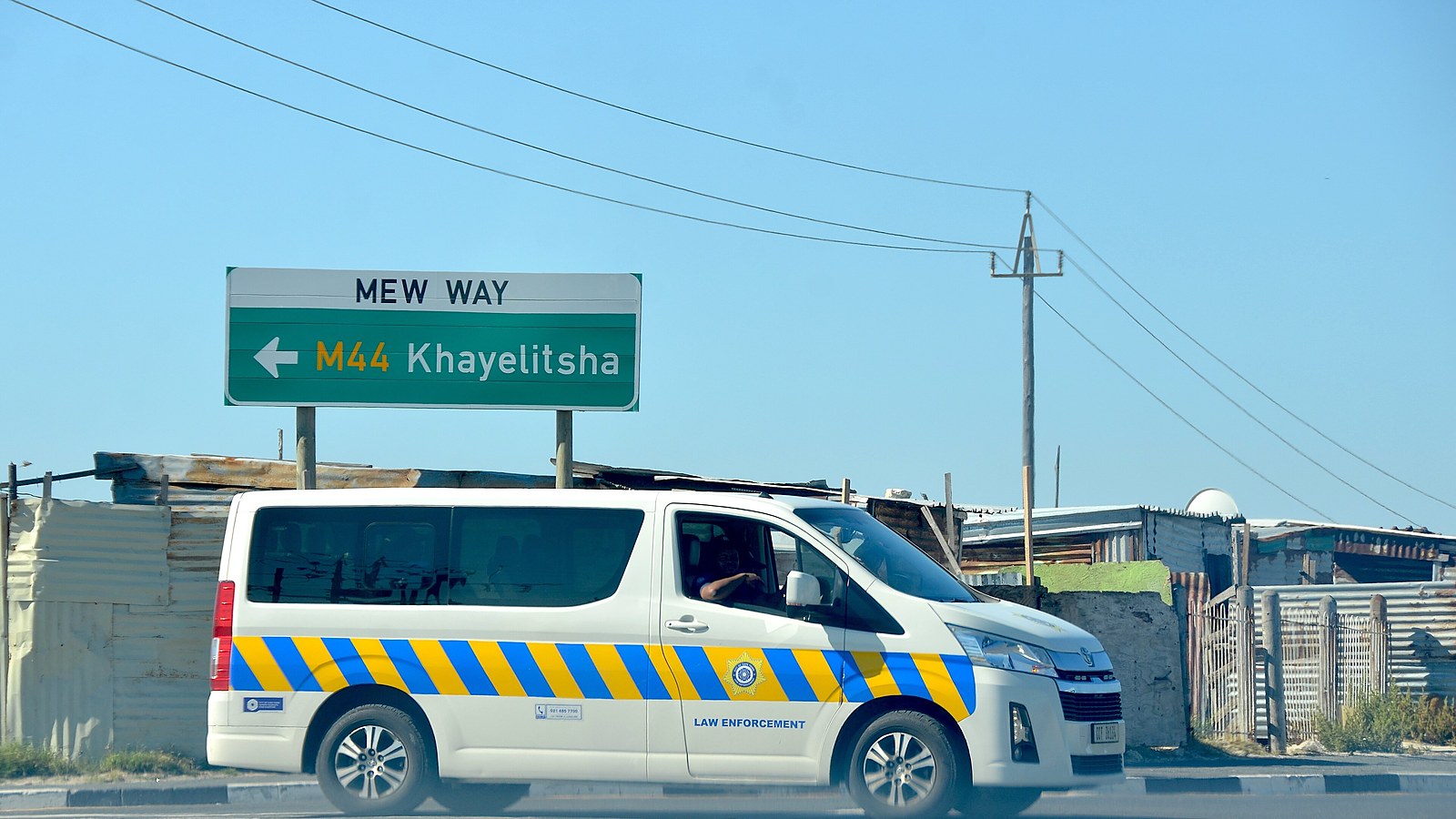
About four hours later, at 1.46am on Sunday, gunmen walked into a shisanyama, an entertainment venue that also sells braaied meat, in Lwandle, a township on the eastern edge of metropolitan Cape Town. Police spokesperson Brigadier Novela Potelwa told IOL that five people died at the scene, five more died in hospital, and 11 were being treated for injuries. As of Sunday, police had made no arrests in either case.
Two motives, one common thread
Gauteng Police Commissioner Lieutenant General Tommy Mthombeni told reporters that robbery was one explanation, because belongings were taken, but that police could not rule out a turf war between illegal mining groups, according to the BBC. ABC News reported that he also said the attack could be retaliation for an earlier shooting at the same tavern about a month ago. He said people from Ethiopia and Lesotho were among the victims, though most were South African. Deputy provincial commissioner Major General Fred Kekana said at the scene that police had clear pictures, and in some cases names, of the suspects, AFP reported.
The West Rand sits on old gold workings, and residents told reporters that illegal miners, known as zama zamas, live in the area where gangs control the illicit trade. The BBC noted that authorities describe these miners as typically undocumented migrants recruited by organised crime groups.
In the Western Cape, Provincial Commissioner Lieutenant General Sizakhele Dyantyi set up a multidisciplinary team led by serious and violent crime detectives. Speaking to reporters, he pointed to a commercial grievance: people were buying alcohol at cheaper outlets and bringing it to drink at the venue, and "business rivalry, business jealousy" may have been the issue, CNN reported, while stressing that the investigation was continuing.
Neither motive has been confirmed. But both point to the same mechanism. A township tavern or shisanyama is a small business with competitors, suppliers and cash, and in some areas it is also the social hub of an underground economy. When a dispute over that business is settled with rifles on a busy Saturday night, the crowd becomes the target and the toll becomes a massacre.
What the police's own data says
South Africa's quarterly crime statistics give this pattern unusual texture, because SAPS publishes breakdowns of multiple-murder cases. In the January to March 2026 report, police recorded 206 multiple-murder dockets with 495 victims in a single quarter. The Western Cape had the most, with 59 dockets and 141 victims, followed by Gauteng with 50 dockets and 135 victims.
The same report lists the circumstances behind every case with five or more victims. One entry, from Philippi East in Cape Town, describes nine people killed in an illegal shebeen in an attack allegedly linked to protection-racket syndicates targeting taverns in the area. That is the extortion version of the business-rivalry theory Dyantyi raised on Sunday, recorded in the government's own statistics months earlier.
The place-of-occurrence tables show why taverns loom larger in public memory than in the totals. From a sample of 4,814 murders that quarter, 160 happened at liquor outlets such as shebeens, taverns, pubs and bottle stores, alongside 343 attempted murders and 4,197 serious assaults. Firearms were the instrument in 2,120 of those murders, about 44 per cent. It also counted 11 murders linked to illicit mining, all in Gauteng.
The latest release, for April to June 2026, recorded 5,427 murders, according to Business Day and Daily Maverick. That works out to roughly 60 killings a day. Daily Maverick reported that firearms accounted for 2,513 of those deaths, nearly half. Acting Police Minister Firoz Cachalia described the violence in terms that fit this weekend closely, according to Jacaranda FM.
"Some kinds of crime are committed by organised, heavily armed criminal groups that operate with some planning, organisation, financing, and a level of sophistication. Gang violence is one example, as well as the violence related to illegal mining, construction mafias, and cartels disturbing the delivery of water." — Acting Police Minister Firoz Cachalia, releasing crime statistics in August
A pattern on the West Rand and beyond
The Wedela attack closely resembles one nine months earlier and a short drive away. Just before 1am on December 21, 2025, about 12 gunmen in a minibus and a sedan opened fire on patrons at the KwaNoxolo tavern in Bekkersdal, also on the West Rand, killing nine people, according to police statements reported by the Associated Press and Al Jazeera. Kekana, then acting provincial commissioner, said the attackers searched people after shooting them and took their phones.
The list stretches back further. On July 9, 2022, gunmen killed 16 people at a tavern in Soweto, and on the same day four people were killed in a bar shooting in Pietermaritzburg in KwaZulu-Natal, according to AP. In Lusikisiki in the Eastern Cape, 18 people were killed outside two homes in September 2024, and one suspect was later charged with 18 counts of murder and possessing an unlicensed AK-47. In June 2026, CNN reported, 12 people were killed in an informal settlement in Cleveland, Johannesburg.
This weekend's killings also came just four days after three gunmen entered a house in KwaMakhutha, south of Durban, on Tuesday night and killed 11 people at a party, including a woman believed to be pregnant. Police said some of those victims had previously come to the attention of Crime Intelligence over alleged illegal activities and that a feud between rival groups could not be ruled out, CNN reported.
What links most of these cases is the weapon, more than the setting. Police descriptions again and again name the AK-47, an assault rifle, alongside pistols. That points to armed groups with access to military-grade weapons rather than a household handgun used in a quarrel, and it is a large part of why the tolls are so high. SAPS opened 3,759 cases of illegal possession of firearms and ammunition in the first quarter of 2026 alone.
The case that things are improving
There is a serious counter-argument to the sense of a country spiralling. Murder has fallen year on year for several consecutive quarters: the January to March figure of 5,181 was 9.5 per cent lower than a year earlier, and April to June was down 5.9 per cent. Researcher David Bruce of the Institute for Security Studies told Daily Maverick that annual murders have fallen by roughly 16 per cent since the 2023/24 police year. Soldiers moved into violence hotspots in Johannesburg in March to support police, CBS News reported, and the government has named 140 high-crime police stations for targeted work.
Mass shootings are also, statistically, a small share of the problem. Of the 206 multiple-murder dockets in the first quarter, 159 involved two victims. Most victims die one or two at a time, and attacks like Wedela and Lwandle, however horrific, do not drive the national rate.
But the improving averages carry their own warnings. Attempted murder rose 8.7 per cent in April to June, according to Business Day, which suggests the shooting has not stopped even where deaths have fallen. Bruce also noted that murders usually peak in the months before the festive season, the stretch now beginning. Criminologist John Alexander told Daily Maverick that one "murder" category lumps together gang killings and domestic disputes that need very different responses.
What the weekend shows
That criticism explains why this weekend matters beyond its toll. A national murder rate that falls on average can hide specific criminal markets, such as illegal mining turf, liquor-trade rivalry and tavern extortion, that are becoming more heavily armed and more willing to kill crowds. President Cyril Ramaphosa said that police had photographs of the suspects and that "this cannot go on like this", ABC News reported.
The lasting lesson of Wedela and Lwandle is that South Africa's worst massacres are not random. They follow money that moves through the townships' informal businesses. Policing that treats the tavern as just a crime scene, rather than as a contested market with owners, rivals and armed enforcers, will keep arriving after the shooting has stopped.
This analysis draws on police statements as reported by the BBC, Al Jazeera and AFP, CNN, CBS News, ABC News (Australia), IOL, The Citizen and Cape Town Etc; on the SAPS Police Recorded Crime Statistics for January to March 2026 (primary document); and on Business Day, Daily Maverick and Jacaranda FM coverage of the April to June 2026 figures. Tolls are at least 17 in Wedela and at least 10 in Lwandle, according to police as of Sunday, and may rise. Motives are lines of inquiry named by police, not findings, and no arrests had been announced. The precedent tolls come from contemporaneous AP, Al Jazeera and CNN reporting and the Wikipedia entries on the Soweto and Lusikisiki shootings.