
Stephen Miller will replace Susie Wiles as White House chief of staff on Monday, three days after Democrats won the House and Senate
President Trump answered a midterm rout by promoting the architect of his deportation drive to the most powerful unelected job in Washington. The move tells an incoming Democratic Congress what the last two years will look like — and turns the president's own gatekeeper into a likely target of oversight.
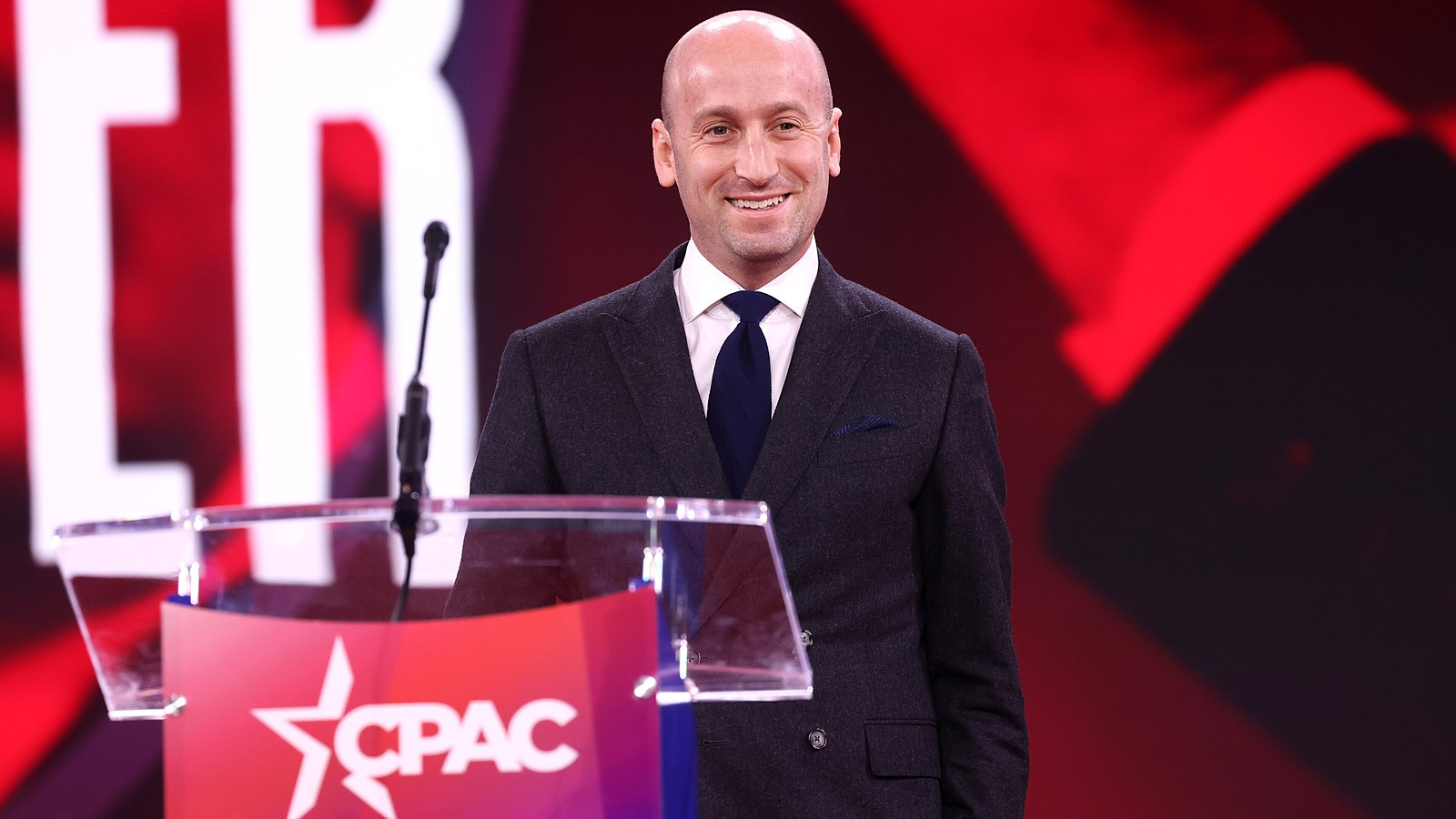
Presidents who lose a midterm usually reach for someone who can talk to the other side. Donald Trump, three days after Democrats took both chambers of Congress, reached for the aide Democrats most want to put under oath. On Friday he announced on Truth Social that Stephen Miller, his deputy chief of staff and the author of his mass-deportation program, will become White House chief of staff starting Monday, November 9, replacing Susie Wiles.
Trump called Miller "one of my most trusted advisors" and said Wiles, "who has done an outstanding job, will be moving over to the Trump Political Operation." Asked about the change outside the White House, he offered little explanation beyond the decision itself. "I wanted to make a change," he told reporters, according to CBS News and CNBC, adding that "sometimes in life you have to make moves."
The scale of the defeat frames everything else. As of Friday, according to Al Jazeera, Democrats had netted seven Senate seats with Alaska and Mississippi still counting, and had won 253 of the 435 House seats with 27 races outstanding. Al Jazeera described the vote as widely viewed as a referendum on the president. The new majorities are sworn in in January, which gives Miller roughly two months in the job before the subpoena power changes hands.
How Wiles left
The accounts of Wiles's exit agree on the sequence and differ on the tone. A White House official told The Hill she submitted her resignation on Thursday night; Al Jazeera reported she handed it to Trump in the Oval Office. CBS News, citing three sources familiar with the matter, said the resignation was tied to the midterm losses, and that Wiles had intended to stay through the lame-duck session and leave around the turn of the year before the president accelerated her departure.
CNBC, citing a report by MS NOW, said Trump was angry with Wiles after the results and that she told him she would make it easy and resign. Those characterisations rest on anonymous sourcing and have not been confirmed on the record. What is on the record is Wiles's own post on X: "Today is my last day as White House Chief of Staff," she wrote, adding that while her role might be changing, her commitment to the president and the mission never would.
Only three weeks earlier the president had said the opposite in public. On October 16, speaking to reporters on the South Lawn a day after Politico reported he had been sounding out possible successors, Trump said there was "zero chance" he would replace Wiles and that she would be there for a long time. The reversal is a reminder that in this White House a public vote of confidence is a statement about the moment, not a commitment about the future.
What Wiles built, and what Miller inherits
Wiles was the first woman to serve as White House chief of staff, a point NPR and former press secretary Karoline Leavitt both noted on Friday. She ran Trump's 2024 campaign and held the job from his first day back in office. NPR reported that she built a reputation as a strict manager who cut the staff turnover and the volume of leaks that defined Trump's first term, and that she served through a breast cancer diagnosis earlier this year before being declared cancer free this fall.
That record matters because the first term is the comparison everyone in Washington reaches for. Reince Priebus, Trump's first chief of staff, lasted 189 days in 2017, which CNN described at the time as the shortest tenure of the modern era. John Kelly followed, and Mulvaney served as acting chief after him. Wiles's run of nearly two years, without the public infighting of 2017 and 2018, was the main evidence that the second administration had learned to run itself differently.
Miller is a different kind of chief. He came to Trump's 2016 campaign from the office of then-Senator Jeff Sessions, according to The Hill, and has been in the president's circle ever since, as speechwriter, policy adviser and most recently deputy chief of staff and homeland security adviser. NPR noted that his portfolio has extended to advising on military operations in the Middle East, and that he is known for his rhetorical pugnacity rather than for managing large organisations.
"The chief of staff is a very important gatekeeper of the president's time, and of their information and the people that are going in to see the president." — David Cohen, University of Akron political scientist, to NPR
Why the gatekeeper job is the point
The chief of staff is not confirmed by the Senate, so the new Democratic majority cannot block the appointment. But the position is not a policy job in the narrow sense. It decides who gets into the Oval Office, which memos reach the president's desk and in what order, and who speaks last before a decision. Cohen told NPR the chief is supposed to act as a neutral broker who makes sure all voices are heard, and that the chief is often the last person talking to the president.
That is the mechanism that makes this appointment more consequential than a title change. As deputy, Miller was one powerful voice among several. As chief, he controls the process by which the other voices reach Trump. NPR concluded that he is likely to exercise even greater influence over the president's time and attention. For a White House that has to decide whether to bargain with a hostile Congress or govern around it, the person running that process is the decision.
Trump had sounded open to bargaining. On Tuesday, election day, he told Fox News that he could work with Democrats on immigration, The Hill reported, calling it a big deal and saying he had always felt the two sides should be able to work on it. Elevating the official most closely identified with the deportation program cuts against that, and CBS News characterised the move as a doubling down on his approach to governing despite voters' rejection of it on Tuesday.
How Democrats and Republicans reacted
The reaction from the incoming majorities was immediate and unusually personal. House Democratic leader Hakeem Jeffries, widely expected to become speaker, called Miller a dangerous xenophobe and reckless extremist and told Trump to fire him. Senate Democratic leader Chuck Schumer said the president had learned nothing from his defeat and that Democratic majorities would fight Miller every step of the way.
"Oversight Democrats will continue to investigate Miller for his misconduct, and we will fight against his hateful policies in Congress and the courts." — Rep. Robert Garcia, in line to chair the House Oversight Committee, in statements reported by CBS News and Al Jazeera
Republicans largely closed ranks. Vice President JD Vance said Miller would do great things, Defense Secretary Pete Hegseth posted his congratulations, and Trump's political operation posted a photo of Miller captioned "It's Miller time." There was dissent, too. Senator Thom Tillis of North Carolina had already said in March, on CNN, that Miller was "a big problem in this administration" and should leave it — a view he has not publicly retracted.
The precedents, and the counter-argument
There is precedent for a post-midterm reshuffle, though not for this direction. After Democrats won the House in 2018, Trump announced on December 8 that Kelly would leave by the end of the year and named Mulvaney acting chief a week later. In February 1987, as the Iran-contra affair engulfed his White House, Ronald Reagan replaced Donald Regan with Howard Baker, a former Senate majority leader. In both cases the incoming chief was a creature of Congress; Miller's background is in the movement, not the institution.
The case for the move, as the president's allies make it, is that a lame-duck president facing two years of investigations needs a chief who knows the agenda intimately and will not flinch. Communications director Steven Cheung said there was no bigger advocate for the Trump agenda than Miller. On that reading, a conciliatory chief would buy little: Democrats were going to investigate immigration enforcement regardless, and a negotiator would simply mean fewer of the president's priorities survive.
The weakness of that argument is the one the election itself exposed. NPR reported that data showed voters backed Democrats this week partly because of the administration's aggressive immigration enforcement. Putting the chief architect of that policy in charge of the president's schedule does not just signal defiance to Congress; it also places him at the centre of the oversight Democrats have promised, where every hearing about deportations becomes a hearing about the chief of staff.
The durable point is about structure rather than personality. A White House chief of staff is usually the person who translates the president's will into something the rest of government, including Congress, can work with. By choosing Miller, Trump has decided that for his final two years the translator should be the most committed believer in the original text, and the incoming Democratic majorities will now have to decide how much of their oversight time to spend on him.
This analysis is based on reporting by CNBC, CBS News, NPR, The Hill and Al Jazeera published on November 6, 2026, together with the public posts by President Trump, Stephen Miller and Susie Wiles quoted in that coverage. Accounts of why Wiles resigned, and of the president's mood after the midterms, rest on anonymous sources and have not been confirmed on the record. Midterm seat totals were provisional as of Friday, with several House races and the Alaska and Mississippi Senate contests still being counted. Historical tenure figures come from contemporaneous reporting by CNN and others.