
Supreme Court hears Suncor v. Boulder, the climate case that could end dozens of lawsuits against Exxon and Big Oil — with Alito recused and a 4-4 tie possible
Boulder, Colorado, wants Exxon Mobil and Suncor to pay for wildfire, heat and flood costs it blames on decades of deception. The companies say only Washington can govern a global problem. Eight justices heard the first case of the term on Monday; the answer will shape more than two dozen similar suits.
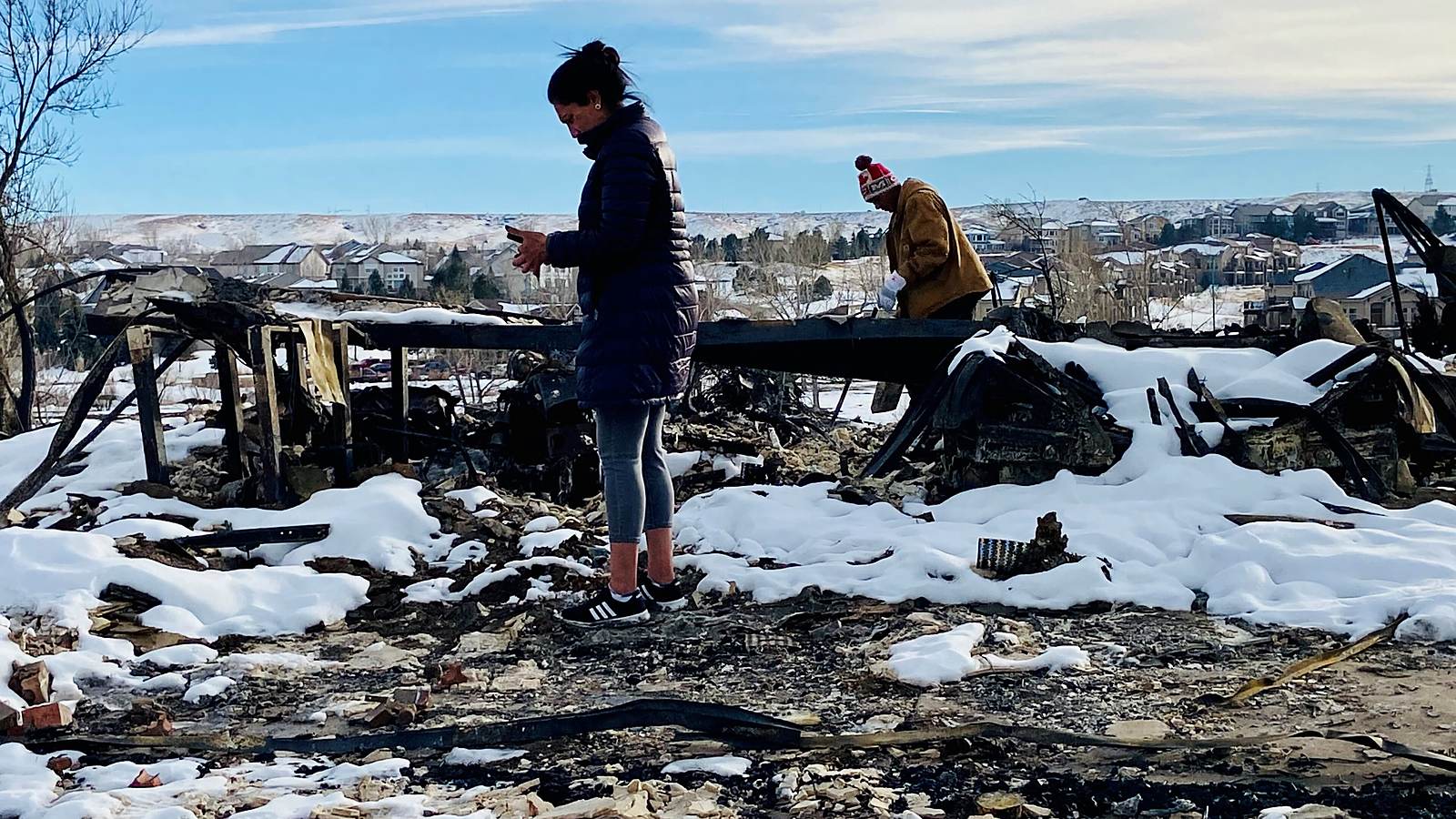
The most important fact about the Supreme Court's first case of the new term is that Boulder has not won anything yet. The city and county's lawsuit against Exxon Mobil and Suncor Energy, filed in April 2018, has never been tried. No jury has heard evidence, and no court has decided whether the companies misled anyone. What the justices heard on Monday is a far more basic question — whether a lawsuit like this is allowed to exist at all. The answer will decide the fate not only of Boulder's case but of dozens of others filed by states and cities across the country.
The case, Suncor Energy (U.S.A.) Inc. v. County Commissioners of Boulder County, asks whether federal law — the Constitution, the Clean Air Act, or both — bars state-law claims seeking money for local harms blamed on global greenhouse-gas emissions. Only eight justices are hearing it. The court told the parties a week before argument that Justice Samuel Alito would not participate; he later told Bloomberg News it was "prudent" to step aside given his holdings in energy stocks, though neither company is among them. A 4-4 split would leave in place the Colorado Supreme Court's ruling that the suit can proceed, without setting any national precedent.
What Boulder is actually suing over
Boulder's complaint brings six claims under Colorado law: public and private nuisance, trespass, unjust enrichment, civil conspiracy and violation of the state Consumer Protection Act. Its theory is that Exxon and Suncor — a Canadian company that operates refineries in Colorado — knew for decades that their products would heat the planet, concealed it, and marketed fossil fuels in ways that inflated demand. The city and county say that has left them paying for extreme heat, drought, larger and more frequent wildfires and damage to ecosystems. CNN reports they are seeking billions of dollars in damages.
The lawsuit's backdrop became painfully concrete on December 30, 2021, when the Marshall Fire swept through Superior, Louisville and unincorporated Boulder County, destroying more than 1,100 homes. Colorado has had another summer of extreme heat, drought and fires this year. Boulder stresses that it is not trying to cap anyone's emissions or stop oil production. It wants the companies to pay what it calls their fair share of costs that local taxpayers would otherwise bear alone.
"This litigation is not an attempt to solve climate change; it merely asks that petitioners bear their fair share of local costs incurred in part because of their tortious conduct." — Boulder's brief to the Supreme Court
Eight years of fighting about where to fight
The case's long route to Washington explains why Monday's argument matters so much. For years the oil industry tried to move climate suits like Boulder's out of state courts and into federal ones, where a 2011 Supreme Court ruling, American Electric Power v. Connecticut, had already held that the Clean Air Act displaced federal common-law nuisance claims over emissions. That strategy failed. According to the Congressional Research Service, every federal appeals court to consider the question — eight circuits in all — sent the cases back to state court, and the Supreme Court turned down at least eight petitions to intervene.
Back in state court, the companies argued the claims were preempted by federal law. Some judges agreed. Boulder's trial court did not, and in May 2025 the Colorado Supreme Court, by five votes to two, ruled that federal law did not preempt the claims. Suncor and Exxon appealed, the Trump administration's Justice Department filed an unsolicited brief backing them — reversing the position the previous administration took in a similar case — and the justices agreed in February to hear it. They also asked both sides to address whether the court even has jurisdiction yet, given that the case is at such an early stage.
The companies' case: a global problem needs one rule
Exxon and Suncor make two main arguments. The broader one is constitutional: air and water cross borders, so a state that imposes liability for worldwide emissions is regulating beyond its territory. "By joining the Union, the States surrendered their right to resolve those conflicts by resorting to their own law in lieu of a neutral, uniform federal law," their lawyers wrote. The narrower argument is that the Clean Air Act governs interstate air pollution and leaves no room for state tort law. If Colorado's ruling stands, they warn, every state, every city and even individuals could set "countless, conflicting climate policies for the Nation".
The administration adds a foreign-policy layer, arguing that suits targeting emissions abroad invite "needless diplomatic friction". West Virginia and 25 other states back the companies. "It's a national problem, so it requires a national solution," said Michael Williams, West Virginia's solicitor general, who called Alito's recusal unwelcome news for his side. The companies describe the cases as an attempt to impose an enormous de facto carbon tax that could bankrupt the industry.
Boulder's case: no law says otherwise
Boulder's answer is aimed squarely at the court's textualist majority. Preemption, it argues, has to come from the words of the Constitution or a statute, and none bars its claims. The Clean Air Act regulates emissions; Boulder says it is suing over deceptive marketing and sales, which the act does not touch. "Avoiding liability would not require reducing emissions at all — only telling the truth," its lawyers wrote. State courts, they note, routinely hear product-liability and consumer-deception cases whose effects cross state lines.
That argument puts unusual attention on Justices Clarence Thomas and Neil Gorsuch, conservatives who have long resisted letting vague federal interests override state law. In April, Thomas wrote a 6-3 majority opinion allowing an injured Army specialist to sue a military contractor under state law, declaring that "there is no federal preemption in vacuo, without a constitutional text or a federal statute to assert it". Boulder cites that case four times in its latest brief, CNN reported. Gorsuch wrote in a 2019 uranium-mining case that "invoking some brooding federal interest" should never be enough to win preemption.
Jonathan Adler, a William & Mary law professor who filed a brief supporting Boulder, made the institutional point: Congress could restrict these suits, as it shielded gun makers from certain liability in 2005. Bills titled the Stop Climate Shakedowns Act, introduced in both chambers in April, would do exactly that. "That's a job for the legislature, not a job for the courts," Adler said.
Supporters of the suits make the opposite case. Corey Riday-White, legal director at the Center for Climate Integrity, told NPR the case is about whether corporations are held to the same standards as everyone else: "If you know you are going to cause harm, and you don't tell someone, then you should help clean up that harm." Critics are blunter. Todd Zywicki, a George Mason University law professor, framed it as whether "a bunch of rich hippies in Boulder County" may dictate energy policy to the rest of the world.
Why it reaches beyond climate
The stakes extend well past fossil fuels. Deepak Gupta, an appellate lawyer who regularly argues before the court, noted that litigation over forever chemicals, opioids and nuisance claims against AI data centres all turn on the same question: when can a state court make a company pay for local harm caused by conduct that spans the country? A broad ruling for the companies on constitutional grounds could narrow that space far beyond climate. A ruling on the Clean Air Act alone would be more contained.
The case for the companies' caution
The industry's warning is not frivolous. Greenhouse gases from every source on Earth mix in the same atmosphere, and no court can trace a Boulder wildfire to a particular barrel of Exxon oil. If dozens of state juries each assign their own share of liability, companies could face overlapping, inconsistent judgments for the same emissions — the kind of patchwork federal law usually exists to prevent. Even Adler cautioned that a win for Boulder would only mean it gets to make its case, and that what it can pursue "might well be narrowed significantly".
The court also has an exit. It could decide it lacks jurisdiction because there is no final judgment, sending the case back to Colorado and very likely returning to Washington in a few years. A decision of any kind is expected by the summer of 2027. Whatever the eight justices do, the durable point of Monday is that the question has moved from where these suits may be heard to whether they may be heard at all — and that is a question only the Supreme Court, or Congress, can finally answer.
This analysis is based on the parties' Supreme Court filings as quoted by CBS News, CNN, NBC News and NPR, a September 30 Congressional Research Service report on the case, and statements from the City of Boulder, as of Monday, October 5. It was written as oral argument took place and does not characterise the justices' questioning. Boulder's allegations have not been tested at trial and are denied by Exxon Mobil and Suncor. A decision is expected by summer 2027.