
Big Tech's AI bill reaches $730 billion this year — even as its own platforms build shovels for the slop
Four companies will spend more on AI infrastructure in 2026 than most countries spend on everything. Alphabet just went cash-flow negative for the first time in 22 years, Zuckerberg published a 6,500-word manifesto to justify the bet, and LinkedIn added a button that says 'Seems like AI slop.' All of these facts are related.
Somewhere in the past year, the artificial-intelligence buildout stopped being a line item and became the line item. Combined capital spending by Microsoft, Alphabet, Amazon and Meta is set to surpass $730 billion in 2026 — a figure that varies a little by who is counting, with credible tallies clustering between $720 billion and $760 billion, but whose direction nobody disputes: it is up roughly 77 percent from about $410 billion last year, and analysts already see the total crossing $1 trillion in 2027.
The individual numbers have outgrown most national budgets. Amazon leads at roughly $200 billion projected for the year. Microsoft is near $190 billion — including about $25 billion it attributes simply to higher component prices. Alphabet has raised its full-year guidance three times, to as much as $205 billion. Meta, at up to $145 billion, has roughly doubled its 2025 outlay.
Amazon's free cash flow is projected to turn negative this year under the load, and none of the four has signaled a ceiling. Big Tech has told investors, in near-identical language across four earnings calls, that the constraint on AI revenue is capacity — and that the answer to capacity is more concrete, more turbines and more chips.
The quarter the market flinched
For three years, investors waved the spending through. Late July was the first time they visibly balked. Alphabet's second-quarter capital spending hit $44.9 billion — roughly double a year earlier and, for the first time in 22 years as a public company, more than its operations generated in cash: free cash flow came in around negative $5.9 billion. The stock fell about 7 percent the next day and dragged the Magnificent Seven down almost 5 percent with it. Meta beat on revenue — $60.8 billion, up 28 percent — but missed badly on earnings as infrastructure costs squeezed margins. Only Microsoft escaped clean, with Azure growing 43 percent past $100 billion in annual revenue and its shares rising 7 percent after hours.
The math behind the flinch is simple and getting harder to ignore: Reuters calculated in late July that the big five spenders are on pace for capital expenditure to overtake free cash flow entirely by 2027. Alphabet's CFO, Anat Ashkenazi, told investors 2027 spending will "increase significantly" and "continue to put pressure" on profits. The companies are, in effect, converting the most profitable business models ever devised into construction firms — on the thesis that the buildings will think.
A manifesto for the bill
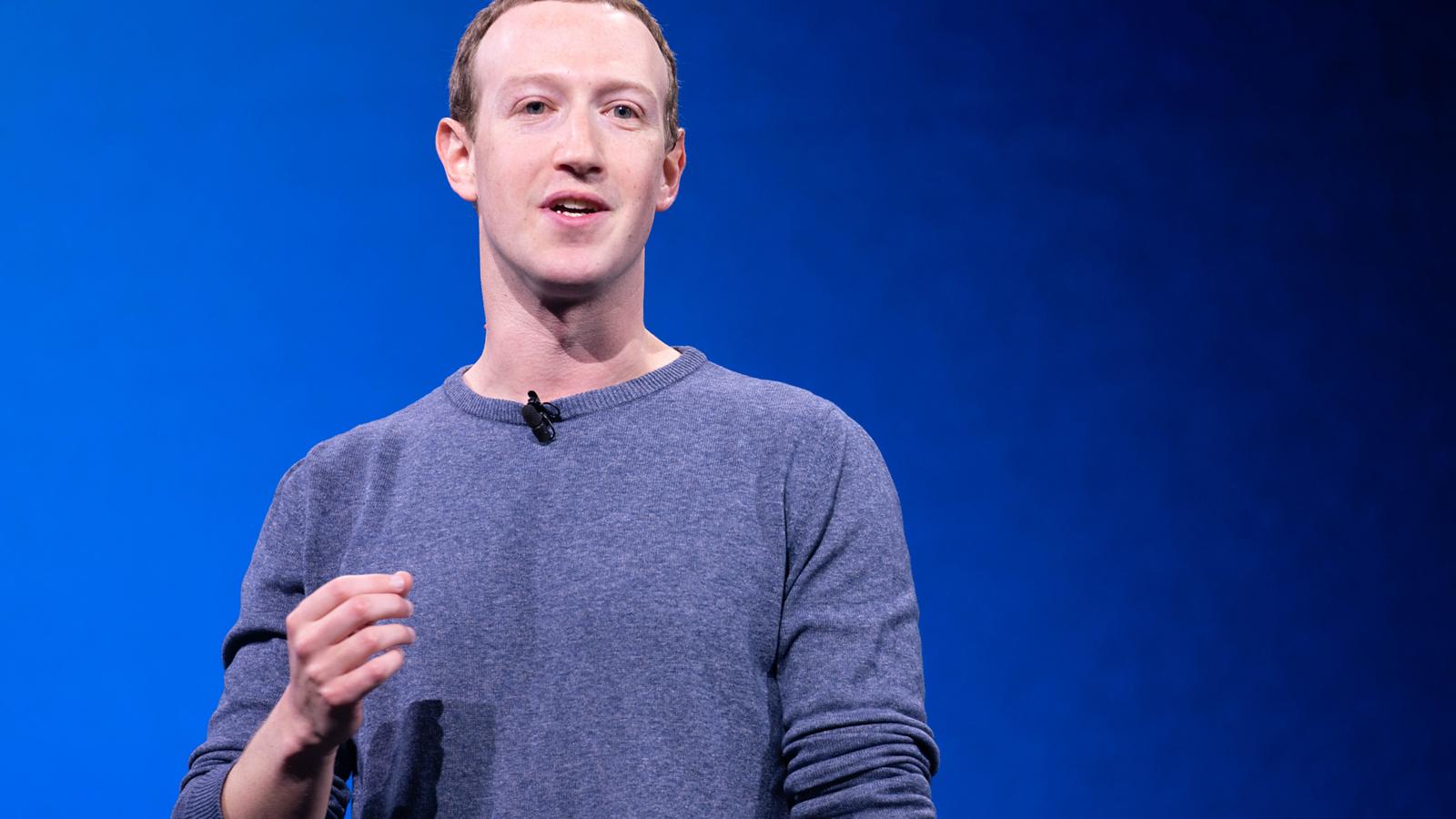
Into this moment, on August 10, Mark Zuckerberg published "The Future is for Everyone" — a roughly 6,500-word essay arguing that the central risk of AI is not the technology but the concentration of control over it, and that the safest path through the transition to superintelligence is distributing it as widely as possible: "personal superintelligence" for every individual rather than power held by a few labs and governments. "Everyone will have a personalized tutor and coach with a PhD in every subject and unlimited patience," he wrote, promising free or affordable AI tutors, coaches and even lawyers.
The essay came with receipts — two model releases including the open-source Glimmer, a $1 billion fund for communities near Meta's data centers, a jobs-training program, new board oversight of model-release safety — and with an unmistakable subtext: it is the ideological case for the $145 billion. The reception was rough. TechCrunch's assessment ran under the headline "Mark Zuckerberg's AI manifesto is exactly why people don't like AI," faulting it for never acknowledging harms the way rival lab chiefs have. Even Meta's own CTO, Andrew Bosworth, undercut the leisure-utopia pitch at an internal Q&A, hoping people would use their liberated time to "do even more and cooler stuff" — inside Meta's products.
The slop problem
Meanwhile, the same industry has spent the summer building tools to manage what the boom produces. LinkedIn changed its feed algorithm in May to suppress low-quality AI posts and automation, added a user-report button that literally reads "Seems like AI slop" in July, and says it has blocked billions of automated comment attempts in recent months — it even replaced its AI "enhance your post" writing tool with a mere proofreader. Snapchat updated Spotlight so it will not recommend wholly AI-generated videos. None of the platforms ban AI content outright; all of them are trying to strain the anonymous, mass-produced volume out of what people actually see.
The crackdown is broader than two platforms — Google, YouTube and TikTok have all tightened rules this year against anonymous mass-produced AI volume while protecting human-anchored work that uses AI as a tool. The through-line is hard to miss: the companies selling the shovels are also panning the river, and they have concluded the sediment is a product problem. A TechCrunch follow-up caught the public mood in a headline — "Why people aren't buying Mark Zuckerberg's AI future" — noting, among other objections, that the open-source Glimmer model requires hardware most users don't own.
For this not to be a bubble by definition, it requires that the benefits of this are much more evenly spread.
That is Microsoft's Satya Nadella — the biggest spender's CEO, offering the most hedged defense of the boom on record. The bears are less delicate. Ray Dalio called AI "in the early stages of a bubble" in January. BCA Research's Juan Correa argues there isn't one AI bubble but a "rolling sequence of bubbles," telling Fortune this month: "We suspect that we could be in the early innings of a violent blow-off rally in AI-related stocks." The concentration statistics do the bears' work for them: the top 10 stocks now make up about 35 percent of the S&P 500, versus roughly 25 percent at the dot-com peak.
The referendum on Wednesday
All of which converges on a single earnings call: Nvidia reports second-quarter results Wednesday, August 26 — the same week as the Jackson Hole symposium — in what amounts to a quarterly referendum on whether the $730 billion is buying something real. Jensen Huang's position is unchanged and unbothered: $700 billion is "just the start," he said this year, backing roughly $1 trillion in revenue from his Blackwell and Rubin chip generations through 2027. "This new way of doing computing is not going to go back."
He is almost certainly right about the direction and possibly wrong about the pace, and the gap between those two is where the next year of markets lives. The 2026 buildout is history's largest capital deployment on an unproven timeline: the companies are spending like the future is certain while behaving — via slop filters, safety boards and Nadella's carefully lawyered "evenly spread" — like it isn't. Both behaviors are rational. Only one of them shows up in the capex guidance.
Spending figures are company guidance and reported results as of the July-August 2026 earnings cycle; the $730 billion total is NBC News' arithmetic from the four companies' guidance midpoints, and other credible tallies range from roughly $720 billion to $760 billion depending on methodology.