
Pfizer is cutting $7.7 billion of costs against a $17 billion patent cliff — and paid $10 billion for an obesity drug that is still in trials
Pfizer's non-Covid business grew 18 per cent operationally last quarter and the shares rose 7 per cent. It still expects 2026 revenue to fall, earnings to fall, and $17 billion of sales to be exposed to expiring patents in 2026 and 2028. Its answer is the obesity market, bought rather than discovered. An analysis of a company spending its way out of a cliff it has known about for years.
Every figure in this article is drawn from Pfizer's second-quarter 2026 results, published 4 August 2026, its 2026 guidance and SEC filings, or from CNBC and Pharmaceutical Technology as attributed. Sections marked as analysis are identified as such.
Pfizer's second quarter was better than expected. Non-Covid revenue grew 18 per cent operationally, led by the anticoagulant Eliquis and the oncology portfolio; the company beat estimates and raised the bottom of its revenue guidance. The shares rose almost 7 per cent.
None of that changes the shape of the problem. Pfizer expects 2026 revenue of $60.5 to $62.5 billion, against $62.6 billion in 2025 — a year of decline — and adjusted earnings of $2.80 to $3.00 a share against $3.22. The company is shrinking on purpose while it rebuilds.
The cliff
Pfizer has disclosed that roughly $17 billion of revenue is exposed to patent and regulatory exclusivity expirations, concentrated in 2026 and 2028. That is more than a quarter of the company. Separately, Eliquis — among its largest products — faces lower Medicare prices from next year under the drug-pricing negotiations established by the Inflation Reduction Act.
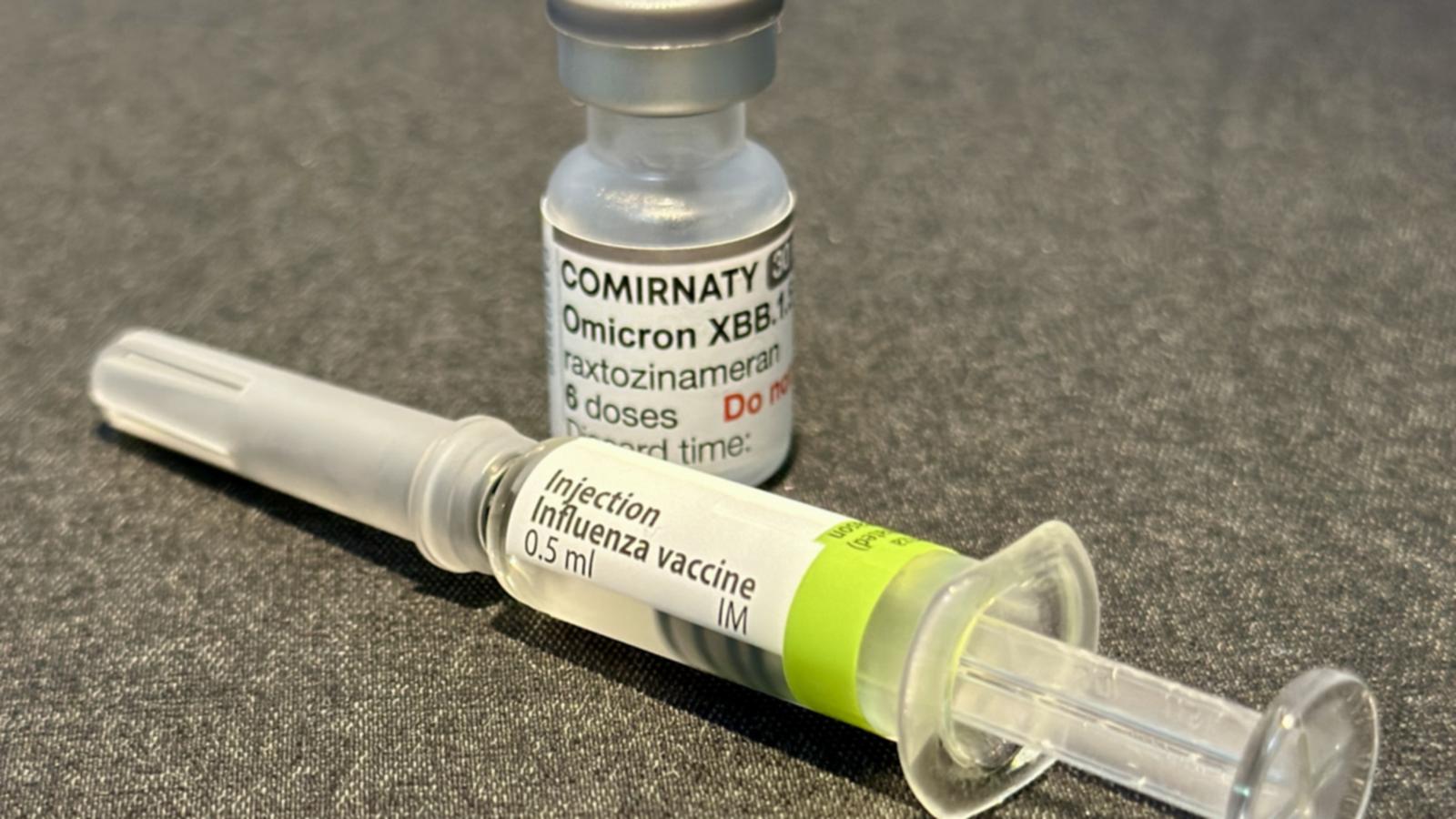
This is the ordinary arithmetic of the pharmaceutical industry, and it is not a surprise to anyone at Pfizer; patent expiry dates are known two decades in advance. What makes this particular cliff difficult is what preceded it. The Covid years gave Pfizer an extraordinary and temporary revenue base — Comirnaty and Paxlovid together produced sums no vaccine and antiviral franchise had approached — and the decline from that peak is running concurrently with the patent expiries rather than after them.
The pandemic windfall also left a habit behind. Pfizer spent much of 2022 and 2023 deploying that cash into acquisitions at valuations set during the boom, of which Seagen at roughly $43 billion was by far the largest. Those deals are now being judged in a much colder market, and the interest cost of the debt raised to fund them arrives every quarter regardless of how the pipeline performs.
| Pfizer 2026 | Value | Comparison |
|---|---|---|
| Revenue guidance | $60.5–62.5bn | vs $62.6bn in 2025 |
| Adjusted EPS guidance | $2.80–3.00 | vs $3.22 in 2025 |
| Revenue exposed to patent expiry | ~$17bn | 2026 and 2028 |
| Cost reduction programme | $7.7bn | by 2027 |
| Metsera acquisition | ~$10bn | completed Nov 2025 |
The two responses
The first is cost. Albert Bourla has repeatedly expanded the savings programme, which is now targeted to remove $7.7 billion of spending by 2027 across research, manufacturing and general administration. Cost programmes of that scale are not efficiency drives; they are a restructuring of what the company intends to be.
Cuts of this magnitude carry a specific risk in this industry, which is that research productivity is impossible to measure in the year you damage it. A pharmaceutical company can reduce spending sharply and report improved margins for several years before discovering that the compounds which should have entered the clinic in that period do not exist. Every large drugmaker that has been through a cliff has faced this trade, and the record is mixed.
The second is acquisition. Pfizer bought Metsera for about $10 billion, completing the deal in November 2025 after a contested auction, to acquire a clinical-stage obesity and cardiometabolic portfolio. Its lead asset, berobenatide, is a monthly GLP-1 receptor agonist — a dosing interval no approved product offers. Pfizer plans more than twenty obesity studies this year, including ten Phase 3 trials for that compound alone.
Analysis: buying the market it missed
It is worth being direct about what this represents. Pfizer had its own oral obesity candidates and discontinued them after disappointing results. The most valuable therapeutic category to emerge in a generation developed without it, and the company has now paid $10 billion to purchase an entry — into a market where a competitor is already selling $15 billion a quarter and has spent $50 billion building the capacity to sell more.
The strategic case for doing it anyway is reasonable. The obesity market is large enough to support several winners, treatment is chronic, and the field is nowhere near settled on dosing, tolerability or the combination therapies likely to follow. A monthly injection, if berobenatide's trials support one, addresses a genuine problem with weekly products: patients stop taking them.
Adherence is a bigger commercial variable in this category than the trial results suggest. A substantial proportion of people prescribed weekly GLP-1 injections discontinue within a year, which caps the revenue per patient far below what the list price implies. A product that requires twelve injections a year rather than fifty-two attacks that number directly — and in a chronic therapy, persistence is worth more than potency.
The case against is timing. Ten Phase 3 studies beginning in 2026 produce approvals toward the end of the decade at the earliest, which is well after the patent cliff arrives and after the incumbents have entrenched formulary positions and manufacturing scale. Pfizer is buying a lottery ticket for the 2030s to solve a revenue problem in the 2020s, and it has been explicit that the Metsera and 3SBio deals are dilutive to earnings in the meantime.
There is a defensible counter to the timing objection: the obesity market in the 2030s is likely to be considerably larger than it is now, and the current leaders will by then be defending mature franchises against exactly the sort of differentiated late entrant Pfizer is trying to build. Being late to a market that keeps expanding is a much better position than being late to one that does not.
Analysis: the honest version of the position
Pfizer is often written about as a company in decline, and the guidance makes that easy. The more accurate description is a company with an excellent current portfolio, a serious near-term revenue problem it cannot avoid, and a pipeline strategy that will not pay for several years.
The oncology franchise built through the Seagen acquisition is real and growing. The 18 per cent operational growth in non-Covid products is real. Eliquis remains one of the most successful cardiovascular medicines ever sold, right up until the point that Medicare pricing and generic entry take it. All of these things are true simultaneously, and the market has spent two years trying to weight them.
The measure that matters over the next eighteen months is not revenue, which will fall for reasons already known. It is whether the cost programme lands without damaging research productivity, and whether any of the twenty obesity studies produces data good enough to change the competitive picture. The first is within management's control. The second is not.
It is a considerably less comfortable position than the one Pfizer occupied in 2021, and considerably more typical of the industry. The pandemic gave one company a decade of revenue in two years. Getting through the years afterwards was always going to be the harder part, and this is what it looks like.
One number to keep in view while the argument plays out: Pfizer still expects to generate more than $60 billion of revenue this year from a portfolio spanning vaccines, oncology, cardiovascular and inflammation. Very few companies in any industry could absorb a $17 billion exposure and a collapsing pandemic franchise simultaneously and still be this size. The question has never been whether Pfizer survives the cliff. It is what it looks like on the other side.