
TikTok's biggest duet pairs Taylor Swift's chart-topping Pixar ballad with a wooden drum creature nobody owns
'I Knew It, I Knew You' debuted at No. 1 in seven countries. Tung Tung Tung Sahur is an AI-generated Indonesian Ramadan drum with a bat. The mashup of the two is how Gen Alpha decided the biggest song of the summer should be experienced — and it says everything about how pop travels now.
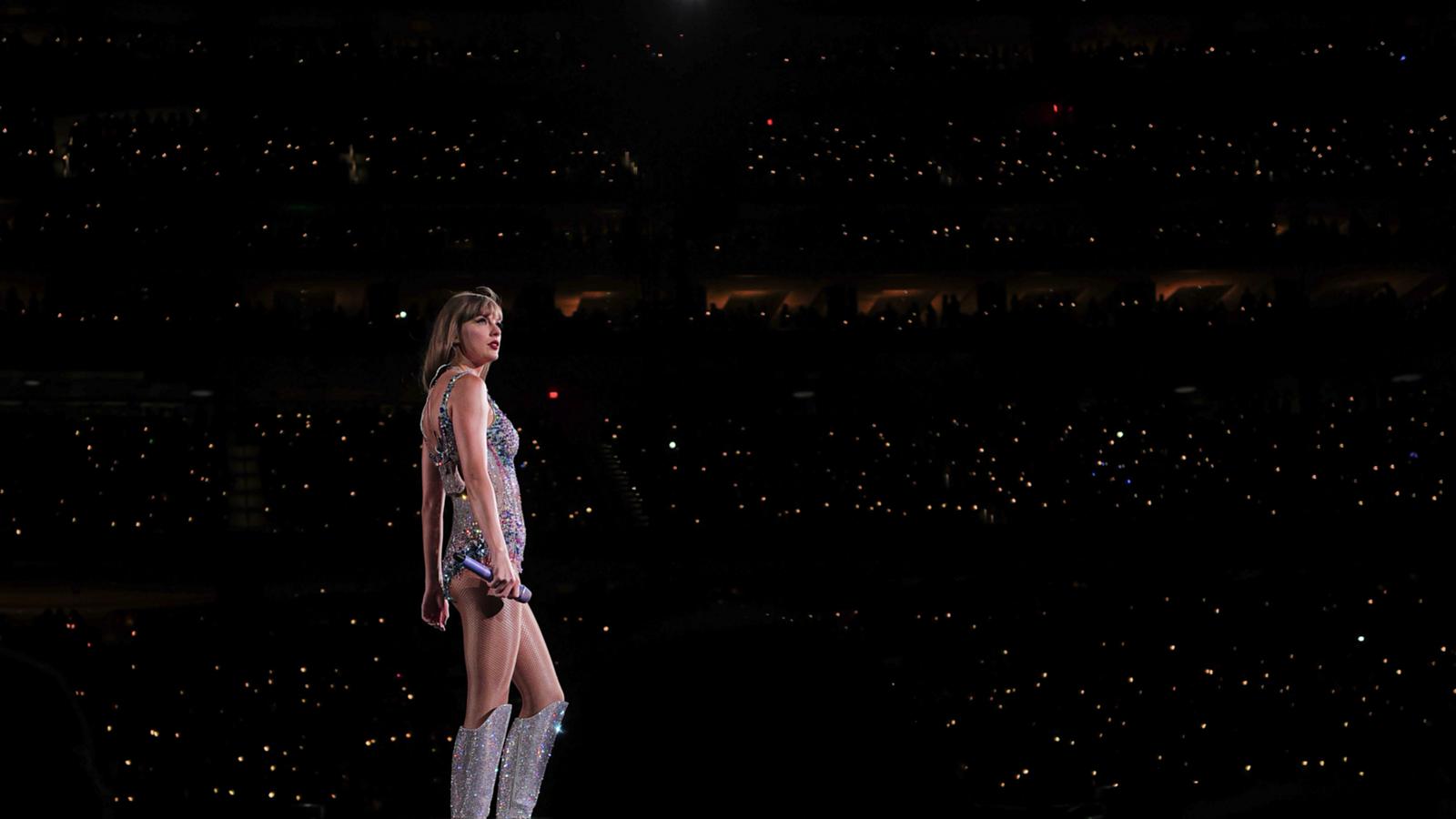
The most reliable way to encounter the biggest song of the summer is not the radio, and it is not a streaming playlist. It is a 15-second video in which a sentimental Taylor Swift ballad written for a Pixar cowgirl plays while a wooden creature with a baseball bat — an anthropomorphic Indonesian drum, rendered by AI — line-dances beside a teenager in their kitchen.
This is the "Tung Tung Tung Sahur" mashup, and for two months it has been one of TikTok's dominant formats: a filter-and-template dance duet pairing Swift's "I Knew It, I Knew You" with the internet's favorite cursed mascot. Trend analysts flagged it as viral within two weeks of the song's release, and the tutorial economy around it — dance breakdowns, CapCut templates, duet chains — was still churning out content this month.
The song is not what the trend posts say it is
Start with the half of the duet that has a record label. "I Knew It, I Knew You" is routinely misattributed in trend posts as a single from Swift's album "The Life of a Showgirl." It is actually something rarer: an original song written for Disney and Pixar's "Toy Story 5," released June 5 on Walt Disney Records — Swift's first collaboration with producer Jack Antonoff since "The Tortured Poets Department," built around banjo, mandolin and harmonica in a deliberate return to her country roots, and inspired by the cowgirl Jessie's story of being outgrown and left behind.
"Writing this song felt like a musical departure and coming home at the same time," Swift said in her announcement, adding that being "a Toy Story kid from the age of 5 til now… is an adventure I plan to be on, to infinity and beyond."
The commercial results were historic by any measure. The song debuted at No. 1 on the Billboard Hot 100 — Swift's 15th chart-topper and her ninth No. 1 debut, the most of any woman — on first-week numbers of 27.2 million U.S. streams, a 46.7 million radio audience and 87,000 copies sold. It was the first No. 1 Hot 100 debut ever from a Disney animated film and Pixar's first chart-topper, and it opened at No. 1 in the U.K., Australia, Canada, Germany, Austria and Belgium as well. Country radio added it at every reporting station in week one, a first for a female artist. Only The Beatles, with 20 career No. 1s, and Mariah Carey, with 19, remain ahead of her.
The staying power has matched the debut. In Britain, where it became her seventh Official Singles Chart No. 1, the song's second week logged 71,000 units — the biggest one-week single sale of 2026 and the largest for any single since The Beatles' "Now and Then" in 2023. "It's incredible just how meaningful it's been having Taylor write and perform this song," said Andrew Stanton, the film's director. "Her connection to Jessie and the immediate way she understood what the character was going through was undeniable."
The other half of the duet is a Ramadan drum
Now the half with no label, no rights holder and arguably no owner at all. Tung Tung Tung Sahur is an AI-generated character created by Indonesian TikToker Fernanda Bagas Indrastata, who posted the original video on February 28, 2025 — the eve of Ramadan in Indonesia. The creature is a living kentongan, the slit drum traditionally beaten to wake neighborhoods for sahur, the pre-dawn meal; the name is the drum's onomatopoeia, and the original voice-over cast it as a "scary anomaly" that visits anyone who sleeps through the third wake-up call. The video drew more than 42.5 million views.
From there the character was absorbed into the "Italian brainrot" wave — the absurdist AI-creature universe that colonized Gen Alpha feeds through 2025 — despite being Indonesian, and went fully multiplatform: a Fortnite cosmetic this April, a starring role in Roblox's "Steal a Brainrot," powerscaling debates, denied movie rumors. Because it is AI-generated imagery, its copyright status is genuinely contested; an agency has claimed rights, but in practice the character functions as public-domain folklore, remixable by anyone.
Prestige nostalgia and algorithmic absurdity, collapsed into one frame.
That is how the social analytics firm ListenFirst describes the mashup's appeal — noting that the character can function as "horror figure, dance partner, romance prop, mascot, NPC, or emotional support cryptid" depending on the audio underneath it. Put the year's most chart-verified ballad underneath, and the collision is the content: maximum sincerity meets maximum nonsense, and both get funnier and somehow more affecting for the contact.
The mashup shares the feed with the summer's other big formats — the "Low Sleep" trend, in which creators claim to be thriving on zero sleep before botching a mundane task on camera, and the Thermostat Game, a charades variant miming temperatures through dance. But none of those have a No. 1 single attached, which is why this one crossed from For You pages into trade coverage.
Why this keeps happening
There is no official view count for the mashup — TikTok's discover pages and template libraries confirm the scale qualitatively, and no outlet has published a reliable aggregate — but the pattern it fits is well documented. Songs no longer go viral on TikTok because their artists post them; they go viral when the platform's meme layer adopts them as raw material. The adoption is the distribution. A generation that will never buy a CD single met Swift's Pixar ballad through a wooden drum doing a two-step, the same way it metabolizes everything: through the remix first, the source second.
What is new in 2026 is the asymmetry of the two halves. One side of the duet is the most professionally managed intellectual property on earth — a Disney-released, Antonoff-produced, chart-record-setting single. The other side is authorless: a piece of crowd-owned folklore generated by a model, claimed by no one the crowd recognizes. The mashup works precisely because the internet treats them as equals. On TikTok, Jessie's ballad and the sahur drum have the same standing — two pieces of culture, free to dance.
For artists and labels, the lesson is now standing policy: the remix layer is not dilution, it is the funnel. The song the brainrot adopts is the song that stays No. 1 — and there is no evidence the reverse embarrassment exists. Swift's team, which once fought unauthorized use of her catalog clip by clip, has conspicuously let this one run. Eleven weeks after release, the tutorial videos are still coming, and so are the streams.
Chart and sales figures are Billboard data for the tracking week of June 5-11, 2026; view counts for the mashup format itself are not independently published and are characterized here qualitatively.